

Heat Dissipation Challenges and Solutions in PCB Circuit Board Design
Circuit boards are more than just that green board in a phone
I’ve been pondering something lately—finding a reliable prototype PCB manufacturer is actually quite interesting. When I first started in hardware, I always thought choosing a manufacturer was just about comparing prices and delivery times; now I realize I was oversimplifying the issue.
I remember once hiring a manufacturer with an exceptionally low quote, only to find the board arrived with misaligned solder pads. Later, I realized that a good prototype PCB isn’t just about surface parameters; it’s about whether they understand your design intent. Another time, I designed a board with an RF module, and the engineer called me in the middle of the night to discuss impedance matching issues. That kind of professionalism is truly valuable.
Many manufacturers like to boast about how many imported machines they have, but the real determinant of PCB quality is often the skill and experience of the experienced craftsmen. I once visited a small factory; their exposure machine wasn’t even as expensive as my refrigerator, yet their impedance control precision was more stable than that of large manufacturers. The factory manager said the key wasn’t how expensive the machine was, but how many sleepless nights the people adjusting it had spent.
Actually, the worst thing about choosing a manufacturer is encountering one that only produces according to specifications. You throw in the Gerber, and they cut it without even looking. A truly excellent partner will proactively help you avoid design flaws. Last week, when I received my board, I noticed the manufacturer had added auxiliary supports at the stamp perforation area. Later, I learned they had noticed my panelization method was prone to deformation. This attention to detail is far more valuable than saving ten dollars.
Now, I value more whether a manufacturer can become a technical partner. Last year, I worked on a medical device project, and the PCB manufacturer provided a lot of advice, from material selection to heat dissipation. This experience isn’t something you can glean from just looking at the official website specifications. Sometimes, spending a little more money to choose a supplier you can connect with can save you the cost of rework later.
Ultimately, finding a prototype PCB manufacturer is like finding a partner; just looking at a list of criteria is useless. You need to actually get to know them and see if they understand your unspoken needs. After all, every board we hardware manufacturers manufacture has a personal touch.
Recently, I was chatting with a friend who works in smart home technology and discovered an interesting phenomenon. Their team originally planned to skip the traditional prototyping process and directly produce sensor motherboards using molds, but they suffered a major setback—the antenna impedance matching on the circuit board completely failed, resulting in a 50% reduction in signal transmission distance, forcing them to rework. This made me rethink the value of seemingly old-fashioned processes in this era of rapid iteration. For example, the 2.4GHz antenna they used showed a perfect 50-ohm impedance match in simulation, but the actual dielectric constant fluctuations of the PCB material caused phase deviations. These microscopic differences can only be captured through actual measurement using a vector network analyzer. Even more problematic is that the roughness of the copper foil at the edges of RF traces during mass production further degrades high-frequency performance; this process variation is impossible to simulate in a virtual environment.
Many people believe that with various simulation software and AI-assisted design, the necessity of physical prototypes has decreased. However, the reality is quite the opposite. The more complex the design, the more it requires physical verification. Just as you can’t decide what to wear based solely on the weather forecast, you still need to feel the outdoor temperature. Last week, during a visit to a factory specializing in high-difficulty projects, I saw engineers using magnifying glasses to compare design drafts with freshly produced samples. Their focus was something algorithms simply cannot replicate. They were inspecting an 18-layer backplane of an industrial-grade switch, containing 2200 BGA solder balls alone. Experienced technicians used hot air guns to locally heat the solder joints and observe the melting sequence. This intuitive judgment of the material’s thermal conductivity comes from twenty years of experience handling military products.
One detail particularly struck me: when they were making flexible circuit boards for a medical device customer, they discovered that the spacing between the pads of a component on the schematic was 0.1 mm smaller than the standard. Although the software tests all passed, the experienced technicians, based on their experience, judged that it would easily lead to solder bridging during mass production. They proactively suggested widening the isolation grooves. This kind of predictive ability based on long-term practice is the most valuable part of manufacturing. In fact, this fine-tuning also avoids a more hidden risk—in the long-term vibration environment of the equipment, solder joints that are too close together may develop micro-cracks due to differences in thermal expansion coefficients. This failure mode often requires thousands of hours of accelerated aging testing to manifest.
Currently, some teams rely too much on digital simulation, even treating virtual prototypes as a panacea. However, the real world is full of variables: material batch differences, environmental temperature and humidity variations—these variables are forever idealized in the computer. I’ve seen too many cases where the simulation report is perfect, but the actual product suffers from chip soldering problems due to substrate warping. Factories that can quickly provide corrective solutions in such situations are like emergency room doctors. I once saw them use liquid nitrogen to instantly cool the deformed area and determine the stress concentration point by listening to the cracking sound of the solder balls. This on-site diagnostic ability is like a traditional Chinese medicine doctor taking a pulse—a wisdom that data can never replicate.
Speaking of technological innovation, I think new processes like additive manufacturing actually highlight the irreplaceable role of traditional prototyping. Last year, a team used inkjet printing to create stretchable circuits and discovered that the conductive ink experienced a sudden impedance change when bent. They ultimately had to adjust etching parameters multiple times to solve the problem. New technologies need the fallback of older methods; this complementary relationship is quite interesting. They later discovered that the key lies in controlling the sintering temperature profile of the silver particles. When the circuit is stretched by 30%, excessively high temperatures cause the conductive particles to excessively aggregate, forming stress concentration points. This critical value can only be determined by repeatedly testing samples under different humidity environments.
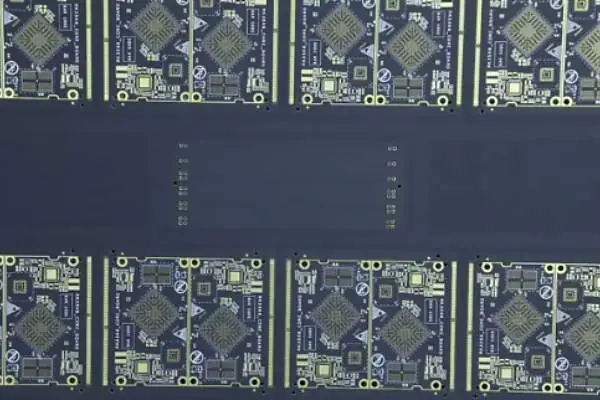
Truly efficient prototyping services should be like a well-coordinated dance partnership: designers propose imaginative ideas, the factory uses experience to judge the feasibility, and both parties optimize the solution through collaboration, rather than simply placing an order and delivering. The best suppliers I’ve worked with even proactively record every modification to the process parameters, creating a dedicated database. This accumulation is more reliable than any algorithm. Their database even includes deformation patterns of FR4 boards from different origins under high temperature and humidity. When a customer designs equipment for use near the sea, they can directly recommend the more corrosion-resistant immersion gold process instead of the conventional tin plating.
Ultimately, hardware innovation is always a tug-of-war between theory and practice. Good manufacturers cannot be complacent, nor can they blindly chase after new trends. Finding a balance between stability and flexibility is perhaps the industry’s most fascinating challenge.
When it comes to finding a reliable prototype PCB manufacturer, I think we need to think about it from a different perspective. Many people immediately focus on fast delivery and low prices, which can easily lead to pitfalls. I’ve seen too many people choose unreliable manufacturers to save a little money, only to receive boards with a host of problems, doubling the debugging time and delaying the actual work.
What’s truly important is whether they understand your design intent. Last time, I had a board that needed impedance control, and I found a manufacturer with a very cheap quote. They didn’t even clarify the basic layer stack-up structure, and the resulting board had terrible signal quality. Later, I switched to another manufacturer. Although the unit price was a bit higher, the engineers proactively discussed trace width and material matching issues with me, which was much more reassuring.
Functional testing is now mentioned by many manufacturers, but the actual execution varies greatly. Some simply power it on and check if the indicator lights are on. Real professionals will confirm test cases with you and even simulate the actual working environment. I value this step because early detection of problems can save a lot of rework time later.
Cost is indeed a consideration, but now I’m more focused on the overall… Cost, not just the initial design fee: Some manufacturers’ quotes seem attractive, but subsequent modifications incur various engineering fees, ultimately making it more expensive. Good manufacturers will clearly tell you which modifications don’t require extra charges, such as minor adjustments to the silkscreen position.
Regarding data security, I have a lot of experience, especially when developing innovative products. It’s crucial to sign a formal confidentiality agreement. A friend’s company once experienced a design leak; although it was difficult to prove, the risk is real. Now, I prioritize manufacturers with robust document management systems. They usually have encrypted transmission and regular data destruction processes.
Choosing a manufacturer is like finding a partner. In the short term, they might seem similar, but in the long run, you’ll find that highly professional manufacturers can help you avoid many pitfalls. Recently, I’ve been working on a high-frequency circuit board project and deeply understand how important it is to find a technically savvy manufacturer. They can even point out potential heat dissipation issues in my design in advance—this added-value service is where the real value lies.
I’ve always found finding the right prototype PCB manufacturer quite interesting. I used to think that only local manufacturers were reliable—so I could easily visit to check on progress and discuss details in person. But now my thinking has completely changed.
Last year, I had a project with a very tight deadline. I tried an online service platform—the kind where you upload files and the system automatically provides a quote—and it went surprisingly smoothly. The entire process was done online—from submitting the design to confirming production details—and the efficiency was much higher than I expected.
I found the biggest advantage of this online service to be its transparency—all processes are standardized—you clearly know where each step is at.
Of course, some people might feel that online communication isn’t direct enough—but I actually find it more efficient—all requirements are clearly recorded in writing—avoiding misunderstandings that can arise from verbal communication.
I remember once I revised a design file at 2 AM—after resubmitting, the system immediately updated the quote—and I received production confirmation the next day at noon—this level of response is difficult to achieve with traditional methods.
Now, I prioritize online services for prototyping PCBs—especially platforms that support automatic quotes—saving the time and cost of back-and-forth communication.
However, I also understand why some people still prefer traditional methods—face-to-face communication is indeed more personal—especially for particularly complex custom requests.
In my personal experience, standardized processes for online services are actually more suitable for most prototyping needs—after all, a clear and concise process is more important than personal connections.
Every time I see newcomers discussing in groups which PCB manufacturer to choose, I think they’re overcomplicating things. I’ve seen too many people immediately fixate on price, trying to drive costs down to the bare minimum, but they’re overlooking a crucial point: you’re not looking for a simple manufacturing plant, but a partner who can learn from your mistakes. A good prototype PCB manufacturer is more like a knowledgeable friend; they know the pitfalls you’ll encounter on the hardware path and understand what a reliable board means for subsequent testing.
I remember when I first started my project, I went to a small workshop to save money, and the board I received couldn’t even connect the power. At that time, I didn’t understand the importance of impedance matching and just thought it was bad luck. Later, I realized that the manufacturer’s workmanship was too rough, and they hadn’t even provided basic design feedback. Since then, I’ve learned my lesson. Now, before sending any files, I always chat with their engineers to see if they can point out any potential problems in the design. This kind of interaction is far more meaningful than simply comparing prices. With hardware, if a prototype has a problem, the cost of redesigning it later can be ten times higher than the small savings on processing fees.
Some people always think that hiring a large manufacturer guarantees reliability, but I don’t think so. Large manufacturers have long processes and slow communication; sometimes, even if you urgently need to change a trace, you have to wait two days. On the contrary, some small and medium-sized prototype PCB manufacturers react faster and are willing to spend time understanding your needs. One company I worked with even proactively suggested adjustments to the layout before production because they had seen similar designs fail in high-temperature environments. These attention to detail is what’s truly valuable.
Ultimately, hardware innovation is never a one-person job. From drawing schematics to final mass production, every step requires support. A good prototype PCB is like the foundation laid before building a house; you can’t see it, but it determines how long the entire structure can last. When choosing partners now, I value their responsiveness and professionalism more; price isn’t my primary concern, since time is the most expensive cost.
Recently, a friend who works on IoT devices complained to me that he kept failing during testing due to signal interference. Just looking at his board, I knew where the problem lay—the layer stack-up design was too haphazard. Later, he switched to a manufacturer specializing in high-frequency boards, and the results of their re-prototype were immediately impressive. You see, sometimes it’s not that your idea is lacking, but that you haven’t found the right person to bring it to life.
The longer I’ve been in the hardware industry, the more I realize that choosing the right path is more important than hard work. Especially in the prototyping stage, what you need isn’t the cheapest quote, but the most knowledgeable partner.
Every time I send my circuit diagrams to a PCB manufacturer, I have a strange sense of anticipation. Watching the lines on the computer screen transform into a tangible board is incredibly rewarding. Anyone in the hardware industry understands this feeling.
I know many engineers who rely heavily on simulation software, thinking it can simulate all scenarios. But the actual boards they produce always surprise you—sometimes a pleasant surprise, sometimes a shock. I remember once my power supply design worked perfectly in simulation, but the actual board started smoking as soon as it was powered on. Later, I discovered that the ESR parameter of a certain capacitor had been set too ideally in the simulation.
That’s why I think finding a reliable prototyping manufacturer is crucial; they do more than just turn your drawings into a board. Good manufacturers will remind you of easily overlooked details, such as whether impedance matching has considered the actual parameters of the board material, and whether vias will affect signal integrity. These are practical issues that are easily missed while sitting in front of a computer.
Many startups nowadays like to pursue rapid prototyping, wanting to receive the board the day after receiving the documents. But speed is not the only standard. I value more whether the manufacturer can understand your design intent. An experienced engineer can point out potential risks at a glance in your documents; this value far outweighs the few days saved.
Once, my RF circuit design performed unstablely in the first batch of samples. The manufacturer suggested I switch to a more expensive substrate. Although the cost was higher, the performance of the second batch of samples was immediately stable. This made me realize that good cooperation should be a two-way technical exchange, not just a simple order and delivery relationship.
Ultimately, the most difficult part of hardware manufacturing is the process of transforming virtual design into a reliable physical object. You need not only manufacturing capabilities but also experience support that can help you avoid detours. This is the core competitiveness of excellent PCB manufacturers.
I recently chatted with a friend who works in RF circuits and discovered an interesting phenomenon—their team would rather spend an extra two weeks repeatedly revising the design drawings than just find any factory to make a prototype. This reminds me of a mistake I made when I first entered the industry: I always thought finding a prototype PCB manufacturer was as simple as comparing prices and delivery times.
In reality, what truly affects the quality of the finished product are often those easily overlooked details. For example, when we tested the impact of different substrates on signal integrity, we found that the same trace design could result in more than three times the difference in dielectric loss with different substrates. That’s when I realized that material selection can’t just be based on the impressive numbers on the specification sheet; it must be judged in conjunction with the specific application scenario.
I remember once rushing to meet a project deadline, I chose a manufacturer that claimed to deliver in three days. The batch of boards I received couldn’t even meet the impedance matching requirements. Later, I learned that to save costs, they had simplified the lamination process of the four-layer board to two layers of adhesive, causing the dielectric constant to fluctuate wildly, like an electrocardiogram.
Now, my team and I have established a rule that before sending any documents to manufacturers, we must have them confirm the material inventory, especially the batch numbers of special boards. Once, when we were working on control boards for high-temperature environments, the supplier temporarily substituted an equivalent grade of epoxy resin, resulting in delamination and blistering during aging tests.
Good manufacturers often get involved in discussions during the engineering design phase. For example, they might remind us to adjust the position of blind vias to avoid stress concentration areas or suggest adding a thermal insulation solder mask layer around the heat dissipation pads. These accumulated details often save time on rework later.
A recent rigid-flex board project made me realize the importance of early communication. When the manufacturer’s engineers proactively suggested adjusting the copper foil thickness in the bending area from 18μm to 12μm, the folding resistance of the entire product increased fivefold. This kind of advice based on process experience is far more practical than theoretical design specifications.
Ultimately, finding a prototype manufacturer is a bit like finding a fitness coach—it’s not about how advanced their equipment is, but whether they can provide a personalized solution tailored to your needs. After all, no matter how impressive the specifications are, nothing beats the peace of mind of having a board that works stably in your hands.
I always want to laugh when I see those newly graduated engineers carrying design drawings around looking for manufacturers. They always think that making a prototype is just a matter of sending out a file and waiting for delivery—it’s not that simple! Our team experienced this firsthand last year when we were redesigning a smart home motherboard. The prototype PCB manufacturer we’d been working with for three years suddenly raised prices by 30%, citing a shortage of high-frequency boards. I was furious: we’d confirmed the bill of materials two months ago, and now they’re saying this? Suppliers who change their minds at the last minute are practically killing the project timeline.
Real, reliable manufacturers will proactively help you mitigate risks. I remember the first time I worked on a military-grade project, they required impedance control testing, and I was completely bewildered—what need is there for these things on a standard ten-layer board? The experienced technician sent by the manufacturer demonstrated how to use a vector network analyzer to adjust parameters, muttering as he did so, “You software engineers always treat signal integrity like a math problem; the electromagnetic field actually bends along the edges of the board.” After that, we made it a habit to confirm the fixture design via video conference before each prototype to avoid rework later.
Recently, a friend’s company was making wearable devices and insisted on a 0.3mm thickness, resulting in the first batch of fifty boards deforming during reflow soldering. I suggested they change their approach: first verify the functionality using a standard thickness board, then consider thinning the result. The second version passed the vibration test. Sometimes, the so-called “technical bottleneck” is actually a rigid decision-making chain.
Now, when looking for suppliers, what I value most is adaptability. Last month, I needed to temporarily change a four-layer prototype PCB to a six-layer structure with blind vias, and the supplier’s production line was able to rearrange the lamination sequence within 24 hours—this flexibility is far more important than price. After all, nobody wants the entire team waiting for two weeks because of a bottleneck in one step.
The most ironic thing is that some customers are always fixated on whether the impedance tolerance is 5%, forgetting that the board ultimately needs to be installed in a casing. Just the other day, I saw someone place the interface directly below the screw holes. Even the best manufacturer can’t save someone from such a basic mistake. Ultimately, hardware development is a relay race; the manufacturer is only one leg. The real key to success lies in the density of collaboration.
It’s always particularly interesting to receive a prototype of a newly designed circuit board. Seeing that small board transform from lines on a computer screen into something tangible in my hand always brings a sense of security—even if it might not even light up. I always feel it’s essential to find a reliable prototype PCB manufacturer to make several sample versions. I remember once working on a small controller project. The computer simulation worked perfectly, but the actual prototype showed such severe signal interference that it was unusable. We had to temporarily modify the wiring to barely complete the functionality test, but that board was never used again—it was just too ugly. This experience made me realize that even the most powerful simulation software can’t replace the problems exposed by a physical prototype PCB.
Now, whenever I send out prototypes, I habitually name the files with a version number including “Rev,” such as ProjectXRev23. This way, even with minor changes, I can clearly distinguish the differences between different batches of samples, making it easier to compare test results and identify problems.
Sometimes friends ask me why I spend so much time and energy repeatedly working on these prototypes instead of going straight to mass production. My answer is simple: this upfront investment is paving the way for the future, reducing potential problems during large-scale production.
The worst thing in hardware development is assuming the design is flawless, only to discover a detail was poorly handled after mass production. Modifying it then becomes too costly and could even affect the entire project schedule. Therefore, spending extra time refining several prototype versions is well worth it; after all, a good start is half the battle.
Circuit boards are more than just that green board in a phone
From disassembling old routers to visiting electronics manufacturing plants, I gradually realized
As an electronics enthusiast, I’ve come to understand firsthand the impact of
- Experto en producción de lotes pequeños y medianos
- Fabricación de placas de circuito impreso de alta precisión y montaje automatizado
- Socio fiable para proyectos electrónicos OEM/ODM
Horario comercial: (de lunes a sábado) De 9:00 a 18:30