

The Success Illusion of an Off-Grid Solar Inverter PCB Prototype: Why the Sample Works but Mass Production Fails
Every time I receive a freshly built Off-Grid Solar Inverter PCB prototype,
Every time I get a Printed Circuit Board Quote, I find myself wondering just how many hidden traps are buried in those numbers. Last week, a client brought me quote sheets from four factories to compare, and the most outrageous one had calculated loss allowance at three times the actual rate, insisting with a straight face that this was standard industry practice.
Actually, component procurement is where a supplier’s real level gets tested. I’ve seen far too many people fixate on the total price while overlooking a critical detail: a plan that claims to save money often starts planting traps right at the material line-item level — for example, deliberately obscuring the loss coefficient tied to a specific package size, or mixing secondhand chips into a batch to pad the count.
Once, helping a friend audit a BGA assembly house’s invoice, I found they charged a 10% loss fee, but the production line actually had automatic counting — real loss came in under 2%. In cases like that, you have to pull out the itemized clauses and dispute them point by point.
Now I pay especially close attention to whether a quote sheet clearly distinguishes loss standards between prototype and small-batch production. It’s reasonable to stock extra material during the hand-soldering prototype stage, but if a ten-thousand-unit bulk order still applies the same loss ratio, that’s simply treating the customer as an easy mark.
What gives people the biggest headache is a supplier playing word games — verbally claiming everything’s included, then suddenly demanding a rework-calibration fee once mass production begins. That’s exactly when having a detailed clause list signed upfront proves its worth.
At the end of the day, finding a PCB supplier can’t be about the price number alone — you need to audit every step’s reasonableness like reviewing a financial statement. Real cost control was never about squeezing the price — it’s about making sure every dollar goes exactly where it needs to.
I’ve always found receiving a PCB quote sheet genuinely interesting — that thin piece of paper hides far more worth digging into than you’d expect. Many people habitually stare only at the most conspicuous number, when what actually determines cost often hides in the unremarkable details.
I remember a project last year where two suppliers’ quotes differed by less than 5%. On the surface, choosing the cheaper one seemed obvious, right? But looking closely, the slightly pricier one had bundled flying-probe testing and impedance control into the base fee, while the cheaper quote was propped up by add-on testing fees tacked on later. In cases like this, you need to pay special attention to the fine print on the quote sheet — it’s best to call directly and confirm the exact scope of every service.
Verification is genuinely more important than most people assume. Once, rushing to get into production, we skipped sample validation and went straight to a bulk order. The result: a quarter of the first batch developed micro-shorts, and the rework cost far exceeded the time we’d saved by skipping validation. Now my habit is: even for the simplest design, I insist on personally seeing a physical sample pass basic testing before feeling at ease — especially with a new factory.
I especially like deliberately leaving a few design parameters open when requesting a quote. For example, asking simultaneously about the price difference between ordinary FR4 and high-frequency material, or testing how much different surface-finish processes affect price. This approach helps you gauge a supplier’s technical depth — factories that proactively suggest alternatives tend to be far more reliable.
What a lot of people easily overlook are the hidden costs outside the quote sheet itself. For example, one factory might have a low per-board price but always charges a minimum $200 shipping fee; another splits the engineering fee into a dozen small line items that gradually add up later. Now I always ask suppliers to bundle tooling fees, testing fees, and shipping into one final landed price before comparing.
Actually, the ideal collaboration is finding a supplier willing to optimize cost together with you. Last month, a factory proactively suggested lowering copper thickness on certain non-critical layers from 1oz to 0.5oz — that change alone lowered overall cost by 12% without affecting performance at all. That kind of two-way technical exchange is far more meaningful than simple price comparison.
At the end of the day, PCB procurement was never a simple price negotiation. It’s more like an art of balancing quality, efficiency, and risk — and that quote sheet is just an excerpt from the score of that dance.
Every time I get a Printed Circuit Board Quote, I pay especially close attention to the numbers tucked away in the corners. Many people habitually make a decision based only on the most conspicuous board-price number — that’s genuinely risky.
I’ve seen too many cases where overlooking tariff issues threw the final cost completely out of control. Last year, one of our projects chose a particularly cheap overseas supplier, only to find at customs clearance that the product classification had changed, with tariffs coming in 12% higher than expected — eating straight into the entire project’s profit margin. Now I require suppliers to clearly state country of origin and applicable tariff rate on the quote sheet, even if it’s just an estimate — far better than discovering the problem after the fact.
Shipping-method selection is genuinely worth careful thought. Sometimes spending a bit more on faster logistics actually saves more overall. Last month, rushing to meet a deadline, we chose air freight — the shipping fee was 20% higher, but it avoided the risk of a production-line shutdown. However you calculate it, that math works out. I generally won’t even consider a quote that bundles shipping into the board price, since you simply can’t see the actual cost structure.
I think engineering fees are fairer when listed separately for both sides. Some suppliers like to spread NRE cost into the unit price — that looks convenient short-term, but it doesn’t serve long-term collaboration well. I prefer a transparent approach where every dollar’s destination is clear — that makes cost calculation far more precise when adjusting a design or adding quantity later.
Testing fees are another area prone to misunderstanding. Some quotes look great on the surface, only for you to be told at actual production time that electrical testing costs extra — that kind of hidden clause is the most frustrating. Now I ask directly about testing standards and fee structure upfront — I’d rather spend more time communicating early than deal with arguments later.
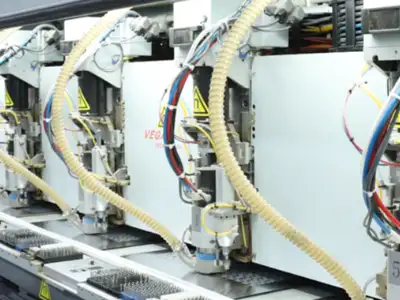
Actually, reading a PCB quote is a lot like buying a house — you can’t just look at the total price; you also need to factor in renovation and tax costs down the line. Sometimes a supplier with a slightly higher unit price actually delivers lower overall cost, because their service is more complete and quality more stable. Now I focus much more on a supplier’s overall solution capability rather than just that one conspicuous number.
Recently, our team has been discussing whether to move part of our orders back domestically. Board price might run somewhat higher, but factoring in logistics time and tariff risk, overall cost might actually be more controllable. This shift requires reassessing a lot of factors, but I think this kind of consideration is becoming increasingly necessary in the current trade environment.
At the end of the day, reading a PCB quote sheet takes patience and experience. Every number might hide an unexpected cost — only by working through every detail can you make a genuinely informed decision.
Every time I get a Printed Circuit Board Quote, I check a few key points first. A lot of people jump straight into staring at the total-price number, easily overlooking the factors that actually drive cost.
I remember a project last year where the client insisted on an eight-layer board for a small controller. The prototype came back costing far more than expected. We later reassessed the signal-integrity requirements and found a 4-layer board with a well-planned routing strategy could fully meet performance needs — after the adjustment, cost dropped by roughly 30% directly. This kind of precise layer-count evaluation often delivers unexpectedly big savings.
Designers sometimes fall into habitual thinking — always assuming more layers means more safety margin, but the reality is every additional layer means higher material cost and manufacturing difficulty. I’ve seen too many cases of budget spiraling out of control from over-engineering. Now, whenever my team discusses a design approach, we repeatedly ask one question: does this layer genuinely serve an irreplaceable function?
Another commonly overlooked factor is panel utilization. Some factories’ quote sheets don’t display this information at all. Actually, low panel utilization essentially means you’re paying for scrap material. I generally require suppliers to provide the panel layout — if utilization is below 80%, I’ll consider adjusting dimensions or the panelization approach. This detail can directly affect the final quote — a lesson that matters just as much on a compact design like a Panic Button PCB as on any larger board.
On surface-finish selection, I’ve fallen into plenty of traps too. Once, a project defaulted to ENIG, only to find later that OSP was fully sufficient — a completely unnecessary extra expense. Now I focus more on the actual application scenario — does the product need frequent plugging or long-term storage — before deciding on the surface-finish type, rather than blindly chasing a high-end process.
Copper-thickness selection follows similar logic — not every area needs thick copper. Sometimes optimizing layout or adding thermal-relief holes solves a heat-management issue just as well. Blindly increasing copper thickness only makes etching harder and hurts yield. These design-level details often matter far more than simply pressing on price.
The factors that genuinely affect PCB cost are often hidden in seemingly unremarkable design decisions. Rather than spending time agonizing over unit price, it’s more effective to put that energy into optimizing the design itself — controlling cost at the source.
I’ve recently noticed a genuinely interesting phenomenon — a lot of people, when looking for a PCB supplier, rely heavily on those online quoting systems. Enter a few parameters and instantly get a price — genuinely convenient. But honestly, this kind of instant Printed Circuit Board Quote can sometimes lead you straight into a trap.
I remember last month, one of our projects needed a batch of boards with special impedance control. I tried online quoting on three different platforms, and the resulting prices differed by nearly 40%. The most absurd part: one supplier’s online system directly misidentified our process requirement as an ordinary double-sided board — if I hadn’t asked one more question, we would have nearly placed the order using the wrong parameters.
These platforms today love emphasizing “quote in three minutes,” but I increasingly feel that genuinely reliable collaboration actually needs to slow down. Last week, I visited a PCB factory we’ve worked with for three years — their engineers sat in the conference room going through our design draft layer by layer, analyzing impedance line width, even proactively suggesting adjustments to two via positions. How could a few mouse clicks ever replace that kind of deep communication?
Of course, I’m not saying online quoting is entirely useless. For the prototyping stage, using rapid online quotes to compare a few baseline prices genuinely saves time. But for a complex project, the details hiding behind those parameters are what actually matter. Like once, we needed a rigid-flex board — the online price looked great, but at actual production time we found the factory didn’t even have lamination equipment, forcing us to scramble for a replacement supplier.
Actually, a good supplier relationship is more like shopping at a local wet market — a stall you visit often will tell you which vegetables are fresh today and which to avoid. The PCB factory we’ve worked with the longest sends an engineer for a video meeting on every new project — they can even anticipate potential production difficulty just from how I describe the requirement. What price on a cold quote sheet could ever deliver that kind of value?
So now my approach is treating online quoting as an initial screening tool — for genuinely important projects, I always insist on a video meeting or an in-person factory visit. Last month, visiting a supplier in Dongguan, I happened to discover they’d just brought in an automatic prepreg-cutting machine — isn’t that exactly the process our next product series needs? If I’d only stared at a computer screen, how could I ever have discovered that kind of opportunity?
At the end of the day, no matter how advanced the technology, the warmth of business ultimately has to be carried through people. Those seemingly efficient online systems can actually make us forget the most basic truth — good collaboration is about mutual achievement, not a simple buy-sell transaction.
Every time I see someone agonizing over board-material thickness to save a few dollars on a PCB, I want to laugh. The places that genuinely burn money have nothing to do with these surface-level details.
I’ve seen too many engineers go back and forth comparing Printed Circuit Board Quotes from three suppliers. Factory A quotes $10, Factory B quotes $8, Factory C quotes $7.50 — and then they choose the cheapest one? Too naive. Last week, a client excitedly chose a small workshop for a bulk-board order. The first batch of goods revealed impedance control was a complete mess. You think you saved two thousand dollars on board material? The labor cost of reworking it afterward could buy three more batches of boards.
PCB cost was never as simple as comparing unit price. Suppliers who break a quote sheet down into a dozen line items are actually more trustworthy — at least you can see exactly where the money goes: is the board material Shengyi or Elite? Is the solder-mask ink Sun Chemical or a domestic alternative? Is immersion-gold thickness up to international standard? These details are what genuinely determine whether a board lasts three months or three years.
Once, we needed a mainboard for medical equipment that had to pass certification, and that’s when the real problem surfaced — the supplier never mentioned that environmental certification would incur an extra charge! Switching materials last-minute delayed the project by two weeks — a loss far greater than the PCB cost we’d originally saved!
Now, the first question I ask a supplier is whether they can provide a complete, itemized cost breakdown! Anyone who just pats their chest and promises “guaranteed lowest price” basically gets crossed off the list on the spot! A genuinely professional factory will work with you to optimize the design! For example, adjusting panel dimensions by 0.5mm to fit two extra sets on the panel! Or suggesting a via-diameter change from 0.2mm to 0.25mm to save thirty percent on drilling cost! That kind of collaboration is what real cost reduction looks like!
A recent smart-home client left a strong impression on me! Their designer insisted on imported high-frequency board material, claiming better performance! In reality, ordinary FR4 with impedance matching solves 80% of the problem! We ended up with a compromise solution — high-end material for critical signal layers, standard material for everything else! Overall cost dropped 30% with no performance sacrifice!
At the end of the day, getting a PCB quote is just the beginning! What genuinely tests your skill is seeing through the numbers to the technical fit behind them! Next time, don’t just fixate on the total-price number — ask more questions like “why is this specific item expensive” or “can that parameter be adjusted”! You’ll find there’s a lot more room to save than you thought.
Don’t rush straight to the price column the moment you get a PCB quote sheet. I’ve seen too many people make a decision based on total price alone and pay dearly for it.
You need to first look at how the warranty clause is written. Some suppliers word the warranty period vaguely, and the moment a problem actually surfaces, they start arguing it’s a customer design flaw or improper handling. A genuinely reliable one lays out disclaimer clauses and warranty scope clearly — for example, promising a free redo within three years for non-human-caused damage. That kind of confidence reflects genuine process stability. For example, a quality supplier will explicitly define in the contract what counts as a process defect — things like trace shorts or uneven plating on hole walls — backed by third-party inspection standards as reference. They’ll even provide an X-ray inspection report before shipment, using data to prove the board material’s glass-transition temperature meets standard — this kind of transparency effectively avoids later disputes.
Once, rushing to find a new supplier, we chose the lowest quote, and the first batch of boards had cold-solder problems, stopping the production line for two days — a loss far greater than what we’d saved. It later turned out that supplier’s warranty only covered material defects, not process issues. Even worse, they tried shifting responsibility, claiming our pad design didn’t meet industry standard, when in fact our design file clearly specified pad dimensions and spacing. That experience taught me you have to require a supplier to provide successful case studies of similar processes right at the quoting stage — especially for special designs like BGA packages or HDI boards.
Lead time is secondary — what matters more is whether the other side has built in buffer room. I once worked with a mid-sized factory whose quote sheet clearly separated sample lead time from bulk-order lead time, even proactively noting “for expedited orders, we recommend reserving a 20% buffer.” That kind of candor actually put me at ease, since the cost of a production line waiting idle for material far exceeds an expedite fee. That factory also annotated the expected time for every production step — for example, noting immersion-gold requires 48 hours of aging test — letting the customer track progress precisely. They even built a raw-material inventory early-warning mechanism, notifying customers ahead of time of potential price adjustments during copper-foil price fluctuations.
Now I specifically flip to the last few pages of any quote sheet to look at the fine print. Payment terms hide a lot of information — a supplier requiring 100% prepayment either has tight cash flow or lacks confidence in their own delivery capability, while one willing to accept staged payment tends to focus more on long-term collaboration. For example, one supplier proposed “30% deposit, 40% on delivery, 30% after acceptance” — the total price was slightly higher, but they simultaneously opened real-time production-line monitoring access — that kind of deeply bound collaboration model actually lowers overall risk.
A genuinely good quote sheet should read like a medical check-up report — not just listing data, but including risk alerts. For example, noting for a special process that “first production run recommends sampling first,” or reminding that “immersion-gold thickness exceeding standard spec might affect impedance control” — that kind of detail is what professionalism actually looks like. I once saw a quote sheet that could genuinely serve as a textbook example — for high-frequency board material, it specifically noted the dielectric-constant-versus-temperature curve, and suggested adding impedance test points at a specific frequency band. That kind of upfront technical communication helps a design engineer optimize their plan ahead of time.
Don’t forget to compare price breakpoints across different quantity tiers. Some suppliers have a threefold unit-price gap between 10 pieces and 100 pieces — clearly better suited to the prototyping stage; another only gains price advantage above a thousand pieces — that requires evaluating whether your actual usage volume matches which model. Blindly copying someone else’s recommendation easily leads you into a trap. For example, flex-circuit-board production uses laser cutting at small batch, which costs more, but the tooling-amortization advantage shows up once volume exceeds 500 pieces. Smart buyers ask suppliers to provide process explanations for different quantity tiers, avoiding the “low-price trap” — some quotes look cheap on the surface but are actually achieved by reducing copper thickness or skipping electrical testing.
Finally, remember: a quote sheet is a litmus test. A supplier willing to lay their limitations openly on the table tends to be more trustworthy than one who agrees to everything readily — after all, making circuit boards is a hands-on technical craft, and anyone who oversells should be treated with extra caution. One supplier directly noted on their quote sheet “we don’t accept blind-via designs under 0.1mm hole diameter,” while also recommending a partner laser-drilling factory — that kind of stated limitation actually reflects genuine professional integrity. After all, circuit-board production involves hundreds of process steps, and any promise needs to match actual equipment capability and accumulated technical experience.
Every time I see one of those complicated Printed Circuit Board Quote sheets, I get a headache. Last week, a supplier sent me a densely packed table — the BOM list alone took up three full pages. I stared at those component part numbers for a long time before noticing one resistor’s package size was mislabeled — the kind of detail that usually only surfaces at production time.
Actually, a lot of engineers easily fall into a misconception, always assuming the more detailed the technical parameters, the better. But the reality is a supplier cares most about executability. Last time, one of our projects used a special substrate material that extended lead time by two weeks — it later turned out ordinary FR4 would have fully met the requirement. This kind of information asymmetry often makes the entire quoting process needlessly complicated.
I’ve made it a habit to hold a brief phone call before sending out an inquiry. Directly telling the supplier our application scenario is far more effective than throwing a pile of technical documents at them. For example, last time working on a smart-home controller, we clearly stated we needed environmental certification, and the supplier proactively suggested switching to a lower-cost lead-free process. That kind of interaction is far more meaningful than simply comparing prices.
I recently ran into an interesting situation — a factory, when quoting, specifically flagged the supply-cycle risk for a particular chip. That kind of proactive risk alert actually made me more willing to work with them, since circuit-board production isn’t a one-time deal — the ongoing collaboration afterward matters enormously.
On the topic of BOM management, I think the most troublesome part is version control. Last month, our production line nearly used the wrong version — fortunately, the purchasing manager caught it by double-checking the revision log. Now we require every file title to note the date and version number — a seemingly clumsy method, but the most reliable.
Actually, a good quoting process should be like a puzzle — both sides need to show their hand. Recently, we tried putting design requirements and capacity planning on the same sheet so the supplier can see everything at a glance — the result was noticeably better quote accuracy and more reliable lead-time estimates.
Sometimes I wonder why this industry always overcomplicates simple things. Like once, a project only needed a double-sided board, but the supplier quoted it according to a four-layer-board standard. After communication, it turned out they saw an impedance requirement in the design file and automatically upgraded the solution — when in fact our impedance tolerance could easily be relaxed to 10%. Failing to communicate these details clearly genuinely adds cost for nothing.
Now, every time I receive a new quote, I first check the flagged anomaly items. Notes marking something as a special consideration often hide the most critical information — far more substantive than a flashy slide deck.
Every time I get a Printed Circuit Board Quote, I habitually look at the unit price first — but what actually determines cost usually isn’t that number itself. I remember a project last year where Supplier A’s quote looked especially attractive, at just $8 per square foot. Then, mid-production, we discovered we needed additional impedance testing, and the extra fee pushed the total price up 30% directly. That experience taught me that comparing unit price alone is like only checking the label at the supermarket without checking the expiration date.
I later developed a habit of always flipping to the testing section of a quote sheet first for careful review. Some factories bundle basic testing into the unit price, while others, despite looking cheap, list critical inspection as an extra service. This matters especially for complex designs like high-frequency boards or multilayer boards — skipping necessary testing steps can cost far more down the line.
Once, rushing to meet a deadline, we chose a mid-priced factory — their per-square-foot unit price was genuinely competitive. But the first batch of boards revealed impedance control fell short of spec, causing signal-integrity problems. The delay from rework plus the cost of redoing it ended up costing more than if we’d chosen the pricier supplier with more thorough testing from the start. That incident made me realize PCB quality isn’t determined by unit price alone.
Now I break a quote sheet down into several dimensions to evaluate — material suitability determines baseline performance, process complexity affects yield, and test coverage is the real safety net for quality. Sometimes a 10% higher unit price that includes a full reliability-testing package is actually more economical. After all, a circuit board is going into a real product — the cost of later repair or recall far exceeds that small price difference saved upfront.
A recent automotive-electronics project drove this home for me even more. The supplier’s quote clearly listed different tiers of thermal-cycling test options, and we chose the strictest version. The unit price looked somewhat higher than competitors, but passing every environmental test in one go at the client’s validation stage saved us so much hassle. A good PCB quote should read like an instruction manual, clearly showing the value at every step — not just a simple list of numbers.
Every time I see a PCB supplier’s quote sheet arrive, I want to laugh. Those densely packed numbers hide far more trickery than you’d think. I’ve seen too many engineers grab a quote and rush straight to procurement to push the order through, only to discover once the board arrives that impedance control has a problem, requiring an extra two weeks to redo it. How is that saving money? That’s just throwing money into a fire pit.
Anyone who genuinely understands the business breaks a Printed Circuit Board Quote down piece by piece. Board-material model determines temperature tolerance; ink color affects yield. Last week, one project’s yield rate spiked because a light-colored silkscreen was chosen — this kind of hidden cost simply doesn’t show up in the initial quote. Purchasing departments always fixate on haggling over unit price while overlooking one fact: a cheap board might require a much more expensive pick-and-place machine debugging time to compensate.
Now, when evaluating a supplier, I bring an R&D colleague to tour the factory with me. A temperature-and-humidity gauge reading on the shop floor is more convincing than a price sheet. Once, I found an exposure machine’s filter mesh had been used past its service life and switched suppliers on the spot without hesitation. Even though the board cost fifty cents more per unit, batch yield jumped from 85% to 98%. That kind of multi-dimensional consideration is what real cost control looks like.
While recently running a TCO analysis for a client, I found something interesting. Their long-time Shenzhen supplier quoted low but consistently delayed delivery. Factoring in production-line shutdown losses, actual cost ended up higher than a Taiwanese factory quoting 30% more. What procurement should really focus on isn’t the invoice amount — it’s the total accounting at month’s end. Sometimes paying 10% more upfront saves 30% in downstream maintenance cost.
Now, for any new project, I require suppliers to provide material-traceability documentation. Last year we got burned when a batch of boards, due to chlorine content in the substrate, caused an entire batch of medical devices to be recalled. Since then, we’ve made environmental certification part of our supplier evaluation criteria. Seemingly unrelated details often determine a product’s total lifecycle cost. Good procurement needs to dig for the truth behind the data like a detective.
Every time I receive a freshly built Off-Grid Solar Inverter PCB prototype,
Many engineers focus too much on technical parameters early on and overlook
As someone who has worked in PCB outsourcing for years, I’ve found
- Experto en producción de lotes pequeños y medianos
- Fabricación de placas de circuito impreso de alta precisión y montaje automatizado
- Socio fiable para proyectos electrónicos OEM/ODM
Horario comercial: (de lunes a sábado) De 9:00 a 18:30
Get quote, solution or any question, Andre always here to help