

Heat Dissipation Challenges and Solutions in PCB Circuit Board Design
Circuit boards are more than just that green board in a phone
When it comes to HDI PCB manufacturing, I think many people tend to fall into a misunderstanding – paying too much attention to technical parameters and ignoring the actual application scenarios. I have seen many engineers comparing numerous technical indicators everywhere, only to find that the selected solutions performed mediocrely in actual use. For example, in the field of consumer electronics, excessive pursuit of high aspect ratio microvias may have a negative impact on heat dissipation and reliability.
HDI does bring more possibilities to electronic design, but the key lies in how you use it. I remember that our team worked on a medical equipment project last year. At first, we thought it could be done with traditional PCB design, but later we found that the space constraints were too great. After switching to HDI, not only the layout problem was solved, but the signal integrity was unexpectedly improved. This change made me realize that sometimes choosing HDI is not just for high-density wiring, but also for better overall performance. Especially through arbitrary layer interconnect technology, we achieve shorter signal paths and reduce crosstalk.
There are various opinions about HDI on the market now, but what is really important is to find a solution that suits your product. For example, consumer electronics and industrial equipment have completely different requirements for reliability. Blindly pursuing HDI with the highest specifications may actually increase unnecessary costs. I tend to clarify the product positioning first, and then decide what kind of PCB technical support is needed. Industrial control boards, for example, may require thicker copper foil and tighter tolerance standards.
Interestingly, with the rise of flexible electronics, the application scenarios of HDI are still expanding. Last week I visited an innovative company, and they even used HDI technology in curved circuits for wearable devices. This kind of cross-border application makes me very inspired – maybe we should rethink the potential boundaries of HDI. They use a prepreg lamination process that allows the circuit to be bent thousands of times without failure.
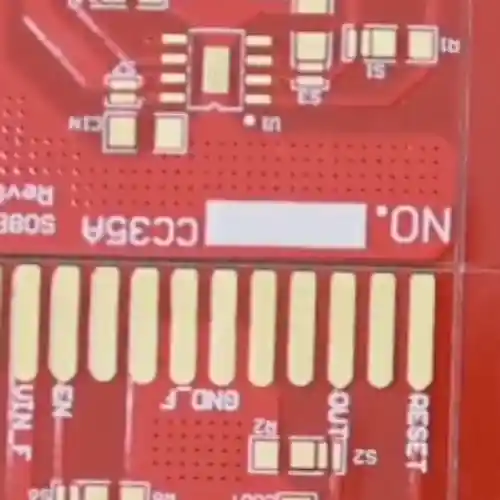
In the final analysis, good design is never a collection of technologies. When you truly understand the product requirements, you will naturally understand whether HDI is needed and to what extent. This kind of judgment is more important than any technical parameters. For example, automotive radar modules need to maintain stable impedance control in high-temperature vibration environments.
I recently talked with several engineer friends about HDI PCB manufacturing and found that many people have misunderstandings about material selection. In fact, the application of high Tg sheets in HDI is far more than just high temperature resistance. I remember there was a medical equipment project last year. We tested three FR-4 materials with different Tg values. It was found that high-Tg materials not only remain dimensionally stable when the ambient temperature changes frequently. The risk of micropore cracking is also significantly reduced. This is because the molecular chains of high-Tg materials can still maintain a tightly cross-linked structure at high temperatures. This characteristic allows the material to exhibit better fatigue resistance during thermal stress cycles. Especially during multiple reflow soldering processes, ordinary materials are prone to Z-axis expansion caused by glass transition, and high Tg materials can effectively suppress this deformation.
There is a common misunderstanding that HDI must pursue the highest quality materials. In fact, when upgrading ordinary PCB to HDI, the first thing to consider is whether the existing production line can match it.
Our team once tried an imported high-frequency material. Although the electrical performance is excellent, there is always a problem with resin residue when laser drilling. Later, domestic improved high Tg materials were used. Not only has the cost been reduced by 30%, but the processing yield has also been improved. This case shows that the compatibility of materials and processes is often more important than the individual parameters of the material itself. For example, although some imported materials have excellent dielectric constants, their resin systems may not be suitable for the common domestic UV laser drilling process, causing carbonized residues to block micropores.
What many people overlook is that the thermal expansion coefficient of a material deserves more attention than the Tg value. Once I was working on an automotive electronics project, and all the parameters during the sample stage were perfect. However, during the road test with severe temperature differences, micro-cracks appeared in the solder joints of ordinary PCBs. However, HDI boards using high Tg materials are safe and sound. This hidden advantage cannot be seen at all in the drawings. In fact, mismatch in thermal expansion coefficients will cause stress concentration at the interface of different materials, especially in the BGA packaging area. Micro deformations will accumulate with each temperature cycle, eventually causing solder joint fatigue failure. High Tg materials generally have lower CTE values and can better match the expansion characteristics of the chip carrier.
Now some manufacturers blindly pile up high-end materials for gimmicks. In fact, a truly excellent HDI design should be as focused on matching as cooking. For example, high-performance materials are used in the main chip area. The peripheral circuits can completely use proven conventional PCB materials. This mixed-use solution keeps costs under control. It also ensures the reliability of key areas. For example, low-loss materials are used around the processor to ensure signal integrity, while standard FR-4 is used in the power management part to achieve a balance between performance and cost through reasonable stacking design. This idea requires designers to have a precise grasp of signal flow and heat distribution.
Recently I came into contact with the new trend of flexible HDI. It was discovered that the thinking of traditional rigid PCBs needed a complete change. Flexible materials have completely different requirements for laser drilling accuracy. One partner has innovatively implemented 5-micron circuits on polyimide substrates. This breakthrough made me realize that the boundaries of HDI are still expanding. Flexible HDI requires special attention to the ductility and bending resistance of the material, such as using modified polyimide to improve the tear resistance, and at the same time solving the adhesion problem between the covering film and the substrate. In the field of wearable devices and flexible displays, this technology is creating new application possibilities.
After all, choosing HDI materials is like choosing a partner. It’s not about finding the best. It’s about finding the one that’s most suitable. Sometimes we pursue parameter indicators too much. Instead, the particularities of actual application scenarios will be ignored. The most fascinating thing about this industry is that. There are always new challenges waiting for us to break through conventional cognition. For example, the emerging buried resistance and buried capacitance technology puts forward higher requirements for the uniformity of dielectric materials; and 5G millimeter wave applications require the development of lower loss liquid crystal polymer materials. Each iteration of technology is redefining the standards of “fit.”
When I first started getting into PCB design, I was quite naive, thinking that I just needed to connect the lines.
Later I realized that the real test of skill is how to pack more functions into a space the size of a fingernail. That’s why I’m so fascinated by HDI technology – it transforms circuit boards from simple connectors into sophisticated micro-cities.
I remember once changing a smart bracelet solution, but traditional PCB could not solve the interference problem of the antenna module. After trying to rearrange the layout using microhole technology, not only the signal purity was improved by 30%, but also the space for the sensor was unexpectedly saved. This kind of breakthrough is like suddenly drawing a long stick while playing Tetris and instantly opening up the Ren and Du channels. Microvia technology uses laser drilling and electroplating on the dielectric layer to achieve inter-layer interconnection. The hole diameter can be as small as 0.1 mm, which is far smaller than the 0.3 mm limit of traditional mechanical drilling. This fine processing not only reduces the impact of parasitic capacitance on high-frequency signals, but also allows more I/O interfaces to be arranged within a limited area.
It is a pity to see that some manufacturers are still using eight-layer board stacks to implement basic functions. Last year I visited a factory that manufactures HDI PCBs. Their laser drilling machine can drill holes one-tenth the thickness of a human hair, which allows double-sided mounting of components as freely as building blocks. An engineer joked that when evaluating a plan, one must first see whose chessboard is better at “stealing space.” The factory’s automated optical inspection system can capture micron-level alignment deviations in real time, ensuring that the line width of each layer of copper foil is accurate to 3 microns. This kind of precision is equivalent to controlling the error within the cross-section of a hair when drawing a line on A4 paper.
In fact, there is a very intuitive way to judge the HDI level: find a scrap board and look at it against the light. If the vias are distributed in an orderly manner like a constellation diagram, and the copper foil traces are denser than a spider web, it is basically a mature solution. My collection of original smartwatch motherboards serve as an example—those awkward perforations look like tunnels carved with nails. Modern HDI boards will adopt a stepped micro-hole design. For example, after drilling holes on the 1-2 floors, they will then make staggered holes on the 2-3 floors to form a structure similar to a spiral staircase in a building. This layout avoids stress concentrations while increasing wiring density.
Recently, I discovered an interesting phenomenon when helping to select a drone project: it is also a 6-layer board, and the battery life of the board using any layer interconnection design is actually 15% longer than that of ordinary HDI. This reminds me of the multi-layered three-dimensional maze ball I played when I was a child. The real secret to clearing levels is never to brute force, but to learn to turn gracefully in a three-dimensional space. Any layer interconnect technology allows each signal layer to be directly connected, just like building a direct highway for electric current. Compared with the traditional routing method that requires multiple vias, this design can shorten the signal transmission distance by 40%, thereby reducing power loss.
Of course, there are also times when you are educated by reality. Last month, a customer insisted on inserting a wireless module into an industrial controller. As a result, the high-frequency noise from the first batch of prototypes almost caused the sensors to go on strike. Later, all key signal lines were switched to blind and buried via designs, which was like building an overpass for traffic with different voltage levels, and the interference problem was solved.
Blind vias only connect the surface layer and specific inner layers, while buried vias are completely hidden between inner layers. This layered management can effectively isolate the electromagnetic coupling of digital circuits and radio frequency modules. We also use grid-like copper foil segmentation technology on the power layer so that currents in different voltage domains do not interfere with each other like vehicles driving in different lanes.
When young engineers ask me whether it is worthwhile to specialize in the field of HDI, I always suggest that they first disassemble the old radio circuit board and take a look – those thick pads and undisguised jumpers are in sharp contrast to the sophisticated aesthetics of modern PCBs. The evolution of technology is never a simple iteration, but a reconstruction of the way of thinking. When you start to think about circuit layout with a microscopic lens, you have truly entered the door of this field.
When it comes to the field of HDI PCB manufacturing, I always feel that everyone pays too much attention to technical parameters. Yes, thin lines and wide spacing can indeed increase wiring density, but what I am more concerned about is whether these designs are reliable in practical applications.
I remember that our team took over a medical equipment project last year. The customer was particularly obsessed with pursuing the ultimate microporous design at first. As a result, when the first batch of samples came back, it was discovered that although the conductive performance was theoretically improved, the equipment experienced connection failure in less than 200 hours of operation in a high-temperature environment. Later, we adjusted our thinking and did not continue to pursue the smallest hole diameter. Instead, we optimized the distribution density of micropores while ensuring reliability, which made the overall performance much more stable.
As for PCB, sometimes the more precise the better. I have seen too many engineers design HDI to be too complex just to pile up parameters, causing subsequent maintenance costs to skyrocket. Especially for those stacked structures that require multiple pressings, once there is a deviation in some link in the middle, the entire board may have to be scrapped and redone.
Many manufacturers now advertise that they can produce a line width of 2.5mil, but few tell you how low the yield rate will be with this kind of precision. We have previously tested a batch of HDI boards that claim to be at the top of the industry, and found that nearly 30% of them would have microcracks during the temperature cycle test. So I have now set a rule for the team: any new design must pass a 96-hour aging test before mass production.
In fact, a good HDI design should be like building building blocks. It should not only consider the accuracy of individual building blocks, but also pay attention to the stability of the overall structure. Recently, when we were working on a vehicle radar project, we discovered that by appropriately relaxing the line spacing requirements in some non-critical areas and using the saved space to enhance heat dissipation design, the life of the PCB was extended by at least 30%.
After all, PCB manufacturing is not a show-off competition. No matter how advanced the micropore technology is, no matter how sophisticated the circuit design is, if it cannot withstand the test of actual use, it is just talk on paper.
Circuit boards are more than just that green board in a phone
From disassembling old routers to visiting electronics manufacturing plants, I gradually realized
As an electronics enthusiast, I’ve come to understand firsthand the impact of
- Experto en producción de lotes pequeños y medianos
- Fabricación de placas de circuito impreso de alta precisión y montaje automatizado
- Socio fiable para proyectos electrónicos OEM/ODM
Horario comercial: (de lunes a sábado) De 9:00 a 18:30