

Heat Dissipation Challenges and Solutions in PCB Circuit Board Design
Circuit boards are more than just that green board in a phone
Recently, while researching the internal structure of drones, I discovered a particularly interesting phenomenon—many people believe that the soul of a drone lies in its flight control algorithm or camera module. In fact, the key to a drone’s stable operation is often hidden in the most inconspicuous place: that circuit board filled with components.
I remember last year when I disassembled an old aerial drone, I saw that its main control board layout was quite loose. Looking back, that design is unimaginable today. Modern drone PCB manufacturers are racking their brains to cram more functionality into limited space. I’ve seen main control boards the size of a fingernail integrated with image transmission, positioning, and obstacle avoidance modules in an electronics market in Shenzhen.
Speaking of this, we must mention the special requirements of industrial-grade drones. Last month, while visiting an agricultural plant protection site, I saw machines operating continuously in pesticide mist; their circuit systems were completely waterproofed. This made me realize that ordinary consumer-grade PCBs simply cannot withstand such harsh environments. Professional drone PCBs require a complete redesign, from substrate selection to coating processes.
Interestingly, the military field has taken a different approach. At an industry conference, an engineer demonstrated the redundancy system of a military reconnaissance aircraft—critical modules have three backup circuits. This design approach is rarely seen in the civilian sector. It’s clear that the requirements for circuit systems in different applications of drones can vary drastically.
I always feel that when discussing the intelligence level of drones, everyone focuses too much on the software aspect. In reality, even the most advanced algorithms must be implemented through hardware, and the PCB is like the bridge connecting the intelligent system and the physical world. While testing a new model from a certain brand recently, I found that although the AI tracking function advertised by the manufacturer was impressive, signal delays due to electromagnetic interference still existed during actual flight.
Perhaps we should consider the problem from a different perspective: instead of constantly piling on the number of sensors, we should first optimize the most basic circuit layout. Just like building blocks, if the foundation is unstable, no matter how many elaborate structures are added on top, it will easily collapse.
Over the years of flying drones, I’ve gradually noticed a rather interesting phenomenon—many people, when discussing drone performance, only focus on obvious aspects like flight control algorithms or battery life. In reality, what truly determines a drone’s stable operation is often the small, hidden components, such as the quality of the PCB. I’ve seen too many flight accidents caused by PCB problems, some even stemming from a small, poorly soldered joint.
I remember last year helping a friend debug an agricultural drone. It kept inexplicably going out of control while spraying pesticides. Upon disassembly, we discovered that the power management module’s PCB had corroded in a humid environment. Ordinary PCBs simply cannot withstand this; it requires special waterproofing treatment from a professional drone PCB manufacturer. They coat the board with a high-performance protective varnish, but this varnish must not affect the heat dissipation of the BGA chips. Finding the right balance is a true test of manufacturing skill.
Many drone manufacturers now strive for lightweight design, cramming every component into a space the size of a fingernail. This necessitates the use of 01005 packaged micro-components and 0.4mm pitch BGA chips on the PCB. While this design sounds sophisticated, the precision requirements for surface mount technology are incredibly stringent. Even a slight deviation can render the entire board unusable. I once visited a factory where their production line had three or four microscopes just for inspecting BGA soldering quality; workers had to repeatedly adjust the stencil thickness to ensure uniform solder paste printing.
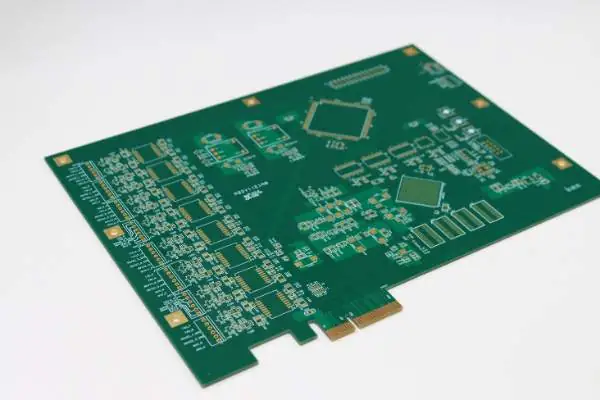
Military-grade drones are in a completely different world. Their PCBs often have to withstand extreme temperatures, severe vibrations, or strong electromagnetic interference. While ordinary consumer drones might only fly a few times before gathering dust, these industrial drones need to operate continuously for years in harsh environments. In this case, the PCB is no longer just a simple circuit connection carrier but becomes the cornerstone of the entire aircraft’s reliability. I remember chatting with an engineer who makes inspection drones. He said their biggest fear wasn’t bugs in the flight control program, but rather the circuit board suddenly malfunctioning under a high-voltage electric field—something that can’t be fixed by simply restarting.
Ultimately, a drone’s PCB is like the human nervous system—seemingly inconspicuous, yet controlling all crucial movements. Choosing the right board material, handling the BGA soldering properly, and implementing protective measures for different usage scenarios—only then does the drone truly have a “soul.” Now, every time I see those machines hovering steadily in the air, I think—behind them, there must be a meticulously crafted circuit board silently supporting everything.
Every time I see a drone hovering steadily in the sky or turning nimbly, I think about the game of balance behind it all. Many people might think the charm of drones lies in the flight itself or how clear the footage is, but I’m more concerned with the small circuit board supporting these movements. This board determines so much more than just whether it can fly.
I’ve seen some beginners rush to test fly drones, only to encounter signal interference or sudden power outages after a few flights. Later, when they disassembled them, they found the internal wiring was a mess and the heat dissipation was inadequate. Good PCB design lays the foundation for a superior flight experience. For example, the circuit layout must be compact yet avoid interference, and the components must work together like a well-trained team, with clear priorities and order.
I once chatted with a hardware friend about how their team emphasized environmental adaptability when designing an agricultural drone. Fields have high humidity and large temperature variations, so ordinary circuit boards would likely fail quickly. They focused heavily on material selection and coating processes. These details might not sound cool, but it’s precisely these seemingly insignificant adjustments that allow the drone to remain stable in various environments.
Now, drones on the market are becoming increasingly lightweight yet feature-rich, placing even higher demands on PCBs. You can’t sacrifice stability for weight reduction, nor can you ignore heat dissipation to cram in more chips. I always feel that when choosing a manufacturer, you shouldn’t just look at price or delivery time; more importantly, do they understand your application scenario? Some manufacturers may excel at consumer-grade products but easily falter when it comes to industrial-grade needs.
Another point that many people easily overlook is the ease of maintenance. Overly complex circuit board designs make repairs difficult, requiring disassembly and replacement of parts, which increases hidden costs. Good design should simplify upgrades and maintenance, not encapsulate the device like a black box.
Ultimately, the soul of a drone isn’t its shell or camera, but the board that carries all commands. Like the human nervous system, even minor errors can affect overall performance. Therefore, whether DIY or hiring a professional team, I prefer to focus more on the initial design and manufacturing stages—it’s far more cost-effective than fixing problems after they occur.
Low-altitude applications will undoubtedly become more widespread in the future, but I believe the direction of technological iteration shouldn’t just be about flying higher and farther, but about making every takeoff more reliable and worry-free. This depends precisely on whether we’re willing to invest more effort in the unseen aspects.
Recently, while researching the internal structure of drones, I discovered an interesting phenomenon: many people only focus on the drone’s external design and flight performance. In reality, what truly determines a drone’s potential is often that unassuming circuit board. I remember once disassembling an old drone and finding its PCB layout extremely chaotic, causing severe signal interference and frequent static in the image. Specifically, the power supply lines and image transmission lines were routed parallel to each other without shielding, leading to high-frequency signal crosstalk and data distortion during transmission. This fundamental design flaw was particularly common in early products and could even affect the positioning accuracy of the GPS module.
Now, leading drone manufacturers treat circuit board design as a core engineering project. I’ve met several manufacturers specializing in this area, and they even create individual files for each circuit board, recording the entire process from material selection to testing—a level of detail that is truly impressive. For example, a German manufacturer uses laser scanning technology to create 3D models of each board, precisely recording the tilt angle and amount of solder used for component welding. Any board that deviates from design standards is immediately scrapped. This near-stringent quality control system allows their industrial-grade drones to operate continuously for thousands of hours without failure in harsh environments such as mine monitoring.
Chip selection is even more critical. Some manufacturers use ordinary commercial chips to save costs, resulting in frequent malfunctions in high-altitude and low-temperature environments. The most extreme case I’ve seen is an agricultural drone that crashed into a rice paddy while spraying pesticides because its main control chip suddenly malfunctioned. Subsequent analysis revealed that the chip’s operating temperature range was 0-70℃, while the altitude temperature during operation that day had reached -5℃, causing the crystal oscillator to stop oscillating. In contrast, industrial-grade chips, although 40% more expensive, can withstand extreme temperatures from -40℃ to 85℃ and effectively resist corrosive pesticide vapors.
The truly professional approach is to consider extreme operating conditions, much like designing for spacecraft. For example, the selection of PCB materials must consider the impact of temperature changes on circuit stability, rather than simply applying standards for consumer electronics. Some high-end models use special substrate materials, which, although three times more expensive, effectively prevent short circuits caused by condensation at high altitudes. These materials typically have a moisture absorption rate of less than 0.3%, and their coefficient of thermal expansion closely matches that of copper foil, preventing through-hole breakage even under rapid temperature changes at an altitude of 5000 meters. An even more advanced approach is to coat critical circuit areas with a parylene coating, forming a micron-level waterproof barrier.
Recently, an interesting trend has emerged: more and more drones are integrating AI processing units, posing new challenges to circuit board design. Not only must heat dissipation be addressed, but electromagnetic compatibility (EMC) must also be considered, as the high-frequency oscillations of the processing chip can easily interfere with navigation signals. I noticed that some manufacturers are attempting to physically isolate digital and analog circuits using layered designs, a truly ingenious approach. For example, the AI computing unit is placed on the top layer of the circuit board with a miniature heat spreader for cooling, while sensitive components such as gyroscopes and magnetometers are placed on the bottom layer, with a ground plane providing electromagnetic shielding in between. Some designs even incorporate a “guard ring” around the chip, reducing electromagnetic leakage by more than 15dB.
The future development of drones will likely rely more heavily on circuit board miniaturization technology; after all, nobody wants to lug around a brick-sized device. However, maintaining stability while reducing size is a challenging balance to strike. I saw a prototype from a lab where they compressed the functionality that originally required seven circuit boards into four, and even added self-healing circuitry—an innovative spirit worth learning from. They used HDI technology to achieve a 50-micron linewidth and implanted a microcapsule-structured self-healing material. When a crack appears in the circuit, the capsule ruptures, releasing conductive liquid to automatically rebuild the circuit. Although this technology is not yet in mass production, it can already repair circuit damage smaller than 0.2 millimeters in a laboratory environment.
Ultimately, drones are aircraft, and safety and reliability must always be the top priority. The circuit board, as the nerve center of a drone, directly determines whether the device is safe to use.
I’ve always felt that the soul of a drone lies not in how high or far it flies, but in the seamless coordination of the circuit boards hidden within the fuselage. Especially the part responsible for signal transmission—it’s practically the heartbeat of the entire system.
I remember once disassembling an older drone and finding its image transmission module particularly fragile. Later, I realized the problem was the matching between the antenna and the RF circuitry. Many drone PCB manufacturers easily overlook a detail in their designs: insufficient clearance in the antenna area. I once saw a board with a tiny grounding via directly below the antenna, which directly caused severe signal reflection.
RF circuitry is truly a delicate art. It’s not simply a matter of drawing a few 50-ohm traces; you have to consider the impact of every corner and every via along the entire signal path. I’ve seen designs where, to save space, RF cables are routed extremely close to digital circuits, resulting in intermittent image transmission during flight. For example, when operating in the 2.4GHz band, the high-speed switching of digital signals generates abundant harmonic interference. Without sufficient isolation or shielding, this noise can contaminate sensitive RF signals through coupling effects. Even connector selection is crucial; inferior SMA connectors can introduce insertion losses as high as 0.5dB, which is fatal for long-distance transmission.
More and more drones are now using rigid-flex boards, a truly ingenious approach. Especially for moving parts, such as the connection between the gimbal and the arm, traditional rigid boards are prone to cracking due to repeated bending. However, impedance control of flexible parts is more difficult to manage; even slight deviations in material thickness can affect RF performance. In practical applications, specialized simulation software is needed to model impedance changes under bending conditions. For example, when the bending radius of the flexible part is less than 5mm, the characteristic impedance may shift by up to 10%, requiring a dynamic compensation margin in the design.
Speaking of material selection, I think many people’s excessive pursuit of thinness can actually cause problems. Especially as operating frequencies increase, the losses of ordinary FR4 boards become significant. One test revealed that switching to a specific high-frequency board increased the transmission distance by nearly one-third at the same transmit power. For example, the Rogers 4350B has a loss tangent of only 0.0037 at 5.8GHz, while ordinary FR4 may reach 0.02. This difference accumulates into a significant performance gap in multilayer board designs. However, high-frequency boards often have lower thermal conductivity, requiring additional consideration of heat dissipation path design.
Shielding measures are also a topic worth discussing. Some designs have made the shielding cover extremely thin to reduce weight, only to turn it into a radiation source during high-power operation. The ideal approach would be to isolate different frequency bands separately, rather than simply covering them with a large cover. For example, the GPS receiver circuit and the WiFi module could be isolated with separate 0.2mm thick tin-plated steel covers, with a continuous array of grounding vias designed along the edge of the cover to ensure the gap size is less than 1/20th of the wavelength of the highest operating frequency. It’s also crucial to ensure that the openings in the shielding cover do not disrupt electromagnetic continuity. A common mistake is neglecting the waveguide cutoff frequency in heat dissipation hole design.
What impresses me most is the transformative impact of advancements in HDI technology on drone design. High-density wiring enabled by micro-vias allows for tighter integration of RF modules with the main control unit. However, this also places higher demands on soldering processes, especially for BGA-packaged RF chips. Even a slight solder joint defect can lead to instability across the entire board. Modern production lines require X-ray inspection equipment to monitor solder ball void ratios, typically requiring a void area ratio not exceeding 25%; otherwise, connection failures may occur in low-temperature environments due to mismatched thermal expansion coefficients.
Over the years of flying drones, I’ve increasingly realized that a good flight experience relies on precise control of countless details. From a simple circuit board to a stable flying machine, each step requires a designer’s deep understanding of electromagnetic characteristics. This is perhaps why excellent drones always provide a seamless human-machine connection.
Recently, I was chatting with a friend who makes agricultural drones and discovered an interesting phenomenon—the flight controller their team purchased at a high price always experienced signal drift during spraying operations. Upon disassembly, we discovered the problem lay in that thin PCB.
This reminded me of a detail that many drone PCB manufacturers easily overlook: grounding design isn’t just about drawing a copper trace. Especially for agricultural drones operating in humid environments, conformal coatings only address surface issues; what truly affects signal stability are often the unseen current loops.
Last year, I tested the image transmission module of a maritime drone, and after two hours of operation in a salt spray environment, the image started to show snow-like patterns. Disassembly revealed that although waterproof sealant was used, the grounding reference point between the power and signal layers was improperly set. Moisture intrusion caused high-frequency signals to wander aimlessly.
In fact, the electromagnetic environment of drones is far more complex than we imagine. The pulse noise generated by the motor speed controller can erratically propagate along the power supply lines, while the flight control sensors collect signals at the microvolt level. I once saw a design where the power ground and digital ground were directly connected, resulting in a GPS module positioning error of over ten meters.
Many manufacturers now like to pile on shielding covers and filter capacitors, but the most fundamental grounding strategy is neglected. It’s like building a house and only focusing on decorating the walls while forgetting to lay the foundation. The smartest approach I’ve seen is to create a separate grounding island below the IMU sensor and connect it to the main ground using a ferrite bead. This simple modification improved the stability of attitude data by three times.
The real test of drone PCB design skill often lies in handling details in extreme scenarios. For example, when a chemical inspection drone encounters volatile gases, a difference of a few micrometers in the thickness of the conformal coating can cause solder pad corrosion, and the grounding path planning determines whether electrostatic discharge is smooth.
Sometimes I feel the drone industry’s pursuit of feature iteration has led to a neglect of fundamental design principles. Like that friend who works in agricultural drones, who ultimately found that optimizing the PCB layout was more effective than replacing components with more expensive ones—that’s probably the charm of engineering design.
I’ve seen too many drones fail due to PCB issues. Once, during a test flight in the countryside, one suddenly went out of control and crashed. Upon disassembly, we discovered that a capacitor on the main control board had broken off a leg—this thing had just passed factory testing. Later, talking with some hardware friends, I realized that many drone PCB manufacturers focus on lightweight design, neglecting the damage to the circuit board caused by the continuous vibrations from the motors during flight.
In fact, drone vibration is like a chronic illness; it won’t kill you immediately, but it slowly erodes your health. Those reinforcing adhesives with component labels will become brittle over time due to temperature differences. I prefer to cram large components into the center of the board during the layout stage and then use flexible brackets to secure the board itself. A team making agricultural drones tried this method, and their machines could withstand continuous vibrations for hours while spraying pesticides without malfunctioning.
Temperature fluctuations are the real killer. Last summer, I took my equipment to test in the Northwest desert. At midday, the ground temperature was hot enough to cook an egg, but after flying 500 meters, it instantly dropped to the teens. When I checked the PCB afterward, I found that a corner of a BGA-packaged chip had slightly warped—the forces of thermal expansion and contraction between different materials are much stronger than we imagine.
Now, seeing some manufacturers advertising “ultra-thin PCBs” makes me nervous. Slimming the PCB too much is like removing a load-bearing wall from a house; it will definitely sway violently in strong winds. Good design should be like Tai Chi, both dissipating vibration energy and maintaining structural stability. Last time I disassembled a flagship drone, I noticed they even placed a silicone cushioning pad under the gyroscope chip; this kind of attention to detail shows true expertise.
Ultimately, drone PCBs aren’t lab art; they need to withstand the elements in real-world environments. Instead of piling on high-end materials, it’s better to solidify the basic design, such as optimizing the screw hole distribution to evenly distribute vibrations. After all, nobody wants their drone to become a drifting leaf, right?
I’ve always felt that the most fascinating aspect of drones isn’t how high or far they can fly, but rather the small details hidden within their fuselage. Especially those seemingly ordinary circuit boards—they are the true key to the flight experience.
I remember once testing a new model. Even though the parameters met the specifications, the response always felt a beat slow during flight. Later, I discovered the problem was in the current sampling circuitry of the ESC board. The line responsible for collecting the current signal was too close to the high-current trace, causing the readings to always contain subtle interference. This interference was almost imperceptible during static testing, but once the drone made a rapid turn or climb in the air, the current data received by the control system would deviate, and the flight attitude would become hesitant.
This incident made me realize how important it is to choose a reliable drone PCB manufacturer. They not only need to understand circuit design but also the dynamic requirements of flight. For example, the layout of the flight controller board cannot simply copy the design of a mobile phone motherboard; it must consider the unique operating environment of a drone.
I’ve seen some manufacturers, in order to save costs, cramm various functional modules onto a single board. As a result, the GPS antenna is right next to the motor drive circuit, and the navigation signal is interfered with every acceleration. This is as unrealistic as trying to hear a whisper in a market.
A good PCB design should be like a meticulously planned urban transportation system. High-current channels are like highways, needing to be wide and smooth; control signals are like urban expressways, needing to be unobstructed; and precision measurement circuits like current sampling need to be like dedicated bike lanes, maintaining connection to the main roads while avoiding interference from motor vehicles.
A recently tested industrial-grade drone does this very well. Its flight controller board places the IMU sensor at the center of its motion, surrounded by a copper foil isolation zone, like building a quiet, detached villa for the core sensor. The ESC board further minimizes the power circuitry, with the input capacitor almost flush with the MOSFET, significantly reducing parasitic inductance.
These meticulous details ultimately translate into improved flight quality. When you control the drone to perform complex maneuvers, you can clearly feel its crisper and more responsive action, without that subtle lag. This difference is like the difference between driving a regular family car and a professional race car—on the surface, they both have four wheels and a steering wheel, but the internal mechanical tuning makes the driving experience worlds apart.
So next time you choose a drone, don’t just look at surface parameters like flight time and payload capacity. Ask more about the design philosophy of the circuit boards and understand the layout logic of the key subsystems. These hidden gems of intelligence within the drone are the true soul that determines flight quality.
I’ve always found what’s particularly interesting about drones is that they manage to function stably within such a small space, packed with a bunch of complex electronic components. I remember the first time I disassembled a friend’s aerial drone; the densely packed circuit boards reminded me of taking apart a radio as a child—except the technology is on a completely different level now.
When talking about the core components of a drone, many people first think of the flight control system or the camera module, but I’ve found that what truly determines flight stability is often the seemingly insignificant circuit board design. Especially the board that powers the motors, which has to handle both high current and high-frequency signal interference—it’s like trying to transport both fire-fighting water and drinking water through a single pipe without them contaminating each other.
I once participated in an improvement project for an agricultural spraying drone. The team discovered signal jitter after every twenty minutes of flight. After much troubleshooting, they found a problem with the power management board’s heat dissipation design. Under direct sunlight, the materials of ordinary PCBs simply couldn’t withstand the high temperatures. The problem was only solved after switching to a professional drone PCB manufacturer and redesigning the circuit layout.
Many manufacturers are now pursuing thinner and lighter designs, but this leaves increasingly limited space on the PCB. I’ve seen products where, to reduce thickness, multiple circuit boards are stacked together, resulting in increased electromagnetic interference. Good design should be like urban planning, considering both functional zoning and sufficient buffer zones, especially ensuring proper isolation between high-frequency signals and power circuits.
Recently, while helping a friend choose a drone, I noticed a phenomenon: some brands emphasize the number of PCB layers or special substrates they use. However, actual testing revealed that more layers don’t necessarily mean better performance; the key is a reasonable circuit layout. Just like writing an article, a clear and concise expression is worse than flowery language.
What fascinates me most about drone PCB design is the need to balance so many conflicting demands: lightweight yet robust, efficient yet stable. This kind of innovation under extreme conditions best showcases the ingenuity of engineers. Whenever I see a teardown video of a new drone, I always pay special attention to the clever circuit design; it’s much more interesting than simply comparing flight parameters.
Circuit boards are more than just that green board in a phone
From disassembling old routers to visiting electronics manufacturing plants, I gradually realized
As an electronics enthusiast, I’ve come to understand firsthand the impact of
- Experto en producción de lotes pequeños y medianos
- Fabricación de placas de circuito impreso de alta precisión y montaje automatizado
- Socio fiable para proyectos electrónicos OEM/ODM
Horario comercial: (de lunes a sábado) De 9:00 a 18:30