

From Novice to Expert: Sharing My Experience in Pin Header PCB Selection
As an electronics enthusiast, I’ve come to understand firsthand the impact of
I recently chatted with a few friends working in hardware development and noticed an interesting phenomenon: nowadays, many startup teams tend to fixate solely on lists of top-ranked manufacturers when choosing a PCB supplier. In reality, those globally ranked PCB companies aren’t necessarily the right fit for every project.
I recall that last year, while developing a smart home device, we tried to engage a major manufacturer to produce our HDI boards; their immediate demand was a minimum order quantity of 5,000 units. For a project like ours—which involves rapid, small-batch iterations—having 3,000 boards sitting in a warehouse that can no longer be revised is an absolute nightmare. We later turned to a medium-sized factory, which proved to be far more flexible.
One common misconception is that the more advanced the fabrication process, the better. In practice, if a standard multi-layer board can solve the problem, there is no need to force the use of overly complex technologies. I’ve seen teams—driven by a desire for impressive technical specifications—design even simple sensor boards as 8-layer HDI assemblies. Not only did the cost triple, but the production yield rate actually dropped.
What matters most today is a supplier’s ability to align with your R&D timeline. During a recent project involving a medical wearable, we faced an urgent production request; our partner factory immediately dedicated an entire production line to accommodate our trial run. That level of responsiveness is far more valuable than any abstract technical specification.
Ultimately, choosing a PCB supplier is a bit like choosing a spouse: you can’t just look at their family background or reputation; you have to see if you can actually build a life together. Major manufacturers certainly have their advantages, but compatibility is far more important than prestige. Sometimes, small to medium-sized factories can offer you a level of flexibility you never expected.
I recently chatted with a few friends working in hardware development and noticed an interesting phenomenon—many startup teams these days immediately insist on designing their products using 8-layer or 10-layer PCBs right out of the gate. This reminds me of the very mistakes I made myself five years ago when I was just getting started in the hardware world. Back then, our team insisted on using six-layer PCBs for our smart home devices, believing it was the only way to guarantee stable performance. As a result, our costs doubled overnight, and we even ran into shortages of board materials. Later, we switched to four-layer boards combined with an optimized layout; we discovered that this had absolutely no negative impact on functionality—in fact, it gave our product a distinct price advantage.
Looking back now, I see that the PCB companies with true longevity are often the ones that understand the art of balance. They know exactly when to deploy advanced HDI technology and when a standard double-sided board will suffice.
I was particularly impressed by a client of ours that manufactures industrial sensors. Their products are designed to operate in environments as cold as -40°C, yet they insisted on a solution utilizing a four-layer board with a specialized coating—rather than blindly stacking more layers. This deep understanding of the specific application scenario is, in my view, the true core competence.
In reality, multi-layer PCBs are much like clothing: simply having more layers isn’t necessarily better; the key is finding the perfect fit. I’ve seen far too many teams squander their resources on over-engineering, only to neglect far more critical aspects such as thermal management and interface optimization.
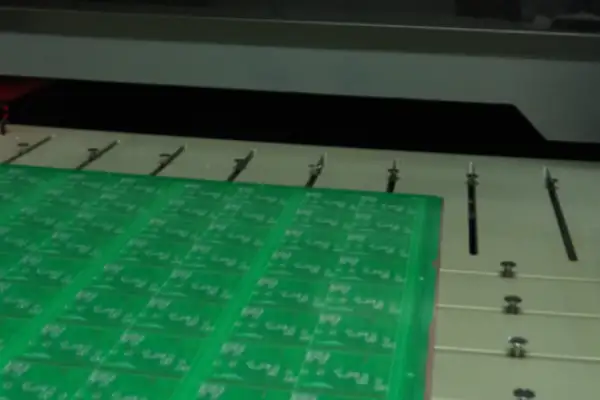
Recently, while helping to select a vendor for a medical device project, we evaluated five different suppliers. We discovered that while there are indeed plenty of manufacturers capable of producing twenty-layer boards, it is far more difficult to find one that can achieve absolute precision in impedance control on a standard four-layer board. This level of precision manufacturing capability represents the true barrier to entry in our industry.
Sometimes I find myself thinking: perhaps what this industry lacks most isn’t factories capable of producing boards with ever-increasing layer counts, but rather engineers with the wisdom to say, “Actually, for this specific design, a double-sided board is all you really need.”
I recently chatted with a few hardware-focused friends about the latest trends in the PCB industry, and we observed a rather interesting phenomenon: while many manufacturers today are chasing the elusive goal of offering “one-stop shop” services, very few actually possess the expertise to truly master—and seamlessly integrate—these diverse technological approaches.
I recall a visit to a factory owned by Dongshan Group, where their flexible circuit production line left a lasting impression on me. The sheer precision with which their equipment operated served as tangible proof of their deep-seated expertise in precision manufacturing. However, what intrigued me even more was how they managed to genuinely integrate the various technological systems they had acquired through mergers and acquisitions—after all, the challenge of integrating technology you’ve purchased is an entirely different beast than integrating technology you’ve organically developed in-house.
Speaking of which, I’ve come to realize that the greatest challenge currently facing domestic PCB companies isn’t merely catching up technologically, but rather establishing a sustainable mechanism for continuous innovation. For instance, some companies invest heavily in R&D for substrate materials, yet they consistently lag a step behind when it comes to actually translating those innovations into mass production. This reminds me of a scene I witnessed at an industry trade show last year: two different companies were showcasing their high-end HDI technologies, yet while one was able to present fully mass-producible samples, the other remained stuck firmly in the laboratory phase. In reality, what users care about most is never how flashy your technology is, but rather whether you can deliver consistently and reliably. Some procurement managers I’ve worked with often say they would rather choose a supplier with slightly inferior technology—provided they deliver on time—than one with cutting-edge tech but unreliable delivery schedules. This pragmatic attitude clearly demonstrates that, in this industry, reliability takes precedence over technological advancement.
I’ve recently noticed a trend: an increasing number of end-product manufacturers are beginning to participate in the formulation of upstream material standards. While this deep integration helps ensure supply chain security, it may also limit the scope for technological innovation among PCB manufacturers. Finding the right balance between meeting client demands and pursuing independent R&D will likely be a critical factor in future industry competition.
Sometimes, I feel that the greatest allure of this industry lies in its constant state of flux. Yesterday, we were discussing thermal management issues for 5G base station boards; today, we’re already grappling with reliability standards for automotive electronics. This rapid pace of iteration is a characteristic that is simultaneously headache-inducing and full of opportunity.
I’ve always found the process of selecting a PCB supplier to be quite fascinating. Many people tend to focus primarily on price and technical specifications—factors that are, of course, important. However, I’ve discovered that what truly determines the quality of a partnership is often found in those less quantifiable aspects—for instance, a supplier’s attitude toward problem-solving. On one occasion, we encountered a minor design issue. Strictly speaking, it wasn’t their responsibility; yet, the engineers at that PCB company took the initiative to help us tweak the design solution and even offered suggestions for further improvement. That willingness to “go the extra mile” left a lasting impression on me.
The PCB market is currently crowded with suppliers, making for fierce competition. Every company claims to offer superior technology at lower prices, yet very few actually evolve into true long-term partners. I’ve come to realize that selecting a PCB supplier requires looking beyond mere hardware capabilities and technical specifications. Far more important is whether the two parties can establish a genuine rapport and mutual understanding. Some companies may not possess the absolute cutting-edge technology, but they possess a profound understanding of our specific needs—they know exactly what matters to us and what keeps us up at night. This level of insight and understanding is far more valuable than technical metrics alone.
Ultimately, product development comes down to the details. And those details often hinge on the capabilities and reliability of your partners. A good PCB supplier can help you craft a product that is more refined and robust—qualities that directly impact the end-user experience. Users may not be able to articulate exactly why, but they simply find your product intuitive and satisfying to use. This subtle yet distinct difference constitutes a vital component of your competitive edge.
I’ve witnessed far too many companies constantly switching suppliers in an attempt to save a few pennies, only to end up derailing their major projects. Building a stable, enduring partnership takes time and effort to cultivate, but it is an investment well worth making. After all, product development isn’t a one-off transaction; it demands sustained support, continuous improvement, and a collaborative spirit. Sometimes I wonder why certain small companies are able to create products that truly dazzle, while large corporations often appear cumbersome by comparison. Perhaps it is simply because these smaller firms have found the right partners and established highly efficient modes of collaboration. The flexibility and focus that stem from such collaboration constitute an advantage in and of themselves.
Ultimately, finding a PCB supplier is much like recruiting a teammate: merely reviewing a resume is futile; you must actually work together to discover whether you are truly a good fit.
I have always found the process of selecting a PCB supplier to be quite fascinating. Many people begin by listing a host of technical specifications and compiling comparison charts—how many layers the board requires, the minimum line width, the presence of specific certifications, and so on—as if simply filling out a spreadsheet were sufficient to identify the perfect partner. In reality, however, this endeavor is far more akin to seeking a collaborator than merely purchasing a component.
I recall a specific project where we required a rigid-flex PCB utilizing high-frequency laminates. We approached several manufacturers whose technical specifications appeared impeccable on paper. Yet, we discovered that while one particular vendor possessed state-of-the-art equipment, their engineers’ understanding of signal integrity remained entirely theoretical. They could readily present various UL certifications and ISO certificates, but during the actual prototyping phase, they struggled to grasp even the fundamental principles of impedance matching; despite five or six rounds of revisions, they failed to meet our requirements. Conversely, a smaller-scale manufacturer—whose technical director personally led the team—spent two full days in the lab fine-tuning parameters, ultimately delivering a solution that proved even more stable than our original design.
Consequently, my perspective on evaluating PCB companies has shifted. While technical specifications—such as process capabilities and precision parameters—are certainly essential considerations, they serve merely as the “admission ticket.” The true determinants of a successful partnership are often those intangible qualities that do not appear in spreadsheets—such as a team’s willingness and capacity to solve problems, or their fundamental attitude toward challenges: do they deflect blame, or do they proactively take ownership?
Speaking of certification systems, I believe many enterprises today have completely inverted their priorities regarding this matter. A wall festooned with certificates does not automatically guarantee superior quality. I once visited the facility of a moderately well-known company; while their workshop walls were plastered with various certification logos, the operational protocols on their assembly lines were executed haphazardly, and the workers’ understanding of the relevant standards was vague at best. Such superficial window-dressing proves utterly unreliable in the context of actual production.
Conversely, certain small-to-medium-sized PCB enterprises—though they may lack an abundance of flashy certificates—demonstrate profound expertise in specific technical processes. For instance, one manufacturer specializing in automotive electronics possesses a particularly sophisticated methodology for handling thermal management materials—so much so that even established industry giants like Shennan Circuits have sought them out to exchange technical insights. This kind of tangible, hard-earned expertise carries far more weight than any glossy marketing brochure. Ultimately, when selecting a partner, I place the greatest value on their responsiveness and problem-solving logic when issues arise. While technology can be iterated upon and equipment can be upgraded, the sincerity and capability demonstrated in resolving problems constitute the true bedrock of a long-term partnership—a quality far more tangible than any formal certification.
During recent conversations with friends involved in hardware development, I noticed an interesting phenomenon: many people’s perception of PCB companies remains stuck at the level of mere contract manufacturers. In reality, modern PCB manufacturers have long since evolved beyond the simple task of merely accepting orders and executing production.
I recall a challenge our team faced last year while designing a smart home controller: we needed to ensure signal integrity while simultaneously keeping costs under control. After consulting with several PCB companies at the time, we discovered that their engineering teams were far more professional than we had anticipated. One company went so far as to completely optimize our routing scheme; drawing upon their extensive manufacturing experience, they fine-tuned the impedance matching design—a move that not only enhanced performance but also saved us the cost of two additional board layers.
Looking back, I realize this is precisely where the true value of an exceptional PCB company lies. They no longer act as passive executors of a design but instead proactively offer expert advice from the manufacturing perspective. This is particularly critical in the realm of high-frequency and high-speed circuits, where manufacturers possessing years of accumulated process expertise are often able to identify practical issues that designers might easily overlook.
I have also observed a distinct trend: an increasing number of electronics brands are beginning to view their PCB suppliers as R&D partners rather than mere outsourced vendors. After all, given the rapid iteration cycles of modern electronics—ranging from wearable devices to new energy vehicles—the demands placed on circuit boards are becoming increasingly rigorous. Simply striving for narrower line widths and tighter spacing is no longer sufficient; manufacturers must now also address factors such as thermal management, material selection, and even environmental compliance standards—all of which require a deep reservoir of technical expertise.
One specific detail left a lasting impression on me: a particular PCB company specializing in automotive electronics actually maintains its own in-house EMC laboratory. Their engineers proactively assist clients by conducting electromagnetic compatibility testing—a level of service that would have been virtually unimaginable in the past. This clearly demonstrates that the industry is undergoing a fundamental transformation, shifting its focus from pure manufacturing toward the provision of technical services.
Of course, not every company is capable of keeping pace with this evolution. Some established manufacturers continue to cling to traditional methodologies, but the market space available to them is rapidly shrinking. After all, even consumer electronics products are now frequently required to pass automotive-grade testing standards; consequently, any supplier lacking the capacity for technological upgrading will soon face obsolescence.
I believe that the PCB companies destined to survive and thrive in the future must possess two essential attributes: first, the boldness to make sustained investments in R&D; and second, the agility to respond rapidly to shifting market dynamics. A prime example is the current surge in demand for AI servers, where manufacturers who had the foresight to position themselves early in the high-speed board materials sector have successfully seized the competitive advantage.
Ultimately, this industry is currently undergoing a quiet revolution. In the past, the competition centered on production capacity and pricing; now, the focus has shifted to technological reserves and service capabilities. As hardware professionals, we, too, must adjust our mindset: by viewing manufacturers as partners in collaborative problem-solving, we may unlock unexpected innovative breakthroughs.
While chatting with several friends in the hardware sector recently, I noticed an intriguing phenomenon: the PCB industry began heating up much sooner than anticipated. Three years ago—when everyone was still debating the construction cycle for 5G base stations—I observed that some PCB manufacturers had already begun reconfiguring their production lines. For instance, they were gradually shifting their capacity away from standard double-sided boards and toward high-layer-count substrates and specialized material applications.
A friend working in industrial automation complained to me last month that, nowadays, even simple motor driver boards require six-layer substrates due to increasingly stringent electromagnetic compatibility (EMC) requirements—something that would have been utterly unthinkable just five years ago. In reality, this shift is driven by the broader demand for supply chain upgrades, which compels PCB manufacturers to proactively build up their technological capabilities ahead of time.
I observed a particularly telling detail: while attending an electronics trade show last year, I noticed that several leading manufacturers had placed samples of IC packaging substrates in the most prominent spots at their booths, whereas standard PCBs—the staples of traditional consumer electronics—had been relegated to supporting roles. This shift in exhibition focus speaks volumes: high-end technology is emerging as the new competitive arena within the industry.
I recall visiting a factory that supplies components for new energy vehicles; one of their engineers pointed to a PCB within a battery management system and explained that their biggest headache wasn’t the circuit design itself, but rather how to achieve superior thermal dissipation performance within a strictly limited thickness. They subsequently experimented with a hybrid lamination process utilizing metal-core substrates; although this increased costs by 30%, it actually boosted their yield rates. Such trade-offs are becoming increasingly commonplace in today’s landscape.
This trend is even more pronounced in the realm of flexible circuits. Last year, while helping a friend’s company evaluate a solution for smart wearables, we discovered that for sensors performing identical functions, the performance gap between using a traditional rigid board versus a flexible board could exceed 40%. This reminded me of the rapid evolution we’ve witnessed—from the flexible keypad membranes found in early mobile phones to the sophisticated FPC technology powering the hinges of today’s foldable screens; the pace of technological iteration is far outpacing our initial expectations.
At times, it feels as though the PCB industry is engaged in an arms race with no visible finish line: yesterday, the conversation revolved around HDI micro-vias; today, we are already grappling with the new challenges posed by advanced chip packaging. Yet, viewed from a different perspective, this state of perpetual evolution is precisely what keeps this traditional industry vibrant and dynamic. While chatting recently with a few friends in the hardware industry, I noticed an interesting phenomenon: finding a PCB supplier these days is a bit like opening a “blind box.” On the surface, the technical specifications look nearly identical, yet the quoted prices can vary by a factor of three. Some people complain that their prototyping runs are constantly plagued by failures, while others—using the exact same design—manage to achieve top-tier performance. This reminded me of the pitfalls I encountered last year when I was helping my team select components and suppliers.
At the time, we were working on an AI accelerator card project that required a 20-layer PCB. Several well-known PCB manufacturers submitted proposals filled with grandiose claims and flowery rhetoric. However, when we actually received and tested the samples, the problems quickly came to light. One vendor’s impedance control was an absolute disaster; the signal integrity was actually worse than what we’d seen on an 8-layer board. Another vendor boasted about their “thick copper” technology, yet during thermal testing, they ended up overheating the chip to the point where it had to throttle its clock speed. The vendor we ultimately selected, however, didn’t make any claims about proprietary “black magic” technologies; instead, they simply focused on the fundamentals—meticulously controlling the tolerance of every single via to within 0.05mm, and even providing real-time monitoring data on the thickness consistency of the immersion gold plating.
This experience made me realize that what the industry lacks most right now isn’t flashy, high-tech wizardry, but rather the patience to execute fundamental manufacturing processes to absolute perfection. Many companies are so busy chasing the latest trends—such as developing specialized boards for AI applications—that they fail to guarantee even the most basic requirements, like consistent trace width. I once visited a supply chain factory and watched them use a microscope to conduct spot checks on the precision of their solder mask openings; that level of meticulousness and rigor was far more reassuring than anything I’d ever read in a marketing brochure.
In reality, a truly reliable supply chain partnership is much like a seasoned practitioner of Traditional Chinese Medicine taking a pulse: one must look beyond the mere list of equipment to discern the underlying logic of quality control. For instance, when working with high-frequency materials, some manufacturers rely solely on imported machinery to brute-force the technical specifications, while others fine-tune their lamination curves based on the specific characteristics of the substrate. I once observed a veteran craftsman who could determine—simply by rubbing his fingers against the base material—whether its glass transition temperature met the required standards. Such experience is something that even the most sophisticated AI can never replicate.
Nowadays, some clients are quick to demand “domestic substitution” at every turn. However, I believe the critical factor isn’t the country of origin, but rather the depth of technical expertise and accumulated experience. During a comparative test, we discovered that the moisture and heat resistance of a halogen-free PCB board from a small domestic factory actually outperformed that of a product from a major international brand. This was because they had specifically adjusted their resin formula to suit the humid monsoon climate of southern China. Conversely, some factories that jumped on the “green manufacturing” bandwagon merely to follow the trend—despite possessing a full suite of certifications—actually had production lines where the wastewater recycling rate fell below 30%.
Ultimately, choosing a PCB supplier is much like choosing a spouse: simply focusing on the “dowry” (the price tag) is futile; what truly matters is whether they can consistently handle the small details with excellence, day in and day out, for decades to come. The factory we recently partnered with includes a detailed production line inspection log with every delivery—even clearly listing the employee ID numbers of the operators involved. This level of operational transparency offers far more peace of mind than any mere verbal promise. After all, when your product needs to survive five years running in a desert environment—or operate 24/7 in a server room—you realize that the meticulous craftsmanship hidden within those millimeter-scale details is the true “moat” protecting your product’s reliability.
While chatting with several friends who work in hardware development recently, I noticed an interesting phenomenon: the criteria we use to select PCB suppliers have fundamentally shifted. In the past, our primary concern was driving the price down to the absolute lowest possible limit; now, however, we place far greater value on a supplier’s ability to deliver reliably and avoid “dropping the ball” during critical moments.
I recall a project last year where we engaged a small factory that offered a particularly enticing quote. The result? The sample production phase alone dragged on for a full three weeks. The person in charge there would promise, “We’ll definitely ship it tomorrow,” day after day—until, by the end, they had completely run out of creative excuses. That experience drove home the realization that, for teams genuinely focused on bringing a product to market, the delivery schedule is infinitely more important than the numbers listed on a price quote.
Nowadays, whenever I interact with PCB manufacturing firms, I pay close attention to the pace and quality of their responsiveness. For instance, if I send a technical inquiry, I observe whether they reply within two hours or wait two days to send back a generic, templated response. Suppliers who can quickly grasp our requirements—and even proactively propose alternative solutions—tend to make for much smoother long-term partners. On one occasion, we urgently needed to adjust a specific trace width; a manufacturer in Shenzhen immediately set up a dedicated technical group chat and provided three viable solutions within just half an hour. That level of collaborative efficiency helped us shorten the entire project cycle by a full third.
In fact, many small-to-medium-sized PCB enterprises actually possess a distinct competitive advantage when it comes to flexibility and agility. Last month, we needed to conduct a small-batch test run for some specialized circuit boards. The major manufacturers we approached turned us down, deeming the order quantity too small to be worth their while. However, a supplier specializing in medical equipment not only accepted the job but also helped us optimize the design of our heat dissipation vents. Their owner remarked that, while the order was small, it offered an opportunity to gain experience with specialized manufacturing processes—a forward-looking perspective that I found truly admirable.
Given the recent volatility in global material markets, I place an even greater premium on supplier transparency. A reputable PCB manufacturer will proactively inform you if the lead time for a specific substrate is likely to be extended and recommend alternative solutions; others, however, wait until the very last day to notify you of material shortages. The former allows you to adjust your design in a timely manner, whereas the latter can completely derail your product’s entire market launch window.
I view the process of finding a supplier today much like recruiting a teammate: simply tallying the number of machines they own isn’t enough. The critical factor is how they interpret the concept of “delivery”—do they merely fabricate the boards and ship them out, or do they treat the client’s time constraints and pressures as if they were their own? One manufacturer I worked with even included microscopic photographs of the solder joints in the shipment package—a level of attention to detail that offers far more reassurance than any glossy marketing brochure ever could.
Ultimately, the greatest cost in hardware entrepreneurship is not financial; it is temporal. Choosing the right PCB partner can spare you countless late nights spent “firefighting” and allow you to channel your energy where it truly belongs: into product innovation. After all, when your circuit boards arrive on the production line exactly on schedule, the trivial cost savings you might have squeezed out during price negotiations become utterly insignificant.
While recently discussing evolving trends in the PCB industry with several friends in the hardware sector, I observed an intriguing phenomenon: many small-to-medium-sized PCB enterprises are now shifting their focus toward providing deeply customized services within specific niche domains. This stands in stark contrast to the situation a few years ago, when everyone was rushing en masse to chase after sheer mass-production scale.
A manufacturer in Shenzhen with whom I’ve worked serves as a prime example of this shift. They originally specialized in standard PCBs for consumer electronics; however, about two years ago, they abruptly pivoted toward the medical device sector, specifically dedicating themselves to developing high-reliability substrates for cardiac pacemakers. This transformation was, in essence, driven by market demand compelling the company to reorient its strategy: profit margins on orders for standard consumer electronics were becoming increasingly razor-thin, whereas the stringent requirements for packaging processes and material stability inherent in medical devices effectively created a natural technical barrier to entry.
Many PCB companies across the Pearl River Delta region are now more inclined to accept orders that are smaller in volume but high in technical complexity—such as customizing specialized RF circuits for research institutions or developing heat-resistant substrate materials for industrial robots. This strategic pivot reminds me of the path taken by Taiwanese manufacturers in earlier decades, though today’s mainland Chinese enterprises demonstrate a distinct advantage in their ability to leverage local supply chains to facilitate rapid product iteration. Interestingly, companies in the Yangtze River Delta region have actually discovered new opportunities within the automotive electronics sector. During a visit to a factory in Suzhou last week, I observed them conducting trial production of multi-layer rigid-flex PCBs designed for autonomous driving systems. These boards must simultaneously satisfy stringent vibration resistance requirements and high-frequency signal transmission standards—criteria that traditional PCB manufacturing processes simply cannot meet. The engineers informed me that their recently developed embedded resistor technology enhances the circuit board’s stability in extreme environments by more than threefold.
The experiences of Japanese companies are certainly worth re-examining. Their almost obsessive dedication to materials science has indeed fostered a sense of indispensability; for instance, a specific Japanese firm specializes in high-frequency substrates capable of maintaining signal integrity in the millimeter-wave scenarios of 5G base stations. However, this technological path demands long-term investment and is ill-suited for a market environment that prioritizes rapid returns.
The Korean model, on the other hand, offers a different kind of insight. Samsung Electro-Mechanics’ strategy—which integrates semiconductor packaging with PCB manufacturing—is undeniably efficient, yet it presupposes seamless coordination across the entire supply chain. I believe domestic enterprises would be better served by initially seeking breakthroughs in niche segments—perhaps by first mastering a specific type of packaging substrate before gradually expanding their technological horizons.
Ultimately, modern PCB manufacturing is no longer merely about circuit fabrication; it requires a deep understanding of the end product’s actual application scenarios. I was particularly intrigued by a waterproof circuit board designed for agricultural drones by a company in Wuhan; they not only refined their packaging processes but also developed specialized surface treatment technologies to withstand the corrosive effects of pesticides. This type of innovation—closely aligned with practical, real-world needs—is where true competitiveness lies.
I recently discussed the process of sourcing suppliers with several friends in the hardware industry and noticed that many tend to fall into a common trap when selecting PCB manufacturers: they focus excessively on pricing and technical specifications while overlooking more fundamental factors. In the context of a global supply chain, selecting a PCB supplier is less about a simple buyer-seller transaction and more about finding a long-term partner with whom you can fight side-by-side.
I recall a project our team undertook last year where our original domestic manufacturing partner suddenly faced severe capacity constraints, forcing us to make a last-minute switch to a PCB manufacturer in Southeast Asia. Although their quoted price was 15% lower, our communication efficiency plummeted; even a minor design tweak required three days of back-and-forth confirmation. Consequently, the product launch was delayed by two weeks—resulting in financial losses that far exceeded the initial cost savings. This experience taught me a valuable lesson: hidden costs—such as time zone differences and language barriers—are often far more critical factors to guard against than the figures listed on a price quote.
Nowadays, I place a particularly high premium on a supplier’s crisis management capabilities. For instance, during the pandemic, a PCB manufacturer in Taiwan proactively adjusted its production processes when raw material supplies were cut off, utilizing its existing inventory to help us keep our production lines running. This capacity for flexible adaptation is, in fact, the most valuable asset within a globalized supply chain.
Some of my industry peers remain fixated on finding suppliers with the “most cutting-edge technology”; personally, however, I believe that compatibility is far more important. Automotive electronics demand extreme reliability; consumer electronics prioritize rapid iteration; and medical devices emphasize comprehensive certification. Rather than blindly chasing technical specifications, it is wiser to first clearly define exactly what your product truly requires. It is akin to fitting snow tires onto a sports car: no matter how advanced the technology may be, it is ultimately a waste if applied in the wrong context.
I have recently observed a distinct trend: an increasing number of PCB companies are beginning to disperse their production capacity across different continents. While this strategic layout may appear to increase management overhead, it actually serves to significantly enhance their resilience against risk. Much like the adage about not putting all your eggs in one basket, this approach ensures that should a natural disaster or trade fluctuation strike a particular region, other facilities can immediately step in to fill the gap. This kind of operational resilience may well prove to be even more valuable than mere technological superiority.
Ultimately, selecting a PCB supplier is not simply a matter of making a multiple-choice decision; rather, it is about building an ecosystem designed for mutual growth. The ideal partner is not necessarily the largest one, but rather a collaborator who truly understands your business logic and is willing to adjust their pace and processes to align with your specific needs. After all, in a rapidly shifting market landscape, having a partner capable of pivoting flexibly alongside you is more important than anything else.
As an electronics enthusiast, I’ve come to understand firsthand the impact of
Why is green the universal choice for circuit boards? Behind this seemingly
Through conversations with industry peers, I’ve discovered that many people hold misconceptions
- Experto en producción de lotes pequeños y medianos
- Fabricación de placas de circuito impreso de alta precisión y montaje automatizado
- Socio fiable para proyectos electrónicos OEM/ODM
Horario comercial: (de lunes a sábado) De 9:00 a 18:30