

Why the Best PCB Supply Chains Are Built Like Relationships, Not Transactions: Lessons for Satellite Communication PCB Programs
What actually makes a long-term PCB supply chain partnership work — shared
Over the years in hardware development, I’ve gradually noticed a phenomenon: many people treat rapid prototyping as a firefighting tool. When a circuit board has a problem, they quickly find a factory that can expedite the process and try to redesign it. This approach is actually quite passive.
A Quick Turn PCB Assembly service provider I worked with changed my perspective. Their engineers proactively checked the design files before placing an order. I remember one detail clearly: a chip package was drawn backwards; if they produced according to the original drawing, the entire batch of boards would have been scrapped. This early intervention saved at least a week compared to rework afterwards.
True speed isn’t simply about compressing the production cycle, but about spending time wisely. Now, my team moves the procurement process to the design stage, synchronizing it with the design phase. For example, when selecting components, we prioritize those with ample inventory rather than stubbornly sticking to a specific model. Sometimes, switching to a pin-compatible model can save two or three weeks of lead time.
Speed and quality are never mutually exclusive. Last time, when we were rushing a project, we tried a new supplier. They broke down the surface mount inspection process into three rounds of sampling, and surprisingly, they delivered half a day ahead of the traditional full inspection. This flexible quality control approach surprised me.
Recently, I’ve been trying to integrate rapid prototyping into the product iteration cycle. I schedule two small-batch updates each month, testing new features and collecting user feedback. This small-step, fast-paced approach is actually more reliable than waiting for a major overhaul.
Ultimately, rapid turnaround hinges on the collaborative capabilities of the entire supply chain. Squeezing in even a little time at each stage—from design to procurement to production—creates a significant advantage.
Recently, while tidying up my studio, I unearthed a pile of old circuit boards. Some were yellowed with age. Looking at these old components, I suddenly realized how much easier hardware development has become. Previously, a small-batch trial production could take half a month. Now, with the right supplier, you can have the finished product in a few days.
I remember last year, a smart home project required fifty sets of samples. We chose a service provider specializing in Quick Turn PCB Assembly. Their biggest advantage was their comprehensive component inventory. They could get most common resistors, capacitors, and inductors directly from their shelves. This saved us at least a week of procurement time.
However, the most troublesome aspect of rapid turnaround services is component matching. Once, we used a rare sensor in our design, and the supplier was stuck for three days trying to procure it. We learned our lesson. Now, we ask them to confirm inventory availability before even starting the schematic design phase.
Many people easily overlook a detail—panel design has a greater impact on delivery time than they realize. Last time, we designed five small boards with stamp-hole connections. The supplier immediately said this design would add two days of work time because their test fixtures needed to be custom-made. So now, we always incorporate testing strategies into the layout design beforehand.
Speaking of testing, I don’t think it’s necessary to pursue 100% coverage for bulk orders. In a previous project, we added several test points at critical signal nodes, along with power supply short-circuit checks. This already eliminated over 90% of the problems. Over-testing actually slows down the overall progress.
Now, after working with suppliers for a while, we’ve found that trust is more important than contract terms. For example, once a board arrived and we found a resistor value was incorrect. The supplier arranged for rework that same day and covered all the extra costs. This responsible attitude makes us willing to entrust more projects to them.
Recently, we’ve tried ordering standard and custom parts separately. Regular circuit boards are ordered through the fast track, while special components are procured separately. Although it’s more complicated to manage, the overall efficiency is actually higher.
The most fascinating aspect of hardware development is turning ideas into tangible products. And good suppliers are like reliable partners.
Looking at the new circuit being debugged on the workbench, I suddenly realized that the most interesting thing about this industry is that you never know what challenges and surprises the next project will bring.
I’m always particularly cautious when faced with projects requiring rapid prototyping. Claims of 24-hour PCB assembly sound tempting, but they often hide many pitfalls. I experienced an emergency once where I chose a provider specializing in Quick Turn PCB Assembly, only to have the entire project stalled for a week due to a problem procuring a rare component.
Now, I pay more attention to the supplier’s actual operational processes rather than simply their advertised delivery times. A truly reliable fast turnaround service should have flexible component allocation capabilities, especially for uncommon models, with backup plans. Once, we used a special connector in our design, and the supplier directly sourced it from their sample library. This adaptability is more important than simply shortening production time.
The inspection process is often underestimated. Many manufacturers have AOI equipment on display, but in practice, they might skip certain details to meet deadlines. I value how they handle abnormal situations, such as whether they choose to rework or scrap the entire machine when soldering problems are found. The former seems to save time but may leave hidden problems, while the latter, although increasing costs, offers better quality assurance.
In fact, the biggest challenge of rapid turnaround isn’t equipment speed, but the efficiency of the entire supply chain. Every link, from component procurement to production and testing, must be robust. Some suppliers focus on superficial expedited service while neglecting internal process optimization; this is like trying to drive a sports car on a muddy road—even the best hardware won’t perform.
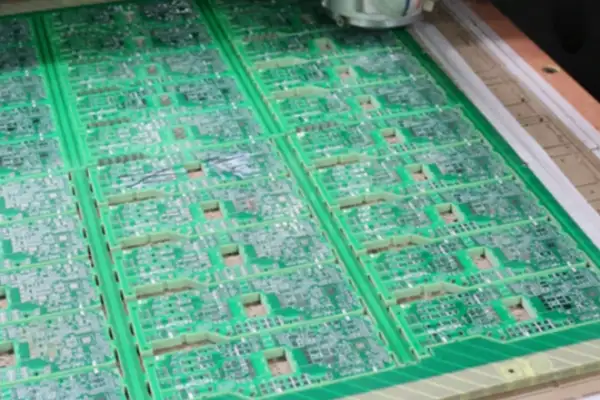
My current approach is to communicate design requirements with suppliers in advance, giving them the opportunity to anticipate potential bottlenecks. For example, during the layout phase, we avoid components with long procurement cycles or prepare alternative solutions. This small upfront investment often makes later turnarounds much smoother; prevention is always more cost-effective than remediation.
I’ve been pondering something lately—why do some projects’ Quick Turn PCB Assembly, which seems simple, always run into problems? Often, the problem isn’t with the technology itself.
Remember that project last year that urgently needed to produce prototype test boards? At the time, the team chose the cheapest component supplier to meet deadlines, which backfired spectacularly—after the first batch of boards was soldered, they discovered a critical chip was refurbished, causing a two-week delay and requiring rework. That’s when I realized component reliability is far more sensitive than price. Now, in similar situations, I first confirm whether the supplier has a long-term, stable supply chain; even if it costs more, it’s worth it because time is precious.
Many people think that rapid turnaround means drastically cutting costs. I think this approach is flawed. What truly impacts progress are often the unseen details, such as using non-standard packages in the design, requiring global sourcing, or having overly complex boards that necessitate adjustments to the factory’s production lines. These hidden costs are often more expensive than the overt processing fees.
Now, I prioritize overall efficiency over simply comparing prices. Once, we compiled a list of commonly used components in advance and reached an agreement with suppliers to keep them in stock. Although the unit price was slightly higher, the next time we needed Quick Turn PCB Assembly, we could directly order from their inventory and receive samples within three days, saving waiting time and communication costs. This kind of investment is particularly worthwhile in the long run.
Of course, not all projects are suited to pursuing extreme speed. For example, for large-volume orders after mass production, I prefer to follow standard cycles to reduce costs. However, during product iteration, quickly obtaining testable boards helps the team validate ideas as early as possible. In such cases, paying extra for expedited processing is actually an investment.
Ultimately, PCB prototyping is like cooking; speed alone isn’t enough. You also need to consider what ingredients you have and how to control the heat. Sometimes, being slower but ensuring quality is much better than rushing to finish a half-cooked dish.
I’ve always felt that hardware developers easily fall into a misconception—always wanting to solve all problems at once. I’ve seen too many teams pursue perfect designs from the beginning of a project, only to get stuck on details and unable to produce a prototype for six months. Hardware iteration can be approached with a different mindset, like playing a jigsaw puzzle; you don’t have to wait until all the pieces are in place before starting.
Recently, I contacted several suppliers of Quick Turn PCB Assembly and found that their value lies not only in speed but also in changing the rhythm of hardware development. A friend who works in smart home technology complained to me last month that their team originally planned to spend three months testing a new sensor, but after finding a reliable assembly plant, they received the finished product in just five days from submitting the board. They adjusted the antenna layout once, and the supplier updated the engineering confirmation that same day, starting production the next day. At this pace, they actually tried three different RF solutions within two weeks; previously, just waiting for the boards to arrive would have taken a month.
Many people struggle with whether to use a fully managed assembly service or manage components themselves. The key is to consider the team’s stage. Startups with limited manpower can actually save time by entrusting everything to suppliers. I’ve seen a small team that didn’t even know all the component models, yet they achieved two generations of product iterations using turnkey services because they only needed to focus on writing code and testing functionality; the hardware details were completely unaffected. Mature teams with stable component channels and consignment models can squeeze out more cost margins, as bulk purchases of capacitors and resistors can be 30% cheaper than supplier quotes.
Process optimization is the core of rapid turnaround. Good suppliers will break down steps like surface mount soldering into parallel modules, such as stencil engraving and component preparation, rather than rigidly queuing steps. Once, I visited a factory where their production line was like a fast-food restaurant, with each workstation handling only components of a specific size. Even the orientation of the boards automatically changed as they moved. This attention to detail truly embodies the word “fast.”
The biggest fear in hardware isn’t errors, but not knowing where the errors are. The significance of rapid board production lies in shortening the verification cycle to days. Even something as simple as changing a resistor value or adjusting an interface position can immediately show the physical effect. This real-time feedback is more realistic than any simulation software; after all, you can only feel whether a solder pad is cold by touching a hot board.
I recently noticed an interesting phenomenon: many people underestimate the complexity of rapid PCBA turnaround services, thinking it’s just about paying more for faster delivery. There’s more to it than that. The key is whether the supplier can truly understand your needs while ensuring quality.
I remember a project last year where we found a manufacturer with a very low quote. However, they treated our boards as standard parts, completely ignoring the soldering requirements of a specific component in the design. Although we delivered on time, we had to rework them, resulting in a two-week delay. This experience taught me that speed isn’t just about the production line’s pace, but also the entire team’s responsiveness.
Some suppliers in the market are indeed doing a good job; they organize engineers to review documents immediately upon receiving them, proactively identifying design issues that might impact schedules. This proactive communication is far more efficient than reactive remediation. What I value most is their ability to provide a clear production plan, including timelines for each step, before order confirmation.
Sometimes, clients demand to compress a standard five-day process into two days in pursuit of extreme speed. However, in my experience, such extreme cases often come at the cost of additional quality risks. The truly reliable approach is to allow a reasonable time window for the factory to arrange material testing and process debugging.
In fact, good fast turnaround service should be like a professional race car team’s pit stop operation—it requires strict time management while ensuring every action is precise. Now, my partners and I allow about a day’s buffer period, which avoids delaying the overall schedule while providing necessary quality control leeway in production.
When selecting PCBA suppliers, I pay particular attention to their component inventory management capabilities. Once, I encountered an urgent project where the client was able to procure all the less common components within 24 hours. This was because they had established a robust supply chain network, and this implicit advantage was more important than price in critical moments.
Ultimately, the value of rapid turnaround services lies not in simply speed, but in maintaining professional standards under time pressure. After all, what we ultimately need are working circuit boards, not rushed, half-finished products.
Having worked in hardware for many years, I’ve come to realize that sometimes speed is the best strategy. Just last week, a project required a last-minute change to the sensor design, necessitating re-prototyping. We used Quick Turn PCB Assembly services, and we received the new boards the very next day. This turnaround speed was unimaginable five years ago.
Many teams now treat rapid delivery as an emergency measure, but I think it should become standard practice. The biggest fear in hardware iteration isn’t errors, but waiting too long to realize a problem. I remember our first smart home product; we spent ten days debating the heatsink material, only to discover an interface definition issue during mass production. If we could have received the revised board within three days, we could have saved at least two months of development time.
Some worry that pursuing speed will sacrifice quality. However, the visual calibration of modern pick-and-place machines is far more precise than manual calibration. Our recent order with flexible circuit boards completed impedance testing within 24 hours, and the report was even more detailed than that of older factories that relied on slow, meticulous work. The key is finding partners who truly understand high-speed production. They anticipate potential production bottlenecks during the engineering review phase; for example, high-density BGA packaging requires X-ray inspection beforehand, rather than waiting until soldering is complete and then reworking.
The biggest benefit of speed is more decisive decision-making. Last year, when prototyping medical devices, we tried three different battery management solutions within two weeks. After quickly obtaining physical boards for testing, we immediately eliminated the one with low charging efficiency. Following the traditional process, waiting a month might have led the team to reluctantly adopt a suboptimal solution due to sunk costs.
Truly efficient rapid turnaround service should be as reliable as a convenience store, able to handle small-batch urgent needs while maintaining stable quality control. This time, our partner even updated the production schedule at 3 AM. This responsiveness finally gives hardware development a touch of the agility of software iteration.
Every time I see those beautifully designed circuit boards, I wonder—why are some people always able to complete production quickly and well? The answer is actually quite simple: they understand how to break down complex tasks into actionable steps instead of blindly pursuing speed while ignoring details.
I remember the first time I tried Quick Turn PCB Assembly, I made a mistake by focusing too much on delivery time and neglecting the most basic component selection. That batch of boards used special-specification resistors, and when it came time to solder them, I discovered the supplier didn’t have them in stock, so I had to order them on the spot, delaying the process by a whole week. From then on, I understood that choosing general-purpose components is much more reliable than choosing special-purpose ones. This doesn’t mean using high-end parts, but rather making the design more practical.
The soldering process is a true test of patience. I’ve seen too many people simply dump the board into the factory, thinking their job is done. In reality, the quality of the solder joints often determines the lifespan of the entire product. Once, during sample inspection, I discovered several tiny components with poor soldering; they were practically invisible without a magnifying glass. Such problems are disastrous in mass production. Therefore, I now insist that suppliers provide high-resolution records of the soldering process, even just a few photos, to give me peace of mind.
Many people think fast delivery is simply about compressing time, but I believe true speed is built on process optimization. For example, preparing design documents in advance to avoid repeated revisions, and maintaining communication with suppliers to confirm their equipment can handle the board material. These seemingly trivial matters can actually save a lot of waiting time.
Speed and quality are not mutually exclusive. The key is whether you’re willing to invest more effort upfront. Sometimes, slow is fast—this is especially evident in PCB manufacturing.
Every time I see advertisements for turnkey services that claim to handle everything, I want to laugh. They always portray rapid PCB assembly as as simple as ordering takeout—select the menu, pay, and wait for delivery. The reality is that when you truly need Quick Turn PCB Assembly, the biggest headaches are often the seemingly simple component issues.
I’ve encountered many clients who come to us with meticulously designed circuit diagrams, only to get stuck on component supply problems. One medical equipment team had their entire project delayed by two months due to a shortage of a certain sensor. They initially thought that outsourcing to a contract manufacturer would solve everything, only to discover that the supplier simply didn’t have that specific component.
This is where the consignment model shows its value. Although it sounds like it takes more effort, the situation is completely different when you already have some key components in stock. Especially for components that are not commonly found on the market, having them in advance gives you control.
However, I’ve also seen people oversimplify consignment. Once, a client sent a batch of components with labels all over the place; it took us three days just to check the bill of materials. Even worse, some of the chips were older versions that were incompatible with the newly designed boards. In such cases, the so-called rapid turnaround becomes meaningless.
A good cooperation model should be flexible. I prefer to adjust my strategy based on the project stage—providing core components myself for initial prototyping, and then outsourcing the procurement of general-purpose parts to suppliers for mass production. This ensures control over key components while leveraging the supplier’s procurement channels.
When choosing partners, I particularly value their ability to handle unconventional needs. Once, we needed to produce a batch of boards with special packages within 48 hours. The manufacturer we partnered with not only adjusted their production line overnight but also helped us coordinate the supply of scarce connector components. This adaptability is more important than simply offering the lowest price.
Ultimately, rapid turnaround is never about a single person working alone; it’s about seamless integration of design, component supply, and production processes. Instead of blindly trusting so-called all-around services, it’s better to find partners who can solve real problems together.
What actually makes a long-term PCB supply chain partnership work — shared
Practical, experience-based strategies for how to reduce PCB procurement risks — from
Real factory-floor lessons on how to optimize a PCB manufacturing process —
- Experto en producción de lotes pequeños y medianos
- Fabricación de placas de circuito impreso de alta precisión y montaje automatizado
- Socio fiable para proyectos electrónicos OEM/ODM
Horario comercial: (de lunes a sábado) De 9:00 a 18:30
Get quote, solution or any question, Andre always here to help