

What Separates the Best Prototype Printed Circuit Board Manufacturers When You’re Building a Telecom Rectifier PCB
Many people assume the key to circuit-board manufacturing is high-end equipment, but
I’ve seen many people misunderstand CEM material, always thinking it’s inferior to FR4. Actually, this completely depends on the application scenario. Take our recent smart socket project as an example. The team debated for ages about whether to use CEM or FR4 materials.
During the prototyping, I noticed an interesting phenomenon: the drilling performance of CEM was actually more stable than expected. While the paper substrate does require a gentler feed rate, after adjusting the parameters, the hole wall smoothness was in no way inferior to some mid-range FR4 substrates. An intern was worried that the paper substrate would warp when exposed to moisture, so we conducted a comparative experiment—drilling holes in both materials after 48 hours in a high-humidity environment. The hole offset of CEM was actually smaller than that of some inexpensive FR4.
Regarding surface treatment, I always advocate for a case-by-case approach. Once, a client insisted on chemical tin plating for the remote control motherboard, resulting in solder whiskers appearing in batches three months later. The rework cost was enough to make two more batches of boards. Later, we switched to regular hot air leveling, and those boards are still working perfectly. It’s not that tin plating is bad, but for consumer electronics products like these, there’s really no need to pursue excessive configurations.
Many small appliance manufacturers are currently overly reliant on FR4, but for low-frequency circuits like rice cooker temperature control boards, CEM’s dielectric constant is perfectly adequate. Last year, I helped a lighting factory redesign their circuitry, replacing their FR4-based touch switch boards with CEM series boards. This reduced material costs by 40%, and during aging tests, we found improved anti-static performance.
Recently, I’ve been working on a smart flowerpot project, and for the humidity sensor board, I specifically chose CEM material for hot air leveling. During testing, I discovered a detail: under the same conditions, CEM board had lower warpage than some thin FR4 boards, resulting in higher yield rates during surface mount technology (SMT).
Ultimately, material selection is like clothing; not every occasion requires a suit and tie. I now dread seeing solutions that force high-end materials onto simple control boards—it’s like using a scalpel to cut a watermelon—excessive performance is a waste.
I’ve seen many engineers struggle with PCB board selection. The key is understanding your needs, not blindly following trends.
Take the smart home controller we developed last year, for example. A young engineer insisted on using FR (Flatliner) boards, believing high-end products required high-end materials. This resulted in costs exceeding budget by 30% and preventing mass production. Switching to the CEM series solved both the heat dissipation and cost issues; sometimes, expensive doesn’t necessarily mean suitable.
Many people associate CEM with low-end products, which is a misconception. I’ve handled numerous industrial equipment boards made with CEM, and their stability is just as good, especially in scenarios requiring long-term continuous operation. In fact, they are more durable than some FR materials.
I remember once inspecting goods at a factory and finding that their CEM-made LED driver boards had been working continuously for over three years. Aside from a slight yellowing of the surface, their performance was completely normal. This tangible durability is more convincing than lab data.
Regarding material upgrades, I don’t think it’s necessary to blindly pursue high performance. Recently, while redesigning for a client, I found that the new CEM version already has sufficient features for most conventional applications, especially for cost-sensitive projects that require basic reliability. There’s no need to pay extra for performance features that aren’t needed.
An interesting phenomenon is that many small and medium-sized enterprises (SMEs) are re-evaluating the value of CEM (Consumer Electronics Materials), especially in the consumer electronics sector. They are increasingly realizing that it’s better to focus on solid fundamental performance rather than piling on unnecessary high-end specifications. Furthermore, today’s consumers care more about the overall product experience than the specifications of a single component.
I suggest that novice engineers spend more time on the production line. Sometimes, the material’s performance during processing is more important than theoretical parameters. For example, burr control during punching and dimensional stability during lamination—these details often determine the final success or failure. Relying solely on datasheets can easily lead to pitfalls.
Recently, I’ve noticed that many people fall into a misconception when choosing circuit board materials—overemphasizing the numbers on the technical specification sheet. In reality, subtle performance differences are often not that significant.
I remember last year when I was designing a control board for a small appliance for a friend, he insisted on using high-end FR series materials. This resulted in double the cost and a two-week delay in delivery. Later, we tried using CEM materials to make several samples and found that in a typical household environment, there was no noticeable difference. Sometimes engineers easily get caught in a vicious cycle of comparing data while neglecting the actual usage scenarios of the product.
Currently, the commonly available CEM series materials on the market can already meet the needs of most consumer electronics products. Especially for simple circuits that don’t require complex multi-layer designs, these materials are more economical. In my experience with many small-batch projects, switching from FR to suitable CEM materials can reduce overall costs by about 30% and shorten production cycles.
An interesting phenomenon is that many customers are particularly concerned about the thermal performance of materials, but their products’ maximum operating temperature may not even reach 60 degrees Celsius. In such cases, choosing a basic CEM material is sufficient; there’s no need to pay for performance features that aren’t needed. Just like buying a car for daily use doesn’t require the extreme performance of a race car, material selection should be based on actual needs.
Speaking of material properties, I think stability and processability are the most important. I previously used a CEM material that, while having some parameters inferior to the FR series, actually had a higher yield rate in actual factory processing. This shows that theoretical technical parameters may not reflect real-world production conditions.
Recently, some new composite materials I’ve encountered are also challenging traditional perceptions. For example, some improved CEM materials perform better than standard FR in specific applications, making me realize that we cannot simply judge quality based on material type. Each project needs to consider specific requirements when choosing materials, rather than blindly following trends.
Ultimately, choosing materials is like choosing ingredients. Fresh, ordinary ingredients, when properly combined, can create delicious dishes; you don’t necessarily need to pursue top-tier raw materials. The key is understanding the properties of materials and using them appropriately—that’s where an engineer’s true value lies.
Recently, I’ve noticed many people have some misunderstandings about circuit board material selection. Some believe that expensive materials are always better, but that’s not the case.
I remember last year helping a friend design a control board for a small appliance. Initially, he insisted on using high-end materials, resulting in excessive costs and almost preventing the project from being completed. Later, by switching to a suitable substrate, the effect was just as good, and a significant amount of money was saved.
Sometimes, choosing materials is like choosing clothes—you have to consider the occasion and choose the material that suits you best.
For example, for a simple power control board, ordinary board material is sufficient; there’s no need to pursue high-performance materials.
I’ve seen too many projects where inappropriate material selection led to uncontrolled costs or excessive performance.
Once, I saw someone designing a double-sided board; ordinary materials could clearly meet the requirements, but they insisted on choosing the most expensive specifications, resulting in a product that was completely uncompetitive in price after launch.
In fact, in many cases, the choice of board material depends more on the requirements of the manufacturing process than simply looking at the specifications.
In a recent project, we experimented with different material combinations and discovered that sometimes mixing and matching yields better results.
Ultimately, the most important thing in material selection is matching actual needs, rather than blindly following trends or pursuing high-end products. Each project has its own unique requirements; finding the most suitable option is key.
While tidying up my studio recently, I found some old circuit boards marked with CEM material. This composite board is quite interesting; unlike high-end products that pursue extreme parameters, it’s more like a pragmatic approach that understands trade-offs.
I remember first encountering CEM-type boards when repairing old radios. At that time, I noticed that many circuit boards in home appliances had a unique texture—neither as light as paperboard nor as hard as fiberglass. Later, I learned that this texture, somewhere in between, came from the special structure of the composite substrate. The junction between the copper foil and the substrate was handled with exceptional finesse, as if two materials with different personalities had achieved a harmonious collaboration.
Once, when helping a friend modify a nightlight, I specifically chose CEM board to test it out. During soldering, I could clearly feel the substrate’s buffering effect on heat, unlike some cheaper boards that are prone to bubbling and delamination. While its heat resistance isn’t as good as professional-grade materials, it’s reliable enough for ordinary electronic projects. However, it’s important to note that this type of board is not well-suited for high-frequency circuit design; I encountered signal attenuation issues when trying to build an RF module.
Some products on the market now focus on more basic boards to cut costs. But those who have truly used various materials understand that composite substrates like CEM actually hold a lot of ingenuity. It may not appear in high-end devices, but for everyday electronic products, this solution that balances practicality and cost is more ingenious.
I recently thought of it again while designing a small controller. Although I ultimately chose another material due to the need for multi-layer wiring, the CEM series is still a worthwhile option for single-sided board designs. Sometimes material selection is like cooking; the most expensive ingredients aren’t necessarily the best. The key is whether it can perfectly meet the needs.
I’ve recently noticed an interesting phenomenon: many engineers have a stereotype about CEM materials. They always think that cheap things are no good—since CEM is so much cheaper than the FR series, its performance must be significantly compromised. This idea overlooks a crucial point: material selection is never about pursuing the highest parameters, but about finding the most suitable balance.
I remember last year when designing a smart socket, our team argued endlessly about the substrate material. Some insisted on using FR4, saying it was the industry standard; but I found that this product didn’t need such high heat resistance, and we valued the yield rate during punching more. In the end, we tried CEM1, which not only reduced costs by a third but also lowered the scrap rate on the production line by 15%. Sometimes, so-called high-end materials are like putting a racing engine on a commuter car—a complete misallocation of resources.
Many manufacturers are now trapped in a parameter race, trying to push every indicator to its limit. But the reality is that most consumer electronics products don’t need the extreme performance of FR4. Take smart home controllers, for example; the signal frequency is usually no more than 50MHz. In this scenario, obsessing over low loss factors can create unnecessary cost burdens.
I particularly enjoy observing the differences in performance between different materials in practical applications. For example, the CEM series has a unique toughness when handling mechanical stress, which is particularly noticeable in connectors that require frequent plugging and unplugging. While its bending strength is not as high as FR4, it is actually less prone to micro-cracks during actual assembly.
Of course, this doesn’t mean CEM is suitable for all scenarios. High-frequency circuits or high-temperature environments still require more specialized substrate materials, but the problem is that 80% of applications on the market currently fall within the medium requirement range. Many engineers, due to habitual conservatism, often exaggerate the safety margin to an unreasonable degree.
I recently verified this point while helping a friend modify an old radio. The original circuit board used a paper substrate that was severely aged. Replacing it with CEM not only kept costs under control but also resulted in a noticeable improvement in sound quality because the new substrate better controls electromagnetic interference.
Ultimately, material selection is like choosing clothes; you don’t need to wear a suit to work every day. The key is to find an outfit suitable for the occasion. Next time you design a product, ask yourself: What are the core requirements of this device? Which parameters must be guaranteed? Which can be appropriately relaxed? Thinking these questions through will suddenly broaden your choices considerably.
I recently found several old radio motherboards while tidying up my studio. Looking at those yellowed CEM-1 boards, it suddenly occurred to me that this material has become a hot commodity in certain fields. Many people, when they think of PCBs, immediately think of chasing the latest trendy materials, but veterans like CEM still have their unique survival wisdom.
Last week, while helping a friend modify a garage door remote control, I noticed an interesting phenomenon—in places where a cheaper CEM board could solve the problem, some people insisted on using FR4. This kind of low-frequency control circuit doesn’t need strong signal transmission performance at all. It’s like using a professional race car to go grocery shopping. Truly knowledgeable engineers consider material compatibility from the initial design stage.
However, CEM does have its shortcomings. Last year, I participated in a smart door lock project. Initially, to save costs, we used a CEM substrate. However, during high-temperature testing, the deformation exceeded expectations. We later switched to a composite substrate and it passed certification. This made me realize that material selection cannot only consider electrical parameters. Mechanical stability is equally crucial.
Now, some manufacturers are blindly pushing CEM boards to compete on price, ignoring its inherent limitations in high-frequency applications. I’ve tested using ordinary CEM for a 2.4GHz antenna matching circuit. Signal attenuation is more than three times higher than that of dedicated substrates. However, it’s more than sufficient for low-frequency applications like remote controls.
Interestingly, the automotive electronics industry has a nuanced attitude towards CEMs. Non-core components like car radios have been used for decades without issue. But current smart cockpit systems would rather use materials costing twice as much than take the risk.
Ultimately, material selection is like prescribing traditional Chinese medicine. There’s no absolute good or bad, only suitability.
One customer insisted on using CEMs for their LED driver boards. As a result, the solder pad blistering rate was extremely high during mass production.
Recently, I’ve noticed some manufacturers in Southeast Asia starting to experiment—locally thickening the copper foil layer on the CEM substrate. This maintains a cost advantage while improving current carrying capacity. This pragmatic innovation is more valuable than blindly piling on parameters. After all, good design isn’t about who uses the most advanced materials, but about whether the final product can stably perform its intended functions.
I’ve seen many people struggle with choosing circuit board materials. Actually, it’s not that complicated; it depends on where you’re using it.
Last year, I helped a friend modify the control board of a small appliance. They were using a regular paperboard board, which kept malfunctioning in humid environments. After switching to CEM series materials, the stability improved significantly. While not as high-end as some premium options, it’s perfectly adequate for everyday home use.
Many people mistakenly believe that the more expensive the material, the better. This isn’t true. Just like you don’t need to use marble tiles for all your home renovations, circuit boards also depend on your specific needs. CEM materials strike a good balance between cost and performance, making them particularly suitable for applications where extreme precision isn’t required.
Speaking of size, I made an interesting discovery. In an experiment, I placed boards of different materials in environments with varying temperature and humidity. The results showed that CEM performed much better than I expected. Of course, there’s still a difference compared to top-tier materials, but this difference is often negligible in practical applications.
I think choosing materials is like choosing shoes – the most important thing is that they fit well. There’s no need to waste money on a tiny performance boost, especially when your product doesn’t actually need that high performance.
A recent project I’ve been working on used CEM PCBs, and the results were surprisingly good. The client was initially worried that the material wasn’t high-end enough, but after testing, they were quite satisfied.
Ultimately, material selection is a very practical issue that needs to be considered in conjunction with the specific usage scenario. Sometimes, focusing too much on specifications can be misleading, since the final product is meant to be used, not just compared by numbers.
I suggest everyone consider actual operating conditions when choosing materials and not be led astray by fancy technical specifications.
I’ve always found choosing PCB materials quite interesting—sometimes people easily fall into the trap of comparing specifications. A while ago, when helping a friend’s small appliance factory adjust its production line, I found that their blind pursuit of high-end materials had increased unnecessary costs. For example, they once chose FR-4 epoxy board for a regular remote control, resulting not only in a 40% increase in raw material costs but also a surge in drill bit wear due to its excessive hardness. This “using a sledgehammer to crack a nut” approach is particularly common in small and medium-sized enterprises, often stemming from a superficial understanding of material properties.
What truly impresses me about CEM materials is their flexibility—especially when processing simple circuit boards, saving considerable time and effort. Their coefficient of thermal expansion closely matches that of copper foil, maintaining dimensional stability even in workshops with large temperature variations, which is crucial for products requiring mass production. We conducted comparative tests; after 8 hours of continuous production, the hole offset in CEM boards remained within 0.1mm, while some composite boards showed visible deformation.
I remember once witnessing a master craftsman’s fluid operation while adjusting a punching machine—the die would drop down and instantly create dozens of holes—an efficiency unmatched by other materials. The master craftsman later demonstrated an even more impressive feat: by adjusting the punching angle with the same die, blind holes of varying depths could be created on CEM boards—a process unimaginable on fiberglass boards. Once, to meet a rush order for an export order, three production lines simultaneously used CEM material to stamp doorbell circuit boards, completing in eight hours what would normally take two days. Even the experienced mold repair technicians were impressed, remarking, “This material is incredibly durable!”
Many people worry about whether materials can handle complex designs—I think we should think about it the other way around: what kind of product should be paired with what kind of board material? Just like you wouldn’t cover the entire kitchen with marble when decorating a house, circuit boards also need to be “allocated according to need.” The smart flowerpot project I recently worked on is a typical example: the sensor part uses high-frequency board material, the control unit uses CEM-1, and the power module uses FR-4; each of the three materials performs its specific function within the same product.
A very typical example is the electric mosquito swatter project I worked on last year—using CEM to make single-sided boards with a punching process directly reduced costs by one-third—these small appliances don’t have particularly demanding requirements for board performance—the key is stability and durability. We specifically conducted accelerated aging tests, simulating a three-year usage cycle, and the board could still withstand a 2000-volt instantaneous high voltage. Even better, due to the high toughness of CEM material, screws won’t burst like epoxy boards even when overtightened during assembly, reducing the defect rate on the production line from 5% to 0.3%.
Speaking of process adaptability—I’ve noticed many engineers tend to overlook the actual conditions in the production process—such as the impact of workshop temperature fluctuations on board dimensions—in which case the characteristics of CEM material can play an unexpected role. During the rainy season in southern China, a factory’s FR-4 boards developed numerous air bubbles during the lamination process due to moisture absorption, while the neighboring production line using CEM material maintained a yield rate of over 98%. Later testing revealed that CEM’s moisture absorption rate was only half that of FR-4, a lifesaver for small and medium-sized factories without temperature and humidity controlled workshops.
Once, during a visit to a long-established radio factory, I noticed they had been using the same CEM material for twenty years—the veteran craftsmen explained that it wasn’t that they didn’t want to switch to new materials, but rather that the existing process had become as natural as breathing. They even summarized a unique trick: using materials stored for six months in the summer and newly arrived materials in the winter, utilizing the natural aging of the material to offset the effects of seasonal temperature differences. This kind of experiential wisdom is more valuable than any parameter table; every veteran worker on the assembly line can judge the moisture content of the board material by touch.
Now, the industry is always talking about technological upgrades—but I think what’s truly important is finding the solution that best suits the current product positioning—sometimes the simplest choice is the smartest. Just as putting a racing engine in a commuter car doesn’t necessarily improve commuting efficiency, material selection must consider the compatibility with the entire production system. A car radio company once blindly followed the trend of switching to high-frequency boards, only to find that besides increased costs, the product’s actual performance actually decreased due to impedance mismatch.
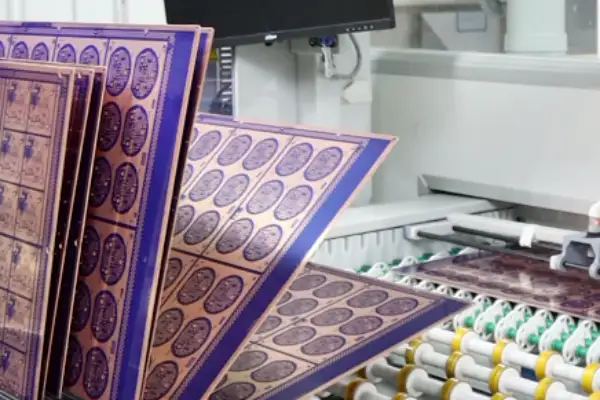
Watching the neatly arranged boards passing through the punching process on the assembly line, I thought—perhaps the charm of manufacturing lies in this balance between precision and efficiency! Each board passes through the mold at a rate of 60 pieces per minute, with the hole tolerance always kept within 0.05mm. Behind this mechanical rhythm lies a subtle harmony achieved by materials, processes, and people. When the stamping machine emits a rhythmic “click,” the entire workshop seems to be playing an industrial symphony.
I’ve made quite a few mistakes in selecting circuit board materials. When I first started a project, I always wanted to use the best materials, only to find that the costs were simply unsustainable. Later, I realized that material selection is like choosing clothes; not every occasion requires a suit and tie.
Materials like CEM are actually quite interesting. I remember once working on a smart home control board. The client was very price-sensitive but also needed to ensure basic performance. We tried several substrates and finally found that CEM-1 struck the perfect balance. It’s not as delicate as high-end materials, yet it meets the needs of ordinary household appliances. Using this board in thermostats, the return rate after three years was much lower than expected.
Many engineers today easily fall into the trap of prioritizing performance above all else. In reality, most consumer electronics products don’t require such high specifications. I’ve seen people use FR-4 material for ordinary remote controls, which is like using a sports car for delivery—it’s not impossible, but it’s incredibly wasteful.
When choosing CEM series materials, the actual application scenario must be considered. For example, outdoor equipment requires more caution, as its weather resistance is limited. But for products like indoor lighting controllers, CEM-1 is actually more suitable than more expensive materials. Last year, after switching to CEM substrates in one of our projects, material costs dropped by a third, and customer feedback indicated that product stability was perfectly adequate.
Sometimes the simplest solution is the smartest. Now, when I design, I first ask: What does this product really need? If it’s just basic circuit connectivity, CEM materials often provide a satisfactory answer. After all, good engineering isn’t about piling on the most advanced components, but about ensuring each component is where it’s meant to be.
Many people assume the key to circuit-board manufacturing is high-end equipment, but
Every time you open up an electronic device, that iconic green circuit
Chasing perfection at the Prototype PCB Production stage can actually plant hidden
- Experto en producción de lotes pequeños y medianos
- Fabricación de placas de circuito impreso de alta precisión y montaje automatizado
- Socio fiable para proyectos electrónicos OEM/ODM
Horario comercial: (de lunes a sábado) De 9:00 a 18:30
Get quote, solution or any question, Andre always here to help