

How Do PCBs for Medical Devices Hold the “Last Line of Defense for Life”?
In the field of medical electronics, attention often focuses on complex algorithms;
I have seen far too many factories pour their energy into the production phase while completely neglecting issues at the source. Just last week, a client came to me to vent their frustrations regarding a newly designed board: despite every single solder joint meeting the required standards, the boards suffered from frequent signal interference when operating in high-temperature environments. Where did the problem lie? It turned out their engineers had selected a niche chip with a lead time of three months; the production department, unable to wait, substituted it with an alternative component—only to discover that its temperature characteristics were completely incompatible.
This disconnect between design and manufacturing is particularly common among small and medium-sized enterprises (SMEs). When designers are drafting schematics at their computers, they often prioritize functional implementation while easily overlooking the procurement difficulties associated with specific components or the process limitations inherent in actual manufacturing. For instance, some components with high-density packaging offer excellent theoretical performance but require specialized soldering techniques that standard SMT machines simply cannot handle. Consequently, companies only discover—once mass production begins—that their yield rates are shockingly low.
Minor fluctuations within the supply chain can trigger a domino effect that compromises final product quality. A case from last year involving an industrial control equipment manufacturer serves as a prime example: their procurement team, seeking to cut costs, switched to a different supplier for resistors and capacitors. Everything appeared normal during sample testing; however, once mass production began, they discovered that this batch of components suffered a drastic drop in insulation resistance when exposed to humid environments, causing the entire batch of PCBA assemblies to fail sequentially after reaching the client. A subsequent investigation revealed that the new supplier’s moisture-proof packaging standards were two tiers lower than those of the original manufacturer—and, critically, that no formal review process for material changes had been established between the procurement and technical departments.
Truly reliable quality control must begin at the design stage. I particularly admire companies that involve their suppliers in their R&D meetings; although the initial communication costs are higher, it helps avoid extensive rework down the line. For instance, a client of ours in the medical device sector requires their component suppliers to provide comprehensive reliability test reports—even mandating the inclusion of data on vibration during transport—to ensure that the assembled PCBAs remain stable even under extreme environmental conditions.
No matter how sophisticated your testing procedures are, they cannot plug the holes in a flawed supply chain. Some people seem to believe that simply deploying a few extra AOI or X-ray inspection machines will allow them to rest easy. However, if the chips you are using are actually refurbished parts, or if the solder paste has been stored improperly, no amount of advanced inspection technology can salvage the situation. I once visited a factory where the production floor was spotless, yet the anti-static bags holding the IC chips in the warehouse were all left wide open—such oversights in the details are often far more fatal than any technical deficiency.
Ultimately, PCBA quality is not the result of a single department working in isolation; rather, it requires design, procurement, and production to mesh together as seamlessly as the gears of a clockwork mechanism. I was recently deeply impressed by a client who went so far as to integrate their PCB laminate suppliers into their quality traceability system. They directly link the glass transition temperature of the base material for every single batch to the corresponding production work order. This kind of organization-wide, collaborative mindset represents the true essence of “Supply Chain Quality.”
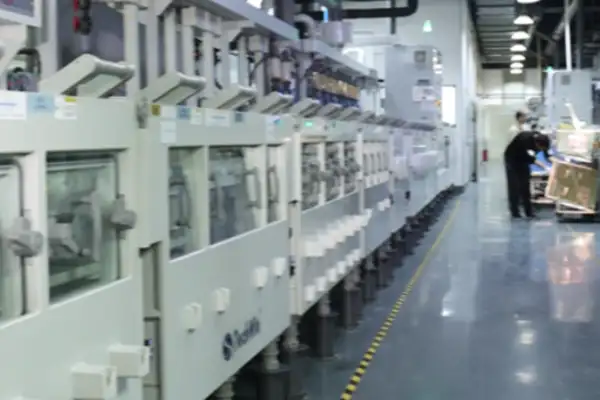
I have seen far too many factories stumble over issues within their supply chains. Sometimes, the components you’ve paid a premium to source directly from the original manufacturer are indeed flawless, yet the assembly process itself can still introduce a host of unexpected problems. Take reflow soldering, for example: if the temperature profile deviates even slightly, an entire batch of boards could end up suffering from cold solder joints. During a quality inspection once, I discovered that the chips on a batch of boards would pop right off with just a gentle touch; an investigation revealed that the furnace temperature had been set too low, preventing the solder paste from melting through completely. This is the kind of problem you simply cannot prevent if you focus solely on verifying the source of your components.
In reality, the greatest pitfall in supply chain management is complacency—making assumptions. Many people assume that as long as they use components from the original manufacturer, their quality is guaranteed; however, PCBA quality is a chain where every link is interdependent. An assembly plant might secretly lower the reflow soldering temperature to save on electricity costs, or cut corners on inspection procedures in a rush to meet production deadlines. I’ve even encountered more egregious cases where factories mixed solder pastes from different production batches; the resulting instability in flux activity meant that while the solder joints looked fine initially, they would fail and cause open circuits after just a few months of use.
Nowadays, some clients place an almost superstitious faith in data reports, constantly demanding to see their suppliers’ SPC charts at every turn. It’s not that these things are useless, but the real problems often lie hidden in the details. For instance, the same component from different manufacturing batches might have varying moisture sensitivity levels. If a package is opened but not fully utilized in a timely manner—and subsequently isn’t properly baked to remove moisture as per regulations—the chip inside could suffer from the “popcorn effect” during reflow soldering. You simply cannot spot this kind of latent risk by merely reviewing datasheets; you have to go on-site to observe how the workers actually handle the components.
I believe the most critical aspect is to view the supply chain as a cohesive whole. From component procurement to final testing, every single stage requires vigilant oversight. Sometimes, spending a little extra to partner with an experienced factory actually proves more cost-effective in the long run, as they possess the expertise to strike the right balance between cost and quality. For example, they will meticulously log the shelf life of every batch of solder paste and regularly calibrate their reflow ovens—these seemingly trivial details are precisely what guarantee the quality of the final PCBA assembly.
A recent case serves as a perfect illustration: a client insisted on using a specific model from a particular original manufacturer, yet that specific component happened to be exceptionally sensitive to reflow soldering temperatures. Consequently, when the assembly plant followed their standard process, the yield rate was abysmal; the issue was only resolved after they adjusted the preheating duration and peak temperature settings. This demonstrates that even if every individual step adheres to established standards, different combinations of components and processes can still lead to complications—underscoring the need for flexibility and adaptability in supply chain management.
Ultimately, quality control isn’t simply a matter of purchasing the most expensive materials; it requires maintaining constant vigilance at every stage of the process. Sometimes, a seemingly minor detail—such as whether a worker is wearing an anti-static wrist strap or whether the storage environment meets regulatory standards—can significantly impact the final outcome. After working in this industry for a while, you come to realize that truly reliable suppliers aren’t necessarily the ones with the most certifications, but rather those partners who are willing to roll up their sleeves and work alongside you to resolve problems.
Oh, and there’s one more point that often gets overlooked: to secure orders, many factories will deliberately drive their quotes down to rock-bottom levels, only to cut corners in areas you cannot see. For instance, they might reduce the number of inspection points during Automated Optical Inspection (AOI) or utilize second-hand equipment for component placement. While these cost-cutting measures may not manifest as immediate issues, they will undoubtedly compromise long-term product reliability. Therefore, when selecting a supplier, you shouldn’t base your decision solely on price; you must also evaluate the extent to which they are genuinely willing to invest in quality assurance.
I find myself increasingly convinced that effective supply chain management is much like playing basketball: victory isn’t achieved simply because you have a single “star player”; it requires seamless coordination and chemistry among the entire team. From the original component manufacturer to the distributor, and finally to the assembly plant—every link in the chain must strive toward a shared objective to produce products that inspire true confidence. Speaking of collaboration, there’s an interesting trend emerging lately: some major manufacturers are starting to involve their suppliers much earlier—specifically during the design phase. For instance, they’ll collaborate on component selection and process requirements right from the start. This approach helps preempt a host of issues that might otherwise surface later on. However, this also places higher demands on suppliers; they need to possess genuine technical expertise, rather than merely knowing how to execute production tasks.
All in all, there is no “one-size-fits-all” solution for supply chain management. It requires constant monitoring and continuous adjustment. Sometimes, you even have to be bold enough to replace unsuitable suppliers. While this might cause some short-term inconvenience, it is absolutely worth it in the long run; after all, if quality issues arise, the loss isn’t just financial—it also erodes customer trust.
What I really want to emphasize is this: don’t be dazzled by elaborate certification systems. True quality is built day by day, bit by bit, right there on the production line. Spending time walking the factory floor and chatting with the workers is often far more effective at uncovering root causes than simply poring over stacks of reports. That, perhaps, is the greatest insight I’ve gained from over a decade in this industry.
Speaking of insights, there’s another interesting phenomenon I’ve observed: many young engineers today rely heavily on simulation software, operating under the assumption that once the computer model runs the numbers, they can rest easy. However, the variables in actual production are far more complex than those in a theoretical model—factors such as fluctuating workshop temperatures and humidity levels, or variations between different batches of raw materials, can all significantly impact the final outcome. Therefore, it is absolutely essential to strike a balance between theory and practice.
I’ve long felt that many people hold a rather one-sided view of supply chain quality control. They tend to focus solely on remedial actions—fixing problems after they’ve occurred—while overlooking the fundamental basics. Just last week, while visiting a factory, I noticed they had invested a fortune in sophisticated inspection equipment; yet, they failed to maintain even basic batch records when receiving incoming components into inventory. This kind of “putting the cart before the horse” mentality is truly frustrating to witness.
In reality, what truly determines PCBA quality is rarely some arcane technical complexity; rather, it is the seemingly simple aspects of day-to-day management. Take component storage conditions, for instance: many people assume that standard room temperature is sufficient, but fluctuations in humidity can have a far more detrimental effect on certain sensitive components than the actual soldering temperatures themselves. We once encountered a batch of circuit boards where the yield rate fluctuated wildly depending on the season; we eventually discovered that the issue stemmed from unstable humidity control in the warehouse, which caused the PCBs to absorb moisture.
Speaking of batch management, I have a particular aversion to the practice of “mixed-batch production”—a shortcut some factories take simply to save effort. Some manufacturers assume there’s no harm in mixing components of the same model together; however, even if the model numbers match, components from different production batches may still exhibit subtle variations in their electrical parameters. While these individual discrepancies may appear negligible in isolation, when compounded, they can render the product’s overall performance unpredictable and uncontrollable. Effective quality management within a PCBA supply chain should be akin to gourmet cooking—meticulously balancing the precise proportions of your ingredients—rather than simply dumping a random assortment of spices haphazardly into the pot. The “black-boxing” of the testing phase is a widespread issue. Many people focus solely on whether the final result passes muster, neglecting to analyze the data fluctuations that occur during the process. For instance, among boards that have all technically “passed” testing, some may exhibit stable voltage curves, while others fluctuate precariously near critical thresholds. The latter might appear problem-free in the short term, but their long-term reliability is undoubtedly compromised. Such nuances simply cannot be detected by looking at pass rates alone.
The approach I value most involves front-loading quality control—shifting it forward into the design phase. For example, when selecting components, one must consider the supplier’s batch-to-batch consistency rather than focusing solely on price and technical specifications. Certain niche components, while inexpensive, may come from inconsistent supply batches, thereby increasing quality risks further down the line. It is far more efficient to exercise strict control at the source than to expend time and effort troubleshooting problems on the production line.
Ultimately, quality control is not merely a collection of cold, rigid standards and procedures; it is a mindset that must permeate every stage of the process. A minor oversight at any single step can be amplified into a major issue at some point in the future; the shortcuts taken today will inevitably come back to haunt you tomorrow.
Sometimes, I feel that working in this field is much like raising a child: you cannot simply fixate on exam scores; you must pay equal attention to daily habits and routines. It is often those seemingly insignificant details that ultimately determine how far one can go.
I have long felt that many people harbor misconceptions regarding quality control in electronics manufacturing. It is particularly frustrating whenever I encounter companies that simplistically equate quality control with nothing more than final inspection. This is as absurd as focusing solely on whether a dish has been cooked through while completely ignoring the freshness of the ingredients used to prepare it.
I recall a project last year that nearly failed due to component issues. The batch of chips in question appeared flawless on the surface, yet their actual performance was abysmal, resulting in a rework rate of 30% for the entire batch of circuit boards. We later discovered that the supplier had surreptitiously switched the material batch without notifying us. That incident drove home the critical importance of supply chain transparency. We now require comprehensive traceability records for every critical component—ensuring that every step, from the wafer fabrication plant to the surface-mount assembly machine, is clearly documented and fully auditable.
In reality, truly robust quality management should resemble the weaving of a protective net. Quality checks must begin the moment raw materials enter the warehouse, and vigilance regarding process parameter monitoring on the production line must never waver. I have seen far too many companies pour all their energy into final inspections while overlooking the immense value of real-time data generated on the production floor. A slight deviation in a temperature profile or a minor anomaly in mounting pressure can sow the seeds of a quality defect—issues that often remain latent until much later in the product lifecycle.
Digitalization has, indeed, opened up exciting new avenues of thought for us. However, I feel that many people today place too much faith in technological tools, thereby overlooking the most fundamental principles of management. No matter how advanced the testing equipment may be, it still requires human operators; similarly, even the most sophisticated systems require a dedicated team to execute them effectively. Recently, we have been experimenting with linking production line data directly to our supplier evaluation metrics, and we have found that this approach yields far better results than simply adding more inspection stages.
What I find most striking is that some companies seem destined to repeat the same mistakes over and over again. They would rather spend a fortune purchasing high-end testing equipment than invest the time required to properly streamline and manage their supply chain relationships. In reality, establishing long-term, trust-based partnerships with core suppliers often yields results that are far greater than the effort expended—achieving “twice the result with half the effort.” When both parties truly stand on the same side, the efficiency with which quality issues are resolved improves dramatically.
Ultimately, quality control is not the sole responsibility of a single department; rather, it requires the collaborative effort of the entire supply chain. From the selection of components to the rigorous control of the production process, and finally to the inspection of the finished product—every single link in the chain is inextricably connected. Only by embedding quality management throughout the entire process can we truly produce products that inspire confidence and peace of mind.
I have always felt that many people tend to overcomplicate the issue of PCBA quality. They love to generate stacks of procedural documents and quality manuals, only to let them sit on a shelf gathering dust—mere window dressing. In truth, what truly determines whether a circuit board will function stably is rarely those flashy system certifications; instead, it boils down to the most fundamental element: the actual reliability of the components you are using.
I recall a project last year that nearly failed—all because of a tiny power management chip. The supplier was a new partner sourced by our purchasing department, offering a price 15% below market rate. At the time, I thought we had stumbled upon a great bargain; that is, until the first batch of sample boards came off the assembly line—three of them immediately burned out. We later had to desolder the chips and examine them under a microscope, only to discover that the plating thickness on the chip pins fell far short of the specifications listed in the datasheet. That incident taught me a valuable lesson: every link in the supply chain can harbor hidden risks, and the most dangerous ones are often those seemingly insignificant, ordinary components.
Many people assume that as long as they strictly control the soldering parameters and equipment precision on the production floor, they can rest easy. However, the reality is that if the components themselves are of dubious origin—no matter how high the precision of your pick-and-place machines or how perfectly tuned your reflow soldering profiles may be—that circuit board is bound to fail sooner or later. I have seen far too many factories pour all their energy into optimizing assembly speeds while turning a blind eye to the material batch reports provided by their suppliers. Nowadays, my team and I have a specific habit when selecting components: for any device involving power management or clock signals—even something as simple as a standard LDO voltage regulator—we require the supplier to provide examples of mass-production applications from at least three different customers. This isn’t about being deliberately difficult; rather, it’s because the stability of these specific components directly impacts the overall lifespan of the finished product. Sometimes, a software algorithm you’ve spent half a month fine-tuning can be completely undone simply because a single capacitor fails to meet the required temperature drift specifications.
I was recently struck by the approach taken by a client of ours in the industrial control sector. Every year, they make it a fixed policy to drop 20% of their component suppliers—even if those suppliers haven’t been involved in any major quality incidents. When asked for the reasoning behind this, their Quality Director offered a very pragmatic explanation:
“Ultimately, PCBA quality is never sustained solely by that final inspection stage; it is much more like a long-distance race that begins the moment component selection starts. Companies that truly prioritize product reliability are often the ones most willing to invest significant effort in supply chain management, because they know that when a critical situation arises, the only things capable of saving the day are their proven partners and their selection of stable, reliable materials.”
I’ve seen far too many companies stumble over PCBA quality issues. They invariably attribute the problems to negligence during the production phase—issues like improper soldering temperatures or misaligned component placement—focusing only on these superficial symptoms. However, the real problems often lie much deeper; the true hidden risks reside in those invisible links further upstream in the supply chain.
Sometimes, I find myself pondering a question: Why do we keep repeating the same mistakes? We know full well that the supply of certain components is unstable, yet we stubbornly incorporate them into our designs anyway; we are fully aware that certain suppliers have poor quality track records, yet we continue to work with them simply because of a price advantage. This kind of “gambler’s fallacy”—hoping to get lucky—will inevitably come back to haunt us sooner or later.
I recall a project last year that left a lasting impression on me. The client was in a rush to mass-produce a batch of equipment, only to discover at the eleventh hour that a critical chip had suddenly become unavailable—not due to a quality issue, but because the entire market was facing a severe shortage. It was at that moment that we realized just how much more fragile supply chain stability is than we had ever imagined. That experience taught me a valuable lesson: no matter how brilliant a design may be, without reliable components to support it, it remains nothing more than theory on paper.
In fact, I believe many companies have fallen into a common trap: they view quality and cost as mutually exclusive concepts. It is as if improving quality automatically implies increased costs and diminished profit margins! Yet, the reality is quite the opposite: just consider how much rework expense a stable supply chain can save you, or how much customer trust a single successful delivery can generate. These intangible values are all too often overlooked!
I currently place a great deal of emphasis on fostering deep collaborative relationships with our suppliers—moving beyond a simple buyer-seller dynamic to establish a genuine partnership. We make a point of visiting their factories regularly to inspect production environments, discuss technical challenges, and even collaborate on optimizing the design specifications for specific components. The benefits of this kind of interaction are reciprocal: we secure a more stable supply channel, while they are able to enhance their product quality based on our feedback.
Ultimately, PCBA quality issues are never the sole responsibility of a single stage in the process. From component selection to supplier management, and from production workflows to final inspection, every link in the chain is inextricably interconnected. Only when we view this entire chain as a cohesive, organic whole can we truly establish a robust quality assurance system. This requires patience—and, even more importantly, foresight. After all, a robust supply chain is not built overnight; rather, it is meticulously forged over time through the steady accumulation of trust and collaboration.
I recently chatted with several friends in the hardware industry and discovered that everyone has become particularly sensitive to PCBA quality issues these days. This is especially true once products reach the end customer, where problems that went undetected on the production line suddenly begin to surface one after another—a truly exasperating situation. We had a project where the boards had passed every factory exit test with flying colors; yet, just two months after deployment, the client reported that the boards were crashing frequently. Upon disassembly and inspection, we discovered the culprit was a faulty connection within a specific via on the PCB. This is precisely the kind of defect that simply cannot be detected during standard production line testing.
In truth, many quality issues stem from disconnects at the interfaces between different stages of the supply chain. For instance, a PCB manufacturer might hand over a batch of boards to an SMT assembly house with incomplete or inaccurate technical parameters. The SMT house, in turn, might assume that since the incoming materials passed their initial inspection, they can proceed directly to mass production. Consequently, when problems eventually arise at the customer’s end, no one is willing to accept responsibility. This kind of ambiguity regarding the boundaries of accountability is, unfortunately, all too common. The most absurd situation I’ve ever encountered involved a circuit board where components suffered from poor solder joints—specifically, “cold joints”—because the reflow soldering temperature profile had been configured incorrectly. The PCB manufacturer insisted there was nothing wrong with their raw board materials, while the SMT assembly house claimed they had strictly followed standard operating procedures. Ultimately, we had to retrieve and analyze the process records from every single stage ourselves just to pinpoint the root cause.
When it comes to supply chain quality management, I believe the biggest blind spots often lie in details that appear—at first glance—to be insignificant. For instance, on one occasion, our procurement team switched to a cheaper supplier for solder mask ink in an effort to cut costs. The result? Six months after reaching our clients, the solder mask layer on that entire batch of boards began to peel off. Although we saved a few pennies on each individual board, the subsequent repair and rework costs ended up being several times higher. We truly need to be extra vigilant regarding these kinds of hidden quality risks.
Nowadays, I place a strong emphasis on establishing transparent communication channels with our suppliers. Whenever a new project kicks off, I bring engineers from both the PCB fabrication house and the SMT assembly plant together into a shared group chat, allowing us to discuss process-specific details right from the design phase. For example, with a recent high-density board project, we proactively confirmed the acceptable tolerance ranges for minimum trace widths and via diameters—a step that successfully prevented any manufacturing deviations from occurring later in the production cycle.
Ultimately, effective PCBA quality control cannot simply focus on the final outgoing inspection stage; instead, one must view the entire supply chain as a single, interconnected system. Sometimes, a single oversight in a minor link of the chain can completely derail an entire project—a painful lesson we have learned far too many times.
I believe the most effective approach is to ensure that information flows freely—both upstream and downstream—throughout the supply chain, rather than having each party operate in isolation, jealously guarding their own specific data. After all, the final product is destined for use in the hands of our customers; surely, no one wants to suffer reputational damage or lose credibility simply because of a blind spot in quality assurance, right?
I’ve long felt that many people’s understanding of PCBA quality control is fundamentally misguided. People tend to fixate on the final inspection stage—acting as if performing a few extra tests before the product leaves the factory is enough to guarantee complete peace of mind. In reality, the true problems often lie hidden in much earlier stages of the process. We had a project last year that fell victim to exactly this scenario: despite having performed all the standard checks at every single stage, we didn’t discover that a specific batch of chips contained a latent defect until the entire shipment had already reached our client. The cost of such post-mortem remediation is easily ten times—if not more—than the cost of proactive prevention.
In today’s electronics manufacturing landscape, who isn’t talking about “Supply Chain PCBA Quality”? Yet, very few people truly grasp the full meaning of that phrase. A supply chain is not merely a simple buyer-seller relationship; it is an intricate, interconnected web of dependencies. Take that past lesson of ours, for instance: the problem appeared, on the surface, to stem from the component supplier. However, a deeper investigation revealed that during the design and component selection phase, insufficient consideration had been given to the stability of the component supply. Furthermore, in an effort to drive down costs, the procurement team had opted to source from a secondary distributor. Ultimately, all the accumulated risks converged upon the final assembly stage.
I strongly disapprove of the practice—all too common when problems arise—of simply shifting blame onto one another. I have witnessed far too many such cases: the PCB manufacturer blames the component supplier, the assembly plant blames the design team, and the whole affair devolves into an endless squabble over who is at fault. In reality, this situation serves only to expose systemic vulnerabilities; when every link in the chain focuses solely on its own narrow domain, the very foundation of quality across the entire supply chain begins to crumble.
Interestingly, the more aggressively one pursues low-cost procurement, the more susceptible one becomes to falling into a “quality trap.” Some companies drive prices down to the absolute limit while completely overlooking the supplier’s technical proficiency and management capabilities. I recall visiting a small-scale PCB manufacturer once, only to discover that they lacked even the most basic environmental controls—specifically, the ability to regulate temperature and humidity. Under such rudimentary conditions, how could they possibly guarantee the stability and integrity of their circuit boards? Yet, simply because their quotes were low, they continued to secure a significant number of orders.
Ultimately, quality issues are never the sole responsibility of a single stage in the process. It is essential to cultivate a pervasive quality consciousness that spans the entire operation—considering manufacturability right from the initial component selection phase, rigorously evaluating a supplier’s true capabilities during procurement, and maintaining complete data transparency throughout the production process. We recently experimented with involving our design engineers in supplier audits, and the results were surprisingly positive; from a technical perspective, they were able to identify numerous potential risks that the procurement staff had previously overlooked.
In truth, the most vexing issues are those insidious, latent quality defects. Problems such as “cold solder joints,” for instance, may not immediately manifest during final factory testing, yet they tend to erupt en masse after the product has been in use for some time. We now place a strong emphasis on monitoring production parameters in real-time—for example, requiring that the temperature profile of our reflow soldering ovens be recorded every two hours. When it comes to future traceability and root-cause analysis, this real-time data proves far more valuable than merely disassembling and analyzing the product after the fact.
Effective supply chain quality management should be akin to a zone defense strategy in basketball: every player must not only hold their own position but also remain constantly prepared to step in and cover for a teammate. When an anomaly arises at any point in the chain, both upstream and downstream partners should be able to respond swiftly, rather than sitting idly by while the problem festers. Achieving this requires establishing shared quality control standards and robust information-sharing mechanisms—though, regrettably, many companies today still struggle to properly implement even the most basic data recording protocols.
Sometimes, I find myself wondering: perhaps it is time we redefined what truly constitutes a “cost advantage.” Simply comparing unit prices is meaningless; one must also factor in subsequent quality risks and rework costs. Those suppliers who appear expensive may be so precisely because they have invested more resources into substantive measures—such as component batch traceability capabilities and continuous monitoring of production environments. These “hidden costs” ultimately manifest as product reliability.
Lately, I have increasingly come to view quality control as an art of balance. It requires ensuring rigor without becoming overly rigid—finding the optimal sweet spot between standardization and flexibility. For instance, strict admission standards must be enforced for critical components, whereas requirements for certain non-core materials can be relaxed somewhat; the key lies in establishing a scientifically sound, tiered management system.
Ultimately, the best quality assurance is achieved when every participant genuinely prioritizes it. This requires breaking down departmental silos to foster collaboration, as well as establishing rational incentive mechanisms. When quality performance is directly tied to the interests of all parties involved, a virtuous cycle naturally emerges. However, this topic could easily warrant a lengthy discussion in its own right—perhaps we can delve into the details another time.
I have long felt that many people’s understanding of supply chains is overly one-sided. They tend to equate PCBA quality control solely with the factory’s final inspection stage—as if maintaining strict vigilance during the very last step is enough to ensure complete peace of mind. In reality, true supply chain management is more akin to playing the game of Go, where every single move influences the ultimate outcome.
I recall a project last year that nearly failed due to component procurement issues. In an effort to accelerate the schedule, we bypassed the verification process for a long-standing, reputable supplier. Consequently, during the testing of the first batch of boards, we discovered that the temperature drift characteristics of a specific chip fell completely short of expectations. The resulting rework costs directly consumed one-third of the entire project’s profit margin. That experience drove home the profound realization that supply chain quality is not merely an issue confined to a single stage, but rather a comprehensive systems engineering challenge that spans the entire process from start to finish.
Nowadays, whenever I see industry peers still debating whether to prioritize incoming material inspection or final outgoing testing, I find it rather amusing. It is akin to arguing over whether a car’s engine or its braking system is more important. The true critical factor lies in whether one can adopt a holistic, big-picture perspective when making management decisions. For instance, when selecting a supplier, one should look beyond price alone and, more importantly, evaluate the robustness of their quality traceability system. Sometimes, spending an extra 5% to partner with a supplier that maintains comprehensive data records can actually save 30% on operational and maintenance costs during the subsequent product lifecycle.
I have recently encountered several cases that were particularly intriguing. One small company insists on using military-grade components for its consumer electronics products; although the unit cost is 20% higher than that of its peers, its repair rate over a three-year period is less than one-tenth of the industry average. Another enterprise, meanwhile, prioritizes allocating its budget toward building up the process capabilities of its suppliers. Behind these seemingly unconventional decisions lies a fundamental difference in how the true essence of supply chain quality is understood.
I am increasingly convinced that excellent supply chain management should resemble the holistic approach of Traditional Chinese Medicine—emphasizing overall synergy. Solely pursuing perfection in a single specific link of the chain can, paradoxically, lead to an imbalance. After all, the reliability of a PCBA is not created during the final inspection stage.
Sometimes, reviewing customer feedback can be quite enlightening. When disassembling equipment that has been in operation for five years or more, one often finds that the components used are nothing more than standard, off-the-shelf parts. What truly enables a product to stand the test of time is, more often than not, the series of mundane yet correct choices made at every single stage of the supply chain.
I recently chatted with an old friend who works in hardware development; he mentioned that a batch of PCBAs from his company had encountered issues at a client’s site. The most vexing part was that, after extensive investigation, they discovered that the test data recorded at the time of shipment simply did not match the actual units—and in some cases, the data couldn’t be found at all. This created a highly awkward predicament: did the latent defects originate during the production phase, or was the equipment mishandled by the client during operation? No one could say for sure.
Such situations are actually quite common. Many manufacturers assume that as long as a PCBA passes its final tests, everything is fine; consequently, they record the data haphazardly or neglect to archive it altogether. Later, when a genuine problem arises and they attempt to trace the root cause, they find themselves with absolutely no evidentiary basis to work from. I experienced this firsthand on a project where we nearly incurred a financial loss because the temperature parameters had not been fully documented; ever since that incident, I have insisted that the test data for every single board be meticulously recorded and clearly archived.
Speaking of supply chain matters, I have observed that many companies treat documentation with a remarkably casual attitude. Certificates of conformity and test reports provided by suppliers are often scattered here and there—making it impossible to gather a complete set, even after frantically rummaging through files when they are urgently needed. During an audit on one occasion, we discovered that the material certification for a specific batch of components did not match the physical parts at all; a subsequent investigation revealed that the supplier had simply reused an old template in an effort to save time and effort.
In reality, determining the true quality of a PCBA requires looking beyond just the production line. From component procurement to surface-mount assembly, the documentation for every single stage must fit together as seamlessly and precisely as the pieces of a jigsaw puzzle. We now require our suppliers to upload electronic copies of all supporting documentation to our system alongside their shipments; this ensures that, at any given moment, one can simply click on a batch number to access a complete and comprehensive history of that specific lot.
Some may find this record-keeping process overly tedious; however, it is only when a customer complaint arises that one realizes these paper records are more valuable than gold. Just last week, a client suddenly requested a spot audit of compliance documentation for a specific batch of PCBAs shipped three years ago. Fortunately, we had scanned and archived all the suppliers’ shipment reports at the time, allowing us to retrieve the necessary files with a single click. It is moments like these that make you realize those steps—which may have seemed superfluous at the time—were not in vain.
Ultimately, quality control within a supply chain cannot be achieved through the isolated efforts of any single stage. Test data must be traceable, and documentation must be interconnected; only then can the entire supply chain achieve true transparency. Recently, for our critical projects, we have even begun experimenting with integrating real-time monitoring data from key manufacturing processes directly into our system. Although the initial workload was somewhat substantial, the sense of control we gained—seeing how fluctuations in production line parameters could be directly correlated with final test results—was truly unparalleled.
In the field of medical electronics, attention often focuses on complex algorithms;
After years of navigating the hardware industry, I’ve observed an interesting phenomenon:
As a practitioner in the circuit board manufacturing industry, I am keenly
- Experte für die Produktion kleiner bis mittlerer Chargen
- Hochpräzise PCB-Fertigung und automatisierte Montage
- Zuverlässiger Partner für OEM/ODM-Elektronikprojekte
Geschäftszeiten: (Mo-Sa) von 9:00 bis 18:30