

Why the Best PCB Supply Chains Are Built Like Relationships, Not Transactions: Lessons for Satellite Communication PCB Programs
What actually makes a long-term PCB supply chain partnership work — shared
I’ve personally disassembled quite a few network cards and stumbled upon an interesting phenomenon: those network adapters that boast high-speed transmission capabilities often harbor a number of subtle “tricks” within their PCB designs. I once helped a friend upgrade his home server and compared two network cards, both nominally rated for 10 Gigabit speeds: one was a retail-packaged card from a well-known brand, while the other was an OEM/bulk-packaged version from a different manufacturer. The result? During actual load testing, the OEM version frequently suffered from data packet loss, whereas the branded card demonstrated significantly superior stability.
Upon disassembling them, I discovered that the root of the problem lay in the network adapter PCB‘s power delivery design—the branded card featured power traces that were twice as wide as those on the OEM version, and it had a denser array of decoupling capacitors positioned around the critical chipset. These subtle design differences directly impacted signal integrity during prolonged periods of heavy load. In reality, a network card’s performance isn’t solely determined by its main controller chip—much in the same way that one shouldn’t judge a custom-built PC based solely on its CPU. The layout of those seemingly inconspicuous resistors and capacitors on the PCB often turns out to be the deciding factor in actual data transmission performance.
I recall a classic case I encountered at a data center: a newly acquired batch of servers consistently experienced network latency fluctuations during a specific time slot every night. After extensive troubleshooting, we discovered that the issue stemmed from the clock crystals on the network adapter PCBs; they were susceptible to temperature fluctuations within the server room, causing frequency drift. Once we swapped them out for versions equipped with temperature compensation circuitry, the problem vanished instantly. Cases like this drove home the realization that hardware design must take the actual operating environment into account, rather than relying solely on laboratory test data.
Nowadays, whenever I’m in the market for a new network adapter, I pay particularly close attention to the PCB’s layer count and the materials used in its construction. For standard office environments, a 4-layer PCB is sufficient; however, for latency-sensitive scenarios—such as high-frequency trading or video rendering—a minimum of 6 layers is required to guarantee signal quality. Furthermore, the ESD (Electrostatic Discharge) protection design near the connectors warrants particular attention; I recall an instance where a network card was rendered completely useless after a thunderstorm simply because the manufacturer had skimped on installing a TVS diode.
Ultimately, a high-quality network card should resemble a meticulously calibrated mechanical watch, where every component works in perfect harmony. Chasing impressive theoretical speeds while neglecting the fundamental PCB design is akin to fitting a rocket engine into an economy-class car—it may look impressive on paper, but in reality, it fails to deliver any meaningful performance gains.
I have recently been researching network adapters and have noticed that many people harbor misconceptions regarding PCB design in this context. In truth, the very core of a network adapter lies in the design of that small circuit board—particularly when it involves high-speed signal transmission. I distinctly remember the first time I disassembled a 10-Gigabit network card; the sheer density and complexity of the trace routing were truly mind-boggling.
Today’s networking environments are becoming increasingly complex, and the demand for bandwidth—especially in enterprise-level applications—is growing exponentially. I have encountered numerous projects where poor PCB design led to severe signal attenuation. On one occasion, while testing an adapter from a specific brand, we discovered significant issues with impedance matching in the vicinity of the SFP interface.
Speaking of high-speed transmission, one cannot overlook the critical importance of material selection. Standard FR4 material suffices for Gigabit-level applications; however, once you move to 10-Gigabit speeds and beyond, you must opt for specialized high-speed PCB laminates. I recall a specific case where signal integrity failed to meet the required standards precisely because standard materials were used.
The design surrounding optical module interfaces is a particularly rigorous test of engineering expertise. The routing around SFP interfaces demands meticulous attention to signal isolation and protection. We once encountered a perplexing issue that was ultimately traced back to crosstalk occurring between adjacent signal traces; the problem was resolved only after we readjusted the spacing between the traces.
Power supply design is another area that is frequently overlooked. During operation, the various modules within a network adapter have distinct power requirements. The PHY chip, in particular, is highly sensitive to power supply noise. I recommend strategically placing additional decoupling capacitors at critical points within the circuit.
I also have a deep appreciation for the importance of thermal design. High-speed network cards generate a significant amount of heat during operation—heat that simply cannot be ignored. I recall a project where the equipment suffered from frequent network disconnections because the thermal management system was inadequate.
Ultimately, I believe the most critical aspect of designing PCBs for network adapters is comprehensive holistic planning. Everything—from signal integrity to power distribution—must be considered as an integrated whole. Sometimes, even a seemingly minor modification can have a profound impact on the overall stability of the entire system.
The debugging process itself is also quite fascinating. Using a network analyzer to observe signal waveforms can reveal numerous issues that were never anticipated during the design phase. This is particularly true regarding the symmetry of differential signals; theoretical analysis on paper simply cannot match the intuitive clarity provided by actual physical testing.
With new materials and manufacturing processes emerging constantly, anyone working in this field must commit to continuous learning. For instance, a novel substrate material we encountered last year boosted our design performance by nearly 20%. However, one must also be careful not to blindly chase after every new technology that appears.
Ultimately, a successful PCB design for network adapters lies in finding the optimal balance amidst various constraints—balancing cost considerations with the imperative to ensure high performance.
I find that the most compelling aspect of this field is that there are always new challenges waiting to be solved.
I’ve always found the process of selecting a PCB manufacturing partner for network adapters to be quite fascinating. Many people tend to lead with discussions about pricing and technical specifications—and while there is certainly nothing wrong with that—I’ve discovered that what truly determines the smoothness of a collaboration are often deeper, more fundamental factors.
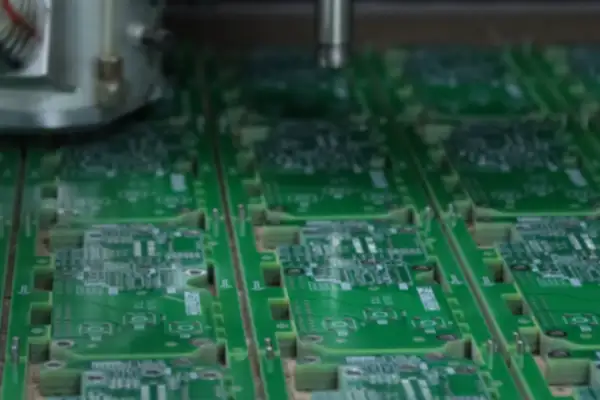
I recall a specific project where we were in a rush to push a new design into the prototyping phase. We reached out to several potential suppliers, each of whom boasted about their superior technology and state-of-the-art equipment. However, when it came time for them to actually produce a quick prototype to validate our design concepts, some began to drag their feet. They offered various excuses—claiming their production schedules were full or that the design was technically unfeasible with their processes. It was then that I truly realized how invaluable a partner is who can respond rapidly and deliver high-quality prototypes. This capability isn’t simply determined by whether they possess AOI inspection systems or X-ray machines; rather, it depends on whether they genuinely prioritize and take their clients’ needs seriously.
Speaking of delivery capabilities, what I value most is a partner’s ability to handle unforeseen circumstances—for instance, how flexibly their production line can adapt to accommodate a last-minute order insertion or minor design tweaks. We once worked with a supplier who seemed promising in every respect, yet whenever an urgent requirement arose, their response time would become excruciatingly long; their internal processes appeared rigid and inflexible. We subsequently switched to a smaller-scale partner, and the communication became much more direct. Their owner would even personally follow up on production progress over the weekend to ensure we didn’t miss our project milestones. That level of personal accountability is far more convincing than mere production capacity figures alone. When it comes to technical support, I don’t think you should focus solely on whether a vendor has a dedicated support team; the crucial factor is whether they truly understand your specific application scenarios. I recall an instance where we encountered impedance matching issues during high-speed signal routing. The vendor’s engineer not only provided concrete optimization suggestions but also proactively shared their practical debugging experiences from similar networking equipment projects, helping us steer clear of several potential pitfalls. This kind of support—rooted in real-world case studies—is far more valuable than merely offering generic, standard solutions.
Ultimately, selecting a vendor isn’t just about signing a contract; it involves a long-term process of collaboration and trust-building. I’ve come to realize that, rather than chasing after impressive-sounding industry certifications, it is far more worthwhile to spend time scrutinizing a vendor’s execution details on actual projects. After all, a truly reliable partner is one who can help you resolve issues during critical moments—not someone who simply parades a stack of certificates.
I find that designing network adapters is becoming increasingly fascinating these days. In the past, people might have viewed them as nothing more than small components plugged into a motherboard; however, that perception has shifted—particularly as we delve into high-speed applications.
While recently researching OCP-spec boards, I observed an interesting phenomenon. Many people assume that simply “stacking up on high-end materials” will solve all their problems—but that is simply not the case. We once tested a 25G adapter prototype that, despite utilizing premium-grade materials, still suffered from signal attenuation. We later discovered that the root cause lay in the PCB’s interlayer structural design; specifically, the seemingly insignificant micro-via processing turned out to be the critical bottleneck.
I recall a particularly illustrative project from last year. A client adamantly insisted on using a specific model of PCB material for their network adapters; however, during actual deployment, we discovered that the thermal dissipation capabilities were completely inadequate. After witnessing such scenarios repeatedly, one comes to understand this fundamental truth: the true test of a high-speed network adapter lies in the designer’s ability to achieve a holistic balance across the entire system design.
There is currently a common misconception within the industry: a tendency to blindly chase after the latest technical specifications. I’ve seen far too many teams jump on the 400G bandwagon—eager to launch projects before they’ve even fully mastered the fundamentals of multi-layer PCB fabrication. From a practical standpoint, simply achieving a stable and reliable 25G solution is, in itself, a significant engineering feat.
Speaking of the OCP standard, I believe its greatest value lies in providing a reusable design framework. However, the reality is that many manufacturers merely—and mechanically—replicate the physical form factors while completely neglecting the critical task of matching electrical characteristics. It is akin to dropping a high-performance racing engine into the chassis of a standard passenger car—it might look impressive on the surface, but once you try to drive it, you’re plagued by a host of operational issues.
I’ve recently noticed an interesting trend: some clients are finally beginning to adopt a more rational and pragmatic approach. They no longer blindly chase after theoretical specifications on paper; instead, they focus more intently on compatibility issues encountered during actual deployment. This shift reminds me of the early days when I was working on Gigabit Ethernet cards—a time when the industry was similarly transitioning from a blind pursuit of novelty toward a more pragmatic, solution-oriented approach.
As for future trends, I don’t believe there is any need to be overly anxious about the pace of technological iteration. After all, hardware development possesses a certain inertia. Rather than worrying about what “black magic” technologies might emerge next year, it is far more productive to first solidify our mastery of current multilayer PCB fabrication techniques; that is, without a doubt, the most reliable path to advancement.
I have observed many engineers designing network adapter PCBs who focus excessively on theoretical parameters while neglecting the realities of the actual application environment. While those complex mathematical formulas are indeed important, the factor that truly determines performance is often the designer’s intuitive understanding of how the circuit actually behaves.
I recall an instance where I was debugging a Gigabit Ethernet card project: although every parameter met the specifications, the signal quality remained consistently suboptimal. We eventually discovered that the issue stemmed from subtle impedance discontinuities along the differential signal traces—a problem that is nearly impossible to detect through standard calculations alone, requiring instead a process of iterative adjustment using simulation tools to pinpoint the exact location.
In terms of physical layout, I make it a practice to segregate high-speed signal zones into distinct areas. This approach serves a dual purpose: it preserves the integrity of the differential pairs while simultaneously preventing interference from other circuit modules. Occasionally, optimizing a signal trace by just a few millimeters may necessitate a complete restructuring of an entire PCB layer.
The design of the power delivery system is often underestimated. Many designers tend to focus their attention on signal traces during the layout phase, overlooking the critical impact that power supply quality has on overall system stability. I make it a habit to reserve ample space around key ICs for decoupling capacitors, thereby ensuring sufficient headroom for adjustments during the subsequent debugging phase.
Thermal management requires a holistic design approach. Simply increasing the number of ventilation holes does not necessarily solve the problem; the key lies in establishing effective thermal conduction pathways. In some instances, simply adding a solid copper pour on the underside of a chip can yield far better thermal performance than implementing a complex array of thermal vias.
These insights were gradually accumulated through hands-on experience with actual projects; theoretical knowledge gleaned from textbooks provides merely a foundational framework. Every project possesses its own unique characteristics, requiring the designer to flexibly adapt their design strategy to meet specific requirements.
Lately, I have been deeply immersed in contemplating the intricacies of network adapter design. Many people assume that simply selecting the right chipset is sufficient to ensure success; however, in reality, a robust and well-engineered PCB is the true linchpin for guaranteeing optimal performance.
I recall that just last year, our team encountered significant signal integrity challenges while designing a high-speed network adapter. I recall an instance where an engineer insisted on adding several extra decoupling capacitors to a PCB, only to inadvertently cause signal reflections. We later discovered that the root of the problem lay in a failure to adequately consider transmission line impedance matching. This incident made me realize that designing a PCB for a network adapter isn’t merely about stacking components; rather, it requires fitting every piece together as precisely as a jigsaw puzzle.
When it comes to ESD protection, many people’s first instinct is to simply add TVS diodes. However, I personally prefer to approach the issue through layout optimization—positioning sensitive circuitry as far away from the board edges as possible while simultaneously ensuring the integrity of the ground plane. We once conducted a test that revealed something remarkable: even without any additional protection components, a robust grounding scheme alone could mitigate the impact of electrostatic discharge by over 70%.
Nowadays, some manufacturers—in an effort to cut costs—opt to use standard FR4 material for high-speed network adapters; this is essentially walking a tightrope. The most extreme example I’ve witnessed involved a Gigabit Ethernet card whose data rate plummeted to a mere 100 Mbps when subjected to high-temperature environments. Upon disassembly, we discovered that the PCB had undergone slight deformation, resulting in uncontrolled impedance.
Regarding thermal management, I hold a somewhat unconventional view. Many designers tend to simply pile on heatsinks, but I’ve found that optimizing the PCB layout is often a far more effective strategy. For instance, widening high-current traces helps reduce heat generation within the copper foil, while strategically dispersing heat-generating components prevents the formation of localized “hot spots.” On one occasion, by simply tweaking the power plane layout on a network adapter PCB, we managed to lower the operating temperature by a full eight degrees—rendering heatsinks entirely unnecessary.
While testing some new models recently, I stumbled upon an intriguing phenomenon: using the exact same design schematic but sourcing PCBs from different manufacturers resulted in signal jitter levels that differed by a factor of more than two. This experience further solidified my conviction that selecting the appropriate base material is far more critical than obsessing over the specific brand of a particular component.
Ultimately, the process of designing a network adapter is akin to a balancing act. One must strike an optimal equilibrium between signal integrity, thermal management, and cost control; sometimes, the simplest solution proves to be the most effective.
I’ve recently been delving into the intricacies of network adapter PCB design, and I’ve noticed that many people tend to place excessive focus on the raw numerical figures listed in technical specification sheets. In reality, the factors that truly dictate the quality of day-to-day user experience are often far more practical in nature.
I recall an instance where I was helping a friend troubleshoot a network device issue. Although every technical metric met or exceeded the required standards, the device suffered from persistent, frequent connection drops. We eventually traced the problem back to moisture absorption in the PCB material, which had caused severe signal attenuation; simply swapping out the board for a new one resolved the issue completely.
Nowadays, many manufacturers seem preoccupied with stacking up high-end technical specifications while neglecting the fundamental requirement of basic operational stability. For instance, some network cards that boast high data rates actually perform poorly in typical office environments, simply because the average user has no need for such excessive bandwidth.
What I prioritize most is how a PCB performs under varying temperatures—particularly in server rooms lacking air conditioning—where those touted “high-performance” specifications often diminish significantly in practice.
When it comes to signal transmission, many people get fixated on theoretical figures; however, the ability to resist interference is actually far more critical. I once conducted tests in a factory workshop where standard network cards suffered from frequent disconnections, whereas an adapter featuring an industrial-grade PCB design operated with complete stability—despite its technical specifications appearing rather unremarkable on paper.
Wiring density is another easily overlooked aspect; I have witnessed far too many instances where stability was sacrificed in the pursuit of a more compact layout.
Ultimately, selecting a PCB for a network adapter is much like choosing a pair of shoes: a proper fit is far more important than outward appearance. There is no need to blindly chase after the absolute highest specifications; the key lies in finding the right balance that best suits your specific usage scenario.
During the network adapter design process, many people fall into a common trap: obsessing over hardware specifications while neglecting how well the product actually aligns with its intended application environment. I have seen countless engineers focus their efforts on selecting top-tier materials, only to discover that the resulting product performs quite mediocrely in real-world settings. This experience taught me that, sometimes, the most expensive option is not necessarily the most suitable one.
Take PCBs, for example: upon hearing the term “high-speed network card,” many people immediately assume they must use a multi-layer board—perhaps 10 layers or more—constructed from the finest low-loss materials. In reality, however, the choice should depend entirely on specific requirements. I once worked on a project where the client insisted on using the highest-spec materials available; the result was a doubling of costs with only a negligible improvement in performance. Conversely, on another project, we successfully achieved stable Gigabit Ethernet operation using standard FR4 material simply by optimizing our routing strategies. The key lies in grasping the fundamental principles of signal integrity, rather than blindly “stacking” expensive materials.
The design of network interface cards is actually quite fascinating; different types of connectors have a profound impact on PCB layout. For instance, the pin assignments of components like PCIe “gold fingers” and RJ45 jacks directly influence routing density and thermal dissipation paths. I recall an instance where our team was designing a compact network card and discovered a spatial conflict between the heat sink and the connector. We eventually resolved this issue by adjusting the PCB stackup structure. This experience taught me that ensuring mechanical compatibility often serves as a far greater test of design expertise than merely meeting electrical specifications.
Thermal management is another aspect that is frequently underestimated. Some people assume that simply attaching a heat sink is sufficient; however, a well-designed network adapter PCB actually requires careful consideration of the heat conduction paths. I once encountered a passively cooled network card where poor PCB thermal resistance design caused the chip temperature to skyrocket, leading to frequent network disconnections. We subsequently redesigned the copper foil distribution to bring the junction temperature back within a safe operating range. Thus, thermal management is not merely a matter of adding a component; it requires meticulous planning at the PCB level itself.
Ultimately, network card design is akin to an art of balance—finding the optimal equilibrium between cost, performance, and reliability. I increasingly believe that excellent design is not achieved by simply stacking up high-end specifications, but rather by truly understanding user needs and then utilizing the most appropriate technologies to fulfill them. This may well be the reason why certain designs—which appear unremarkable on the surface—manage to endure and thrive in the market over the long term.
I have long felt that many people’s understanding of network cards is overly superficial. People tend to fixate on chip specifications—treating them as mere talking points—while overlooking the unassuming foundation that truly determines performance: the network adapter PCB. This component serves as the very skeleton of the entire system; no matter how high-end the chip you employ, if the underlying PCB design is inadequate, you simply won’t be able to achieve the performance speeds the hardware is theoretically capable of delivering.
I recall an instance where I was helping a friend troubleshoot an aging server. It was equipped with a 10-Gigabit Ethernet card, yet the actual data transfer speeds were stuck at Gigabit levels. After hours of investigation, we discovered that the issue stemmed from improper impedance matching during the PCB routing phase, which resulted in severe signal reflection. While such issues might have negligible impact on standard circuit boards, they become a fatal flaw in high-speed networking environments.
Nowadays, many DIY enthusiasts enjoy building their own NAS units or workstations, and they often look to save money on the network card. They reason that since all network traffic runs on the Ethernet protocol anyway, how significant could the differences really be? However, when you truly need to transfer large files with absolute stability, that stuttering, stop-and-go progress bar will provide you with the definitive answer. I have witnessed instances where individuals—despite utilizing top-tier CPUs and RAM—experienced network latency higher than that of a standard configuration simply because the cheap network card they chose lacked a sufficient number of PCB layers. Here is a particularly interesting comparison: Why are industrial-grade Ethernet devices so durable? Part of the reason lies in their PCBs, which utilize thick-copper designs and feature exceptionally robust grounding strategies. While these boards may cost several times more than their consumer-grade counterparts, they can operate stably in a factory environment for well over a decade. In contrast, certain consumer-grade network cards often begin to suffer from port degradation issues after just a year or two of use.
In fact, the evolution of Ethernet—from 100 Mbps to 1 Gbps, and finally to 10 Gbps—is, at its core, a history of advancements in PCB manufacturing processes. From the early days of simple double-sided boards to today’s designs that routinely feature eight or ten layers, every generational increase in data speed has driven—and demanded—innovation in circuit board technology. Sometimes, when I see manufacturers touting their “next-generation” network controllers, I find myself far more interested in the number of PCB layers they’ve utilized and whether they’ve incorporated blind and buried via designs.
My recent tinkering with smart home systems has driven this point home: once the number of simultaneously online devices in a household exceeds fifty, standard consumer-grade routers and their built-in network cards begin to struggle. It wasn’t until I switched to an industrial-grade module that I realized the critical difference lies not in the brand of the chipset, but in whether that green circuit board—etched with its intricate web of traces—can withstand the sheer impact of high-concurrency data streams.
Ultimately, choosing a network card requires looking beyond mere surface-level specifications. The next time someone boasts to you about how “advanced” their networking equipment is, consider asking them about the pedigree of its PCB. After all, in the digital realm, even the most sophisticated algorithms rely on the most fundamental physical connections to realize their true value.
While recently experimenting with various network cards of different specifications, I stumbled upon a rather interesting phenomenon: many people select network cards based solely on the chipset model or interface speed, yet it is actually the quality of the PCB design that determines whether the card can withstand sustained, high-load operation over the long term. I once disassembled a second-hand network card nominally rated for 10 Gbps; while it did indeed hit full bandwidth speeds immediately after booting up, it began suffering from frequent packet loss after less than ten minutes of continuous large-file transfers—upon opening it up, I discovered that the power supply section had been skimped on to an absurd degree.
The PCB layout of a network card is, in reality, a rigorous test of balancing capabilities. Routing signal lines cleanly and precisely is one challenge, but one must also carefully consider how to position heat-generating components so as not to compromise the overall thermal dissipation of the board. To cut costs, some manufacturers position the network transformer on an inner layer, placing it in direct contact with the main controller chip. While this makes the board appear compact on the surface, in actual operation, the chip temperature frequently spikes to over 80°C. Although this design might yield favorable data during short-term laboratory performance tests, it is bound to lead to problems sooner or later when deployed in a server room for continuous 24/7 operation.
I pay particular attention to the design details of heat dissipation vents. Some inexpensive network cards feature heatsinks with completely bare undersides—lacking even basic airflow channels—turning their full-metal enclosures into heat traps. A well-designed network adapter PCB, conversely, incorporates a matrix of thermal vias in critical heat-generating zones; these vias work in conjunction with exposed copper foil on the reverse side to channel heat toward areas with better airflow. I once modified an older Gigabit Ethernet card simply by adding a few thermal vias to the back of the main controller chip; under full load, the temperature dropped by over 10°C.
Nowadays, some high-end network cards have begun utilizing a metal substrate as a dedicated heat dissipation layer—a truly clever approach, though one that imposes rigorous technical demands on the PCB manufacturer. I have seen samples from one particular brand where an aluminum alloy heat-dissipation layer was directly laminated into a four-layer circuit board; this layer serves a dual purpose—acting as a ground plane while simultaneously facilitating rapid heat conduction—a solution far more elegant than simply attaching a bulky, cumbersome heatsink. Naturally, this approach increases manufacturing costs; however, for scenarios requiring sustained high throughput, the willingness to spend a little extra to secure superior stability is a worthwhile investment.
Ultimately, when selecting a network card, one should not rely solely on the attractive specifications listed on marketing brochures. If the opportunity arises, it is best to conduct an actual stress test to monitor the board’s temperature fluctuations firsthand, or at the very least, examine teardown photos to verify whether the power delivery module and thermal design are sufficiently robust. After all, network stability often hinges on precisely these easily overlooked details.
What actually makes a long-term PCB supply chain partnership work — shared
Practical, experience-based strategies for how to reduce PCB procurement risks — from
Real factory-floor lessons on how to optimize a PCB manufacturing process —
- Experte für die Produktion kleiner bis mittlerer Chargen
- Hochpräzise PCB-Fertigung und automatisierte Montage
- Zuverlässiger Partner für OEM/ODM-Elektronikprojekte
Geschäftszeiten: (Mo-Sa) von 9:00 bis 18:30
Get quote, solution or any question, Andre always here to help