

Heat Dissipation Challenges and Solutions in PCB Circuit Board Design
Circuit boards are more than just that green board in a phone
Over the years, working with medical devices, I’ve noticed an interesting phenomenon: many people believe that the newer the technology, the better. This isn’t the case. The medical industry values stability and reliability most, especially for implantable devices. For example, the PCBs used in pacemakers don’t need the latest manufacturing processes; instead, they require time-tested designs that can operate stably in the human body for over ten years.
The unique nature of medical devices dictates a significantly higher manufacturing threshold than that of ordinary electronic products. A random consumer electronics PCB supplier might not even have conducted basic biocompatibility testing. Professional medical PCB manufacturers must consider long-term safety from the very beginning of material selection. For example, the encapsulation materials used in implantable devices must be able to withstand bodily fluid environments and must not release harmful substances. This is not a problem that can be solved simply by changing the solder resist.
I’ve seen some startups, in an effort to save costs, hire unfamiliar suppliers for their medical device PCBs, only to have their products fail during clinical trials. The circuit board’s insulation layer ages too quickly in humid environments, causing signal drift. While this might only affect user experience in consumer electronics, it’s a matter of life and death in the medical field.
In fact, medical-grade PCBs demand the supplier’s comprehensive capabilities. They must not only understand circuit design but also the usage scenarios of medical devices. For instance, even when handling weak signals, the PCB layout of an electrocardiograph and a blood glucose meter are completely different. The former needs to suppress electromagnetic interference, while the latter requires careful consideration of temperature compensation.
Some manufacturers now like to sell industrial-grade PCBs as medical-grade; this is very dangerous. In industrial settings, the worst-case scenario is production stoppage losses; however, problems with medical equipment can lead to major medical accidents. Therefore, when selecting a medical PCB supplier, we always conduct on-site inspections of their cleanrooms and testing processes. We need to see if they truly understand the specific requirements of the medical industry, rather than simply copying standard operating procedures.
Ultimately, the reliability of medical equipment isn’t achieved through cutting-edge technology, but through the rigorous attitude across the entire manufacturing chain. Every step from design to production must consider worst-case scenarios; this is the fundamental difference between medical devices and other products.
Speaking of the circuit boards in medical equipment, I think many people may not realize that they are completely different from the electronic products we use daily. I’ve seen small clinics, in an effort to save money, hire any ordinary PCB supplier for equipment repairs, resulting in numerous problems.
I remember once visiting a reputable medical PCB manufacturer where even the air purification levels in their workshop were divided into different areas. The manager pointed to the production line and said that every board produced here must be traceable to a raw material batch from over a decade ago. This level of rigor made me understand why medical equipment is expensive—after all, things used on people cannot be taken lightly.
When choosing a medical PCB supplier, I found one detail crucial: their attitude towards documentation. Reputable manufacturers meticulously record every step of the production process, like keeping a diary. This isn’t just for show; it reflects a genuine integration of ISO standards into daily operations.
Many new medical devices now feature wireless capabilities, posing new challenges to PCB design. The human body environment significantly impacts signal transmission; sometimes, what works fine in the lab may malfunction in real-world use. This requires designers to go beyond just specifications and consider actual application scenarios.
I particularly admire manufacturers who strike a balance between cost and quality. They don’t cram unnecessary features in pursuit of high-end features, nor do they cut corners to lower prices. This pragmatic approach is precisely what the medical industry needs most.
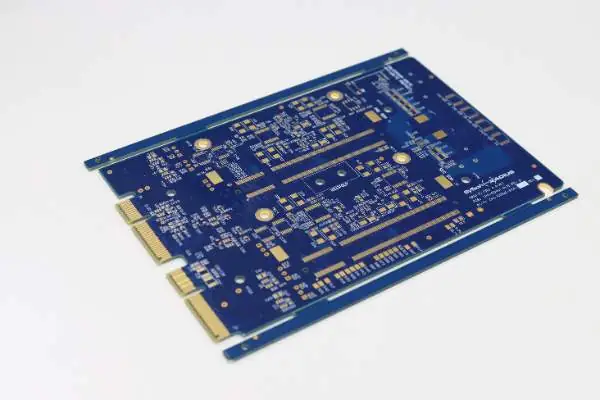
Every time I see news reports of medical device recalls, I wonder if a problem lies with the PCB at some stage. Perhaps it’s just a solder joint not meeting standards, or a slight difference in material batches—these seemingly insignificant details can have serious consequences in the medical field.
In fact, from a user’s perspective, we rarely pay attention to the appearance of the internal circuit boards of a device. But as someone working in the field, I know how much expertise lies behind these seemingly ordinary green boards. Next time you go to the hospital for a checkup, perhaps pay closer attention to those precision instruments—their reliable operation is the result of countless engineers’ painstaking efforts in PCB design.
Ultimately, what impresses me most about the medical industry is this dedication to detail. While it might seem overly cautious to outsiders, it’s precisely this attitude that allows us to confidently entrust our health to modern medical technology.
Recently, I was chatting with a friend who works in medical device R&D and noticed an interesting phenomenon—many medical device manufacturers are particularly conflicted when choosing circuit boards. They want the latest wireless technology to make their devices more portable and user-friendly, but they’re also worried about power consumption affecting battery life. This is indeed a dilemma.
In fact, the circuit boards for medical devices are quite different from those for ordinary electronic products; it’s not something that can be done by just finding any supplier. I remember once visiting a hospital and seeing the circuit boards used in their portable monitors. The small device used in those devices was particularly sophisticated, needing to ensure stable signal transmission while controlling power consumption so that the device could operate continuously for over ten hours. This is a significant challenge for circuit board manufacturers.
One of the biggest headaches I’ve encountered among medical circuit board manufacturers is balancing performance and power consumption. For example, users of the currently popular wearable health monitoring devices expect lightweight designs and long standby times, forcing manufacturers to work on circuit design, integrating various sensors and optimizing power management modules. Sometimes, engineers have to spend weeks repeatedly debugging to reduce power consumption by even a fraction of a milliamp.
Regarding wireless technology, medical devices increasingly prefer Bluetooth for data transmission, but this brings new problems. With so many devices operating simultaneously in a hospital, will their signals interfere with each other? Some high-end medical circuit board suppliers have begun conducting anti-interference tests, running dozens of devices simultaneously in a simulated hospital environment to find the most stable communication solution.
Another point many may not realize is that the lifespan requirements for medical device circuit boards are much higher than for ordinary household appliances. Imagine a medical device costing hundreds of thousands of dollars failing after only three to five years—hospitals certainly wouldn’t accept that. Therefore, reliable manufacturers focus on material selection and manufacturing processes, such as using more heat-resistant substrates and strengthening moisture protection. These details, though invisible to users, directly affect the device’s lifespan.
Some new medical devices are even starting to experiment with flexible circuit boards, especially those that need to be worn close to the body. Traditional rigid circuit boards do have limitations in terms of comfort, while flexible materials can better adapt to the curves of the human body. This presents a new challenge for manufacturers—how to ensure the stability and durability of circuits on flexible materials.
I think the future development direction of medical circuit boards may focus more on personalized customization. Different departments have vastly different requirements for circuit boards for their medical equipment. Emergency departments may require rapid activation, while operating rooms prioritize anti-interference capabilities. This necessitates close collaboration between manufacturers and hospitals to create the most suitable design.
I recently chatted with a friend who works in the medical device industry and realized that many people’s understanding of medical-grade circuit boards is still superficial. They often think that simply finding a reliable medical PCB supplier is enough, but the problem is much more complex.
I remember last year, for a patient monitor project, we commissioned three different medical PCB manufacturers to produce prototypes. We found that the boards produced using the same design files showed significantly different stability under high-temperature environments. Later, we discovered the problem lay in the potting process—one manufacturer used ordinary epoxy resin to save costs, which resulted in extremely rapid degradation of insulation performance under high humidity. This incident made me realize that the reliability of medical equipment cannot be guaranteed by a single aspect.
Many in the industry now focus solely on electrical performance testing before shipment, but environmental simulation is crucial. For example, PCBs used in implantable devices require corrosion testing that simulates the salt environment inside the human body. Some manufacturers even cut corners on basic temperature cycling, let alone these details. The most egregious case I’ve seen is a batch of pacemaker control boards that developed microcracks after only six months due to a mismatch in the thermal expansion coefficients of the potting materials—a problem that conventional testing simply cannot detect.
The medical industry’s biggest fear is a lack of traceability. A medical PCB supplier I previously worked with had a poorly recorded batch number for each batch of boards, leading to a complete recall when problems arose. Good manufacturers should be able to trace even the production date of solder resist ink; this is true medical-grade care.
Many people think medical PCBs are just ordinary boards with conformal coating, but choosing the right protective coating is more complex than imagined. While silicone is flexible, it has poor scratch resistance, and polyurethane is prone to embrittlement at low temperatures. No single material is universally applicable; the key is to choose the right one based on the specific usage scenario of the device.
What I dislike most is some manufacturers constantly talking about “compliance with standards.” Standards are merely the baseline; true reliability comes from designs that exceed those standards. For example, in vibration testing of the control board for angiography machines, we incorporate simulations of the frequency of surgical cart movement. These details are key to distinguishing ordinary PCBs from medical-grade PCBs.
Ultimately, the essence of medical electronics is trust. Patients don’t care what chips you use, but when they entrust their lives to this device, every solder joint must be reliable. Balancing this sense of responsibility with cost control is the essential skill that medical PCB manufacturers must cultivate.
I’ve recently been researching the circuit boards in medical devices and discovered that it’s far more complex than I imagined. I used to think it was just a board, as long as it could conduct electricity. But think about it: when this thing is used on a patient, every wire connects to a living person’s life.
A friend who works in medical device R&D told me that their biggest fear is encountering unreliable medical PCB suppliers. Once, during testing, they discovered that a certain interface would loosen under high temperatures, almost delaying the entire project by six months. These are details that ordinary people would never notice. For example, in an operating room environment, equipment may be subjected to frequent sprays of disinfectant, requiring circuit board coatings with special anti-corrosion properties. Ordinary industrial boards simply cannot meet such stringent requirements.
When choosing a medical PCB manufacturer, what I value most is not the lowest price, but their attitude towards problems. Good manufacturers will proactively tell you which designs may have risks, rather than shirking responsibility after problems arise. The biggest difference between medical-grade PCBs and other industrial boards is that they must withstand various extreme environments. From material selection to manufacturing processes, they must adhere to stricter medical certification standards, such as the ISO 13485 system, which requires a complete traceability mechanism.
I remember visiting a hospital’s equipment department last year and seeing that their monitors had been running continuously for eight years. The engineer said that the circuit boards inside had never failed; this kind of reliability is what medical equipment should be like. Many manufacturers now cut corners to reduce costs. Some companies even use recycled materials to make substrates. This may not show problems in the short term, but long-term use can easily lead to safety hazards such as insulation aging.
I think working in this industry requires a special sense of mission. Every board you produce might one day be used in an operating room or installed inside a patient’s body. This sense of weight makes truly responsible medical PCB manufacturers extremely cautious at every stage. For example, in the soldering process, medical-grade products require X-ray inspection of every solder joint, while ordinary consumer electronics might only undergo random sampling.
Sometimes, looking at the circuitry inside those precision instruments, you realize it’s not just technical work, but also a way of protecting life. After all, when the equipment is running, even the slightest fluctuation in current can affect the accuracy of the monitoring data. Just like an electrocardiograph must be able to capture millivolt-level ECG signals, this places extremely high demands on the circuit’s anti-interference capabilities.
When choosing partners, I pay particular attention to whether they have a long-term vision. Suppliers rushing to deliver often omit necessary environmental stress screening. Responsible manufacturers, on the other hand, simulate the operating conditions of equipment in different climates, such as tropical and frigid zones, to ensure the circuit board remains stable under various unexpected conditions.
Truly excellent medical PCBs should be as imperceptible as air. They don’t need flashy technology, but they must ensure they never fail at critical moments. For example, the circuit board of a defibrillator must complete charging and discharging within a thousandth of a second; this response speed requires hundreds or even thousands of extreme tests to verify.
Now, medical devices are becoming increasingly intelligent, and the requirements for circuit boards are constantly increasing. As practitioners, we must keep up with this change. The next generation of wearable medical devices requires circuit boards to simultaneously meet the demands of miniaturization and flexibility, which brings entirely new challenges to traditional manufacturing processes.
Ultimately, what moves me most about this industry is that every board we make ultimately connects to a life-saving network. This sense of value is hard to experience in other fields. Like the remote monitoring system I recently helped develop, which allows rural patients to receive timely expert treatment, the warmth brought by this technology is truly gratifying.
I recently chatted with a friend who works in medical devices and discovered an interesting phenomenon—many people think the difficulties in developing medical devices lie in software algorithms or sensor technology. In fact, what truly determines whether a device can pass approval and be launched on the market is often the PCB board hidden at the very bottom.
I remember last year, one of their company’s projects was stuck in the clinical trial stage for more than six months. The problem was with a seemingly ordinary monitoring module—the data would drift every time the device ran for a short period of time. Upon disassembly, it was discovered that a medical PCB manufacturer hadn’t properly addressed the distance between the heat dissipation area and signal lines during design, leading to thermal noise interference. Such details might be insignificant in consumer electronics, but in vital sign monitoring equipment, they are fatal flaws.
Those in the medical device industry know that those stringent standards aren’t intentionally designed to be difficult. For example, insulation performance may seem basic, but in practice, the factors to consider are far more numerous than imagined. Once, we tested a portable ultrasound device that exhibited a slight leakage current under high temperature and humidity conditions. The investigation revealed that the PCB board’s moisture absorption rate exceeded the standard; although the data was within the industrial standard range, it was completely unacceptable in a medical setting.
When choosing a medical PCB supplier, what I value most now is not the technical specifications, but whether they have genuine experience in the medical industry. One manufacturer I’ve worked with left a deep impression on me; in addition to standard testing, they proactively conducted aging tests, subjecting the boards to hundreds of hours of cyclical testing under varying temperatures and humidity levels. This seemingly clumsy approach actually avoids many potential risks, because the last thing you want with medical equipment is a low-probability failure.
Many people easily overlook biocompatibility. A prototype of a smart infusion pump was once returned because the volatile substances in its solder resist exceeded the standard. Although the PCB itself doesn’t directly contact the human body, gas exchange within the sealed chamber could still have an impact. These interdisciplinary details often require manufacturers to have a more comprehensive understanding of medical standards.
Ultimately, the special nature of medical-grade PCBs lies in the fact that they carry life-saving data and instructions. I’ve seen too many cases of simply modifying industrial boards and using them in medical devices. While this may save costs in the short term, it poses countless long-term risks. The truly professional approach is to prioritize reliability from the initial design stage, even if it means using multiple materials and iterating the design several times. After all, when this small circuit board starts working, it may be maintaining someone’s heartbeat rhythm.
I’ve always found the circuit boards in medical devices particularly fascinating. Many people may not realize how much intricacies lie behind these seemingly ordinary green boards.
I remember visiting a medical device factory once and witnessing their circuit board testing. The staff meticulously inspected each solder joint with magnifying glasses, their focus leaving a deep impression. Later, I learned that the substrates they used underwent special treatment to withstand repeated high-temperature sterilization—a concern unnecessary for ordinary electronic products.
When choosing a medical PCB manufacturer, my primary consideration is their quality control process. Reputable suppliers don’t rush delivery but spend considerable time conducting tests in extreme environments. Once, the supplier for a circuit board used in our project spent a month repeatedly adjusting a single temperature parameter; such meticulousness is rare in the consumer electronics industry.
In fact, the biggest fear for medical devices isn’t hardware failure, but rather latent malfunctions. Imagine data drift in a monitor or dosage errors in an infusion pump—these could have serious consequences. Therefore, during the design phase, we consider how to mitigate these risks through circuit layout, such as adding redundant circuitry and real-time self-testing functions.
I’ve seen some engineers choose overly compact component layouts in pursuit of miniaturization, which is dangerous in the medical field. Sufficient spacing is crucial not only for electrical safety but also for ease of maintenance. Recently, in a project, we specifically designed critical test points on the board edges, allowing for testing without disassembling the entire device during repairs.
In terms of material selection, medical PCBs often require high-specification substrates. Although this increases costs, it’s a worthwhile investment considering the equipment may operate continuously for ten years. We once compared the performance differences between ordinary and medical-grade materials in humid environments; the latter showed significantly better stability.
What impressed me most was the medical industry’s emphasis on traceability. Every circuit board has a complete record from substrate procurement to finished product testing. This transparency is crucial for ensuring patient safety and is what makes this industry unique.
The circuit boards used in medical devices are completely different from those used in ordinary electronic products. I’ve seen too many people simply apply industrial-grade methods and fail—medical device malfunctions cannot be resolved with a simple restart.
Take sterilization, for example. Ethylene oxide or radiation treatment puts immense strain on materials. Ordinary circuit board substrates are prone to delamination and blistering in high-temperature and high-humidity environments. We need to choose special epoxy resins or even polyimide—materials that can withstand repeated stress. Samples from suppliers must first be sent to the laboratory for accelerated aging tests; it’s not just a simple electrical performance test. For example, ethylene oxide sterilization can penetrate into the intermolecular spaces of materials. If the substrate’s moisture absorption exceeds the standard, the residual sterilizing agent will gradually erode the copper foil bonding surface. We once encountered a batch of boards that developed microcracks after the third sterilization, causing electrocardiogram (ECG) signal drift. Therefore, in addition to routine Tg point testing, we need to simulate the actual sterilization cycle for 5-10 cycles for verification, and even use scanning electron microscopy to observe the interface state between the fiberglass cloth and the resin.
Sometimes, the most troublesome parts are the seemingly simplest ones. For example, in the design of implantable devices, the circuit board needs to remain in the human body for ten or twenty years without failure. We will use isolation rings around critical signal lines to prevent leakage, and the spacing needs to be 50% larger than in conventional designs, even if this doubles the wiring difficulty. For example, in the nerve stimulation circuit of a pacemaker, the isolation ring not only needs to surround the signal line, but also needs to use a trapezoidal gradient design to avoid electric field concentration at right angles. We used simulation software to discover that a standard 0.2mm pitch can generate microampere-level leakage current in a bodily fluid environment, while increasing the pitch to 0.3mm maintains a safety margin even with aging of the encapsulation material. This design reduces board utilization by 15%, but ensures that patients will not suffer accidental electrical stimulation due to current leakage.
I particularly value manufacturers’ attention to detail. They must have their own cleanrooms; workers wearing anti-static clothing are a basic requirement. More importantly, every batch of boards must be tested for residual ions. Some small factories use ordinary cleaning agents to save money, resulting in corrosion of equipment over time. I will not consider cooperating with medical PCB suppliers who are always haggling over prices. For example, boards with excessive sodium ion residue used in blood analyzers may develop dendrite short circuits at the probe interface after three years. We require suppliers to provide ion chromatography reports for each batch, with chloride content below 0.1μg/cm², and the cleaning water must be 18MΩ ultrapure water. During an audit, it was discovered that a manufacturer, in an effort to save costs, used tap water for final rinsing. The resulting calcium and magnesium ions, forming a white frost after drying, directly caused abnormal impedance.
The most difficult aspect isn’t the technology itself, but rather making reliability a habit. In a previous project, we added two extra Zener diodes to the power module, which the client considered wasteful. However, this redundant design proved effective in preventing two voltage fluctuations during high-temperature testing of three prototypes. This invisible safety measure is the true value of medical design. For example, in the defibrillator charging circuit, we connect a low-power backup chip in parallel with the main voltage regulator chip. When the main chip fails due to transient high voltage, the backup chip can take over power supply within 3 microseconds. This design was used in a test device to record a 200ms voltage drop caused by the start and stop of an operating room elevator. The backup chip successfully maintained capacitor charging accuracy, preventing defibrillation energy deviation from exceeding the 5% safety threshold.
Many newcomers easily get caught in a vicious cycle of standard clauses. I think the key is to understand the logic behind the standards. For example, the reason for requiring reduced usage isn’t because the clauses state it that way, but because the sheer terror of experiencing the chip getting unbearably hot after 72 hours of continuous equipment operation is more convincing than any document. For instance, the rated current of a ventilator motor drive chip is 2A, but we design it for 1.2A because actual testing showed that the chip junction temperature could rise by 30°C when the voltage fluctuates in a hospital. Once, during a late-night test, I saw a 98°C hotspot on the surface of a chip on an infrared thermal imager. That burning sensation instantly made me understand that reduced usage isn’t about being conservative, but about a tangible understanding of responsibility for life.
I recently chatted with an old friend who works in medical device R&D, and he mentioned a rather interesting phenomenon. Many people think the core of medical equipment is software algorithms or sensor technology, but in reality, what truly supports the stable operation of these precision instruments are the printed circuit boards hidden inside. You might not realize it, but a small PCB board bears a much greater responsibility in medical settings than we imagine.
Take, for example, some medical PCB manufacturers I’ve encountered. The challenges they face are completely different from those in the general consumer electronics industry. Medical-grade PCBs aren’t simply about printing circuitry; there are far too many factors to consider. For instance, circuit boards for implantable devices need to operate long-term inside the body, requiring biocompatible materials; while equipment in operating rooms must withstand frequent sterilization and corrosion. These special requirements necessitate that medical PCB suppliers establish completely independent production lines and quality control standards.
Once, I visited a factory specializing in high-end medical devices, and their engineers showed me a very interesting comparison. For the same function, the medical version of the circuit board is much thicker than the industrial version. The engineer explained that this isn’t over-design—medical devices are often used in emergency situations and may not be shut down for ten years. This continuous operational reliability relies on the meticulous layout of every component on the PCB board and specialized packaging processes.
Many new medical devices are now moving towards miniaturization, such as wearable ECG monitors or portable ultrasound devices. These innovations actually benefit from advancements in PCB technology. Medical PCB manufacturers need to achieve more complex functions within a smaller space while ensuring absolute stability. It’s like dancing on the tip of a needle—ensuring performance without sacrificing reliability.
I particularly admire PCB suppliers focused on the medical field; they often have their own R&D teams. Because medical devices are rapidly evolving, PCB manufacturers need deep involvement in the design process from concept to product. Sometimes, a small optimization in wiring can significantly improve overall performance. This collaborative model is far more meaningful than simple OEM manufacturing.
Speaking of which, I think the domestic medical PCB industry is undergoing a very interesting transformation. Previously, the focus was more on cost control; now, more and more companies are establishing their own laboratories. A manufacturer of ventilator PCBs told me that they recently invested heavily in researching circuit stability under high-temperature environments to cope with the extreme conditions of long-term continuous operation.
Actually, when choosing a medical PCB supplier, what I value most is not price, but their quality control system. Medical equipment is different from other products; even a minor malfunction can have serious consequences. Good suppliers extend quality control to the raw material procurement stage. They even conduct additional biocompatibility tests on each batch of substrates. This rigorous attitude is what medical devices need most.
With the development of smart healthcare, the role of PCBs in medical devices will become increasingly crucial. It’s not just a carrier, but the nerve center of the entire system. Future medical PCBs may integrate more sensors and communication modules, which places higher demands on manufacturers. But in any case, reliability and safety will always be the bottom line for this industry.
Circuit boards are more than just that green board in a phone
From disassembling old routers to visiting electronics manufacturing plants, I gradually realized
As an electronics enthusiast, I’ve come to understand firsthand the impact of
- Experte für die Produktion kleiner bis mittlerer Chargen
- Hochpräzise PCB-Fertigung und automatisierte Montage
- Zuverlässiger Partner für OEM/ODM-Elektronikprojekte
Geschäftszeiten: (Mo-Sa) von 9:00 bis 18:30