

Heat Dissipation Challenges and Solutions in PCB Circuit Board Design
Circuit boards are more than just that green board in a phone
I recently chatted with a friend who manufactures PCBs and discovered a rather interesting phenomenon. Many customers are now blindly pursuing high-specification PCBs, as if choosing the highest Class level is all that’s needed. Actually, it’s not that simple.
Last year, I remember a smart home development team insisting on using the strictest Class standards for their product prototypes. The result was double the cost and a two-week delay in delivery. Their product was just a regular household appliance; such high reliability standards were completely unnecessary. It’s like driving an SUV to get off work – a complete waste of resources.
PCB manufacturing is highly experience-dependent. Some manufacturers have advanced equipment and impressive brochures, but their actual process control capabilities vary greatly. I’ve seen cases where manufacturers claimed to produce micron-level precision circuitry, but the samples they delivered to the customer couldn’t even achieve basic impedance matching.
Truly reliable manufacturers pay attention to detail. For example, they have dedicated teams of process engineers who monitor quality fluctuations at every stage of the production line daily. These experienced engineers can spot changes in the etching solution’s color with the naked eye, identifying problems faster than with instruments. This kind of experience cannot be replaced by buying a few imported machines.
Many startups nowadays easily fall into the trap of over-design. I once saw a team push the limits of performance to the micrometer level, resulting in a yield rate of only around 30%. Their product, used in typical consumer electronics, didn’t require such precise manufacturing.
When choosing a PCB supplier, I prioritize their ability to continuously improve. Good manufacturers proactively record data from each process adjustment, building their own database. This allows them to quickly provide the optimal solution for similar needs in the future, instead of starting from scratch each time.
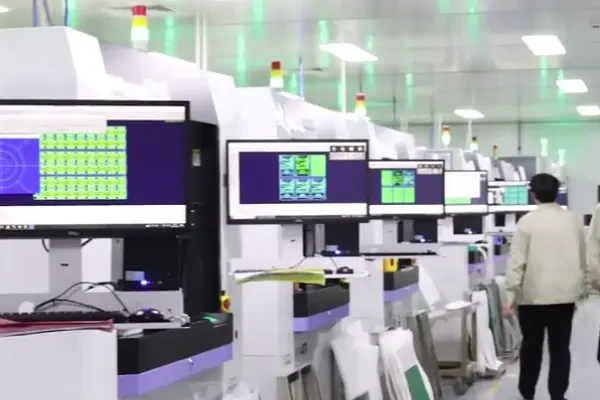
Ultimately, choosing a PCB is like choosing a partner; the key is compatibility, not blindly pursuing the highest standards. The best PCB is the one that suits your product positioning, requiring a clear understanding of your own needs.
I’ve always felt that many people make a mistake when choosing a PCB manufacturer—focusing too much on price while ignoring the material’s inherent properties. Especially when making high-frequency products, simply choosing any factory for prototyping can create hidden problems.
I remember last year a client came to me with a design, insisting on using standard FR-4 for a millimeter-wave module. The result was severe signal attenuation during testing. The problem was solved by switching to a suitable substrate, but the wasted time couldn’t be recovered.
High-frequency circuits are extremely demanding in terms of materials, much like putting regular gasoline on a sports car. Some manufacturers, in order to secure orders, stubbornly use mixed lamination, combining materials with different coefficients of thermal expansion, resulting in board deformation after prolonged use. The most extreme case I’ve seen was a radar board that delaminated directly in an environment with large temperature differences, requiring the entire project to be rebuilt.
In reality, truly professional manufacturers prioritize material matching. They don’t blindly recommend the most expensive substrates; instead, they first clarify the application scenario. For example, even with the same high-frequency requirements, military-grade and consumer electronics have completely different cost tolerances, and the corresponding lamination solutions should also differ.
Once, I visited the workshop of a long-established manufacturer and found their engineers using thermal analyzers to test the stability of each batch of materials. This meticulous attention to detail is a reliable guarantee, far superior to those laymen who only offer low prices.
Now, new technologies iterate too rapidly; 5G equipment hasn’t even been widely adopted yet, and automotive radar requires even lower signal loss. As a designer, I must constantly remind myself: choosing a board material isn’t about comparing prices on Taobao, but about finding a reliable partner for your circuitry. Sometimes, investing a little more in materials can save you several times the effort in later debugging.
Ultimately, PB board manufacturing is no longer just simple circuit printing, especially when it comes to high-frequency applications. A strong foundation in materials science becomes the core competitive advantage. Which established manufacturers have survived without relying on a deep understanding of materials to maintain their position in this fiercely competitive market?
Every time I see those so-called high-end circuit board designs, I wonder: why do so many people believe that using the latest equipment guarantees a good product? This is a misconception. Take some PCB manufacturers I’ve encountered, for example. They purchased the most expensive LDI equipment, yet their alignment accuracy remained unstable. What’s the problem? It’s not that the machines aren’t good enough, but that the operators haven’t truly understood the properties of the materials.
I remember visiting a factory once. Their etching process looked incredibly advanced, but the edges of the finished circuits were always rough. It turned out the chemical concentration was mixed too haphazardly. The technicians assumed following the manual was enough, ignoring the effects of ambient temperature and humidity on the chemical reaction. The result was severe side etching that affected signal integrity. This made me realize that even the best technology is just theory without real-world experience.
Another common misconception concerns interlayer alignment. Many factories boast that their LDI systems can automatically correct this, but in actual production, the significant differences in substrate expansion and contraction mean that machine self-adaptation alone is insufficient. Once, we tested a batch of boards where the theoretical alignment error should be in the micrometer range, yet the finished products showed visible misalignment. Investigation revealed that the temperature profile for the lamination process was set too aggressively, causing excessive substrate deformation. At that point, even the most advanced exposure technology couldn’t salvage the situation.
Ultimately, manufacturing isn’t about who has the most expensive equipment, but about who understands the details better. For example, the uniformity of copper thickness after etching or the adhesion of solder resist ink—these seemingly trivial points often determine the overall reliability of the board. I’ve seen too many cases where people spend a fortune on high-end lines only to fail due to fundamental process issues. It’s truly ironic.
Having worked in this industry for a while, you’ll find that truly top-tier factories prioritize fundamental skills. They don’t blindly pursue trendy technologies but thoroughly understand the traditional processes at each stage, then fine-tune them based on actual conditions. This is a sustainable approach; after all, circuit boards are tangible products, and concepts alone cannot guarantee quality.
Having worked in the PCB industry for a long time, you’ll notice an interesting phenomenon—some clients come to us PCB manufacturers with thick technical specifications, emphasizing “must meet IPC standards.” But if you ask them which specific level of acceptance standard they require, many can’t give a clear answer.
I think it’s better to understand the actual application scenario of your product than to get bogged down in those rigid rules. For example, if you’re making a regular consumer electronics product, insisting on the highest standards for every process can lead to unnecessary cost waste.
I remember last year a client who made industrial control equipment initially insisted that all boards be produced to the most stringent standards. We suggested they use different standards based on circuit function zones, resulting in a one-third reduction in cost while maintaining sufficient performance.
When it comes to high-speed circuit design, many people focus on the Dk value, but in reality, the stability of the substrate is often more important than the parameter itself. I’ve seen too many cases where the pursuit of ideal parameters has led to the neglect of the impact of temperature variations on signal integrity.
Once, while debugging a high-frequency board for a client, I discovered severe signal attenuation. After much investigation, I found it was due to uneven resin flow during lamination, causing localized fluctuations in the dielectric constant. Adjusting the lamination process resolved the issue.
There’s a misconception in the industry that finding a supplier is simply about finding the lowest price. However, the value of a professional PCB manufacturer lies precisely in their mastery of these process details. The same design files can result in vastly different performance levels depending on the factory.
I appreciate clients who are willing to spend time communicating their design intent. Sometimes, simple adjustments to routing rules or material selection can significantly improve yield rates. This is far more effective than post-production wrangling over acceptance standards.
Truly knowledgeable engineers understand that PCB quality isn’t determined by the final inspection process; it’s the natural result of material selection and every stage of manufacturing. Instead of getting bogged down in standard specifications, focus on the factory’s actual process control capabilities.
Every time I talk to clients about PCB manufacturing, I find it quite interesting. Many people think that simply finding a factory, throwing in their drawings, and that’s it—it’s not that simple. I’ve seen too many designs that look beautiful on the drafts fail on the production line. For example, some traces are too densely packed without sufficient clearance; signal layers and power layers are too close together, easily causing interference. If these details aren’t pointed out before production, rework is inevitable.
I particularly value manufacturers who proactively offer design suggestions. Last month, a client wanted an HDI board with an extremely complex design, densely packed with traces only about 0.075 mm wide, and required a stacked via structure. We contacted several manufacturers, most of whom said they could do it without problems. Only one pointed out that the spacing of several vias was too small, which could cause problems during lamination. And indeed, they were right. This kind of experience can’t be solved by equipment alone; it requires engineers to develop a feel for the product through years of experience on the production line.
Speaking of equipment, many factories are touting the advanced nature of their laser drilling machines. However, the key isn’t the machine itself, but whether the operator can fully utilize its capabilities. Even with the same Mitsubishi equipment, some factories produce holes with smooth, neat walls, while others produce rough, even burnt, holes – the difference is huge. Furthermore, the laser parameters directly affect the subsequent electroplating and filling effect. If the holes aren’t drilled well, the copper won’t fill properly, and reliability tests will definitely fail.
I think when choosing a factory now, you can’t just look at whether they have MES or ERP systems. Of course, transparent production is good, but more importantly, does the factory have people who truly understand the technology? Last time I visited a factory, their production director led me through the production line, pointing to a board undergoing AOI inspection, saying they were very familiar with this customer’s design habits and always paid special attention to impedance control because they had worked with them several times before and knew where the problems tended to occur. This long-term, built-up trust is more reliable than any system.
Ultimately, high-end manufacturing boils down to people. Even the best equipment needs skilled operators. Spend time on the production line, and you’ll find that veteran workers can tell the bonding temperature is right just by touching the board, or determine the additive ratio by glancing at the electroplating solution. This experiential data isn’t stored in the system, but it determines the fate of a batch of boards.
Therefore, when choosing partners, I first ask about the average tenure of their production line workers. Even with new equipment, I wouldn’t easily place an order with a factory with a high turnover rate. PCB manufacturing isn’t about pressing buttons; it requires a honed feel, like a seasoned chef skillfully tossing a wok – a slight miscalculation and the flavor is ruined.
I’ve always felt that many people’s views on PCB manufacturers are outdated. They treat manufacturers as a simple processing link – you provide the drawings, I produce – this idea is no longer viable in today’s world. A recent conversation with a smart home hardware team perfectly illustrates this point.
They initially partnered with a manufacturer offering very low prices. However, the first batch of samples showed severe signal interference. They later discovered that the manufacturer hadn’t informed them about the board material selection beforehand. Good manufacturers should be involved from the design stage. They’ve seen countless similar designs and know where problems are likely to arise.
Hardware development is most vulnerable to constant revisions. Each revision not only wastes time and money but also leads to lost market opportunities. I now place particular emphasis on whether manufacturers are willing to invest time in understanding our product logic, rather than simply following specifications.
Once, during a high-density integration project, the manufacturer’s technical team proactively suggested adjustments to the layer stack design, helping us avoid potential heat dissipation issues. This collaboration went beyond the traditional OEM relationship; it was more like partnerships in problem-solving.
Now, when choosing PCB suppliers, I focus more on their technical communication skills and willingness to solve problems than simply comparing prices. After all, good hardware products are the result of collaborative efforts between designers and manufacturers, not just a simple buyer-seller relationship.
I believe that in the future, hardware teams will increasingly value this deep collaborative capability when choosing partners because electronic products will only become more complex; the era of working alone is over.
Circuit boards are more than just that green board in a phone
From disassembling old routers to visiting electronics manufacturing plants, I gradually realized
As an electronics enthusiast, I’ve come to understand firsthand the impact of
- Experte für die Produktion kleiner bis mittlerer Chargen
- Hochpräzise PCB-Fertigung und automatisierte Montage
- Zuverlässiger Partner für OEM/ODM-Elektronikprojekte
Geschäftszeiten: (Mo-Sa) von 9:00 bis 18:30