

Heat Dissipation Challenges and Solutions in PCB Circuit Board Design
Circuit boards are more than just that green board in a phone
I’ve always found the selection of PCB materials quite interesting. When I first started designing circuits, I also believed in the versatility of FR4 PCBs – after all, they’re cheap and readily available! But later I realized things weren’t that simple.
I remember once working on an RF project using ordinary FR4 laminates and running into trouble – the simulation was fine, but the actual signal attenuated significantly! Later I understood the problem lay in the material characteristics! The dielectric constant of FR4 fluctuates too much with temperature; even a slight increase in workshop temperature in the summer would cause the electrical performance of the entire board to drift significantly!
High-frequency circuits have extremely stringent requirements for stability! Even a few percentage points of dielectric constant drift can completely mess up impedance matching! Now I’d rather spend a little more on specialized high-frequency materials! Although the unit price is higher, the increased yield makes it more cost-effective!
Some colleagues think I’m being too meticulous! But they haven’t calculated the cost of rework – boards that are already soldered but scrapped due to material problems are a real waste! Especially multi-layer boards, which can’t even be disassembled! Now, when I see cases of people stubbornly using FR4 for high-frequency designs, I can’t help but want to offer some advice!
A truly good design should allow materials and circuits to complement each other! Just like choosing clothes for the occasion! You can’t expect the same FR4 laminate to handle both power boards and microwave circuits! Some costs really shouldn’t be skimped on!
Recently, I helped a friend modify an antenna design by replacing the substrate with a high-frequency specific laminate, and the effect was immediate! In fact, the growth of an engineer is a process of continuously understanding the limitations of materials! Knowing when to use which material is an art in itself!
Ultimately, PCBs aren’t about being more expensive, but about being more suitable! But the prerequisite for suitability is that you truly understand the characteristics of each material!
When designing circuit boards, I noticed a rather interesting phenomenon—many people instinctively choose FR4 whenever PCB materials are mentioned. This stuff is indeed like a universal glue in the industry, sticking to everything, but sometimes the bond isn’t very strong.
I remember last year helping a team that made medical equipment revise their design. They initially used standard FR4 laminates, but during testing, they found that the signal attenuation was 40% higher than expected. At the time, the entire team was struggling with whether to switch to more expensive materials, but the key issue wasn’t the material price at all, but that they hadn’t clearly considered the environment in which the equipment would operate.
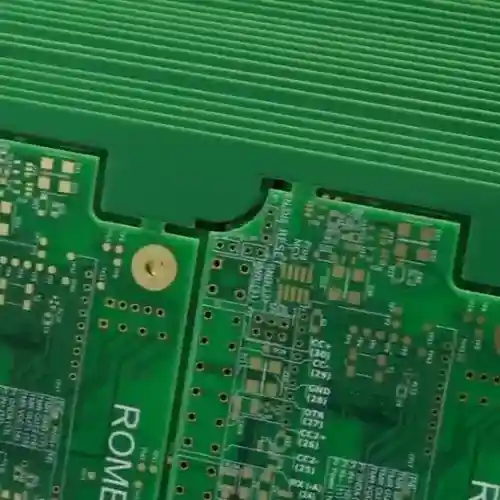
In high-frequency applications, FR4 does expose its shortcomings. I once tested the performance of two materials above 5GHz. The dielectric loss of ordinary FR4 was like a leaky pipe, while the data curve of professional high-frequency laminates was much smoother. However, if you’re just making a smart flowerpot controller, there’s no need to spend three times the cost for that little bit of performance.
Now, some engineers easily fall into a parameter competition, always thinking that a few percentage points lower in DF value can change the fate of the product. But in reality, consumers can’t feel a 0.1dB signal difference, while a 30% increase in cost will immediately make the purchasing department jump.
The most successful case I’ve handled was actually a counter-intuitive approach—using high-frequency laminates for the router antenna part and continuing to use FR4 for other control units. This mixed solution saved half the money compared to using all high-end materials, and the performance tests still met industry standards.
Choosing materials is like choosing glasses; the right prescription is key. Buying aerospace-grade lenses for mild nearsightedness is simply a waste of resources.
Recently, I’ve come into contact with several young teams that are particularly interesting. They even deliberately use FR4 for extreme testing in the early prototype stage, recording which frequency bands experience attenuation, and then upgrading the materials accordingly. This pragmatic attitude is much smarter than blindly piling on expensive materials.
Ultimately, material selection is always a tightrope walk between performance, cost, and actual needs. Instead of obsessing over parameters, ask yourself: Does the user really need to pay for this tiny improvement? While recently organizing my workshop, I came across several circuit boards from different eras and noticed an interesting phenomenon: the old radio motherboards had started to yellow and deform, while the smart home controller I made five years ago using an FR4 substrate remained unchanged. This reminded me of something my mentor often said when I first started in the industry – choosing a circuit board material is like choosing a partner.
Many people think that any PCB can be made with FR4 material. Last year, when I was helping a friend modify baking equipment, I encountered this situation: to save costs, they used ordinary FR4 substrates for the control board of a high-temperature oven, which resulted in frequent machine restarts. The problem was only solved after switching to a metal substrate. Sometimes, seemingly universal materials can fail in specific scenarios.
Once, while visiting an automotive electronics factory, I saw them conducting vibration tests. Circuit boards made of ordinary FR4 material developed tiny cracks under continuous vibration, while samples made of special composite materials remained intact. This made me realize that mechanical strength is far more important in the field of automotive electronics than we might think.
Now, some young engineers easily fall into the trap of material selection, either blindly pursuing new models or simply sticking to old solutions. The criteria are actually quite simple, like choosing shoes: you need to consider both the occasion and the frequency of use. In the smart meter projects I’ve worked on, ordinary FR4 boards have worked stably for more than ten years, but for industrial robot joint control boards, fatigue resistance must be considered.
A recent case involving medical equipment further illustrates the point: even within the same FR4 grade, the insulation performance of a substrate used in an electrocardiogram machine and a circuit board in an MRI machine is vastly different. The former focuses on signal stability, while the latter also needs to consider electromagnetic compatibility. These details are often more important than the flame retardancy index.
Ultimately, material selection is like cooking ingredients: freshness is important, but the logic of combining them is even more crucial. Last week, when helping a drone team select materials, they were initially fixated on imported high-end substrates. Later, they found that after adjusting the wiring design, domestic FR4 could also meet the flight control requirements. This experience further validated my view: excellent engineers should understand the characteristics of each substrate, just like a chef understands the properties of different ingredients.
I’ve seen many people overly focused on the technical parameters in data sheets when choosing circuit board materials. In reality, what truly affects the design is how the material performs in actual working conditions. Let’s take the commonly used FR4 PCB as an example. It’s indeed a versatile material, but it reveals its limitations in certain scenarios. I remember once testing a car radar module; the ordinary FR4 board showed significant signal attenuation in high-temperature environments. We only solved the problem after switching to a specially treated high-frequency laminate – this made me realize that dielectric stability is more important than the numbers on the datasheet.
Many people think that a higher dielectric constant is always better for shrinking circuit size, but high-Dk materials have very demanding processing requirements. Once, I tried using an ultra-high dielectric constant material for a millimeter-wave antenna, but the microstrip line width became so thin that it approached the limits of the manufacturing process, increasing processing difficulty and cost. In fact, many new laminates now achieve equivalent high integration through structural optimization; for example, hybrid dielectric designs can balance size and performance.
Humid environments are the real test. Last year, equipment in a seaside project frequently malfunctioned. Upon disassembly, we found that the copper foil on the ordinary FR4 boards had oxidized and peeled off. Later, we switched to laminates with special coatings, which remained stable even in the corrosive environment of sea breezes. This experience made me realize that it’s better to prioritize environmental resistance during material selection than to try to fix problems afterward.
Ultimately, material selection is more like cooking – there’s no single perfect ingredient; the key is how you combine and use them. I often mix FR4 and high-frequency materials, using high-performance laminates for signal processing and economical FR4 for power management and other frequency-insensitive areas. This controls overall costs while ensuring core performance.
Recently, I noticed an interesting phenomenon: some manufacturers are starting to offer customized dielectric constant laminate services. This means we can adjust material properties according to specific wavelength requirements, such as using a gradient Dk design in 5G base station power amplifier modules, which controls the standing wave ratio while avoiding the cost waste of over-design.
A truly good design should be like tailoring a suit – understanding both the language of the materials and the needs of the circuit. Sometimes, the most expensive high-frequency laminate is not as suitable as an enhanced FR4 with surface treatment – especially in mobile devices where both mechanical strength and electrical performance need to be considered.
I’ve been pondering something lately – why do some people think thinner circuit boards are always better? It’s not that simple. Remember last year when I helped a friend revise the design drawings for a Bluetooth speaker? He insisted on using ultra-thin FR4 PCBs, saying it was to save space. What happened? It fit, but heat dissipation became a huge problem; after using it for a while in the summer, the casing got scorching hot. Sometimes you can’t just look at the thickness; you have to consider the actual application scenario.
Have you noticed that many connector manufacturers are now pushing miniature connectors? This creates a contradiction – the connectors are getting smaller, but the power transmission requirements are increasing. If you still use the old approach to selecting board materials, the gold fingers might detach after just a few insertions and removals. I’ve seen the most extreme case where a certain brand of car dashcam had a 30% return rate due to mismatched PCB thickness and connectors.
Speaking of multilayer boards, there’s a detail that’s often overlooked: changes in dielectric layer thickness directly affect signal integrity. I once tested 1.6mm and 2.0mm FR4 samples from the same manufacturer; when sweeping the frequency with a network analyzer, the impedance curves differed by fifteen percent. This isn’t some kind of voodoo; in high-frequency circuits, capacitive effects genuinely affect the waveform.
Flexible PCBs are interesting, but don’t blindly pursue thinness. Last week, I disassembled an industrial sensor; its curved PCB was actually made by heating and pressing a 1mm substrate. Only two parts truly needed to be bent; the other parts maintained a rigid structure. This hybrid approach is quite clever.
Choosing board material is like getting glasses – the right prescription is most important. In at least 40% of the projects I’ve worked on, the original thickness plan needed adjustment. Sometimes adding 0.2mm of thickness saves the need for extra reinforcing ribs; sometimes reducing the thickness by 0.3mm requires adding an extra layer of ground copper foil. These experiences aren’t something you’ll find in textbooks.
Oh, and a reminder: different PCB thicknesses require different reflow soldering temperature profiles. Last time, a guy copied standard parameters, and all his 0.8mm boards warped like potato chips. This shows that even with boards from the same manufacturer, if the thickness changes, the process needs to be fine-tuned.
Ultimately, thickness is never an isolated parameter; it’s tied to connector selection, lamination process, and even later maintenance. Before finalizing a design, ask yourself: does this size truly match all aspects of the product’s lifecycle?
Every time I see articles that discuss circuit board thickness as a simple parameter, I find it a little amusing. It seems like choosing a thicker or thinner board is just a numbers game.
In reality, I’ve worked on many projects and found that many people initially overlook the actual requirements of the components. Some components are inherently picky about the board, such as certain through-hole devices, which are particularly sensitive to the flatness of the mounting surface. If you use a very thin FR4 PCB, even a slight temperature difference during soldering can cause the entire board to warp, and solder joint cracking is a common occurrence.
I remember a smart wearable project last year where the team chose a 0.6mm board to achieve a thin and lightweight design. However, problems arose during the surface mount assembly – the miniature accelerometer always had intermittent solder joints. Later, they discovered that the board was too soft, and the deformation during reflow soldering caused the pins to lift off the pads.
Thicker boards certainly have their advantages. I previously worked on a main control board for industrial equipment, using 2.4mm FR4 material. Although a bit heavy, it was incredibly stable; high-power relays were directly mounted on the board and remained perfectly still during vibration testing. However, if you were to apply this solution to a drone flight controller, it would probably have difficulty even taking off.
Ultimately, thickness is never an isolated parameter. It’s intertwined with the weight of the components, the thermal expansion coefficient, and even the assembly process. Sometimes you see “recommended board thickness 1.6mm” in the datasheet, but you still need to consider the pressure value of the pick-and-place machine on the production line, or the design of the housing’s snap-fit connectors.
Recently, I encountered an interesting situation: a customer insisted on using an ultra-thin PCB for a car navigation system, claiming that their competitors were doing the same. As a result, during the initial product testing in vehicles, the BGA chip solder balls fractured due to road vibrations. Now they finally understand why German car manufacturers generally use substrates thicker than 1.8mm.
So now I’ve developed a habit: after receiving the component list, I first identify the components sensitive to mechanical stress, and then work backward to determine the appropriate board thickness. This is much more reliable than simply following industry standards, because circuit boards are meant to work, not to be displayed as works of art in a showcase.
I always find the process of material selection quite interesting. When I first started designing circuit boards, I was also confused – seemingly similar board materials produced vastly different results. Only after working on several projects did I understand that the characteristics of the material often determine the direction of the entire design. Let’s take FR4 as an example. Many people consider it a standard option, but I think the best thing about this material is its balance. It’s neither too delicate and difficult to handle nor does it hinder performance, making it particularly suitable for scenarios requiring stable operation. I remember once helping a friend with a small industrial controller project; the original special material was too expensive, almost causing the project to be abandoned. Switching to FR4 not only met the performance requirements but also reduced the overall budget by a third. It’s in situations like this that you truly appreciate how important choosing the right material is.
In PCB design, the biggest pitfall is taking things for granted. For example, board thickness seems like just a number, but in reality, it affects the overall heat dissipation and structural strength. I’ve seen cases where people made multi-layer boards too thin to save space, resulting in frequent malfunctions – sometimes adding just a few tenths of a millimeter in thickness can avoid a lot of trouble. These details are often more practical than pursuing high-end materials.
Now, when I see designs that immediately pile on expensive materials, I feel a little regretful. A truly good design should be based on understanding material characteristics and making trade-offs, not blindly chasing the latest trends. After all, even the most complex circuits ultimately rely on a physical PCB, and the synergy between the material and the design is often more important than the performance of individual components.
Recently, I used an FR4 substrate again in a smart home gateway project. Although many new materials are available now, considering the long-term stability, I still chose this classic option. Sometimes, the most suitable option isn’t the cutting-edge one, but rather a choice proven over time. This pragmatic design approach can actually help a product go further.
Over the years, I’ve worked on many circuit board design projects and noticed an interesting phenomenon. Many people instinctively think of FR4 as a universal option when it comes to PCB materials, but this idea is quite dangerous.
I remember a client who made medical equipment initially insisted on using FR4 for high-frequency signal processing. However, during testing, they found severe signal attenuation. They only solved the problem after switching to a specialized high-frequency laminate. This type of laminate is indeed much better than ordinary FR4 in terms of dielectric constant stability, especially when the frequency exceeds 1GHz.
Of course, this isn’t to say that FR4 is a bad material; its mechanical strength is indeed reliable, and its price is affordable, making it perfectly adequate for ordinary consumer electronics. However, when it comes to radio frequency or microwave applications, its loss factor becomes a major drawback, like using ordinary scissors to cut precise circuit patterns—it’s not that the tool itself is flawed, but rather that it’s unsuitable for the task.
Once, while visiting a car radar production line, I noticed that they specifically chose special laminates even for the antenna substrates. The engineers said that although the cost was 30% higher than FR4, signal fidelity directly affects detection accuracy, and this is not an area where they can cut corners.
Now, when I see young designers immediately diving into drawing schematics, I always ask about the working frequency range. Some projects clearly involve high frequencies, yet they’re still using standard FR4 PCBs. This is like putting bicycle tires on a sports car—it can still run, but it won’t perform to its full potential.
The choice of materials is fundamentally about respecting physical properties. FR4 is like reliable work boots, suitable for everyday commuting, but for rock climbing, you need professional climbing boots.
While renovating my old house recently, I found a radio from the 1980s. When I opened it and saw the yellowed circuit board inside, I suddenly realized that we’re always pursuing the latest technology, but we’ve overlooked the logic behind material evolution.
Many people think that the transition from paper-based substrates to fiberglass is an inevitable trend, but I think it’s more like an accident. An old factory foreman once told me that early substrates made of compressed cotton paper, although prone to moisture absorption and deformation, were actually more stable than some modern materials in a humidity-controlled laboratory environment.
Once, I helped a friend repair an old oscilloscope and found that it used an FR3 substrate. This material is rarely seen now, but its unique woven fiberglass structure results in particularly uniform signal attenuation. In contrast, while the currently popular FR4 has impressive specifications, it often exhibits signal distortion at the edges in practical applications.
I remember visiting a production line that was still using old equipment, and their quality control supervisor had an interesting point of view: newer PCB models aren’t necessarily suitable for all scenarios. For example, the dielectric constant fluctuations of FR4 boards in high-frequency environments can affect the readings of precision instruments. They still insist on using custom-made substrates in certain processes, not out of conservatism, but based on actual testing.
The most exaggerated example I’ve seen is a research unit that ordered a batch of ceramic substrates, but the mismatch in thermal expansion coefficients led to the entire batch of equipment being scrapped. In fact, in many cases, ordinary epoxy resin PCBs can avoid these kinds of problems.
Nowadays, the industry often talks about fifth-generation materials, but what truly determines the lifespan of a circuit board is often the basic manufacturing process. Once, I plugged in a radio from thirty years ago, and the circuit board, covered in oxidation spots, still worked perfectly – material advancements are important, but choosing the right material for the right application is key.
Ultimately, choosing a substrate is like choosing shoes; more expensive isn’t always better, it depends on the intended use. Next time you design a circuit, ask yourself: does this project really need top-of-the-line materials? Perhaps a standard-grade PCB is the optimal solution.
Circuit boards are more than just that green board in a phone
From disassembling old routers to visiting electronics manufacturing plants, I gradually realized
As an electronics enthusiast, I’ve come to understand firsthand the impact of
- Experte für die Produktion kleiner bis mittlerer Chargen
- Hochpräzise PCB-Fertigung und automatisierte Montage
- Zuverlässiger Partner für OEM/ODM-Elektronikprojekte
Geschäftszeiten: (Mo-Sa) von 9:00 bis 18:30