

What Documents Are Required for PCB Production: A Field Guide From Real Industrial Weighing Controller PCB Projects
Many engineers focus too much on technical parameters early on and overlook
I generally steer clear of suppliers who offer rock-bottom prices but remain vague about the technical details of their manufacturing processes. After all, the quality of an assembled PCB directly impacts a product’s lifespan—especially for devices intended for continuous, long-term operation. The most extreme case I ever encountered involved a supplier with an unstable SMT process; during mass production, the cold solder joint rate for resistors skyrocketed to 15%, nearly derailing the entire project.
There is actually a very simple way to gauge a supplier’s reliability: see if they are willing to let you tour their production lines. Those willing to transparently showcase their manufacturing workflow typically possess greater confidence in the quality of their own processes. I recall working with a Taiwanese manufacturer whose workshop was so meticulous that even the line operators would proactively record process parameter variations for every single batch—a level of detail that clearly reflects superior management standards.
Component procurement is another stage that is frequently overlooked. Many people assume that simply matching the specifications in the datasheet is sufficient; however, components from different manufacturing batches can exhibit subtle variations in their soldering characteristics—a factor that is particularly critical in the current climate of global chip shortages.
Whenever I see people agonizing over the minimum order quantity (MOQ) requirements for assembled PCBs, I can’t help but chuckle. After working in this industry for over a decade, I’ve observed an interesting phenomenon: clients who obsessively haggle over the absolute minimum quantity often end up spending more money in the long run. I recall a smart home startup last year that insisted on finding a manufacturer willing to accept orders for just a single test board. The result? They cycled through five different suppliers in three months; each had different process standards, and they ended up with a room full of samples that were completely unsuitable for mass production.
Those who truly understand the industry realize that the priority isn’t driving the Minimum Order Quantity (MOQ) down as low as possible, but rather finding a partner whose growth pace aligns with your own. The smartest approach I’ve seen involves finding manufacturers willing to offer phased pricing—for instance, producing an initial batch of 5 units for engineering validation, followed by a small-batch test run of 50 units, and finally adjusting the mass production volume based on market feedback. While the unit price in the early stages might be 20% higher, this strategy prevents the inventory disasters that often result from blind, premature production.
Nowadays, some manufacturers market “orders starting from just one unit” as a key selling point, but this often conceals a hidden agenda. They might either amortize the engineering setup costs across subsequent orders or simply cobble things together using whatever stock components are on hand, completely disregarding the critical issue of component batch consistency. I once had a client, lured by low prices, choose a vendor advertising “unconditional single-unit customization.” Upon receiving the shipment, they discovered that the capacitors had a manufacturing date two years earlier than the PCB itself. Such seemingly flexible solutions often end up planting even more hidden landmines.
Regarding pricing, I particularly want to dispel a common myth: don’t fixate solely on the unit price; instead, look at the Total Cost of Ownership. I once helped a medical device company select a supplier. Vendor A quoted a price 40% lower than Vendor B but required a one-time order of 5,000 units. Consequently, when the product failed to pass certification, they were left sitting on warehouse inventory worth over three million dollars. Vendor B, on the other hand—despite having a unit price 15% higher—supported a tiered ordering structure, ultimately saving the client over two million dollars in cash flow.
In reality, for small-to-medium batch orders, the most critical factor to look for is whether the manufacturer possesses flexible production lines. We once partnered with a factory in Shenzhen that, while charging a setup fee for orders under 10 units, could rapidly switch between different manufacturing processes using the same set of equipment. This capability is particularly beneficial for R&D projects that require frequent iteration. We worked on a drone project where the antenna design underwent three revisions within just two weeks; had the manufacturer not possessed that level of flexibility, we would never have been able to meet the trade show deadline.
Ultimately, choosing a supplier is much like finding a personal fitness trainer: you shouldn’t look for the cheapest option, but rather the one who best understands and adapts to your specific rhythm. Some people constantly expect to receive bespoke, custom-tailored services at mass-market prices—a fundamentally contradictory expectation. True cost-effectiveness lies in ensuring that every dollar you spend is strategically invested at the critical junctures of your business’s development.
I’ve always felt that the most captivating aspect of electronic products is the transformative journey they undergo—evolving from mere blueprints into tangible, physical objects. Watching a bare circuit board slowly fill up with various components—transforming into an Assembled PCB and subsequently entering the PCBA stage—feels akin to watching a living entity gradually being imbued with a soul.
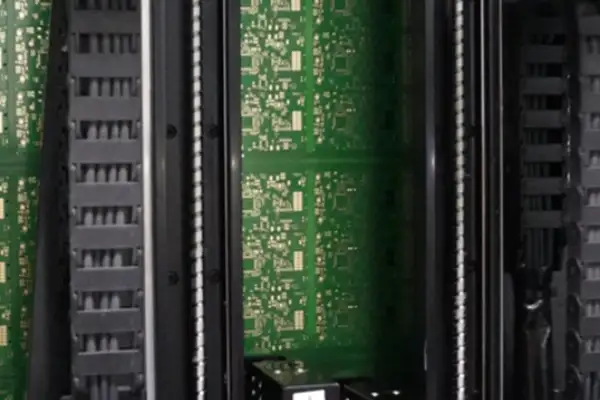
Many people might assume that as long as the soldering is sound, the product is ready for use; in reality, however, it is far more complex than that. I have encountered countless boards where the soldering appeared flawless, yet issues arose the moment power was applied. This experience drove home the realization that the testing phase is of far greater importance than many people imagine. True testing involves more than simply powering up a device to see if the indicator lights turn on; it requires simulating the various extreme conditions the product might encounter over the course of its operational lifespan—spanning years, not just days.
For instance, I once worked on a project involving an industrial control module that underwent continuous operation for hundreds of hours within a high-temperature, high-humidity environment. This rigorous process successfully identified several boards that harbored a risk of early-stage failure. While such testing might seem somewhat arduous, discovering these issues in advance is infinitely more cost-effective than having the product fail in the field after it has already shipped to the customer.
Failure analysis sometimes feels more like detective work. On one occasion, we encountered a baffling intermittent fault—appearing and disappearing unpredictably—that standard inspections failed to uncover. Ultimately, through micro-section analysis, we discovered a microscopic crack within an internal via. Such issues are utterly unsolvable without specialized tools and techniques; relying solely on the naked eye and accumulated experience is simply not enough.
Consequently, I now place immense emphasis on product reliability validation—particularly for equipment destined for critical applications. You can never predict the specific environments in which users will deploy your devices—whether amidst freezing snowscapes or within sweltering industrial workshops. Only products that have undergone thorough validation can truly offer peace of mind.
Ultimately, manufacturing electronic products is not merely a technical endeavor; it is a profound responsibility. Every single stage—from initial design to final production—directly impacts the end user’s experience and safety. This point cannot be overemphasized.
I recently chatted with several friends who are launching hardware startups and noticed a rather interesting phenomenon: many of them tend to oversimplify the process of obtaining Assembled PCBs. They often operate under the assumption that they can simply select a supplier, email them the schematics, and then sit back and wait for the delivery courier to arrive.
In truth, I stumbled badly during my very first prototyping run. In an attempt to save a mere few hundred dollars, I opted for the manufacturer that offered the lowest quote; the boards I received as a result had solder pads that didn’t even align correctly. I subsequently learned that suppliers who beat their chests and promise to deliver a prototype within three days are often the very ones cutting corners in ways you cannot see.
One team working on smart home technology suffered an even worse fate: a specific component they had selected suddenly went out of stock, and their supplier—acting entirely on their own initiative—decided to substitute it with an alternative part without any prior consultation. It wasn’t until this batch of components was integrated into the final products that we discovered their power consumption exceeded the specified limit by a third; the entire project nearly collapsed as a result.
Nowadays, I place a great deal of emphasis on whether a supplier proactively raises potential issues. Just last week, an engineer specifically called me to ask whether a certain chip’s thermal pad required any special treatment—a minute detail that I never would have thought of myself had they not asked. A good collaborative partner helps you pre-screen for potential risks rather than merely executing the design drawings mechanically.
Truly reliable suppliers possess the demeanor of technical consultants. I recall one instance where I designed an irregularly shaped circuit board; after reviewing the files, they suggested relocating two surface-mount capacitors to the underside. The space freed up by this move allowed us to add a debugging port—the kind of practical insight you simply won’t find by merely comparing price lists.
Recently, I’ve experimented with linking payment milestones to specific project phases, and the results have been surprisingly positive. For instance, paying a 30% deposit upon prototype acceptance and settling the final balance only after the initial mass-production batch passes quality inspection provides both parties with a greater sense of security. Rather than obsessing over rigid metrics like delivery deadlines, I’m actually more concerned with whether the veteran craftsmen on the supplier’s production line participated in the design review—sometimes, a simple alignment mark sketched out by an experienced engineer proves far more effective than any contractual clause.
Ultimately, finding a PCB supplier is akin to finding a partner; if you focus solely on comparing price lists, you risk overlooking what truly matters. After all, what eventually reaches the end user is a tangible product—not just a number on an invoice.
I’ve always found it fascinating to watch a bare PCB slowly transform into a functional device. Seeing those tiny components—each assigned to its precise location—feels just like adding color to a blank canvas.
When I first started out, I assumed that simply soldering the components onto the board would be sufficient. It wasn’t until later that I realized selecting the right solder is actually quite critical. If the temperature is too high, you risk damaging the board or the components themselves; if it’s too low, you run the risk of creating a “cold joint”—a weak connection that fails to bond properly.
I remember one time when I attempted to assemble a simple audio amplifier board. After soldering, everything looked fine on the surface; however, the moment I powered it up, there was absolutely no sound. After spending a good while troubleshooting, I finally discovered that the lead of a single resistor hadn’t been fully wetted by the solder—a tiny, minute detail that prevented the connection from being properly secured.
That experience taught me that soldering is about far more than just joining pieces of metal together; it is fundamental to the overall stability and functionality of the entire circuit. Sometimes you pour immense effort into selecting the finest components and crafting the most precise PCB layout, yet if the soldering stage isn’t executed flawlessly, all those prior efforts may very well go to waste. Lately, I’ve come to prefer using solder wire with a slightly higher silver content; I’ve found that it offers better flow characteristics, and the resulting solder joints look brighter and shinier. Of course, this is purely a matter of personal habit, and different people may have different preferences. The important thing is to find a method that suits your own tactile feel and the specific characteristics of your equipment.
Soldering is, in essence, a task that demands patience. You must carefully observe each solder joint to ensure it is round and full—checking for any instances of “spiking” (sharp protrusions) or “bridging” (short circuits between adjacent pins). This is particularly critical when working with IC chips that have very tight pin spacing, where even a slight lapse in attention can easily lead to a short circuit.
I find the most captivating aspect of this process to be the fact that it requires both technical skill and a touch of artistry; each solder joint feels like the handiwork of a craftsman. High-quality soldering can make an entire PCB look both neat and reliable.
I’ve long felt that many people’s understanding of PCBA manufacturing is somewhat misguided—they tend to place an excessive focus on the fancy inspection equipment used in the later stages. In reality, the factors that truly determine the quality of the finished product are often found in the preparation phase before assembly begins. I recall a project last year that nearly ended in disaster simply because we overlooked batch-to-batch variations in the components. The resistors in that batch appeared to match the datasheet specifications perfectly, but during the actual soldering process, we discovered that their leads were severely oxidized, leading to a recurring problem with solder bridging.
Now, whenever I receive a new batch of materials for PCB assembly, the very first thing I do is perform a spot check on their solderability. Even if the supplier confidently guarantees stable quality, I still insist on verifying it myself for peace of mind. Some engineers feel that these basic preliminary checks are a waste of time—arguing that it would be more efficient to simply run a few extra rounds of functional testing—but my experience tells me that any time “saved” in the early stages often ends up costing you exponentially more time and effort down the line.
On one occasion, in an effort to meet a tight deadline, we skipped the contamination spot-check for a critical IC chip. The result? During mass production, an entire batch of products began exhibiting leakage currents when exposed to high-humidity environments. Upon disassembly, we discovered that the issue stemmed from trace amounts of flux residue trapped inside the component’s package. This type of problem is impossible to detect using standard post-assembly X-ray inspections, as the contaminants are hidden within the body of the component itself, rather than being located on the solder joints.
I’ve increasingly come to view PCBA manufacturing as being akin to cooking: no matter how skilled the chef is, you simply cannot create a delicious meal if the ingredients themselves aren’t fresh. Tools like Automated Optical Inspection (AOI) or flying-probe testers are, in this analogy, more like the final “tasting” stage—they can tell you if the seasoning is just right, but they cannot alter the fundamental quality of the ingredients themselves.
Of course, I’m not suggesting that post-assembly testing is unimportant; rather, I believe that its effectiveness is entirely contingent upon—and must be built upon—a foundation of rigorous quality control established during the earlier stages of the manufacturing process. For instance, while online testing is indeed effective at quickly pinpointing open or short circuits, even the most sophisticated In-Circuit Testing (ICT) system can only tell you, “This specific component is defective.” It cannot, however, explain why every component within a particular batch is failing due to the exact same parameter deviation.
We recently revamped our workflow to focus more energy on incoming material inspection and First Article Inspection (FAI). Counterintuitively, this approach has actually reduced the time required for rework later in the process. Sometimes, the most effective improvements in quality stem precisely from those seemingly insignificant, fundamental stages.
I feel that the barrier to entry for developing electronic products is becoming increasingly low these days. I used to think that circuit board manufacturing was a highly specialized discipline; now, I realize it is actually about as simple as shopping online.
Last week, I had a small project requiring the production of a few assembled PCBs, so I reached out to several suppliers for quotes. What surprised me most wasn’t the disparity in pricing, but rather the speed of their response. One supplier provided a detailed quotation on the very same day—clearly itemizing everything, right down to the lead times for component procurement. Another supplier dragged their feet for two days before replying, and even then, getting an answer to a simple technical question required being bounced between multiple departments.
I actually place a great deal of value on a supplier’s responsiveness. Sometimes, a design tweak will suddenly occur to me in the middle of the night; I’ll fire off an email, and by the next morning, I’ll already have a revised proposal waiting for me. That kind of experience is incredibly reassuring. It’s not that I expect them to be on call 24/7, but I want to feel—at the very least—that they are genuinely invested in actively tracking and managing every project.
I recall one instance involving a rush order where I was initially worried that the tight deadline would make it impossible to meet the delivery date. Instead, the supplier immediately set up a dedicated technical group chat. They maintained complete transparency throughout the entire process—from engineering verification to material procurement—and proactively provided daily progress updates. In the end, not only did they deliver on time, but they also produced two extra backup boards, just “in case.”
That level of service attitude gives me a profound sense of confidence and reliability. In today’s fiercely competitive market, relying solely on a price advantage simply isn’t enough to stand out. The true differentiator—what truly sets one supplier apart from another—is their ability to anticipate and address the client’s urgent needs and unspoken requirements.
I’ve since developed a habit: whenever I’m vetting a new supplier, I’ll deliberately send them a technical inquiry via email after standard business hours. If they can provide a thoughtful, substantive response within an hour, they’re almost certainly a safe bet. As for those who offer nothing more than a perfunctory “Received” reply the following day? I immediately cross them off my list of potential candidates.
Ultimately, modern manufacturing is no longer merely about the physical production process itself. From front-end design support to back-end production follow-through, the quality of responsiveness at every single stage serves as a true litmus test of a supplier’s comprehensive capabilities. Sometimes, I even feel that what matters more than the quality of the circuit boards themselves is the sense of security and peace of mind that comes from a truly reliable collaborative experience.
Whenever I see those bare circuit boards lying on the workbench, a question crosses my mind: Why do we always focus our attention on the finished product while overlooking the most fundamental elements? Many people believe that a bare board—devoid of components—holds little value; I, however, believe the exact opposite.
I have seen far too many projects run into trouble simply because the initial materials were chosen incorrectly. Sometimes you receive a beautifully crafted design schematic, only to discover that the actual assembled PCB falls far short of expectations. This has led me to realize that the entire journey—from the bare board stage to final assembly—is actually far more complex than we tend to imagine.
I recall a specific instance last year where a client insisted on using a particular type of specialized substrate; consequently, we encountered persistent warping issues during the soldering process. Later, after switching to a more suitable material, the yield rate for the entire PCBA assembly immediately jumped by 30 percent. This experience taught me that, sometimes, what is touted as a “premium configuration” may not necessarily be the best fit for a real-world manufacturing environment.
Nowadays, whenever I evaluate a potential supplier, I pay particular attention to the depth of their understanding regarding fundamental materials. Some suppliers will simply present you with a stack of certification certificates; however, those who truly possess industry expertise will engage you in a discussion about how different board materials perform under varying temperature conditions. It is precisely these minute details that often determine the ultimate reliability of the final product.
I am increasingly convinced that, in this industry, practical experience carries more weight than theoretical knowledge. Textbooks might suggest that a specific parameter represents the “optimal solution,” but in actual practice, you may need to make a dozen or more adjustments—tailoring them to the specific condition of your equipment—before you can finally strike the perfect balance.
Recently, I’ve noticed a rather interesting trend: many clients have begun requesting that we set aside and retain a portion of the unassembled bare boards to serve as test samples. This strikes me as a very astute strategy; it not only facilitates troubleshooting should issues arise later on, but also provides a valuable reference baseline for future product iterations.
In reality, selecting a supplier is much like solving a jigsaw puzzle: you need to find partners who are capable of not only handling the fundamentals effectively but also demonstrating the flexibility to adapt to changing circumstances. After all, electronics manufacturing is never merely a rigid, step-by-step assembly-line operation; rather, it is a dynamic process that demands constant adjustment.
Sometimes, looking at the semi-finished products on the production line reminds me of my childhood days spent assembling model airplanes—every part had to fit together perfectly, yet still allow for just the right amount of clearance. Is the current landscape of PCBA manufacturing really any different?
Every time I see a circuit board I designed transform into a tangible, finished PCBA product, I experience an indescribable sense of fulfillment. Some people assume circuit design is merely a matter of drawing schematics and routing traces; in reality, it is far more than that. From the initial concept to the moment you hold a functional device in your hands, every single step along the way tests your ability to master the entire process.
I recall one instance where, in an effort to save time, I chose to work with a new, unproven manufacturer for an assembled PCB order. When the boards arrived, I discovered that several capacitors had been soldered in reverse polarity. It was only then that I realized the manufacturing phase is not something you can simply wash your hands of once the design is complete. You must be fully aware of where the materials originate, how the soldering temperatures are configured, and even whether issues might arise during packaging and shipping. These seemingly trivial details often determine whether or not the board will function stably.
Nowadays, when communicating with manufacturers, I actively participate in their process discussions. For instance, I might point out specific areas in my design that are prone to cold joints and suggest adjustments to their component placement sequence. This level of deep engagement actually fosters a smoother collaborative relationship, as they recognize that I am not the type of client who simply dumps a set of schematics on their doorstep and walks away. You must maintain a clear overview of every link in the supply chain; otherwise, a single minor oversight could cause the entire project to suffer significant delays.
Truly excellent circuit design goes beyond merely meeting performance specifications; it also considers how efficiently the product can be manufactured. Sometimes, I will deliberately adjust the component layout to better suit automated assembly processes, even if it entails making slight compromises on certain electrical parameters. After all, when it comes to mass production, stability is far more critical than achieving theoretically perfect metrics that exist only on paper. This philosophy—prioritizing manufacturability right from the design stage—has helped me avoid stumbling into countless pitfalls.
Ultimately, working in hardware is much like playing a game of chess: you have to think several moves ahead. You cannot simply fixate on the specific lines of code or schematics directly in front of you; you must also visualize the future environment in which this board will operate and anticipate the potential issues it might encounter. It is precisely this holistic, big-picture perspective that constitutes the most valuable asset of a hardware engineer.
Whenever I look at those assembled PCB boards with their components arranged in neat, orderly rows, I am invariably reminded of all the hard lessons I learned—and the pitfalls I stumbled into—when I first began my journey in electronics manufacturing. Back then, I used to think that procurement was simply a matter of comparing prices and delivery schedules. It was only later that I realized it is, in fact, a comprehensive systems engineering process that requires constant validation.
I recall an instance where we were rushing to launch a project; we hastily sourced a supplier online, only to receive boards that couldn’t even perform their basic functions. Upon disassembly, we discovered that every single capacitor used was nearing its expiration date. This experience taught me that there can be absolutely no compromise when it comes to validating component quality. Now, whenever a new project kicks off, I insist that suppliers provide complete material traceability records—even if it means paying a slightly higher price, the peace of mind is well worth it.
Many people assume that PCB assembly is merely a matter of executing a design exactly as drawn; however, the factors that truly determine the quality of the finished product are often the subtle details that remain invisible on the schematics. For instance, the temperature drift coefficients for the exact same resistor can vary several-fold depending on the manufacturer—to say nothing of specialized chips that require unique processing techniques. My standard practice is to conduct “stress testing” during the prototyping phase, placing the boards in environmental chambers to run for several days; sometimes, this process genuinely helps uncover latent design flaws.
Regarding procurement strategy, I actually tend to favor process simplification. I’ve seen too many companies implement convoluted bidding procedures, only to end up selecting suppliers who excel at producing polished documentation but whose actual manufacturing capabilities fail to measure up. Nowadays, I place a much higher value on direct communication between our engineers and the factory floor—for example, asking them to film videos demonstrating their SMT machine calibration processes, or conducting random spot checks on semi-finished products directly on the production line. This “seeing is believing” approach proves far more effective than any formal certification.
Perhaps the most easily overlooked aspect is component batch consistency. We once experienced a sudden wave of product failures across an entire batch; after three months of investigation, we discovered that the chip manufacturer had quietly altered the packaging material, while our internal acceptance criteria remained stuck three years in the past. Consequently, whenever we switch suppliers now, I require them to retain a set of initial reference samples; any subsequent material changes must undergo a rigorous re-validation process.
Ultimately, electronics manufacturing is a field that demands the continuous accumulation of experience. No one can guarantee they will never make a mistake, but cultivating sound work habits can certainly help us avoid unnecessary detours. As I often tell my team: rather than spending a fortune on failure analysis after the fact, it is far wiser to invest a little extra time upfront to ensure that our foundational validation processes are executed flawlessly.
Recently, while working on an industrial control project, we took the unconventional step of shifting the procurement process forward into the actual design phase, allowing component suppliers to participate directly in the circuit optimization process. The result was not only a 15% reduction in costs but also a significant boost in product reliability. This type of cross-disciplinary collaborative model may very well represent the future of manufacturing.
Many engineers focus too much on technical parameters early on and overlook
As someone who has worked in PCB outsourcing for years, I’ve found
Cramming a camera, amplifier, dual-mic array, and Wi-Fi radio into a palm-sized
- Experte für die Produktion kleiner bis mittlerer Chargen
- Hochpräzise PCB-Fertigung und automatisierte Montage
- Zuverlässiger Partner für OEM/ODM-Elektronikprojekte
Geschäftszeiten: (Mo-Sa) von 9:00 bis 18:30
Get quote, solution or any question, Andre always here to help