

PCB Manufacturing Standardization: Why the Best Server Cooling Controller PCB Designs Break the Rulebook on Purpose
PCB manufacturing standardization brings quality assurance and industry-wide coordination, but it also
Whenever I look at complex communication network PCB schematics, a question always crosses my mind: Are we overcomplicating things that are fundamentally simple? The industry constantly chases innovations in materials—seeking higher frequencies and lower losses—yet often overlooks the most basic principles of design logic.
I recall a project team last year that spent a fortune procuring a specialized type of copper foil, only to find that their test results were inferior to those achieved using standard materials combined with a well-executed layout. This experience made me realize that, in many instances, the problem lies not with the materials themselves, but rather with how we utilize them. It is much like cooking: while top-tier ingredients are undoubtedly important, it is the mastery of cooking techniques—such as heat control and ingredient ratios—that ultimately determines the quality of the dish.
One of the most frequently overlooked aspects of PCB design is proper grounding. I have encountered far too many designs where the primary focus is placed on optimizing signal layers, while the power layers are allocated insufficient design resources. In reality, power integrity directly dictates signal quality; much like the circulatory system supplying blood to the human body, it is a fundamental yet absolutely critical element. During one testing session, we discovered that a simple adjustment to the segmentation of the power plane resulted in a 30% reduction in signal jitter—a tangible improvement that proved far more effective than simply swapping in high-end materials.
Regarding the selection of copper foil, I believe the industry suffers from a tendency toward “over-optimization.” While specialized copper foils with ultra-low surface roughness can indeed reduce signal loss, their cost may be double that of standard foils, while the actual performance gains in real-world applications may be negligible. Unless the application specifically involves millimeter-wave frequencies, standard-grade copper foils—when incorporated into a well-engineered design—are perfectly capable of meeting the requirements of the vast majority of communication networks.
Hybrid dielectric stack-ups are another fascinating topic, yet I have observed that many engineers treat them as a universal panacea. Discrepancies in the coefficients of thermal expansion (CTE) between different materials can generate mechanical stress as temperatures fluctuate—an effect that may, ironically, compromise the long-term reliability of the PCB. Rather than chasing material diversity for its own sake, it is often more prudent to first focus on optimizing the stack-up configuration using homogeneous materials to the absolute fullest extent. I increasingly feel that good PCB design should be akin to building with blocks rather than sculpting a work of art. The true value of an engineer lies in achieving performance objectives by employing the most standard materials through clever structural design. After all, in practical applications, stability is often far more critical than peak performance.
Lately, I’ve been giving a lot of thought to circuit board design within communication equipment. In reality, many people tend to fixate immediately on the sophisticated, high-end functional modules, while overlooking the fact that the most fundamental elements are often the most critical.
I recall an instance where I was debugging a communication network board. The signal paths were routed correctly, yet intermittent bit errors persisted. After hours of troubleshooting, we finally discovered that the problem lay in the most inconspicuous area: the power supply section. That particular board utilized HDI technology and featured an exceptionally high component density; consequently, the power distribution was poorly executed, causing the voltage supplied to several critical chips to fluctuate constantly.
This experience made me realize that even the most sophisticated communication network PCB designs must prioritize fundamental power supply stability above all else. Sometimes, in the pursuit of high-density layouts, power integrity is inadvertently sacrificed. We subsequently revised our design strategy; although this entailed adding two extra board layers dedicated specifically to power planes, the overall performance saw a significant improvement.
The subject of electromagnetic interference (EMI) is also quite fascinating. As modern devices become increasingly compact, the sheer density of various signals packed together makes mutual interference almost inevitable. I’ve observed many engineers whose first instinct upon encountering interference issues is to simply add shielding enclosures; however, in many cases, simply ensuring proper grounding is sufficient to resolve the majority of the problems.
On one occasion, while addressing an interference issue in an RF module, we discovered that the root cause was the intermingling of the digital ground and the analog ground. We subsequently implemented a simple partitioning scheme—physically separating the two grounds using appropriate connection methods—and the results proved far more effective than utilizing expensive signal-absorbing materials.
Speaking of HDI technology, I believe its value extends far beyond merely enabling high-density routing. More importantly, it introduces a greater degree of flexibility into the design process. For instance, the use of micro-vias allows for the optimization of signal paths, making them shorter and more direct—a feature of particular importance for high-speed signals.
That said, HDI is not a panacea. I have seen instances where designers, in their quest for extreme density, created boards that were overly complex—thereby increasing both manufacturing difficulty and cost. A truly effective design strikes a balance between performance, reliability, and cost-efficiency.
Ultimately, circuit board design is much like building with blocks: every single element is intricately interconnected. If the power supply isn’t stable, even the most sophisticated signal integrity design is futile; and if electromagnetic shielding isn’t executed properly, the entire system could be compromised.
These insights weren’t gained from textbooks; they were forged through the hard knocks of real-world trial and error. Every problem encountered presents a learning opportunity, and over time, one gradually accumulates a unique body of practical wisdom. The greatest pitfall in this profession is a rigid, by-the-book approach; after all, every project presents a unique set of circumstances, requiring the ability to adapt and respond flexibly.
Lately, I’ve been delving deep into the specifics of PCB design for communication networks. Many people immediately jump to discussions about simulation tools and theoretical formulas—but personally, I don’t think it needs to be quite so mystified. Put simply, it boils down to ensuring the signal travels its intended path faithfully and without deviation.
What is the greatest fear when dealing with those densely populated circuit boards? It’s not the complexity of the components themselves, but rather the sudden distortion of a signal as it traverses its route. Sometimes, even when all design parameters appear correct, the actual waveforms observed during testing look “off”; later, you discover that a few inconspicuous vias were the culprits.
I recall a specific board revision where we shifted the position of a via for a critical signal by a mere half-millimeter—and the quality of the resulting eye diagram improved by a whole tier. This incident drove home the realization that impedance continuity is far more sensitive than we often imagine; even a minute displacement of a single via can compromise the performance of the entire signal link.
Nowadays, when working on high-speed designs, I pay particular attention to the electric field distribution surrounding the vias. Don’t let their appearance as simple metal holes deceive you; when high-frequency signals pass through them, the resulting electromagnetic field dynamics are far more complex than what the naked eye can perceive. Sometimes, this can even lead to energy accumulation at frequencies where resonance is explicitly *not* desired.
Regarding impedance control, many engineers get fixated on the precise calculation of trace widths and spacing, yet the inherent stability of the PCB substrate material itself is often overlooked. Even when using the same FR4 material, batch-to-batch variations in dielectric constant can easily render your meticulously crafted design efforts completely in vain.
I make it a habit to reserve a few spare ground vias adjacent to critical signal channels—not necessarily because they will all be utilized, but to provide a margin for maneuver during subsequent debugging and fine-tuning. After all, once the actual prototype boards are fabricated, unforeseen issues—situations that theory simply couldn’t predict—inevitably arise; having a few extra grounding points available at that stage can save a tremendous amount of trouble.
There is one other interesting observation: some engineers, in their quest for perfect impedance matching, route their traces with such rigid geometric precision that they inadvertently *increase* the likelihood of coupling interference. Sometimes, introducing a degree of natural curvature to the traces can be more effective at suppressing crosstalk than keeping them perfectly straight—though, of course, finding the right balance here requires the seasoned judgment that comes only with experience. Ultimately, designing PCBs for communication networks is more of an art of balance: one must ensure signal integrity while simultaneously accommodating manufacturing feasibility. Designs that are overly idealistic often end up failing during the actual production phase.
Recently, while experimenting with splitting power planes, I intentionally left a buffer zone; the results proved superior to strict isolation. Perhaps that is simply the nature of high-frequency circuits—some rules require flexible application; rigidly adhering to dogma can actually cause you to miss out on optimal solutions.
With every design revision, I feel there is still room for further optimization—and therein, I suppose, lies the true allure of design.
Whenever I gaze upon the intricate internal architecture of complex communication equipment, I am struck by the realization that the PCB design underpinning it is truly an art form. As engineers, we know that an exceptional communication network PCB must not only prioritize signal integrity but also account for the practicalities of mass production.
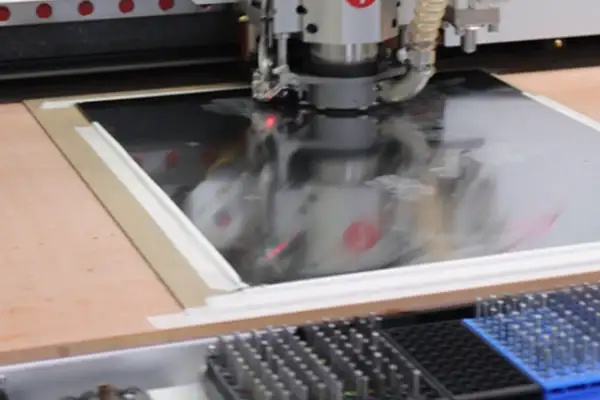
I have encountered far too many engineers who focus their entire attention on circuit routing while overlooking the critical importance of the lamination process. In reality, a multilayer PCB is akin to a human pyramid; the alignment precision of each individual layer directly dictates the overall performance. Sometimes, the slightest discrepancy in thermal expansion between materials during high-temperature processing is enough to render the entire board—and the batch—scrap.
I recall a specific instance where our team took over a base station project and immediately ran into trouble during the lamination phase. The core boards, composed of different materials, exhibited inconsistent thermal expansion coefficients during hot pressing, resulting in misalignments between the internal layers. We were ultimately compelled to recalibrate our parameters and establish a dedicated materials database to resolve the issue. This experience underscored just how pivotal accumulated expertise is in the realm of precision manufacturing.
Many manufacturers today are relentlessly pursuing ever-smaller hole diameters; however, I believe one should not chase miniaturization blindly—the approach must be tailored to the specific application scenario. While laser drilling can indeed achieve micron-level precision, mechanical drilling often proves to be the more economically viable option for standard consumer electronics. The key lies in identifying that optimal balance point.
I particularly admire the mindset that seeks to bridge the gap between the design and manufacturing stages—for instance, by factoring in the subsequent drilling process while planning the routing layout. This involves avoiding the placement of vias in locations prone to stress concentration, thereby simultaneously bolstering reliability and boosting production efficiency.
At times, the simplest designs are the ones that truly put an engineer’s mastery to the test. One need not necessarily chase the most cutting-edge manufacturing processes; rather, the imperative is to ensure that every single stage is robust and reliable—that is the fundamental principle behind crafting a truly exceptional PCB.
I have long felt that many people’s understanding of circuit boards remains confined to the rudimentary level of simple electrical connections. Yet, particularly within the telecommunications sector, that unassuming green board actually conceals a wealth of fascinating intricacies and technical nuances. I recall an instance while debugging a piece of equipment where the signal kept flickering on and off; after spending half the day troubleshooting, we ultimately discovered that the culprit was a seemingly ordinary, nondescript PCB. That experience made me realize that the quality of communication often hinges on those invisible details. When high-frequency signals travel across a circuit board, they behave much like water flowing through a winding pipe; any poorly designed corner can generate signal reflections. Sometimes, even when the absolute best chips are utilized, the overall performance ends up compromised simply because the substrate material was ill-chosen.
I have seen far too many engineers pour all their energy into chip selection, only to neglect the fundamental optimization of the underlying carrier—the circuit board itself. In reality, every single stage—from material properties to routing topology—subtly influences the final outcome. For instance, with an identical design, merely altering the thickness of the dielectric layer can completely transform the entire frequency response curve.
Nowadays, an increasing number of projects are shifting their focus to the actual performance of signals along their transmission paths, rather than merely stacking up impressive hardware specifications. After all, even the fastest processor requires a reliable channel to transmit information—a fact that becomes particularly evident in scenarios demanding real-time responsiveness.
On one occasion, our team attempted to conduct experiments in the millimeter-wave band using standard PCB materials. The result was such severe signal attenuation that the boards were rendered completely unusable; it was only after switching to specialized materials that we were barely able to meet the performance benchmarks. This lesson drove home the point that the PCB requirements for different application scenarios can vary as wildly as night and day.
Ultimately, a robust communication infrastructure is not propped up by a single isolated component, but rather emerges from the synergistic interplay of every single stage in the process. It is akin to building with blocks: the quality of each individual board determines just how far the entire system can go.
While recently researching circuit board design within the field of communication networks, I stumbled upon a rather interesting phenomenon: whenever the topic of PCBs for base stations arises, many people immediately conjure up images of those high-end, sophisticated high-frequency materials. Indeed, the market is currently flooded with specialized board materials developed specifically for 5G base stations, with suppliers constantly touting the extraordinary performance metrics of their products. However, in the trenches of actual engineering practice, I have found that these technical specifications are often overly fetishized.
I recall encountering just such a situation last year while helping a client optimize the design of their small-cell base stations. Initially, they insisted on using a specific brand of premium high-frequency material, arguing that it offered exceptional stability in terms of dielectric constant. Yet, during actual testing, we discovered that because the board material’s coefficient of thermal expansion did not properly match that of their other components, it actually led to issues regarding connection reliability. We subsequently switched to a more conventional modified epoxy resin material—paired with an appropriate structural design—and not only did we manage to cut costs by a third, but the results from our long-term stability testing actually proved to be superior. This experience made me realize that when selecting materials for communication network PCBs, one cannot rely solely on the technical parameters provided by manufacturers; more importantly, one must consider the compatibility of the entire system. For instance, circuit boards in base stations often need to withstand fluctuating outdoor temperatures, while also accounting for practical operating conditions such as moisture resistance and corrosion protection. Sometimes, a single-minded pursuit of a low loss factor can inadvertently compromise the mechanical strength of the board material.
I have seen far too many engineers simplify the selection of PCB materials down to merely comparing a few numbers on a datasheet—a common misconception. It is akin to building with blocks: using the most expensive piece for every component does not necessarily result in the most stable structure; the key lies in whether the parts can work together cohesively.
While many new materials indeed demonstrate impressive performance in laboratory settings, they often reveal unexpected issues when deployed in real-world scenarios—such as base stations—that demand continuous 24/7 operation. For example, certain high-frequency materials, despite possessing excellent electrical properties, are prone to delamination after undergoing multiple thermal cycles; for communication equipment requiring high reliability, this can be a fatal flaw.
Consequently, my current advice to clients is to first clearly define the specific operating environment of their equipment, and then work backward to deduce the necessary material characteristics—rather than being led astray by a supplier’s promotional literature. After all, even the finest materials remain mere theoretical concepts if they fail to meet actual engineering requirements.
Whenever I view the intricate internal schematics of complex communication devices, I am reminded that what truly underpins the entire system are those unassuming circuit boards. A recent project I participated in deepened my understanding of Communication Network PCBs, revealing that the process involves far more than simply drawing circuit traces.
I recall that when I first entered this field, I assumed that merely establishing electrical connectivity was sufficient. Later, however, I discovered that the signal transmission process is fraught with various anomalies; there were times when a design appeared flawless on paper, yet inexplicable interference would emerge during actual testing. On one occasion, while testing a high-frequency signal, we observed severe waveform distortion. After much troubleshooting, we finally traced the issue to signal reflections caused by a poorly designed—and minuscule—via. This incident taught me that relying solely on intuition and experience is no longer adequate; one must leverage more scientific methodologies to validate the reliability of a design.
Nowadays, when designing, I place particular emphasis on the integrity of the entire signal chain—from the chip to the connector, and on to the transmission line—ensuring that no single link is overlooked. We once utilized simulation tools to model signal behavior on a circuit board in advance; the results indeed revealed a potential impedance mismatch issue—a problem that, had it gone undetected until the manufacturing stage, would have resulted in significant financial losses. While simulation cannot entirely replace physical testing, it undoubtedly helps us avoid numerous pitfalls along the way. Technology is advancing at a breakneck pace. I remember when 56 Gbps felt incredibly fast; now, 112 Gbps is becoming the standard. This evolution places increasingly stringent demands on PCB design. The selection of materials has become absolutely critical; substrates with differing dielectric constants can have vastly different impacts on signal integrity. Sometimes, to shave off mere tenths of a decibel in signal loss, we find ourselves repeatedly comparing and evaluating multiple design schemes.
I find that the most fascinating aspect of this profession is that it constantly compels you to learn new things. Just last week, while chatting with a friend at a manufacturing facility, they mentioned that even the surface roughness of the copper foil now requires rigorous control. This is because high-frequency signals propagate along the surface of the conductor, meaning that even microscopic irregularities can compromise performance. Such minute details would have been completely overlooked in the past, yet they have now emerged as one of the pivotal factors determining the ultimate success or failure of a design.
Many people perceive PCB design as a purely mechanical, labor-intensive task; I, however, view it more as an art form—one that requires balancing electrical performance, mechanical robustness, and cost constraints within a finite physical space. Completing a complex design always brings with it a sense of accomplishment akin to solving a challenging mathematical puzzle—a feeling that is particularly gratifying when you see the boards you designed operating stably within the final product.
Ultimately, the core of any communication network lies in reliable data transmission. In this analogy, the PCB serves as the very foundation—the roadbed—of that information superhighway; if the foundation is not laid properly, even the finest vehicle will be unable to travel at full speed.
Whenever I come across articles that portray high-speed circuit design as some sort of mystical, esoteric craft, I can’t help but chuckle. They often give the impression that simply utilizing exotic materials or sophisticated simulation software is enough to magically resolve every conceivable issue. Yet, after years of grappling with these challenges, I’ve observed a rather curious phenomenon: far too many people place an excessive amount of focus on the raw technical specifications of the materials themselves.
It is indeed true that surface roughness affects the transmission efficiency of high-frequency signals. However, in practical applications, you will find that what truly impacts the overall performance of a communication network is often not merely how low the loss value of a single material is, but rather the ability of its various components to work together cohesively. Sometimes, despite investing heavily in ultra-low-profile copper foil, you may find that the overall performance is actually compromised due to inadequate processing techniques.
I have seen far too many engineers dive headfirst into comparing material parameters during the initial design phase, while overlooking more fundamental aspects such as routing structures and grounding schemes. These seemingly simple factors can, in practice, exert a far greater influence than the materials themselves.
The varying performance of high-frequency signals across different frequency bands is another fascinating topic. Some people are constantly searching for a “one-size-fits-all” solution; however, the circuit requirements for different frequency bands vary significantly, and sometimes, a segmented approach yields superior results.
I recall a specific project where, in pursuit of ultimate signal integrity, we poured all our resources into minimizing dielectric loss. Ironically, we discovered that interference issues in certain specific frequency bands actually worsened. It was only after shifting our mindset and adopting a partitioned design approach that we were able to resolve the problem.
Ultimately, designing high-speed circuits is akin to playing a balancing game: one must identify the optimal equilibrium point among various factors that best meets the current requirements, rather than blindly chasing the absolute extreme of a single metric. After all, real-world application scenarios are incredibly diverse; a solution that works for someone else may not necessarily be the right fit for you.
I have recently been giving a lot of thought to the subject of PCBs for communication networks. To be honest, while the number of people entering this field is growing, very few truly possess deep expertise. I remember a project last year where we initially used standard materials; however, in a high-frequency environment, the signal attenuation was severe. We were only able to resolve the issue after switching to specialized substrate materials. During testing, we discovered that at a frequency of 10 GHz, the dielectric loss tangent of standard FR4 material was as high as 0.02, whereas that of the specialized ceramic substrate was a mere 0.001—a difference that directly resulted in a threefold disparity in signal transmission distance.
Many people assume that a PCB is simply a stack of laminated boards, but the reality is far more complex. This is especially true for boards used in communication equipment, which demand exceptionally high material stability; significant temperature fluctuations can cause the dielectric constant to drift, thereby directly compromising signal quality. I have witnessed countless instances where an entire batch of products required rework solely due to an improper choice of materials. For instance, in 5G base station applications, as the temperature rises from -40°C to 85°C, the dielectric constant of standard materials may fluctuate by more than 10%; however, for specialized high-frequency materials, this fluctuation can be kept within 2%.
Dielectric loss is one of the critical metrics in high-frequency application scenarios. Some manufacturers, in an effort to cut costs, opt for standard FR4 materials; consequently, if the transmission distance is even slightly extended, the signal degrades to the point of being nearly lost. Currently, the industry widely favors high-frequency materials such as PTFE; although they come at a higher price point, their performance is undeniably stable. Taking the millimeter-wave band as an example, a PTFE substrate exhibits approximately 30% lower insertion loss than FR4 at 77 GHz—a factor that is absolutely vital for achieving high-speed data transmission.
When designing PCBs for communication networks, the most dreaded issue is impedance mismatch. During one test, we observed severe signal reflection; after half a day of troubleshooting, we discovered the culprit was the uneven thickness of the copper foil on the board material. Such minute details are often the easiest to overlook, yet their impact can be catastrophic. In fact, when the deviation in copper foil thickness exceeds 10% of the nominal value, it triggers significant changes in impedance; specifically on differential signal lines, this deviation can lead to an increase in common-mode noise.
Thermal management also presents a formidable challenge. If a device operates for an extended period and its heat dissipation system fails to keep pace, even the finest materials will eventually succumb to the thermal stress. It is my practice to factor in heat dissipation paths right from the layout stage, ensuring that sufficient thermal vias and copper pour areas are allocated. Some engineers mistakenly believe that packing components as densely as possible is ideal; however, this often results in heat accumulation that ultimately compromises overall performance. For instance, in the power amplifier section, we typically employ 2-ounce thick copper foil and design a stepped array of thermal vias; this approach can effectively reduce the chip junction temperature by 15–20°C.
A current trend within the industry is the increasing adoption of rigid-flex PCBs. This design approach offers the dual advantage of accommodating complex spatial constraints while simultaneously ensuring signal integrity. However, it imposes rigorous demands on the manufacturing process, requiring manufacturers to possess substantial technical expertise. In 5G millimeter-wave antenna modules, rigid-flex PCBs enable optimal interconnection between the antenna elements and the RF front-end, thereby eliminating the need for coaxial cables—components that are prone to signal loss.
Environmental adaptability testing often serves as the ultimate litmus test for PCB quality. I once managed an outdoor base station project where the PCBs were subjected to extreme temperature fluctuations—ranging from a frigid -40°C to over 100°C—yet the board materials withstood the ordeal without exhibiting any signs of delamination. It is precisely this kind of reliability that communication equipment needs most. During our testing process, we even simulated a humid and hot environment, stipulating that after operating continuously for 1,000 hours under conditions of 85°C and 85% relative humidity, the insulation resistance of the circuit board material must not drop by more than one order of magnitude.
Ultimately, manufacturing PCBs for communication networks is akin to crafting precision instruments; no stage can be treated with carelessness. From material selection to process control, success relies on accumulated experience. Merely examining theoretical parameters is insufficient; it is the myriad variables encountered in real-world applications that constitute the true test. For instance, even when using identical raw materials, different manufacturers’ lamination processes can result in variations in dielectric thickness uniformity—a factor that directly impacts the precision of the final impedance control.
We recently embarked on a new project involving the trial of a novel ceramic substrate. It is reputed to possess exceptional high-frequency characteristics, though it presents significant challenges in terms of processing complexity. The emergence of such innovative materials undoubtedly opens up new possibilities for the industry, yet it also necessitates the development of complementary manufacturing processes to keep pace. We discovered that during laser drilling, these ceramic substrates require highly specific laser parameter settings; furthermore, the metallization process demands a specialized sintering technique to ensure adequate bond strength.
I believe that the future evolution of communication PCBs will increasingly hinge upon breakthroughs in materials science; relying solely on circuit design optimization to achieve further performance gains is fast approaching its theoretical limits. After all, the fundamental laws of physics remain immutable; to push beyond current boundaries, we must return to the very foundations—the materials themselves. For example, current research into Liquid Crystal Polymer (LCP) materials shows promise; they can achieve a dielectric constant as low as 2.9 while exhibiting distinct anisotropic properties, thereby offering fresh perspectives for the design of circuits with specialized performance requirements. Concurrently, research into nano-filled composite materials is underway, holding the potential to enhance mechanical strength while simultaneously maintaining low signal loss characteristics.
While recently analyzing circuit board designs used in communication networks, I observed an intriguing phenomenon: many designers tend to focus their attention almost exclusively on material parameters. However, from a practical application standpoint, I have found that an excessive fixation on optimizing a single, isolated metric can sometimes inadvertently lead to unforeseen complications.
I recall an instance where our team was designing a high-frequency communication module and faced a dilemma regarding whether to adopt a specific type of novel substrate material. The data provided by the supplier was, quite frankly, impeccable—demonstrating a dielectric constant temperature stability that surpassed that of conventional materials by several percentage points. Yet, upon conducting actual prototyping and testing, we discovered that this material exhibited extreme performance fluctuations in response to changes in humidity; consequently, the signal attenuation across the entire board within specific environmental conditions far exceeded our initial projections. For instance, in coastal regions where humidity levels reach 80%, dielectric loss can suddenly surge by a factor of 1.5. This directly causes the bit error rate to deteriorate from 10⁻⁹ to 10⁻⁶—a performance level that falls completely short of communication standard requirements.
This situation prompts me to ask a question: Is our industry perhaps too fixated on—or even superstitious about—paper specifications? Take, for example, the “####” packaging technology currently being discussed everywhere; while it certainly *sounds* like it could resolve bottlenecks in transmission distance, actually implementing it requires addressing a host of practical challenges: How do you handle heat dissipation? How do you keep the bit error rate under control? And, perhaps most realistically, what kind of yield rate can you actually expect during mass production? To cite a project we participated in last year involving 400G optical modules: although adopting a new packaging scheme theoretically boosted the transmission distance by 30%, it necessitated a 40% increase in heatsink thickness. This directly caused the overall device dimensions to exceed regulatory limits, ultimately forcing us to completely redesign the structural layout.
I’ve encountered quite a few engineers who, right out of the gate, make a beeline for the highest-spec configurations—as if they couldn’t wait to cram every single cutting-edge technology they could find into the design. Yet, more often than not, the simplest solution proves to be the most reliable. For instance, standard FR4 PCB laminates often perform nearly as well as expensive, specialized materials in certain low-to-mid-frequency applications; the key lies in executing proper impedance matching. Our field test data on base station antenna boards demonstrates that as long as impedance tolerance is kept within ±5%, the insertion loss of FR4 in frequency bands below 6 GHz differs by less than 0.2 dB compared to specialized materials.
There is currently a prevailing trend where everyone loves to talk about “AI-assisted design,” as if algorithms hold the key to solving every problem. However, in my experience, no matter how intelligent the software may be, it can never fully replace the actual, hands-on debugging process. This is especially true when it comes to PCB layouts for communication networks, where electromagnetic interference scenarios are incredibly complex and ever-changing, necessitating repeated adjustments based on real-world waveform measurements. Just last week, we encountered a case in point: an AI-generated equal-length routing scheme appeared flawless in simulations, yet actual testing revealed a crosstalk issue of -35 dB between adjacent differential pairs. The problem was ultimately resolved only after we manually added ground shielding loops to the critical areas.
Speaking of packaging processes, I’ve come across a few rather interesting cases recently. One client, for instance, insisted on reducing the pitch between BGA solder balls to a mere 0.2 millimeters. Consequently, they encountered frequent instances of “cold soldering” (poor solder joints) during the production phase. When they eventually reverted the pitch to 0.35 millimeters—and paired it with a better-designed stencil—their production yield actually improved by 30%. This experience served as a reminder that, sometimes, taking a step back can open up a whole new world of possibilities. Specifically, they adopted a stepped stencil design; the aperture ratio for pads in the central region was increased to 90%, while that in the peripheral regions was maintained at 80%. This approach ensures soldering reliability while simultaneously preventing solder bridging.
In reality, the greatest pitfall when designing boards for communication systems is working in isolation. It is my habit, upon completing each design revision, to consult with system engineers to understand the pain points they encounter during actual network deployment. On one occasion, acting on their feedback, we upgraded the ESD protection circuitry for a specific interface from a two-stage to a three-stage configuration; this single change directly halved the field failure rate of the entire device. It turned out that during base station installation, the electrostatic pulses generated when maintenance personnel hot-plugged fiber optic modules—i.e., connected or disconnected them while the system was powered on—were far more intense than those observed in a controlled laboratory environment. With the enhanced protection, the device became capable of withstanding 8kV of contact discharge.
Currently, the industry is fixated on chasing the latest trends in 5G—and even 6G—technologies. However, I believe that rather than blindly pursuing higher transmission speeds, it is far more prudent to first solidify the fundamental groundwork at hand. For instance, a seemingly simple modification—such as converting standard through-holes into back-drilled structures—can elevate signal quality to an entirely new level. We have conducted tests on 28GHz millimeter-wave boards, where back-drilling was shown to improve the return loss caused by through-hole stubs by over 15dB—a critical factor for systems employing high-order modulation schemes.
Finally, I would like to emphasize that the greatest taboo in the field of technology is merely parroting what others do. A solution widely adopted by others may not necessarily be suitable for your specific application scenario; the key lies in establishing your own independent framework for judgment. After all, the application scenarios for every communication network are unique; identifying the optimal balance point tailored to those specific conditions is where the true value lies.
PCB manufacturing standardization brings quality assurance and industry-wide coordination, but it also
When exploring how to evaluate PCB supplier capability for a Packaging Machine
Many people assume the key to circuit-board manufacturing is high-end equipment, but
- Experte für die Produktion kleiner bis mittlerer Chargen
- Hochpräzise PCB-Fertigung und automatisierte Montage
- Zuverlässiger Partner für OEM/ODM-Elektronikprojekte
Geschäftszeiten: (Mo-Sa) von 9:00 bis 18:30
Get quote, solution or any question, Andre always here to help