

Choosing a Printed Circuit Board Maker for a Grid-Tied Inverter PCB: Why Specialization Beats a Do-Everything Promise
From a smart-home team’s costly stumble over high-frequency PCB material, to a
I’ve seen too many engineers design industrial PCBs as if they were ordinary circuit boards. These are completely different things.
I remember last year a client came to us with a consumer-grade design for an industrial control board. The first batch of samples experienced solder mask peeling off in less than two weeks under high humidity. The problem was that they used a standard thickness solder mask.
Truly reliable industrial PCB manufacturing must consider a lifespan of over ten years.
For example, millimeter-level detail processing is particularly critical. Once, we tested the impact of different solder mask bridge widths on soldering and found that when the width was less than a certain value, even the best soldering techniques would risk short circuits.
I place great importance on the readability of silkscreen printing.
Once, during on-site equipment debugging, component markings were completely illegible under dim lighting. Afterwards, we standardized the silkscreen line width for all industrial-grade PCBs to meet a specific standard. Now, workers can quickly locate problems even in poor lighting conditions.
The choice of conformal coating is also crucial. Not all coatings are suitable for long-term high-temperature environments. We conducted comparative tests; some coatings cracked after temperature cycling, actually accelerating component corrosion.
The shape processing cannot be taken lightly. I’ve seen cases where boards couldn’t fit into chassis due to excessive milling tolerances. Now, we require strict control of processing precision, especially for connectors that require multiple insertions and removals.
Platform design may seem simple, but it directly impacts production efficiency. One customer, in an attempt to save costs, narrowed the process edges, resulting in frequent board jams on the pick-and-place machine, slowing down the entire production schedule.
The biggest pitfall in industrial PCB manufacturing is making assumptions. Every detail must be verified in real-world testing to ensure reliability; there are no shortcuts in this industry.
I’ve seen far too many PCBs scrapped in factories due to improper material selection. Seemingly simple choices like copper foil thickness often determine whether the entire circuit board can withstand long-term high-load operation. I remember an engineer choosing standard-thickness copper foil for power modules to save costs; three months later, the entire batch of equipment failed due to overheating.
In fact, the most troublesome aspect of industrial PCB manufacturing isn’t the design phase, but the compatibility between materials. For example, if the coefficients of thermal expansion of the substrate and copper foil don’t match, micro-cracks will appear after a few temperature cycles. Once, we tested substrate materials from different manufacturers and found that the adhesion strength of copper foil of the same specifications differed by nearly 30% on a certain substrate. This microscopic mismatch is difficult to detect in initial testing and often only becomes apparent after hundreds of thermal shock tests. By then, the product may have already been mass-produced and entered the market, resulting in incalculable losses.
Many engineers now blindly trust the data sheets of imported materials, but the actual application environment is far more complex than the laboratory. I’ve seen communication base station boards made with top-tier high-frequency materials suffer a 5% drift in dielectric constant due to improper curing process adjustments. It was later discovered that the temperature profile during lamination was set too aggressively, actually worsening the resin’s flowability. Especially during multilayer lamination, if the glass transition temperatures of different materials are not precisely matched, it can cause stress deformation in the Z-axis direction of the inner layer circuitry. This defect manifests as a unique star-shaped crack pattern under X-ray inspection.
Metal substrates can indeed solve heat dissipation problems, but don’t expect them to be a panacea. Aluminum substrates suffer from eddy current losses when handling high-frequency signals, while copper substrates are too heavy and expensive. We’ve conducted comparative experiments, and in some scenarios, using thick copper foil with ordinary FR-4 actually performs better than metal substrates. The key is to allow heat to diffuse evenly along the copper layer. Experimental data shows that when using 2 ounces of copper with properly placed thermal vias, the thermal resistance can be comparable to that of aluminum substrates, but the cost is only 60% of the latter, which is a significant advantage in consumer-grade industrial equipment.
Regarding the curing process, many people believe that simply copying the material supplier’s parameters is sufficient. The flowability of prepregs is highly dependent on ambient humidity. For example, a batch of boards produced during the rainy season once developed numerous air bubbles due to improper pressing pressure. After adding a dehumidification system to the workshop, the yield rate immediately increased by 12%. Further research revealed that prepregs undergo hydrolysis after absorbing moisture, affecting not only flowability but also reducing the final TG value. This explains why the same batch of material exhibits completely different pressing characteristics in dry and humid seasons.
The most easily overlooked aspect is the surface treatment of copper foil. The roughness of electrolytic copper foil affects signal integrity, especially in the millimeter-wave band. In one instance, when rectifying a radar board issue, it was discovered that changing the copper foil type from standard to low-profile directly improved insertion loss by 0.8 dB. Modern ultra-low-profile copper foil can control surface roughness to within 1 micrometer. Its crystal structure undergoes special treatment to achieve vertical orientation, effectively reducing skin effect loss in high-frequency signals, which is crucial for applications like 77GHz automotive radar systems.
While new materials are constantly emerging, the fundamental principles remain unchanged. For example, halogen-free materials generally have lower thermal conductivity than traditional materials, requiring more margin in high-power designs. One customer insisted on using environmentally friendly materials for their servo driver, resulting in a 30% increase in PCB area to compensate for poor heat dissipation. In fact, the molecular chain structure of halogen-free resins contains flame-retardant elements such as phosphorus and nitrogen, which disrupt the material’s heat conduction path. Their thermal conductivity is typically 0.2-0.3 W/m·K lower than ordinary FR-4. This difference must be carefully considered in designs with power densities exceeding 0.5 W/cm².
Ultimately, the reliability of industrial-grade products is determined through testing, not calculation. Our lab always keeps various sizes of copper foil samples on hand; for special needs, physical verification is far more reliable than simulation results. We are currently testing a new surface treatment process that chemically plating nanoscale bumps onto copper foil. This enhances adhesion to the substrate without increasing roughness. Preliminary tests show that this structure increases peel strength by 15% while maintaining essentially no signal loss.
When discussing the performance differences of circuit boards in harsh environments, I’ve seen far too many theoretical technical documents focusing solely on material parameters. In reality, what truly determines whether a circuit board can withstand extreme conditions are often the easily overlooked details.
I remember once visiting a factory where an engineer pointed to a batch of industrial control equipment about to be shipped, saying that these circuit boards would be exposed to the extreme temperature fluctuations of a desert environment. Their biggest concern wasn’t the nominal operating temperature range, but rather the tiny connector on the circuit board—whether the metal contacts would experience minute displacement after repeated thermal expansion and contraction, leading to poor contact.
This made me realize that when discussing the durability of circuit boards, we habitually focus on explicit factors like substrate material or circuit design. But what truly tests a product’s reliability is often the fit between seemingly minor components. Like assembling a precision instrument, even with the best steel, uneven screw tightening will still cause structural problems.
Many manufacturers now like to boast about the wide operating temperature range their products can achieve, but rarely mention the potential hazards caused by differences in the coefficients of thermal expansion of different materials during temperature cycling tests. A circuit board might use the highest-grade substrate, but if the solder formula doesn’t match the component lead material, it will still fail after hundreds of temperature changes.
Experienced engineers will tell you that judging whether a circuit board is truly suitable for industrial environments cannot be based solely on the specifications in the technical manual. You need to personally feel the degree of bending of the board under different temperatures and humidity levels, listen to the sounds emitted by components during high-frequency vibrations, and even smell the changes in the odor of the insulating varnish after prolonged high-temperature operation. These intangible experiences are often more valuable than cold, hard technical specifications.
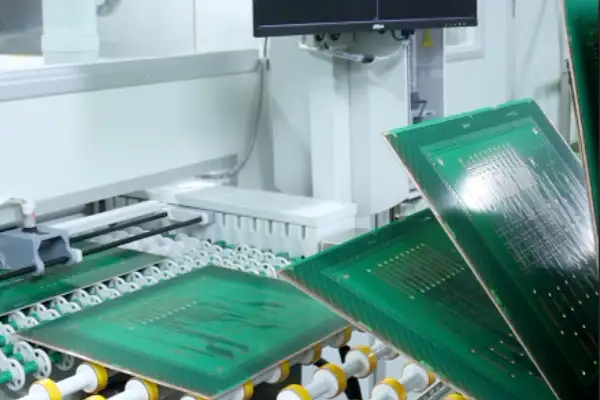
The most durable industrial control equipment circuit boards I’ve seen don’t prioritize extreme temperature parameters. Designers focus on the rational layout of components, keeping heat-generating components away from temperature-sensitive parts, reducing the overall load through physical isolation. This approach is far smarter than simply piling on high-performance materials.
Ultimately, reliability in industrial environments is a systems engineering project. Rather than obsessing over whether a single indicator can reach its theoretical limit, it’s more important to ensure that all components can coexist harmoniously in real-world operating environments. Like a great team, seamless teamwork is often more important than outstanding individual abilities.
I’ve been pondering a question lately: why do some electronic products fail so quickly, while others run stably for years? I discovered that the difference is largely due to the quality of the PCB manufacturing process.
I remember last year, a batch of equipment our company purchased experienced frequent signal interference issues after less than six months. Returning it for testing revealed that the problem stemmed from substandard PCB materials. This incident made me realize that simply looking at product functionality isn’t enough.
Many manufacturers now emphasize their ISO certification, but that’s just the basic requirement. The real key is how these standards are implemented in daily production. I’ve seen many factories, despite displaying ISO certification, frequently cut corners during production. For example, regarding environmental temperature control, even though standards require constant temperature and humidity workshops, they often skimp on even basic air conditioning systems.
Speaking of testing, this is perhaps the most easily overlooked aspect. I once visited a PCB factory claiming to be industry-leading and found their testing equipment indeed very advanced, but operators frequently skipped certain testing steps to meet production targets. Such superficial efforts are ultimately useless.
The biggest headache with industrial-grade PCBs is after-sales service. While ordinary consumer electronics might be replaced directly when they break, industrial equipment often needs to operate for years. If the PCB quality is substandard, the subsequent maintenance costs can be incredibly high.
I think many companies are currently focusing on cost reduction. Price competition is indeed fierce, but in the industrial sector, price alone is not enough. We recently switched suppliers; although the unit price increased by 15%, the product failure rate decreased by 80%—it’s a worthwhile trade-off no matter how you look at it.
Sometimes I wonder why many factories in China would rather engage in price wars than focus on quality. A conversation with an experienced worker revealed that many business owners believe the return on investment in high-end equipment is too long, and saving money is more practical. This short-sighted approach will truly limit the development of the entire industry.
In fact, good PCB manufacturing should be like creating a work of art, requiring meticulous attention to every step. From material selection to processing, from testing to packaging, everything needs to be handled with care. After all, these circuit boards support the operation of critical equipment, and there can be no room for carelessness.
I particularly admire companies that dare to invest in research and development. They might not constantly talk about ISO certification, but you’ll see their meticulous attention to detail in every aspect of production. These are the kinds of companies you can truly trust as partners.
I’ve always found the field of industrial PCB manufacturing particularly fascinating. Many people think that simply routing the circuitry is enough—but that’s just the beginning.
I remember once visiting a factory and seeing a batch of circuit boards undergoing high-temperature aging tests. Those boards had to run continuously for thousands of hours in an environment of 125 degrees Celsius—this isn’t something that can be achieved simply by powering them on. Engineers had to monitor the resistance changes at every node in real time—a fluctuation exceeding 5% was considered an immediate failure.
You might ask why such meticulousness? Because industrial equipment often operates continuously for years in harsh environments—chemical plant control systems must withstand corrosive gases—outdoor base station equipment must endure sun and rain—in these scenarios, even a minor malfunction can bring the entire production line to a standstill.
I’ve paid particular attention to the conductive anode wire phenomenon—commonly known in the industry as CAF (Conductive Anode Fabric)—which is especially fatal in humid environments. Under high temperature and humidity conditions, the insulation layer can develop invisible conductive filaments, ultimately leading to short circuits. Therefore, I now always ensure sufficient creepage distance in my designs.
Temperature cycling tests are even more eye-opening—rapid switching from -55°C to 125°C is equivalent to subjecting the circuit board to a journey between the Arctic and the desert. Many consumer-grade boards begin to delaminate after a few dozen cycles, but industrial-grade boards must withstand thousands.
The most easily overlooked aspect is the visual inspection stage. Once, we returned a batch of seemingly perfect boards because of a pinhead-sized bubble in the solder mask. The supplier didn’t understand at first, until we showed them under a microscope that the copper foil beneath the bubble had begun to oxidize, convincing them otherwise.
Now, when working on new projects, I increase the number of test samples by about 30%—although the cost is higher—it’s negligible compared to the repair costs of on-site failures later on. After all, the reliability of industrial equipment isn’t a matter of luck—it’s built up through rigorous testing and verification data.
Every time I see those complex circuit board designs become physical products, I wonder: why do people treat industrial-grade PCBs like ordinary consumer electronics? It’s not as simple as soldering a few components together.
Last year, a customer brought their designed PCB to our factory for testing, and we discovered that the heat dissipation holes for several key chips were completely misplaced. This kind of problem is easily overlooked during the design phase, but in actual operation, the high temperatures can cause the entire board’s performance to plummet. We later readjusted the layout and added a ring of heat dissipation vias around the power devices to solve the problem.
The industrial environment places far harsher demands on PCBs than imagined. Humidity, vibration, and temperature fluctuations can all cause premature aging of circuit boards. I’ve seen too many cases where equipment developed corrosion after only six months of use in coastal areas because the design didn’t consider protective coatings. Now, we advise customers to perform localized potting in critical areas, although it’s more expensive, it can prevent even greater losses later.
The testing phase is an even bigger disaster area. Some designers, in an effort to save space, don’t even include basic test points, leaving no way to troubleshoot problems when they arise during mass production. A recent project we handled included pre-installed probe contacts next to each power interface, allowing for quick location of faulty lines during flying probe testing. This small upfront investment is negligible compared to the cost of rework later.
More and more manufacturers are now offering early intervention services, participating even during the schematic drawing stage. Last week, a team consulted us about their AI server solution, directly pointing out the hidden dangers in their stacked-layer design—an 18-layer board, while offering high performance, had extremely high process requirements, easily leading to impedance miscontrol. They later adjusted to a 16-layer board with special materials, achieving better signal integrity.
The biggest pitfall in industrial PCB design is assumption-based thinking. I once saw a control board densely packed with components, looking very professional, but during vibration testing, several BGA-packaged chips detached due to resonance. Later, we redistributed the heavier components and added reinforcement points at the four corners before it passed the vibration test.
Ultimately, good industrial-grade products are the result of continuous refinement in design and manufacturing. Like building blocks, it’s not about stacking them as high as possible, but about finding the most stable structure.
I think many people have a misconception about industrial PCB manufacturing, believing that once the circuit design is good, everything is fine. In reality, the process from design drawings to the actual usable circuit board is where the true test of manufacturing skill lies.
Take lamination, for example. It seems simple—just stacking several layers of material together, heating and pressurizing—but in practice, it’s a completely different story. I’ve seen many manufacturers stumble at this stage, either due to improper temperature control causing material deformation or uneven pressure causing delamination.
Once, during a factory visit, I witnessed an interesting phenomenon: to ensure the quality of the interlayer bonding in multilayer boards, they deliberately reserved a few sheets from each batch for destructive testing. Workers directly tore them apart with pliers to inspect them; the crisp cracking sound was reassuring—it indicated that the bonding strength met the standards.
Speaking of lamination processes, vacuum environments are now the mainstream. I remember ten years ago, when ordinary mechanical lamination was still used, air bubbles were often found remaining on the edges of the boards. Now, with vacuuming followed by pressure, the resin fills every corner more evenly, leaving no gaps even as small as 0.1 millimeters.
However, what impresses me most is the advancement in testing technology. Previously, judging interlayer alignment relied on manual microscopic inspection; now, X-ray scanning imaging displays even the slightest inner layer misalignments in real time.
In fact, the biggest fear for industrial-grade PCBs isn’t problems in a single step, but rather the lack of smooth coordination between processes. For example, tiny deviations in previous processes can be amplified in subsequent processing. Therefore, the emphasis now is on parameter matching throughout the entire process, with each step allowing for adjustments in subsequent steps.
I particularly admire manufacturers who are willing to invest in fundamental processes. They may not have the most advanced equipment, but their control over every detail is impeccable. For example, they might experiment dozens of times to find the optimal solution for a simple temperature rise curve adjustment.
Ultimately, good circuit board manufacturing is more like a craft, requiring experience and continuous trial and error. Advanced equipment alone isn’t enough; you also need experienced craftsmen overseeing every detail.
I’ve always found the industrial PCB manufacturing field particularly fascinating. Previously, PCB manufacturing focused more on process stability and cost control. But now, the situation is completely different—with AI technology taking root across various industries, the entire sector is undergoing a profound transformation.
Take a recent project, for example. The client needed to customize a motherboard for a new generation of AI servers. This isn’t a simple wiring problem; it requires achieving ultra-high-speed data transmission within a limited space while simultaneously ensuring heat dissipation efficiency and signal integrity. Traditional design approaches are completely ineffective here; we had to rethink every detail.
What impressed me most was how intelligent auxiliary tools have become indispensable in the design process. Previously, engineers might spend weeks repeatedly adjusting routing schemes; now, specialized algorithms can provide the optimal solution within days and even predict potential performance bottlenecks. This change not only improves efficiency but, more importantly, opens up new possibilities, allowing us to attempt designs that were previously considered too complex.
However, the real test of manufacturing capabilities lies in the actual production stage. High-density interconnect boards demand millimeter-level precision; even the slightest deviation can render an entire batch of products unusable. Our recently introduced automated inspection system has been a huge help. It can detect defects that are difficult to see with the human eye in real time, greatly reducing rework rates.
Material selection is also a topic worth discussing. To meet the demands of high-frequency, high-speed applications, we’ve started experimenting with various new substrates, some even capable of withstanding extreme temperature conditions—unthinkable in traditional industrial control scenarios. I remember once testing over a dozen different material samples for a specific project before finding the most suitable solution.
I believe this industry will continue to evolve in the coming years. With the widespread adoption of edge computing and IoT devices, the requirements for PCBs will become increasingly diverse, demanding both high performance and cost control. This presents a significant challenge for manufacturers, but also means more opportunities.
What excites me most is seeing the innovative ideas brought by young engineers. They often think outside the box and propose groundbreaking solutions. This generational clash of ideas is a crucial driving force for industry progress.
Ultimately, technology serves people. Whether it’s AI or other innovative tools, they must ultimately return to the essence of solving practical problems. As practitioners, we need to maintain an open mind, embracing change while adhering to the bottom line of manufacturing quality. Only in this way can we find our place in a rapidly changing era.
I always thought industrial-grade PCB manufacturing and ordinary consumer electronics were two completely different worlds. Last year, I visited a factory supplying automakers and truly understood what stringent standards meant. The sight of production line workers in anti-static suits operating in a temperature-controlled workshop left a deep impression on me.
One detail was particularly interesting: they simulated the bumpy road conditions of a car to conduct vibration tests on the circuit boards. This reminded me of the occasional blackout and restart of the center console screen in my old car—now I understand that this might have been due to a PCB solder joint failing to withstand prolonged vibration.
The requirements for PCBs in new energy vehicles are even higher. Circuit boards in battery management systems must simultaneously withstand high temperatures and electromagnetic interference. I’ve seen a case where the charging module of an electric vehicle warped due to insufficient heat dissipation design.
The reliability standards for medical equipment are another dimension altogether, although I haven’t encountered specific cases.
The design of circuit boards for communication base stations is also fraught with challenges.
What surprised me most was the near-zero tolerance for error in industrial PCB manufacturing.
Now, when I see a car parked on the roadside, I always think: there might be circuit boards inside that can withstand temperatures as low as -40 degrees Celsius, working silently.
Sometimes I feel that these circuit boards hidden inside equipment are like the capillaries of a city—unseen most of the time, yet supporting the entire system’s operation.
I’ve seen too many circuit boards in factories fail for various reasons. Sometimes, you spend a lot of money on equipment, and suddenly it malfunctions; after much troubleshooting, you discover it’s that tiny PCB that’s the problem. These seemingly insignificant boards actually carry the lifeline of the entire system; once they fail, it triggers a chain reaction.
The most frustrating thing is the intermittent failure—everything seems fine during testing, but after a few days of operation, it starts acting up. Later, I discovered that many problems stemmed from insulation performance, especially in equipment operating in humid environments. Moisture in the air slowly seeps into the board, forming tiny conductive channels over time. This is easily overlooked in ordinary industrial PCB manufacturing because it’s undetectable during factory inspection.
Once, we encountered this problem with a control system we were building for a coastal factory. The equipment operated intermittently, causing the customer considerable trouble. Upon disassembly and inspection, we discovered fine dendritic crystals on the board surface—a typical electrochemical migration phenomenon. We later solved the problem by using a substrate with a special coating.
High-temperature environments pose a severe challenge to circuit boards. I’ve seen numerous cases of solder joints cracking due to thermal expansion and contraction. Especially for equipment requiring long-term operation, temperature changes create stress between different materials, which, after repeated cycles, forms tiny cracks. These cracks initially don’t affect functionality but gradually widen until they eventually cause a complete break.
Now, when designing, I pay special attention to component layout. I don’t just consider convenient routing; I also leave sufficient space for heat dissipation. Sometimes adding more ventilation holes or using a more thermally conductive board, although more expensive, can prevent many future problems.
In fact, circuit board failure is often not caused by a single factor; it’s more like a slow, cumulative process. Just like neglecting car maintenance until it breaks down on the road, it’s too late. Regular inspection and maintenance are far more cost-effective than reactive repairs, especially for critical equipment where a single unexpected downtime can cost more than the entire device.
Recently, I’ve encountered some interesting new materials. Some manufacturers are starting to make composite substrates, pressing materials with different properties together to ensure both mechanical strength and improved heat dissipation. Although more expensive than ordinary boards, they are more economical in the long run because they significantly reduce the frequency of repairs and replacements. Ultimately, the most important aspect of industrial-grade products isn’t how advanced the technology is, but whether it can withstand the test of time. Fancy features are more prone to problems; simple and reliable solutions are key.
I’ve always felt that many people’s understanding of Industry 4.0 is too superficial. While everyone is talking about smart factories and data-driven production, I’ve found that what truly determines product quality is often the most basic manufacturing processes. Take a recent project we were working on, for example. We initially thought that implementing the latest automation system would solve everything, but the problem turned out to be with a seemingly ordinary PCB board.
That experience taught me a valuable lesson: even the most advanced concepts need reliable hardware to support them. To meet deadlines, we compromised on our PCB supplier selection, resulting in frequent signal interference issues after less than three months of operation. Upon rework, the PCB’s workmanship was indeed subpar. This incident had a profound impact on me; now, whenever I see equipment touting smart manufacturing, I pay special attention to the quality of its PCBs.
Many companies are currently pursuing so-called digital transformation, but often overlook the importance of a solid hardware foundation. I’ve seen too many cases where huge sums of money were invested in intelligent systems, only to have the entire production line grind to a halt because of a tiny circuit board. This is especially evident in the automotive electronics industry, given the higher stability requirements of in-vehicle devices. Sometimes I think that instead of blindly pursuing the latest technology, it’s better to first solidify the foundation.
Speaking of the PCB manufacturing industry, I think the most crucial change is in mindset. Many manufacturers are still stuck in the old concept of mass production, but in reality, Industry 4.0 demands customization and rapid response capabilities. Take a supplier we recently worked with, for example; their biggest advantage isn’t how advanced their equipment is, but their ability to flexibly adjust production processes according to customer needs. This adaptability is particularly valuable in today’s market environment.
I firmly believe that a good industrial PCB shouldn’t just be about meeting technical parameters. It needs to withstand the test of real-world use and maintain stable operation in various complex environments. It’s like building a house; even the most beautiful design needs a solid foundation. Especially in today’s interconnected world, the functions of circuit boards are becoming increasingly complex, naturally raising the bar for manufacturing processes.
Recently, while exchanging ideas with colleagues, I noticed an interesting phenomenon: companies that prioritize long-term development are more cautious when choosing PCB suppliers. They don’t just look at price or delivery speed, but pay more attention to the manufacturer’s technological accumulation and quality control system. This shift in selection criteria reflects the industry’s maturation. After all, in the industrial sector, reliability is always more important than trendiness.
Speaking of future development trends, I personally believe environmental factors will become increasingly important. This is not only about complying with regulations, but also a reflection of corporate social responsibility. I’ve visited several environmentally conscious PCB factories, and their wastewater treatment systems and exhaust gas collection devices are very well implemented. This attention to detail often reflects the overall management level of a company.
I’ve always felt that many people misunderstand industrial PCB manufacturing. People tend to focus on fancy technical parameters, neglecting the most fundamental question—what kind of circuit boards can truly withstand the test of a factory environment?
I remember once visiting an automated workshop and seeing a thin layer of dust on the surface of the circuit boards in the control cabinets, yet the equipment had been running stably for over five years. This made me realize that in real-world industrial scenarios, a high Tg value is merely a basic threshold; what’s more important is the material’s stability under various extreme conditions.
I’ve seen far too many cases where lab data looks impressive, but the material fails in real-world applications. One client was obsessed with achieving the highest Tg parameters, only to find that the board developed microcracks in a factory with large day-night temperature differences. Later, switching to a material with a medium Tg but better toughness solved the problem.
Many engineers now easily fall into a parameter race, turning PCB selection into a numbers game. The harsh reality of industrial applications is that circuit boards face multiple challenges, including continuous vibration, chemical corrosion, and sudden temperature changes. Simply pursuing an extreme value for a single indicator can disrupt the overall balance.
Once, while repairing an old piece of equipment, I discovered it used the most common FR-4 board, but the designer had meticulously addressed structural protection. This further convinced me that a good industrial PCB should be the result of systems engineering—material properties should complement structural design and protective measures.
The current trend is an overemphasis on individual parameters, such as pushing Tg values to their theoretical limits. However, in practical applications, the Tg of materials at 150℃ and 170℃ shows no difference under most operating conditions. Investing in a more rational layout design often yields a better return on investment.
I firmly believe that judging the quality of an industrial-grade PCB should be based on its aging performance in real-world environments. Circuit boards that withstand years of production testing may not use the most advanced material parameters, but they have certainly found the optimal balance for their specific application scenarios.
Ultimately, the reliability of industrial products is not achieved by piling on parameters, but by a comprehensive judgment based on a deep understanding of actual operating conditions. This is why the same board material can exhibit drastically different lifespans in different applications—the key lies not in the material itself, but in whether it is used correctly.
I’ve seen many engineers treat PCBs as simple circuit connection boards during the design phase.
Only when they actually enter the industrial PCB manufacturing stage do they discover a multitude of problems.
One project left a deep impression on me: a seemingly ordinary four-layer board experienced a current bottleneck because the trace width in a critical area was only a fraction of a millimeter.
Circuits that performed well in the lab environment revealed various problems once they entered the real-world working environment.
We later redesigned the layout, widening the paths that needed to carry high current to a sufficient size, which resolved the hidden danger.
In fact, many design problems stem from a lack of understanding of manufacturing processes.
For example, sometimes, in pursuit of wiring density, spacing is compressed to the limit while ignoring the factory’s actual processing capabilities.
I once encountered a situation where insufficient pad spacing caused bridging during soldering, making rework extremely troublesome.
Now, I pay more attention to the integration of design and manufacturing, considering every subsequent step during the design phase.
Impedance control is also an easily overlooked detail.
Once, when designing high-speed signal transmission, neglecting the integrity of the reference layer resulted in a significant reduction in signal quality.
Later, we developed the habit of ensuring complete grounding protection along every critical signal path.
These experiences have taught me that good PCB design is not simply about pursuing parameter specifications but about considering various variables in real-world applications.
Environmental factors such as temperature changes and mechanical vibrations can all affect circuit performance.
Now, when I design, I leave sufficient margin and don’t rigidly adhere to parameters.
After all, stability in industrial environments is more important than perfect data from a laboratory.
I feel that many people’s understanding of industrial-grade PCBs is somewhat skewed. When high reliability is mentioned, various testing methods and equipment parameters come to mind—which are certainly important—but what truly determines whether a circuit board can withstand ten or eight years of harsh environmental testing is often the most fundamental element.
Last year, I visited a factory that manufactures control systems for offshore drilling platforms. Their engineer showed me a motherboard that had been running for six years; the dense, thick copper traces still maintained clear edge outlines. Pointing to the area near the power module, the engineer said, “Look, the width changes of these current paths are dynamically adjusted according to the actual load, not simply by applying formulas.” Such details are completely overlooked in ordinary consumer products, but on an offshore platform where the temperature difference between day and night exceeds thirty degrees Celsius, it’s a matter of life and death.
What impresses me most about industrial PCB manufacturing is its implementation of “control” in every single step. For example, many people think impedance matching is just adjusting the trace width and spacing, but in fact, even fluctuations in the resin content of the substrate must be taken into account in the calculations. I once saw a supplier meticulously testing the dielectric constant of boards from the same batch, dividing them into five humidity levels. Their rigorous approach reminded me of an old carpenter weighing timber by hand.
Many manufacturers now like to advertise the number of layers of boards and the thickness of copper foil they use, but the truly crucial aspects are often those unseen. For example, the standard for residual cleaning agents after welding is three times stricter for medical equipment than for industrial equipment because even trace amounts of ion residue can cause long-term corrosion. This difference is invisible during factory testing but determines whether the equipment can survive its warranty period.
The most extreme case I’ve seen is an environmental monitoring module manufacturer for an Antarctic research station. They conducted three consecutive months of on/off cycles in a -60°C environment simulation chamber just to verify the freeze-thaw resistance of a capacitor’s solder joints. The cost of this test was enough to produce another 500 boards, but they felt it was worth it because no one could go to Antarctica for on-site repairs.
Ultimately, high reliability isn’t achieved through the final testing process, but rather through careful consideration from the very beginning of material selection. Just as a good chef doesn’t rely on MSG to save the day, true umami comes from the flavor compounds within the ingredients themselves. The field of industrial PCB manufacturing is actually quite interesting. I’ve seen many people fall into a common pitfall when choosing suppliers—overemphasizing superficial technical parameters. While parameters are important, what truly determines the quality of a collaboration is often the unseen aspects.
I remember last year we had a project requiring a batch of high-density HDI boards. We contacted three suppliers for quotes. The first company touted its technical specifications, the second offered an extremely low price, and the third asked us a barrage of questions about the product’s application scenarios. Guess who we ultimately chose? The one that asked the most detailed questions. Because they genuinely cared about how the board would be used, not simply filling out a specification sheet.
Many factories now emphasize their HDI production capabilities, but few truly excel in refined manufacturing. Once, I visited a factory that claimed to have a fully automated production line and found their quality control still relying on experienced workers using magnifying glasses. This made me question the so-called high-tech label.
Good PCB manufacturing should be like tailoring a bespoke suit—it requires understanding both the fabric’s characteristics and the wearer’s lifestyle. Simply pursuing delivery speed or price advantages often leads to more problems later on, such as unstable impedance control or flawed heat dissipation design.
I increasingly feel that choosing a manufacturing partner is a bit like choosing a marriage partner; looking at family background and education isn’t enough, you also need to consider whether your values align. Manufacturers willing to spend time understanding your product logic and even challenging your design solutions are more worthy of long-term trust.
Recently, a friend who works in industrial control complained to me that he switched to a new supplier because they promised 72-hour sample delivery, but the first batch of boards had micro-short circuit problems, delaying the entire project. This further convinced me that there are no real shortcuts in manufacturing.
Sometimes I wonder why many small and medium-sized enterprises are willing to spend more money to cooperate with established manufacturers. It’s probably because these companies have accumulated a wealth of trial-and-error experience; they know which design details are prone to problems. This experience is far more valuable than machine parameters.
I’ve seen too many people overcomplicate industrial circuit boards. In reality, it all comes down to durability. Think about the equipment in a factory workshop, constantly humming and running, having to withstand various vibrations and high temperatures. Ordinary boards simply wouldn’t last more than a few months before needing to be scrapped. I once handled a PCB board used on a CNC machine tool that operated continuously for eight years in an environment exceeding 40 degrees Celsius, with no major structural issues except for two capacitor replacements.
Many people believe that industrial-grade products require piling on the most expensive materials, but that’s not the case. The truly important thing is to consider actual operating conditions during the design phase. For example, a control board in a chemical plant needs corrosion resistance, so you need to focus on surface treatment, not just simply thickening the copper layer. Once, we tested seven different protective coatings just to cope with salt spray environments for a monitoring module we made for an offshore platform.
There’s a misconception that cramming everything onto a single board equates to high-end technology. I believe a well-designed modular design is more reliable. Separating the power supply and control core makes replacement easier if a module malfunctions, preventing the entire board from being scrapped. After all, the biggest fear in industrial production is downtime losses.
I particularly dislike theories that complicate simple things and insist on applying the latest standards to everything. In reality, many traditional processes are more stable in specific scenarios. For example, while the currently popular HDI technology can indeed reduce size, ordinary multilayer board structures are often more robust in high-frequency vibration environments. The real test of skill lies in finding the balance between cost and reliability. A food factory initially used commercial-grade boards to save money, resulting in maintenance every six months. They later switched to industrial-standard models, which, although 30% more expensive, had no failures in three years – a worthwhile trade-off.
Ultimately, the most important thing in this industry is empathy. You have to think from the user’s perspective. What do they care about most? The impressive data on the specifications sheet, or actual stable operation? I’d rather take on fewer orders than compromise on ensuring every board that leaves can withstand real-world conditions – that’s the fundamental responsibility of industrial product manufacturers.
I’ve seen too many circuit boards scrapped in factories due to neglecting details. Those densely packed lines all look the same, right? But each board has its own quirks. I remember once we took on a medical equipment order; the client insisted on the highest Class standard, and the first batch of samples all failed due to impedance deviation – the design document specified 50 ohms, but the actual measured impedance was 57 ohms. Engineers spent three days troubleshooting before discovering that the problem was caused by fluctuations in the dielectric constant of the substrate—a problem undetectable with a regular multimeter. Such minute parameter deviations are particularly critical in high-frequency circuits, causing signal reflection and attenuation, directly impacting equipment accuracy. Especially in medical imaging equipment, this can lead to image artifacts or data distortion, necessitating precise calibration using specialized equipment like network analyzers.
Many people oversimplify industrial PCB manufacturing, thinking that once components are mounted and the circuit is powered, the job is done. Last year, when we were making control boards for rail transit, we designed six different insulation resistance testing schemes alone. Leakage current in humid environments must be controlled to the microampere level. One board performed perfectly at room temperature, but tripped in a high-temperature, high-humidity chamber. We later discovered a pinhole-sized bubble in the solder mask layer. Such tiny defects can gradually expand due to electrochemical migration during long-term operation, eventually leading to a short circuit. We later introduced an automated optical inspection system, which uses multi-angle light source scanning to capture 99% of surface defects, but a very small number of hidden problems still require the experience of veteran workers to diagnose.
The real test of skill lies in balancing standards and costs. Class III boards require zero defects, but some customers’ products don’t need such stringent performance. I often argue with the purchasing department that it’s unnecessary to apply aerospace-grade standards to every project. For example, insisting on a specific gold plating thickness for the driver board of an outdoor advertising screen can actually double the cost. The key is to understand the actual operating environment of the end product—a server motherboard in an air-conditioned room is completely different from the vibration environment of construction machinery. For instance, vibration environments require special attention to solder joint fatigue resistance, which may require adding anchor points or filler adhesive, while static environments can simplify the structure.
Recently, an interesting phenomenon has emerged: small-batch custom orders are more prone to problems than mass production. Last month, a maker team brought ten IoT gateway boards for flying probe testing. The continuity test on the third board suddenly failed. We had to adjust the microscope to 500x to find a hair-thin copper shaving at the via location, probably left over from drilling. Such issues would have been filtered out by statistical patterns in mass production. Small-batch production lacks the necessary process stability verification cycles. For example, drill bit wear monitoring often requires accumulating data from thousands of drilling operations to establish an early warning model.
What really troubles me are the unseen hidden dangers. A company that manufactures automotive electronic control units insisted on using a certain imported substrate, only to discover micro-cracks in the solder pads during thermal shock testing. They later switched to domestic materials and passed certification. This illustrates that sometimes blindly following standards can lead to detours. What’s truly important is understanding the essence of the technical requirements, not blindly pursuing the numbers on certification certificates. For instance, the thermal expansion coefficients of some imported materials don’t match those of commonly used domestic solders, causing mechanical stress concentration during cycling from -40℃ to 125℃.
Ultimately, industrial-grade PCBs are like putting protective clothing on circuits—ensuring both flexible operation and durability. I’ve seen too many engineers focus all their energy on chip selection, forgetting that the circuit board is the foundation of all components. Now, every time I review a design proposal, I ask: How do you plan to prove this board will last for five years? This requires combining accelerated aging test data, such as simulating long-term use through 85℃/85%RH temperature and humidity cycling, while analyzing the decay curves of copper foil peel strength and dielectric withstand voltage. True reliability is not determined by final testing, but by ensuring reliability throughout the entire process from material selection and process design to production control.
From a smart-home team’s costly stumble over high-frequency PCB material, to a
Chasing PCB production stability, automation is never a magic key — a
Every time you receive a Printed Circuit Board Quote, have you ever
- Experte für die Produktion kleiner bis mittlerer Chargen
- Hochpräzise PCB-Fertigung und automatisierte Montage
- Zuverlässiger Partner für OEM/ODM-Elektronikprojekte
Geschäftszeiten: (Mo-Sa) von 9:00 bis 18:30
Get quote, solution or any question, Andre always here to help