

What Separates the Best Prototype Printed Circuit Board Manufacturers When You’re Building a Telecom Rectifier PCB
Many people assume the key to circuit-board manufacturing is high-end equipment, but
I recently chatted with a friend who works in medical devices and realized that many people’s requirements for PCBs are still at the standard of ordinary electronic products. This is actually quite dangerous. Imagine, if the circuit board of a device used in the human body malfunctions, it’s not something that can be solved simply by restarting. For example, implantable defibrillators (EDDs) require circuit boards that continuously monitor heart rate and deliver an electric shock when necessary. Even the slightest malfunction can lead to misdiagnosis or failure, directly endangering the patient’s life. This is completely different from the impact of malfunctions in consumer electronics like mobile phones or televisions, which at most cause inconvenience. The consequences of medical device malfunctions are often irreversible.
What I admire most about medical PCB manufacturers is their almost obsessive attention to detail in their testing. I’ve seen their workshops where each board undergoes more than a dozen inspection processes. Their automated optical inspection system is like performing a CT scan on the circuit board; it can even detect scratches as fine as a hair. Once, they discovered that a batch of boards exhibited minute deformation under specific humidity conditions, which ordinary equipment wouldn’t detect. They still returned the entire batch to the supplier. This meticulousness is unimaginable in the consumer electronics industry. In fact, this pursuit of detail is also reflected in their control of the production environment. For example, the workshop must maintain a constant temperature and humidity; employees must undergo strict anti-static and dust removal procedures before entering the workshop; even the airflow direction is carefully designed to avoid particulate contamination.
Many people think of PCBs as just layers of green boards, but medical-grade PCBs are different from the base material alone. I’ve seen them test the insulation performance under high temperature and humidity conditions. Ordinary boards might fail after a few hundred hours, while medical-grade boards must withstand thousands of hours of continuous extreme testing. This is due to the huge differences in material formulation and process control. Medical-grade PCBs often use special materials such as polyimide or ceramic substrates. These materials not only have higher glass transition temperatures but also maintain stable dielectric constants over long-term use. Furthermore, medical devices may need to be used repeatedly in sterile environments, so the solder mask layer on the circuit board surface must be able to resist the erosion of sterilization methods such as gamma rays or ethylene oxide.
Speaking of the testing process, I think what’s most impressive is their ability to connect data from every step. For example, if an abnormal solder joint brightness is found on a board during the AOI stage, the system will immediately retrieve all parameter records for that board in the preceding processes, from etching time to copper plating thickness—all traceable. This transparent management across the entire chain makes problems impossible to hide. This data traceability system can even link to batch information of raw materials. If the metal composition of a batch of solder paste shows even slight fluctuations, the system can immediately identify all circuit boards using that batch of materials, preventing potential risks from spreading to subsequent assembly stages.
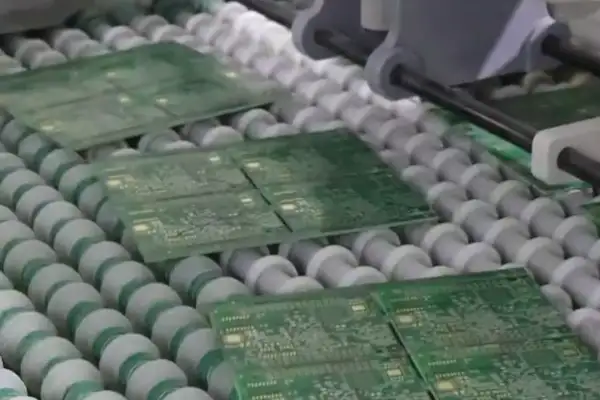
One thing that impressed me particularly was that the water used to clean the boards they made for pacemakers had to meet the standards for water for injection. While ordinary factories might think wiping with alcohol is enough, they tested the ion content in the water to prevent electrochemical migration years later. This long-term consideration is what truly deserves the title “medical-grade.” Besides water quality control, they also test the surface ion residue on the cleaned boards to ensure that the content of sodium, chloride, and other ions is below one part per billion. This level of cleanliness stems from considerations of the long-term reliability of the equipment, because residual ions can form micro-batteries inside the circuit board, gradually corroding the wires and causing open circuits.
Some manufacturers cut corners on testing to reduce costs, which I think is playing with fire. Medical equipment is a matter of life and death; even a small capacitor error on a circuit board can mean a deviation in vital sign data. Therefore, whenever I see manufacturers perfecting their testing processes, I feel they’re not just building products, but constructing a safety barrier. For example, in a pulse oximeter, a 0.5% accuracy deviation in the current sampling circuit can lead to a 2% error in the pulse oximetry reading, which is enough to affect clinical decisions for critically ill patients. This is why responsible manufacturers incorporate Failure Mode and Effects Analysis (FMEA) during the design phase, proactively identifying potential failure points and implementing multiple protection mechanisms.
I’ve seen many cases of medical equipment malfunctions, often not due to design flaws but rather improper material selection. Last year, a customer who made ECG monitors brought us a burnt-out circuit board for disassembly. We discovered that ordinary FR4 material had delaminated during high-temperature sterilization; they hadn’t considered the importance of Tg values at all. For example, the glass transition temperature (Tg) of common epoxy resin-based FR4 boards is typically maintained between 130-140℃, while the high-pressure steam sterilization processes used in hospitals often require withstanding temperatures above 135℃ for extended periods. If the material’s Tg value is insufficient, the resin matrix will gradually soften and lose its support during repeated thermal cycling, leading to a decrease in the adhesion between the copper foil and the substrate, resulting in microcracks.
The requirements for PCBs in medical environments are far more stringent than those in ordinary consumer electronics. Consider surgical instruments that undergo high-temperature steam sterilization daily; if the board’s heat resistance is insufficient, the internal circuitry may deform and fail after just a few sterilization cycles. In such cases, high Tg materials are not an option but a lifeline. For example, composite substrates filled with polyimide or ceramic can have a Tg value exceeding 170℃ and can effectively suppress the CAF (conductive anolyte) phenomenon, preventing short circuits caused by electromigration in humid environments.
Implantable devices require even greater caution. Although PCBs don’t directly contact the human body, the consequences of harmful substances leaching out due to encapsulation problems are unimaginable. One pacemaker manufacturer we work with even requires biocompatibility certification for every batch of boards—stricter than industry standards. They pay particular attention to the migration risk of brominated flame retardants, requiring the use of phosphorus-nitrogen-based environmentally friendly flame retardant systems, and demanding that the ionic purity of the boards reach ppb level to prevent metal ion release and tissue inflammation.
Many people think medical PCBs are simply about higher precision, but the materials and processes need to be rethought. For example, there’s the issue of disinfectant corrosion. Ordinary solder resist inks might fade in six months, while medical devices often need to last five years or more. Chlorine-containing disinfectants, in particular, can corrode traditional epoxy resin inks, while medical-grade solder resist inks must pass a 500-hour salt spray test, and their cross-linking density must be more than 30% higher than ordinary products to ensure long-term stability.
I always feel that when choosing a medical PCB manufacturer, price shouldn’t be the only factor; their supply chain management capabilities are crucial. After all, not just any factory can reliably supply these special boards. Medical-grade PCBs from manufacturers like Rogers and Isola often need to be ordered six months in advance. Manufacturers must establish multi-tiered backup supply chains and even participate in upstream raw material modification processes, such as customizing fiberglass cloth specifications with specific dielectric constants.
Once, during a visit to an operating room, I saw that the PCBs of monitors operated almost flawlessly during continuous use, which truly made me understand why the medical industry is willing to spend three times more for customized solutions—it reflects a profound respect for life. These devices employ buried resistors and capacitors to reduce surface solder joints, use gold plating instead of tin-lead processes, and place grounding shielding rings around critical signal lines. These designs significantly improve reliability in complex electromagnetic environments.
Those seemingly minor details, such as shielding thickness or impedance control deviations, might only result in slightly poor signal strength in ordinary equipment, but in EEG monitoring equipment, they can directly affect diagnostic results. For example, the analog front-end of EEG equipment has extremely high requirements for common-mode rejection ratio; an impedance deviation exceeding 5% can cause 50Hz power frequency interference to intrude into the signal chain, causing microvolt-level EEG signals to be drowned out by noise.
More and more medical PCB manufacturers are establishing end-to-end traceability systems. This is not only an industry requirement but also a responsible attitude towards patients. Every board, from materials to finished product, has traceable data; this transparency is the future of medical electronics. By using laser marking technology to directly engrave traceability information into the board, combined with an MES system recording process parameters for each step, it’s even possible to precisely trace back to the copper foil supplier for a specific batch. This level of quality control is becoming the entry barrier for high-end medical devices.
I’ve always found the circuit board design in medical devices particularly interesting. I remember once visiting a medical PCB manufacturer’s production workshop and noticing a detail—they would repeatedly bend rigid-flex boards hundreds of times when testing them. This reminded me of how mobile phone data cables often break down after a few bends. This test simulates the long-term bending that devices might experience inside the body, such as the continuous deformation of pacemaker leads with heartbeats. Manufacturers also use specialized equipment to record resistance changes after each bend, ensuring connection stability meets medical-grade standards even after millions of cycles.
Many implantable devices are now using HDI technology for miniaturization. One heart monitor’s PCB, only a third the thickness of a credit card, crammed with eight layers of circuitry. This level of precision reminded me of the assembly line for a watch movement. In fact, this high-density interconnect technology allows for the placement of thousands of microvias in an extremely small space, with linewidth and spacing controlled to below 20 micrometers—equivalent to a quarter the diameter of a human hair. Designers also need to consider signal integrity, avoiding crosstalk between densely packed lines in high-frequency ECG data.
The reliability requirements for medical devices are truly extraordinary. While PCBs in ordinary consumer electronics can tolerate minor imperfections, medical devices must be absolutely flawless. One manufacturer told me they have three testing systems on each production line. In addition to routine automated optical inspection, they also perform destructive sampling tests on each batch of products, such as placing samples in a high-accelerated life test chamber to simulate a ten-year aging process through rapid temperature and humidity cycling. Any design detected with ion migration or delamination is immediately returned for modification.
A recent case study involving a neurostimulator was quite interesting. It requires embedding circuitry in soft, biocompatible materials, which involves special rigid-software bonding processes. Traditional rigid PCBs are completely unsuitable here, necessitating the development of entirely new flexible substrates. Engineers used polyimide film as the substrate, with a bending radius of up to 1 millimeter without damaging the circuitry. Even more ingeniously, they integrated a microprocessor into the rigid area and arranged electrode arrays in the flexible portion. This hybrid structure ensures both computational performance and adapts to the curved shape of brain tissue.
Innovation in the medical field often stems from interdisciplinary collaboration. For example, improvements to endoscopes require feedback from doctors on tactile feedback combined with engineers’ optimization of PCB layout. This collaboration is more meaningful than simply pursuing technical parameters. Specifically, when surgeons requested more precise jaw control, engineers added a gyroscope sensor PCB next to the lens module, enabling more natural surgical procedures by detecting subtle wrist movements. This human-centered improvement reduced surgery time by an average of 15%.
Environmental adaptability is also crucial. Some devices require high-temperature sterilization, while others operate in low-temperature environments, placing special demands on PCB material selection. I’ve seen the internal structure of a defibrillator whose circuit board can withstand extreme conditions of minus forty degrees Celsius. This is thanks to the special TG170 high-temperature substrate and low-temperature solder paste formula, ensuring that the ESR parameters of the electrolytic capacitors remain stable even in Arctic rescue scenarios. Some high-end devices also have medical-grade conformal coating on the PCB surface to prevent disinfectant from seeping in and causing short circuits.
What truly moves me about medical electronics is the humanistic care behind the design. Last year, I saw a device designed to help aphasic patients communicate. Its PCB design team specifically studied ergonomic data, adjusting the circuit layout according to wearing comfort – such details truly demonstrate the value of technology. They discovered that the skin in the temporal artery area is the most sensitive, so they avoided placing the motherboard in this area, and the battery module was fixed using the natural indentation of the collarbone. Even the bending angle of the FPC cable was based on the neck’s rotation trajectory to avoid pressure.
The ethical issues brought about by technological advancements are also worth considering. When HDI technology allows devices to be so small as to be almost invisible, balancing functionality and privacy protection becomes a new challenge, going beyond purely technical discussions. For example, a subcutaneous implantable blood glucose meter can continuously transmit data via Bluetooth, but the design team specifically added a physical switch, requiring the patient to actively press a specific location on the skin to activate data transmission. This “explicitly controllable” design philosophy reflects respect for patient autonomy.
From an industry perspective, professional medical PCB manufacturers need multi-dimensional capabilities. They must not only understand electronic engineering but also medical applications and even participate in setting industry standards. This comprehensive requirement makes the field highly competitive but also offers significant rewards. For example, they need to master the characteristics of bioelectrical signals to optimize impedance matching, understand the electromagnetic environment of the operating room to avoid equipment interference, and even be familiar with the impact of sterilization processes on materials. One company has even established a dedicated clinical observation room, allowing engineers to directly observe surgical procedures to understand real-world needs.
I firmly believe that the best medical device design is one that makes people forget the technology exists. True success occurs when the PCB is fully integrated into the device’s functionality, and when patients only experience the therapeutic effect without perceiving the complex technology. Like the miniature circuitry in contact lenses monitoring intraocular pressure, or the sensors in smart pills tracking images of the digestive tract, these designs transform technology into invisible protection. One patient told me that his most satisfying moment with his heart monitor was during a normal day when he forgot it was there yet still felt reassured.
When it comes to medical devices, many people might think of just those cold, impersonal machines doctors use. But there’s a lot more to it than meets the eye. A friend of mine used to work in quality control at an electronics factory, then switched to a company specializing in medical PCBs, only to find it was a completely different world.
What impressed me most about their factory was the ISO 13485 certification mark on the wall. It wasn’t just some random certificate; it was something that truly permeated every step of the production process. Once, I visited their factory during a production line change, and I saw workers meticulously recording the torque of even the smallest screws using calibrated electric screwdrivers. That level of dedication was on a completely different level from what you’d find in a typical electronics factory. At first, I was also puzzled. Aren’t they all just circuit boards? How much difference could there be? But after seeing their testing workshop with my own eyes, I realized that even a tiny air bubble, just one micrometer in size, can cause problems with the signal transmission of a pacemaker. Especially for devices that are implanted in the human body, manufacturers are incredibly demanding when it comes to the stability of the boards. I heard that one batch of boards was scrapped entirely because the temperature and humidity recorder had a deviation of only 0.5 degrees Celsius.
Now, many small factories love to boast about how advanced their technology is, but what the medical industry values most isn’t some cutting-edge technology, but rather unwavering stability over a decade. The most outrageous example I’ve seen is a hospital that had been cooperating with me for twenty years suddenly requesting to retrieve a batch of monitors from fifteen years ago.
The medical PCB manufacturer actually managed to find the original ion contamination test report from their archives—this kind of detail is what truly gives people peace of mind.
Sometimes it’s quite interesting to think about. If a regular consumer electronics board breaks, you can just restart it. But if a medical device malfunctions, it’s a matter of life and death. So don’t underestimate a PCB just because it’s a series of green boards; the weight it bears varies greatly depending on the application.
Many people assume the key to circuit-board manufacturing is high-end equipment, but
Every time you open up an electronic device, that iconic green circuit
Chasing perfection at the Prototype PCB Production stage can actually plant hidden
- Experte für die Produktion kleiner bis mittlerer Chargen
- Hochpräzise PCB-Fertigung und automatisierte Montage
- Zuverlässiger Partner für OEM/ODM-Elektronikprojekte
Geschäftszeiten: (Mo-Sa) von 9:00 bis 18:30
Get quote, solution or any question, Andre always here to help