

Printed Circuit Manufacturer or Middleman in Disguise? What Buyers of a Welding Machine Controller PCB Keep Getting Wrong
During circuit-board procurement, many people assume they’re working directly with a Printed
I’ve always found choosing a PCB manufacturer a genuinely interesting exercise. When I first got into this industry, I assumed I needed to partner with whoever had the flashiest technology. I later realized what actually matters is finding a partner who can deliver stable, consistent results over the long haul.
I remember a project that needed special impedance-control requirements. At the time, several suppliers all claimed they could handle the process. Once samples came back, only one of them actually met our design standard. That experience taught me that process capability isn’t measured by how polished a brochure looks — it’s measured by the actual quality of what gets delivered.
Whenever I talk about supplier-selection criteria now, I always bring up one detail: a good manufacturer proactively discusses design specifics with you before production even begins. They’ll tell you where things can be optimized and which process steps need special attention. That kind of professional attitude is worth far more than simply quoting a low price.
I’ve seen too many people fixate purely on price comparison while overlooking manufacturing-process stability. Once, to save a bit of cost, we switched to a new supplier, and unstable board-material batches forced an entire rework of the order. From that point on, I paid much closer attention to a supplier’s material-control capability.
Every industry actually has different PCB requirements — for our industrial control equipment, long-term reliability matters far more than chasing the newest technology. Some suppliers love pitching high-end materials and processes, but I’ve found that simple, mature solutions tend to be far more dependable, especially for a Digital IO Controller PCB running around the clock in an industrial control cabinet. For boards carrying heavier current loads, a specialized heavy copper PCB manufacturer or thick copper PCB supplier will usually be more upfront about what’s realistic than a general-purpose shop chasing every trend. After all, equipment on a production line can’t afford frequent maintenance.
The manufacturer I currently work with may not be the most cutting-edge, but they have one particularly good habit: before every production run, they confirm process parameters with us directly, and if something unusual comes up, they proactively propose alternative solutions. That kind of grounded, dependable approach gives us real peace of mind.
Choosing a partner is a lot like choosing a friend — you want someone reliable and easy to communicate with. After all, PCB manufacturing isn’t a one-time transaction; it’s a relationship that requires long-term collaboration.
I’ve seen too many companies get burned by PCB supplier selection. Some try to save a little money and end up with an unreliable supplier, only to lose far more time and cost in the end. Choosing a supplier really shouldn’t be based on price alone — it needs to account for the potential of a long-term partnership.
I remember switching through three suppliers last year before finally settling down while developing a new product. The first quoted especially low but always dragged on delivery; the second’s technical capability couldn’t keep up with design changes. It wasn’t until we found our current partner that I understood what a reliable PCB manufacturing partner should really feel like — like a well-coordinated teammate on a sports team: you don’t need to watch them every single day, because you know they’ll reliably cover your needs.
In today’s fiercely competitive market, treating suppliers purely as a bargaining target is genuinely short-sighted. A good supplier helps you bring your ideas to life quickly; a poor one keeps your team busy putting out fires every day. I’ve increasingly come to believe that supplier selection isn’t just a procurement decision — it’s a strategic decision the entire team should participate in.
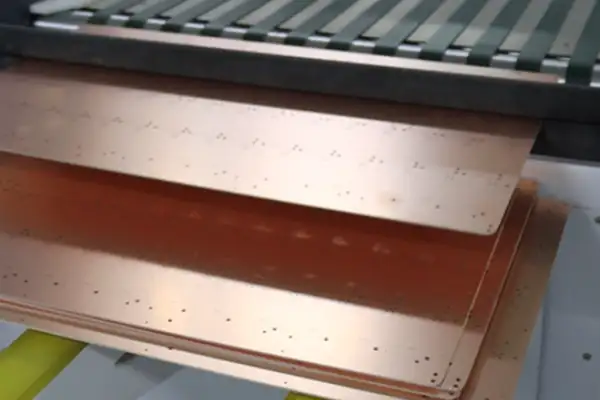
Sometimes, walking through a supplier’s production floor tells you more than reading ten qualification documents. Only by seeing their workflow and quality-inspection process with your own eyes can you truly judge whether a factory is dependable. Our current partner was actually chosen after touring their production line — how disciplined the line workers were said more than any number printed in a brochure.
At the end of the day, a company and its supplier exist in a symbiotic relationship. When you entrust a new product to a partner, you’re effectively sharing in each other’s growth opportunity. Once that kind of trust is established, it holds far more weight than any contract clause.
I’ve been mulling over something lately — finding a reliable PCB manufacturer sometimes has nothing to do with how polished their brochure looks or how low their quote is. What matters is whether they can genuinely get the job done right. This becomes especially true when you need a high-precision board — a millimeter of error can keep you up at night.
I took the wrong path early on too, fixating purely on price. The first batch of boards came back with even the pad alignment off, and the entire batch had to be scrapped and redone. I eventually understood that precision isn’t something you can just talk about — it comes down to a manufacturer’s actual operating process and equipment level. Can their drilling machine reliably hold micron-level tolerance? Can their etching process guarantee consistent line uniformity? These details are often what ultimately determine a board’s reliability.
As for lead time, I actually think that’s secondary. Sure, everyone wants speed, but what matters more is whether the other side can reliably deliver a qualified product exactly when you need it. I once worked with a factory that never promised “rush delivery in three days,” but every single time, they’d have the goods sitting on the quality-inspection table by the promised morning. That kind of predictability is worth far more than a vendor constantly offering to “speed things up for an extra fee.”
Actually, there’s a simple way to judge whether you’ve found a Reliable PCB Manufacturing Partner: see whether they’re willing to show you their work-in-progress. Once, during a factory audit, the engineer walked me straight onto the shop floor and pointed at a board mid-etch, saying the impedance control on this section was still being fine-tuned — that kind of transparency actually put me at ease. After all, PCB manufacturing is inherently a process of continuous fine-tuning, and a manufacturer willing to expose its own imperfections usually has a stronger grip on quality control.
We’ve built a real rapport with our long-term partner now — they’ll even proactively double-check certain error-prone details beyond what’s marked on the drawings. That kind of responsibility, going beyond the contract itself, is what real, long-term-worthy partnership looks like. After all, when your product eventually faces a real user, every marked detail on the drawing carries real weight in the actual user experience.
Spending enough time in this industry taught me something: finding a supplier is a lot like finding a partner — the ones who barely bother to respond at first are never going to work out. I remember a project last year where we urgently needed to find a Reliable PCB Manufacturing Partner. We reached out to several vendors — some took most of a day to reply, others didn’t respond until the next day.
The most frustrating experience was a supplier who promised a quote within 24 hours but dragged it out for a full three days, and every time we followed up, they kept saying “still calculating.” That kind of experience was genuinely awful.
We later changed our approach and started prioritizing response speed when evaluating suppliers. Our current long-term partner typically responds within thirty minutes of a message, and for technical questions, their engineers will even proactively call to discuss. That kind of collaboration flows remarkably smoothly.
Often, it’s not that you need the other side to solve the problem instantly — you just need to feel that they take your needs seriously. Once, when a small issue came up on a board, our current supplier sent a technician on-site the very same day. It turned out to be a minor oversight on our own design, but that proactive attitude genuinely put us at ease.
I think in today’s fiercely competitive, highly commoditized market, service has become the key differentiator. Sometimes even if the price is a little higher, as long as response is prompt and communication is smooth, the money is well spent.
Finding a reliable PCB manufacturer is genuinely an interesting exercise. Plenty of people start by focusing purely on price, assuming cheaper is always better, but I’ve found that’s not how it actually plays out in practice.
I’ve seen too many people spend a huge amount of time building comparison spreadsheets, choose the lowest quote, and then run into constant problems — inconsistent lead times, inconsistent quality — only to find they actually lost money in the end.
What really matters when choosing a supplier is how they handle problems. Once, on an especially urgent project, we needed a last-minute design change at ten at night. I tried reaching several previous partners, and only one picked up immediately — right there on the phone, we held a quick video call with their technical team and locked in a solution on the spot. That experience taught me that finding a Reliable PCB Manufacturing Partner isn’t about how they perform when everything’s going smoothly — it’s about whether they show up when things go wrong.
Vetting a supplier shouldn’t rely purely on what they tell you — it’s worth asking around for peer feedback, since industry word-of-mouth is often more useful than any certification. I usually start with a small trial-production order, not chasing speed, just watching whether every step follows proper procedure, whether they proactively report progress, and how promptly they communicate when issues arise — these small details often reveal a factory’s true level.
Our current long-term partner wasn’t the cheapest quote when we started, but their engineers proactively helped optimize our design. The per-board cost was slightly higher, but overall yield went up, which actually saved us money in the end. That kind of partner who thinks from the customer’s perspective is genuinely worth keeping long-term.
At the end of the day, vetting a supplier is like making a friend — surface-level conditions mean nothing; you only find out if they’re trustworthy after going through something together.
I’ve finally come to understand something about finding a PCB manufacturer: focusing purely on the price number will absolutely burn you. Last year, to save some budget, we chose a low-price supplier for a project, and the boards came back with completely wrong impedance control — debugging alone ended up costing an extra two months. That kind of hidden cost is often far scarier than the number on the quote sheet.
The hardest thing to find in a reliable partner is a willingness to work through problems with you. I remember once needing an urgent mid-project design change — their engineer stayed up with us past midnight adjusting the plan. That kind of collaboration simply can’t be measured by the small amount saved on processing fees. Now, when discussing partnership with any supplier, I always ask directly: if a design issue is discovered mid-production, how fast can your team respond? That question tells you far more than comparing price per square centimeter.
Something people often overlook is that a good manufacturer can actually save you money. They know material properties well enough to recommend a more cost-effective substrate; they understand process pain points well enough to help you avoid production risk ahead of time. The factory we eventually switched to charges 15% more per unit, but yield improved by 20% — which actually brought our overall cost down.
Payment terms are another key point. Some factories require full prepayment, which carries too much risk. I now prefer suppliers willing to accept installment payments — say, 30% at order placement and the remainder before shipment. This leaves trust room on both sides while keeping quality controllable.
I’m currently trying out a new factory that proactively provided a detailed production-process breakdown, spelling out the quality-control standard for every single step. That kind of transparency puts me at ease, since I at least know exactly where the money is going. After all, choosing a manufacturer isn’t a one-time transaction — it’s finding a partner you can stand shoulder-to-shoulder with for the long haul.
Finding a Reliable PCB Manufacturing Partner, even at a somewhat higher cost, is really an investment that saves money down the road. Fewer after-sales issues, fewer rounds of rework, and the team can focus its energy on product innovation instead. However you calculate it, that math works out.
And one more thing — don’t be dazzled by flashy certifications. I’ve seen factories with a whole wall covered in certificates whose actual production floor was a chaotic mess. Now, whenever I evaluate a supplier, I insist on walking the production line directly — how disciplined the workers are tells you more than any certification ever could.
The ideal outcome, honestly, is finding a factory that can grow alongside you. Our current partner has grown with us from double-sided boards all the way to HDI boards, and the rapport we’ve built together has significantly lowered our communication overhead. The time and effort saved through that kind of long-term partnership is worth far more than any small difference in unit price.
After years in hardware, I’ve come to find choosing a PCB supplier genuinely fascinating. It’s not like buying a component where price alone decides it — it’s more like finding a reliable external partner for your team. Think about it: can a factory that can’t even nail down basic process fundamentals fully execute your design intent? I’ve seen too many people fixate purely on the quote, only to find at the sample stage that pad alignment doesn’t match hole position, with wildly excessive deviation. By then, switching suppliers derails the entire project timeline.
Judging whether a factory is trustworthy doesn’t actually require a complicated evaluation spreadsheet. My favorite approach is simply walking their production floor and watching how the line workers operate. Factories where the workstations are tidy and materials are neatly organized rarely produce bad boards. I once visited a small shop in Dongguan and watched their quality inspector examine gold-finger plating thickness under a magnifying glass, board by board — right then, I knew this was a Reliable PCB Manufacturing Partner worth working with long-term.
A lot of people agonize over choosing a large factory versus a small one — I think it really depends on where your product is in its lifecycle. Early-stage projects are better suited to flexible, small-to-mid-sized PCB suppliers who are willing to take small-batch orders and can quickly accommodate design revisions — and if your board needs extra copper weight, checking whether they can double as a heavy copper PCB supplier or thick copper PCB manufacturer saves you from a second vendor search later. Once a product matures and moves toward large-scale production, then a factory’s lead time and stability matter more than anything else. But don’t assume a big company automatically means peace of mind — I once ran into a well-known brand whose production line had aging equipment that pushed impedance control completely out of spec across the board, costing us two entire batches.
There’s a not-so-great trend in the industry right now — everyone leans too heavily on standard certifications. ISO 9001 and similar certificates matter, of course, but what actually determines PCB quality is often found in the details those certificates don’t cover — things like daily control of chemical-solution concentration or how often drill bits get replaced. These are what truly reveal a factory’s professionalism. My favorite supplier to work with attaches key process-parameter records to every shipment — that kind of transparency is more reassuring than any qualification document.
At the end of the day, choosing a PCB partner is a process that requires ongoing calibration. Spending more time on an on-site visit upfront, validating through small-batch orders mid-process, and building a stable communication mechanism afterward is far more meaningful than simply comparing quotes. After all, a good supplier can bring your design intent to life 100%, while a poor one will let your idea die on the production line.
I think a lot of people get the direction wrong from the very start when looking for a reliable PCB manufacturer. Everyone fixates on price, as if saving a few cents decides everything — that’s really not how it works.
I’ve seen too many projects go sideways from picking the wrong supplier. Once, rushing to meet a deadline, we found the factory couldn’t even get basic impedance control right, and the boards came back completely unusable after testing. From that point on, I understood: instead of haggling like you’re buying groceries at every bidding round, it’s better to spend the time finding a true long-term technical partner.
A good PCB supplier should feel like a seasoned collaborator, someone who can think through problems together with you. On a recent RF board, for example, their engineer proactively suggested widening certain traces, explaining that it would make high-frequency performance more stable. That kind of professional advice isn’t something just any factory can offer.
Some companies love bragging about their scale or their newest equipment. I think what actually matters is whether they truly understand your requirements. For medical-device boards we work on, reliability standards are especially high, and factories caught up in constant price wars simply can’t meet that bar.
Honestly, the most direct way to judge whether a partner is trustworthy is to watch how they handle a sudden crisis. Last month we had an urgent order that needed to be squeezed into the schedule, and our usual partner adjusted their production plan without a second thought. That kind of rapport doesn’t develop overnight.
The industry moves fast these days — you might be making standard boards today and need HDI processing tomorrow. If you had to find a new supplier every time the process changed, you’d lose far too much time. So now, when choosing a factory, I place a lot of weight on their learning capacity and technical depth.
At the end of the day, finding a PCB supplier is a lot like finding a partner — looks alone don’t matter; what matters is whether you’re genuinely compatible. After all, this isn’t a one-time deal — it’s about steadily improving the product together, right?
Choosing a reliable PCB manufacturer, I’ve come to think, is a bit like finding a partner — focusing purely on surface-level conditions is a trap waiting to happen. To save budget, our company once chose an especially low-quote supplier, and the first batch of boards immediately had soldering issues, delaying the schedule by a full two weeks. It was only then that I understood — evaluating a supplier can’t just be about the number on the quote sheet.
I once visited a prospective vendor’s production line and noticed their engineers inspecting every single via under a magnifying glass. That level of attention to detail felt genuinely trustworthy — after all, a manufacturer willing to put in effort in places you can’t even see is unlikely to produce a bad board. Sure enough, the collaboration went smoothly afterward, with even common issues like component-placement offset rarely showing up.
What I emphasize most to procurement these days is not to treat a supplier as a purely transactional counterpart. For instance, a factory we worked with last year noticed a slight issue with the board-material parameters they’d sent us and proactively called to suggest a design adjustment. That kind of customer-first attitude is worth far more than any certification.
Actually, there’s a simple way to judge whether a factory is trustworthy: watch their response speed when something goes wrong. Last month, our production line suddenly needed an urgent revision mid-run, and our Reliable PCB Manufacturing Partner immediately dispatched an engineer to stay on-site and debug the issue. That kind of responsiveness can’t be enforced by contract — it’s built through long-term accumulated rapport.
I think finding a supplier is like assembling a puzzle — technical capability and quality control are the basic pieces, but what truly determines how far a partnership can go is alignment in values. Now, whenever I evaluate a new vendor, I make a point of observing how their employees treat the details of their work — a single motion of tightening a screw on the line can sometimes reveal more than any output figure in a brochure.
While recently helping the company select a new PCB manufacturer, I noticed something interesting: a lot of people spend so much energy comparing prices that they miss what actually matters. Like finding a partner in any relationship, price matters, of course, but what matters more is whether the other side can offer real, professional advice when you hit a technical bottleneck.
I remember a project last year that needed a flexible circuit board. The supplier we worked with at the time quoted low, but problems surfaced right at the sample stage — they couldn’t even run a basic impedance test. We had to switch factories on short notice, and it nearly delayed our delivery schedule. That experience taught me that finding a PCB manufacturer can’t be about price alone — the capability hiding beneath the surface is what actually matters.
I place a lot of weight on whether a supplier holds a full set of industry certifications — not because a certificate itself matters, but because it reflects how seriously they take quality. Our current partner, for example, holds IATF16949 automotive-electronics certification, which means their production process can handle far more demanding environmental requirements — including reliably meeting the durability standards required for something like a Digital IO Controller PCB in an industrial cabinet. Once, our design file had a detail prone to causing solder defects, and their engineer proactively suggested a fix. That level of professionalism is worth far more than simply cutting cost.
You can actually judge how reliable a supplier is by how fast they respond to a problem. Last month we needed to switch a batch’s surface finish from ENIG to immersion tin, and they arranged a trial run within 24 hours, along with comparative test data for the different processes. That kind of response speed told me they genuinely put customer needs first, rather than just following procedure.
Some people assume a big factory automatically means reliability, but I’ve found mid-sized suppliers are often more flexible. We work with one high-frequency-material specialist with fewer than 200 employees, but their technical director personally joins design reviews and even helped us optimize the trace layout on an antenna section — that kind of hands-on service is hard to get from a large corporation.
At the end of the day, finding a Reliable PCB Manufacturing Partner is like finding a personal trainer — credentials alone aren’t enough; you need someone who genuinely understands your needs. I’ve increasingly come to believe that a great partnership is a mutually reinforcing one — when a supplier is willing to spend time understanding your product’s application context, what they provide is no longer just manufacturing service, but an extension of your own R&D team.
I’ve always found choosing a PCB manufacturer a genuinely interesting exercise. A lot of people start by asking about price and lead time — fair enough, nothing wrong with that — but I’ve found that what actually determines whether a partnership lasts is often something you can’t see at first glance.
I remember a project last year that nearly went off the rails. We chose the lowest-priced factory for a sample run, and signal integrity turned out to be a disaster — it later became clear they hadn’t even gotten basic impedance matching right. From that point on, I became very attentive to whether a factory genuinely takes testing seriously, rather than treating it as a slogan.
Now, when I evaluate a supplier, I start by asking how their inspection process is embedded into production. A good Reliable PCB Manufacturing Partner breaks inspection into distinct stages — a basic screening when materials arrive, a few key checkpoints mid-production, and a final full-process validation before shipment. That kind of layered checkpoint approach is far more dependable than relying solely on final inspection.
Having been burned by impedance-control issues before, I’ve become especially sensitive to it. Once, visiting a partner’s lab, I watched their engineer run real-time impedance monitoring with a TDR device, carefully adjusting parameters while recording the waveform — that level of diligence genuinely put me at ease. That batch later performed remarkably stably in high-speed signal transmission.
Even the most advanced inspection equipment ultimately comes down to how well people use it. I’ve seen factories that bought the most cutting-edge AOI systems, only to have operators grow so accustomed to false alarms that they just dismiss them and let the line keep running. In moments like that, even the best equipment is just decoration. A genuinely reliable partner cultivates a team that questions anomalies as a habit — chasing down the root cause of even a tiny impedance fluctuation.
One detail from a recent partner left a strong impression on me: they build a data archive for every single batch — not just recording pass rates, but also noting which parameters were adjusted, and even keeping the microscope photos from first-article inspection. That kind of traceability takes extra effort, but it saves an enormous amount of back-and-forth when troubleshooting a problem later.
At the end of the day, choosing a manufacturer is like choosing a long-distance running partner — starting speed doesn’t matter; what matters is confirming whether they’re willing to watch the road with you and adjust pace together, step after step, so you can go farther and steadier.
I’ve always found choosing a PCB manufacturer a genuinely interesting exercise. A lot of people jump straight to asking how low the price is or how fast the lead time is, but what actually matters most is whether the factory is fundamentally trustworthy. Think about it — would a Reliable PCB Manufacturing Partner ever leave you hanging right when you urgently need product? Definitely not.
I got burned last year, choosing an especially cheap supplier, and the very first batch of boards had problems. Some of the components they used were obviously substandard — solder simply wouldn’t hold on the pads. It later came out that this factory, in a rush to cut costs, had been sourcing from all kinds of cheap channels and couldn’t even maintain basic quality control.
Now, with any partner, I first check how stable their supply chain is. A good supplier will tell you upfront which channels they mainly source components from and whether they have a backup plan. After all, the electronics industry moves fast these days — if a chip shortage hits, the ones who can quickly find an alternative are the ones with real capability.
Sometimes small details reveal a lot. For instance, when you send over a design file, does the other side just quote a price, or do they first check whether the design itself makes sense? I once worked with a particularly thoughtful factory — when they spotted a spot on my board that could cause interference, they called specifically to discuss a fix. That kind of customer-first attitude is worth far more than simply quoting a low price.
Finding a manufacturer is really a lot like making a friend — surface-level conditions don’t matter; what matters is how the other side handles things when a problem comes up. My current partner once absorbed extra cost themselves during a raw-material price spike without ever passing it on to us — that’s the kind of long-term relationship that’s genuinely valuable.
At the end of the day, choosing a supplier isn’t about who quotes the lowest price — it’s about finding someone who can become a truly dependable link in your business. After all, a great product needs great manufacturing behind it, and that principle holds true everywhere.
During circuit-board procurement, many people assume they’re working directly with a Printed
Through a real case from a Vibration Monitoring PCB smart-hardware project, this
Does PCB delivery time always feel impossible to predict? Drawing on real
- Experte für die Produktion kleiner bis mittlerer Chargen
- Hochpräzise PCB-Fertigung und automatisierte Montage
- Zuverlässiger Partner für OEM/ODM-Elektronikprojekte
Geschäftszeiten: (Mo-Sa) von 9:00 bis 18:30
Get quote, solution or any question, Andre always here to help