

Heat Dissipation Challenges and Solutions in PCB Circuit Board Design
Circuit boards are more than just that green board in a phone
I’ve always found choosing an industrial PCB supplier quite interesting—many people immediately ask about prices and how impressive the numbers on the technical specifications are. In reality, those beautifully printed product manuals tell you very little.
I remember last year, a controller board in one of our projects malfunctioned. The supplier provided sample test data that was quite impressive—perfect impedance matching! And what happened? The equipment started experiencing inexplicable resets after three months of operation in the customer’s workshop.
We later changed partners and finally understood the problem—real industrial PCB production tests the ability to maintain consistent and stable output, not just the data from a few hours of testing in a lab! This is especially true for automated production lines that need to operate 24/7!
Once, during a visit to a reliable industrial PCB manufacturer’s production line, I noticed a detail—their aging test workshop was larger than their production workshop! The engineers told me they conduct thousands of hours of cyclic testing on each batch of products, simulating real-world conditions! This dedication to reliability impressed me deeply!
Now, when I encounter projects requiring customized controllers, I pay special attention to the supplier’s actual case studies—whether they have experience in similar environments! For example, project records of long-term operation in the hot and humid weather of the south or the low temperatures of the north! These real-world performances are more convincing than any certification marks in brochures!
Recently, we had a photovoltaic power station project that is particularly typical—the PCB boards in the outdoor cabinets had to withstand drastic daily temperature changes! In such situations, the stability of the board material is more important than simple electrical performance! After all, nobody wants equipment to malfunction in the wilderness due to fundamental material issues!
Ultimately, choosing an industrial-grade PCB is choosing a long-term partner—suppliers willing to invest time understanding your application scenario and working together to solve problems are truly trustworthy!
I’ve seen too many companies choose ordinary PCB suppliers to save on budget, only to have their equipment fail within six months of installation. The way ordinary boards delaminate in humid environments is no different from waterlogged cookies. Industrial scenarios demand a completely different level of PCB quality; you have to treat material durability as a matter of life and death.
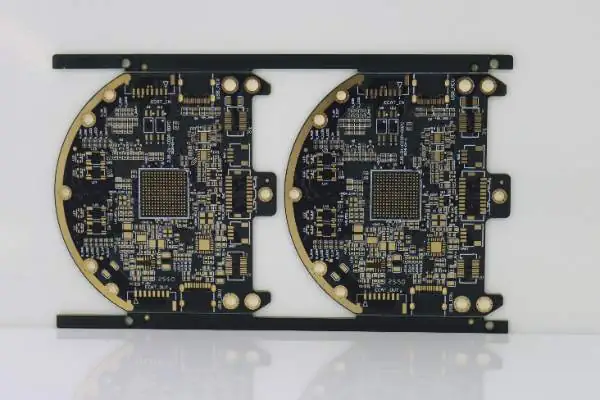
Last year, we had a project using it in the control system of a coastal chemical plant. We specifically chose a polymer substrate specially developed by an industrial PCB manufacturer. This material was tested in a salt spray environment for three months, and the solder mask didn’t even change color. Ordinary FR-4 material would blister in less than two weeks in such an environment. This polymer substrate’s formula includes special anti-corrosion fillers that effectively block chloride ion penetration, and its glass transition temperature is more than 50°C higher than conventional materials, ensuring that its mechanical strength does not decrease in high-temperature and high-humidity environments.
The biggest fear in industrial PCB production is sudden failure. During a visit to an automotive parts production line, I noticed that the control boards at critical workstations all featured dual power supplies. This redundancy, while seemingly increasing costs, is actually extremely worthwhile – if the main circuit fails, the backup circuit can take over the production line within 0.5 seconds. They also use gold-plated, thickened connectors with a lifespan exceeding 5000 insertion/removal cycles, far surpassing the 500-cycle standard for consumer-grade products, preventing poor contact due to frequent maintenance.
Isolation is practically a fundamental requirement in industrial PCBs. I remember a power equipment manufacturer’s board that impressed me; they used lasers to create a 2mm wide isolation groove on the board, increasing the spacing between traces on both sides to more than five times that of conventional designs. While this design wastes some layout space, it completely eliminates the risk of high-voltage crosstalk. The groove is also filled with silicone rubber insulation, ensuring creepage distances twice the international safety standard, guaranteeing signal integrity even under lightning surge conditions.
When choosing a PCB supplier, I particularly value their material traceability system. True industrial-grade manufacturers maintain records for each batch of PCBs, allowing them to retrieve the original parameters even ten years later when re-production is needed. Once, when we needed to replace circuit boards in equipment from fifteen years ago, our supplier miraculously found original-specification copper-clad laminates in a corner of their warehouse. They even kept detailed records of the original fiberglass weave and resin content. This end-to-end traceability system ensures that the replacement boards are electrically perfectly matched to the original equipment.
Many PCB manufacturers originating from consumer electronics often emphasize impressive specifications, but industrial applications prioritize stability under extreme conditions. For example, in the extreme temperature fluctuations of a steel mill, the thermal expansion coefficient of ordinary PCBs can cause solder joints to crack, while industrial-grade materials can maintain their shape between -40°C and 150°C. Industrial-grade PCBs also employ embedded copper heat dissipation technology, reducing the thermal resistance of key components by 30%, ensuring that performance drift is not caused by overheating during sustained high-load operation.
What impressed me most was once disassembling the control cabinet of a long-established German machine tool. The PCB, dating back twenty years, was still functioning perfectly. Their design philosophy is particularly worthy of emulation—critical signal lines were all routed in a serpentine pattern, with a 30% current-carrying margin. This redundancy mindset is the essence of industrial equipment. All vias were sealed with resin to prevent moisture absorption, and the gold fingers were coated with a hard gold layer, reaching a thickness of 3 micrometers, far exceeding the 0.5-micrometer standard for consumer products. This ensured good contact even after years of insertion and removal wear.
Actually, there’s a simple way to judge whether a PCB is industrial-grade: see if they dare to publicly disclose accelerated aging test data. Genuine industrial PCB manufacturers will proactively provide reports of 10,000 hours of continuous operation at 85 degrees Celsius and 85% humidity, while ordinary suppliers often avoid discussing such tests. Professional industrial-grade manufacturers will also demonstrate board warping data after 1000 thermal cycles, requiring deformation to be less than 0.5% of the board thickness. This rigorous mechanical stability testing is the touchstone for industrial applications.
I recently had an interesting conversation with an engineer from an industrial PCB manufacturer. He mentioned that many customers are particularly concerned about the lifespan of their products. We discussed how industrial equipment is often designed for a lifespan of ten or twenty years, which is completely different from replacing a mobile phone after two or three years.
I remember a project last year involving a motor control cabinet that left a deep impression on me. The customer repeatedly asked if the boards could be guaranteed to withstand continuous vibration without via cracking. Many people overlook the fact that industrial PCB manufacturing involves more than just considering the effects of temperature changes; the details of the mechanical structure are often even more critical. For example, for equipment that needs to withstand long-term vibration, simply choosing high Tg materials is not enough.
A common misconception is that more layers equate to greater reliability. However, in reality, a reasonable structural design is more important than blindly stacking layers. I’ve seen some PCB suppliers design vias to be too densely packed to save costs, which can actually lead to problems in environments with large temperature differences. This is especially true for high-voltage equipment that needs to meet the 60950 safety standard; adding more layers won’t help if the creepage distance is insufficient.
The challenges posed by humid environments to circuit boards are actually more severe than we imagine. Previously, a controller used on an offshore platform, despite having conformal coating, still developed verdigris due to weak points in the coating at the through-holes. Now, reputable industrial PCB manufacturers invest more effort in surface treatment.
I think the most interesting aspect of the industrial sector is that each application scenario has unique requirements. Some customers are particularly concerned about long-term supply stability, as their products may need to be manufactured for over a decade. This is completely different from the fast-paced, trend-chasing consumer electronics industry.
Sometimes, looking at the design drawings provided by customers, I find they focus excessively on technical parameters while neglecting the actual usage scenario. For example, in chemical environments, focusing on corrosion resistance is more practical than pursuing higher temperature resistance. This is why more and more industrial PCB production is shifting towards customized services.
Truly durable circuit boards are often meticulously crafted in the details. Like assembling building blocks, every component must withstand the test of time.
I’ve seen many engineers obsess over price when choosing an industrial PCB manufacturer. But what’s truly worth considering isn’t the price tag on the board itself. Last year, we had a project where, to save on budget, we chose the lowest-priced supplier. However, the production line was shut down for half a day due to a single faulty board, resulting in a loss equivalent to three years’ worth of PCBs.
Good industrial PCB manufacturers don’t play number games. They break down costs for you, showing you whether the board selection matches the equipment’s lifespan, whether the panelization scheme maximizes board utilization, and even whether the design of a small hole increases the probability of cold solder joints. These details truly determine the total expenditure.
Once, I spoke with a reliable PCB supplier who proactively suggested changing an eight-layer board to a ten-layer one. Although the price per board increased by 15%, eliminating two external filter modules actually reduced the overall BOM cost by 20%. This system-wide approach to cost-effectiveness is what industrial-grade cooperation should look like.
Now, many clients demand “military-grade quality” but expect to achieve it with a consumer-grade budget. Truly professional manufacturers will help you find a balance, such as using ordinary TG material on non-critical signal layers and ensuring sufficient copper thickness in the power supply section. This controls costs while maintaining core performance.
What I fear most are suppliers who just nod and agree to whatever you say. Experienced manufacturers will often argue with you, insisting on moving test points from the board edge to the center, even if you think it’s unnecessary. They’ll explain that edge solder joints are prone to cracking under vibration. This meticulousness is what shows responsibility to the customer.
Ultimately, choosing a PCB supplier in the industrial sector is like choosing a marriage partner; focusing solely on the dowry is a sure way to lose out. The intangible value—whether the equipment will work stably after five years, whether someone can answer the phone in the middle of the night when problems arise—is far more important than the numbers on the price list.
I’ve seen too many companies treat PCB procurement as a simple parts transaction. They go around comparing prices with blueprints, always thinking that finding the cheapest PCB supplier will save costs. This idea might work in consumer electronics, but it’s completely ineffective in the industrial sector.
The requirements for circuit boards in the industrial environment are on a completely different level. High temperature and humidity are just the basic thresholds. Vibration, shock, electromagnetic interference, and long-term continuous operation are the real tests. Once, we visited an automated production line. The equipment manufacturer complained that the control board frequently crashed inexplicably. Upon disassembly, we found it was using consumer-grade PCBs. The board thickness was insufficient, and the copper trace spacing was too close. This type of board might pass lab tests, but it simply can’t withstand the current surges during the start-up and shutdown of large equipment in a factory.
Truly reliable industrial PCB manufacturers consider the application scenario first. They won’t rush to give you a quote; instead, they’ll first ask what equipment the board will be installed on, its operating temperature range, its expected lifespan, and whether there are any special protection requirements. I once worked with a supplier whose engineers even proactively suggested widening certain critical lines. While this slightly increases costs, it significantly improves the board’s reliability in harsh environments.
The industrial-grade production philosophy is reflected in the details. For example, with the same solder mask layer, industrial PCB production strictly controls the thickness uniformity because this directly affects insulation performance. Ordinary commercial boards might only have single-sided tin plating, while industrial boards require immersion gold plating. Although it’s significantly more expensive, it ensures stable contacts even after many years. These choices reflect a deep understanding of industrial applications.
Now, many companies are beginning to realize this. They no longer simply compare unit prices but evaluate the supplier’s engineering support capabilities. After all, in the industrial field… A single faulty circuit board can bring an entire production line to a halt. The losses are far greater than any savings in procurement costs. When choosing partners, I prioritize whether they truly understand industrial needs and can provide tailored solutions. That’s where the real value lies.
I’ve seen far too many people make the same mistake when selecting PCB suppliers—focusing excessively on price while neglecting what truly matters. I remember last year a client came to me with three quotes, asking if they could choose the lowest one. Upon opening their qualification documents, I found their so-called certifications were just a few expired ISO certificates; they didn’t even have basic UL certification. These industrial PCB manufacturers often cut costs in ways you can’t see, such as omitting crucial testing or using unverified alternative materials. For example, they might skip impedance or thermal stress testing, which, while increasing costs, are essential for ensuring the long-term stability of the circuit board. Using cheap alternative materials, such as low-quality FR-4 substrate, may not show immediate problems, but it can easily lead to delamination or decreased electrical performance under high temperature or high humidity environments.
Truly reliable industrial PCB production requires a complete quality traceability system. Once, our production line discovered a batch of boards experiencing micro-short circuits under high-temperature conditions. The investigation revealed that a supplier of a particular batch of copper-clad laminates had secretly adjusted the resin formula. Fortunately, data was recorded at every stage from raw material warehousing to finished product shipment, allowing us to quickly pinpoint the problem and prevent greater losses. Now, I’m particularly wary of suppliers who boast about their low prices because the cost of quality control is undeniable. This tracking system includes not only batch number management but also supplier audits and regular reviews, ensuring transparency from source to end. For example, each roll of copper-clad laminate is scanned with a QR code upon arrival to record the supplier, production date, and key parameters. This allows for rapid tracing of problems to specific stages, rather than blindly investigating the entire line.
Many people believe that once a PCB sample passes basic functional testing, everything is fine—this is a misconception. We once had a medical device project where all indicators were perfect in the sample stage, but during mass production, batch impedance deviations suddenly appeared. We later discovered this was caused by fluctuations in the etching solution concentration. Reputable industrial PCB manufacturers conduct continuous process capability monitoring rather than relying solely on final inspection. Just like driving, you can’t just stare at the finish line; you have to constantly monitor the parameters on the dashboard. Process monitoring includes real-time monitoring of key process parameters such as etching rate and copper plating thickness, and analyzing trends through Statistical Process Control (SPC) charts to provide early warnings of potential deviations, rather than discovering problems only after the finished product is finished.
Regarding certification, I particularly value a manufacturer’s understanding of industry-specific standards. Once, during an audit of a supplier claiming automotive-grade certification, I discovered their temperature cycling tests used consumer electronics standards, which are far less stringent than automotive industry requirements. True industrial-grade certification means every test parameter must withstand scrutiny; for example, thermal shock testing should simulate the instantaneous transition from extreme cold to high temperature, rather than a slow temperature rise. For instance, automotive electronics require thousands of temperature cycles from -40°C to 125°C, while consumer electronics might only require -20°C to 85°C. This difference directly impacts product reliability in extreme environments. Whether a supplier possesses testing capabilities compliant with professional standards such as ISO/TS 16949 often determines the PCB’s performance under long-term vibration or temperature variations.
Recently, an interesting phenomenon has emerged: many emerging IoT device companies are turning to PCB suppliers with military-grade backgrounds. Although their prices are 30% higher, these suppliers’ experience in material selection and process control can indeed avoid many potential risks. After all, when your product is deployed in remote areas, a faulty PCB could paralyze the entire system—a cost far exceeding any cost savings. Military-grade suppliers typically use high-TG materials and thick gold plating, among other special processes. These technologies offer significant advantages in corrosion resistance and high/low temperature resistance, making them particularly suitable for long-term operation in outdoor or industrial environments. Their production lines often have stricter environmental controls, such as temperature- and humidity-controlled workshops, to reduce process fluctuations.
When choosing partners, I usually visit their production sites. Good industrial PCB manufacturers have a well-organized and busy atmosphere in their workshops; quality control positions are not isolated at the final stage but integrated into every stage of the process. Once, I saw a factory where they equipped their microscopes with digital scales and even uploaded data from the operator’s logbooks to the system in real time. Such attention to detail is more convincing than any brochure. This embedded quality control system means that each process has self-inspection and mutual inspection mechanisms; for example, hole wall quality is checked immediately after drilling, instead of waiting for final testing. Real-time data uploading not only avoids human error but also allows management to monitor production status instantly through a dashboard system and respond quickly to anomalies.
Recently, I was chatting with a friend who works in the equipment industry and discovered an interesting phenomenon—the control boards they purchased for their factory developed signal drift in less than six months. Upon disassembly, we found that they were made by a small workshop using ordinary FR4 material. This reminded me that there are many intricacies involved in choosing PCB suppliers in the industrial sector.
Many people easily overlook one point: the difference between industrial-grade PCBs and ordinary consumer electronics is like the difference between an off-road vehicle and a city car. Both have four wheels; can they both handle mountain roads? Try driving a sedan on a gravel slope and you’ll see.
Last month, during a visit to a reliable industrial PCB manufacturer’s workshop, I noticed a detail—each roll of substrate on their material racks had a color-coded label. Later, an engineer told me this was to differentiate the Dk value fluctuation range between different batches.
Speaking of Class standards, this is quite interesting. Once, our lab compared three samples all claiming to meet Class 3 standards, and the results were astonishing—the solder mask on one board could be cracked by hand.
Many industrial PCB manufacturers now divide their production lines into two independent lines: one dedicated to high-precision impedance control, and the other handling regular orders.
The most outrageous example I’ve seen is a spare board for a rail transit project that developed solder pad oxidation after three years of storage. The supplier claimed it was due to the storage environment, while another supplier’s board, stored under the same conditions, still powered on normally after five years.
Actually, there’s a simple way to judge whether an industrial PCB supplier is reliable: see if they dare to share their process inspection data with their customers.
A recent medical device project left me quite moved—the manufacturer insisted on adding X-ray thickness measurement after the immersion gold process, which delayed delivery by three days but avoided the risk of mass rework later.
Ultimately, PCBs in industrial settings are like the foundation of a building; they’re invisible until problems arise, often triggering a chain reaction.
I recently spoke with a senior engineer working on automation equipment about their PCB selection process. He mentioned an interesting point: industrial PCBs are more like “trust products.” When choosing a PCB supplier, you don’t look at how attractive their brochures are or how advanced their specifications are; you look at whether they can answer your phone when your equipment malfunctions in the middle of the night.
Industrial PCB manufacturers are completely different from consumer electronics manufacturers. Consumer electronics may prioritize thinness, flashy features, and rapid feature iteration, while in industry, a single board may be installed and run for ten or twenty years. Many devices operate continuously in high-temperature, vibration, and humid environments, which dictates that industrial PCB production must prioritize stability. I’ve seen factories shut down their entire production line for a day because a small capacitor on a single PCB failed, resulting in losses far exceeding the total price of that batch of PCBs.
Many manufacturers are now talking about intelligent manufacturing and the Internet of Things (IoT), but this actually places higher demands on the underlying hardware. For example, an intelligent production line uses dozens of sensors and control units that need to communicate in real time. If the PCB itself lacks interference resistance, even the most advanced algorithms will be useless. At this point, you’ll find that a good PCB is not just about interconnected circuits; it also requires consideration of electromagnetic compatibility, heat dissipation, and the effects of long-term aging. These details are where the true test of a PCB supplier’s capabilities lies.
The supply chain has also become more complex in recent years. Previously, finding a manufacturer with a reasonable price might have sufficed; now, everyone values supply stability more. If some critical materials are unavailable, the production line will have to shut down. Therefore, industrial customers often prefer to cooperate with manufacturers that have their own production capabilities or multi-regional layouts. This is actually forcing the industrial PCB production system to develop in a more resilient and transparent direction.
Ultimately, choosing an industrial PCB is a bit like choosing a partner. It’s not a one-off deal; you can’t just go for the cheapest option or something new. You have to see if the other party can handle the workload with you. After all, it’s about whether the production line can operate, whether the power supply can be maintained, and whether the equipment can remain stable—that’s the true foundation of industry.
Every time I walk into a factory workshop and see those large pieces of equipment running smoothly, I always think of the industrial-grade PCBs that silently support them. These circuit boards are completely different from the consumer electronics we encounter every day—they don’t pursue fancy features, but must withstand the rigorous testing of ten years of continuous operation.
I remember visiting a long-established manufacturing company last year and seeing an interesting phenomenon: the oldest control cabinet on their production line had been running continuously for eighteen years. When I opened the cabinet door and saw the PCB board inside, I was particularly surprised. Although the components were covered with a thin layer of dust, the board itself hadn’t even changed color much. Later, chatting with their engineers, I learned that they had chosen products from a manufacturer specializing in industrial PCBs, using a substrate that was almost twice as thick as ordinary boards.
This durability is precisely the quality most valued in industrial production. Consumer electronics may be replaced every two or three years, but industrial equipment investment often lasts for over a decade. Good PCB suppliers will consider extreme conditions, such as thermal expansion and contraction caused by temperature differences in northern winters (minus 30 degrees Celsius) or corrosion prevention in humid southern environments. Once, when we exported equipment to Southeast Asia, the copper foil on ordinary circuit boards oxidized after only three months because we neglected the local rainy season humidity. The problem was only solved by replacing them with custom-designed industrial PCBs.
Many companies now tend to get caught up in a parameter race when choosing PCBs. However, for industrial applications, stability is more important than performance parameters. I’ve seen too many cases where pursuing a high-performance indicator sacrifices long-term reliability. Truly professional industrial PCB manufacturers focus more on material selection and process control, such as testing the moisture content of each batch of boards or ensuring the consistency of immersion gold thickness. These seemingly ordinary details often determine whether a circuit board lasts three or thirty years.
Recently, a client impressed me. Their newly built intelligent workshop insisted on using PCBs from the same established supplier for all control units, even at a 20% higher price, to guarantee a 15-year warranty. This decision, seemingly conservative, is actually shrewd—the loss from a one-hour production line downtime is enough to replace the entire control system.
Ultimately, choosing PCBs in the industrial sector is more like finding a partner. You need to find manufacturers who understand the rhythm of industrial production and know how to balance cost and reliability, rather than simply providing standard products. After all, these circuit boards are integrated into the entire production system; they carry the commitment of continuous operation.
I recently chatted with a friend who works in equipment control, and he mentioned that many people start off on the wrong foot when choosing industrial PCBs. Everyone tends to focus on material parameters, thinking that using high-grade materials will solve the problem. But what truly determines whether a board can withstand the demands of a factory environment is often not how superior the materials themselves are, but whether the industrial PCB manufacturer has a thorough understanding of the manufacturing process.
Take the issue of thick copper plating, for example—some suppliers simplify the electroplating process to save costs. The result? The copper layer thickness appears to meet the requirements, but in reality, severe localized overheating occurs after power is applied. This problem is completely undetectable during laboratory testing; the failure only suddenly emerges after the machine has been running continuously for hundreds of hours. The most extreme case I’ve seen was a frequency converter motherboard where an entire production line was shut down simply because of a difference of a few micrometers in electroplating uniformity. In practice, professional electroplating processes employ pulse plating or horizontal plating techniques. By precisely controlling current density and solution flow, they ensure uniform copper deposition on the hole walls and board surface, avoiding localized issues of excessive thickness or thinness caused by current concentration.
Choosing FR series materials is actually simpler. Many engineers have a misconception: they believe that only the highest-specification FR materials are safe. In reality, standard FR materials are perfectly adequate for ordinary industrial environments. Unless your equipment is installed near a steel furnace or in an extreme environment like a chemical plant, there’s no need to pursue top-of-the-line configurations. The key is to find the right supplier who understands the applicable boundaries of different FR materials, rather than simply pushing the most expensive models. For example, in humid environments, the water absorption of FR materials becomes a critical indicator, while in high-temperature cycling scenarios, the compatibility between its glass transition temperature and coefficient of thermal expansion needs to be considered.
The metal substrate deserves a bit more discussion. During a recent visit to a company that manufactures LED plant factories, I noticed their lighting modules initially used ordinary fiberglass boards, which resulted in poor heat dissipation and rapid light decay. After switching to aluminum substrates, their lifespan doubled. However, there’s a crucial detail: the bonding process between the metal substrate and the circuit layer can easily lead to delamination under large temperature differences if not handled properly. This is a significant test of a manufacturer’s experience. Excellent suppliers will pre-treat the metal surface with anodizing or micro-arc oxidation and precisely control the adhesive layer thickness using thermally conductive adhesive films, reducing thermal resistance to below 0.5℃/W while ensuring no peeling occurs during thermal shock testing from -40℃ to 130℃.
Regarding flexible boards, I feel they’ve been overhyped. While polyimide materials are indeed powerful, do ordinary sensor circuits require such high temperature resistance? In many cases, using modified FR materials can control costs while meeting mechanical bending requirements. The key is to strike a balance based on the actual application scenario, rather than blindly pursuing impressive parameters. For example, the flexible circuitry of a car window regulator only needs to withstand a bending frequency of once per second. Using a PET substrate with pressure-extended copper, a bending life of over 50,000 cycles can be achieved, reducing costs by 40% compared to polyimide and meeting an operating temperature range of -30℃ to 85℃.
Ultimately, industrial-grade PCB production and ordinary consumer electronics are completely different. It’s more like solving a comprehensive problem. Material selection is just the basics; the real advantage lies in the manufacturer’s attention to detail. For example, how to handle the plating of high aspect ratio holes and how to ensure no stress cracks occur during multilayer board lamination are key differentiators between ordinary suppliers and high-quality partners. For instance, when laminating boards with eight or more layers, a gradual temperature rise curve and special buffer materials are required to release stress in dielectric layers with different expansion coefficients, preventing board breakage during subsequent component soldering.
Sometimes I advise clients to start with small-batch trial production before placing large orders. Letting the boards run under real-world conditions for a month is more effective than any test report. After all, the industrial environment is the most honest indicator; the combined effects of vibration, humidity, and temperature changes cannot be fully simulated even in the most sophisticated laboratories. During trial production, it is important to monitor the impedance change curve under dynamic load, especially when the power circuit is frequently started and stopped. Current spikes may cause micro-cracks at the interface between the copper foil and the substrate. This potential defect can only be revealed after accumulating more than 200 hours of operating data.
Circuit boards are more than just that green board in a phone
From disassembling old routers to visiting electronics manufacturing plants, I gradually realized
As an electronics enthusiast, I’ve come to understand firsthand the impact of
• Expert in Small-to-Medium Batch Production
• High-Precision PCB Fabrication & Automated Assembly
• Reliable Partner for OEM/ODM Electronic Projects
Business Hours: (Mon-Sat) From 9:00 To 18:30