

Heat Dissipation Challenges and Solutions in PCB Circuit Board Design
Circuit boards are more than just that green board in a phone
I’ve always felt that many people have misconceptions about high-frequency PCBs. Every time I see discussions that only focus on board material parameters, I find it particularly interesting. Anyone who has actually worked on high-frequency projects understands that when choosing a manufacturer, materials are only the most basic threshold.
I remember last year when our team designed a millimeter-wave radar module, we tried three suppliers. The first one provided samples with perfect performance in a laboratory environment; the second one was 30% cheaper; the third one seemed unremarkable. But when we actually tested them in a vehicle, only the third supplier’s board remained stable at -40 degrees Celsius—we later learned that they had more than ten years of experience in the military field, and even their cleaning agent formula was optimized for extreme environments. No parameter table will tell you about these details.
The most troublesome aspect of high-frequency circuits is not the design itself, but how to prevent theoretical performance from degrading in real-world environments. I’ve seen too many cases where the simulation curves look beautiful, like textbook examples, but once installed in a casing and connected to an antenna, the performance is halved. That’s when you realize that a good manufacturer puts effort into areas you might not notice—for example, they know which surface treatment method can reduce microwave signal edge diffraction; how to control the lamination temperature to avoid tiny air bubbles in the dielectric layer.
Now, when many people discuss the prospects of terahertz technology, they always focus on material innovation. I think the breakthrough point in the next five years will be more practical—how to fully unleash the potential of existing high-frequency materials? Just like the same ingredients can produce vastly different dishes in the hands of different chefs, a manufacturer we’ve been working with for years recently did something brilliant: they specially treated standard FR4 boards for use in the sub-6GHz frequency range. They found that by carefully controlling the dielectric constant stability, they could reduce costs by 40% with almost no performance loss.
This innovation wasn’t achieved by simply piling on high-end materials; it was built on a deep understanding of the nature of electromagnetic waves. Sometimes, it even requires educating the customer – for example, we once insisted that a certain device use thicker copper foil; the customer initially thought it was wasteful, but testing revealed improved heat dissipation and a 15% reduction in overall power consumption. This made me realize that an excellent high-frequency PCB manufacturer should act as a technical partner; they need to be able to judge which parameters can be compromised and which bottom lines must be strictly maintained.
Recently, I’ve been deeply impressed by the issue of sustainable development; it’s not enough to simply switch to environmentally friendly materials. The real challenge lies in achieving this while maintaining performance – for example, some halogen-free substrates exhibit significant tangent delta drift in high-temperature and high-humidity environments. This requires the manufacturer to re-validate everything from the resin system to the curing process; this process is far more complex than imagined.
Ultimately, choosing a high-frequency PCB partner is like choosing a marriage partner – simply looking at the hardware specifications is far from enough. You need to consider their problem-solving approach, their willingness to spend three months debugging a minor impedance matching issue, and their ability to maintain professionalism when receiving urgent calls late at night. These soft skills often determine the success or failure of a project more than technical parameters.
I’ve recently noticed an interesting phenomenon: many people think that making high-frequency PCBs is as simple as choosing a low-loss material. In reality, it’s far more complex. Last year, we had a project using a high-end board material widely recognized in the industry, but its performance in the high-frequency range was unsatisfactory. After repeated debugging with a reliable high-frequency PCB manufacturer, we discovered that the problem lay in the compatibility between the fiberglass cloth and the resin – the same materials, but processed with different manufacturing techniques, yielded completely different results.
High-frequency circuits are incredibly sensitive; sometimes even slight unevenness in the board surface treatment can affect signal quality. I’ve seen many engineers simply hand over the drawings to the manufacturer and assume everything will be fine, only to receive prototypes with significantly inferior performance. In fact, truly professional manufacturers will proactively help you optimize your design, suggesting adjustments to details such as copper foil roughness or dielectric layer thickness. Their experience accumulated from daily exposure to various high-frequency applications is often more useful than textbook theories.
Many manufacturers now advertise how high a frequency their high-frequency PCBs can achieve, but in actual applications, you’ll find that stability is a much bigger challenge. This is especially true for devices like automotive radar, which operate in environments with temperature variations of tens of degrees Celsius. Parameters measured at room temperature simply aren’t enough.
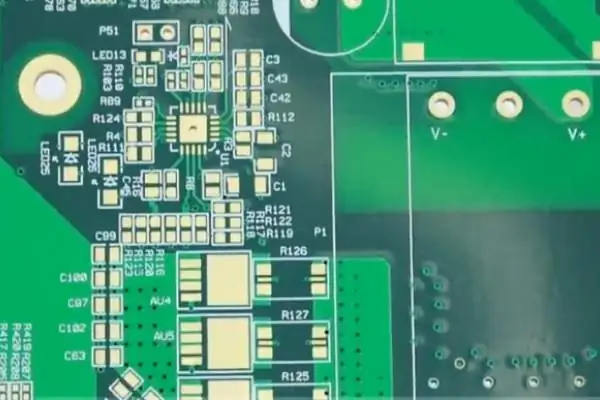
I was quite impressed during a visit to a manufacturer’s workshop. Their testing procedures included vibration testing simulating extreme temperature environments. This level of attention to detail explains why some manufacturers’ boards are more durable. After all, high-frequency signals don’t lie; any flaw in any stage will be clearly exposed in the performance curve.
When choosing a partner, I value their problem-solving approach more. For example, when we encountered a phase noise problem, our collaborating manufacturer sent a process engineer with samples of different surface treatment solutions to our lab for comparative testing. This kind of collaborative approach, where they work with you on technical details, is far more meaningful than simply offering a low price.
Ultimately, finding a high-frequency PCB supplier isn’t just a procurement activity, but a technical collaboration. A good manufacturer should be like an external support team; their deep understanding of material characteristics and processing precision directly impacts the final product performance.
There’s a misconception in the industry that focuses excessively on individual technical parameters while neglecting overall compatibility. Making the frequency higher isn’t difficult, but simultaneously ensuring signal integrity and long-term reliability requires very solid engineering experience. I’ve seen too many projects get stuck on yield issues during mass production, ultimately due to insufficient expertise in the manufacturing process.
I’ve always felt that many people have a too simplistic understanding of high-frequency PCBs. They think that finding a factory that can process special materials is enough. In reality, what truly tests the capabilities of a high-frequency PCB manufacturer is not how expensive their equipment is, but whether they understand the subtle interplay between different materials.
I remember last year a client who made radar modules came to us with a design. He had chosen a very high-end ceramic-filled material, saying that all the parameters on the datasheet looked great. However, we found that the line density in his design was too high, and that material was prone to warping and deformation during hot pressing. We suggested switching to a different thermosetting polymer substrate. Although the loss factor was slightly higher, the processing stability was better, and the final product yield increased by 30%. For example, in 77GHz automotive radar applications, this replacement not only avoided interlayer displacement during multi-layer lamination but also maintained impedance control accuracy within ±3%, which is crucial for beamforming accuracy.
In the high-frequency field, theoretical calculations without practical experience are the biggest pitfall. Some engineers overly rely on simulation data but ignore the fact that differences in the thermal expansion coefficients of materials during actual processing can lead to cracks in the copper layers of vias. This problem often only becomes apparent during aging tests. We have seen too many hidden failures caused by CTE mismatch. For example, in a 5G base station power amplifier board case, the CTE difference between the ceramic filter and the organic substrate reached 8 ppm/°C, leading to microcracks in the BGA solder joints after temperature cycling. This failure mode is extremely difficult to accurately model in simulations.
I pay particular attention to a manufacturer’s ability to control details, such as surface roughness. This seemingly insignificant indicator actually directly affects signal integrity. Sometimes, changing the chemical formula or adjusting the etching time can reduce insertion loss by a few tenths of a decibel, but this requires years of accumulated experience and cannot be solved simply by looking at the equipment list. We once improved the phase noise in the 28GHz band by 2dB by optimizing the roughness of the inverted copper foil from 0.5μm to 0.3μm, which has a decisive impact on the EVM index of millimeter-wave communication systems.
Many factories now boast about how many imported drilling machines they have, but the real key is whether they understand the processing characteristics of different high-frequency materials. For example, PTFE material is soft and easily deformed, requiring special vacuum adsorption fixtures, while ceramic substrates are too hard and cause significant tool wear. These details are the true value of a reliable manufacturer. For example, when processing the RO3003 series, the drilling speed needs to be controlled below 180m/min to avoid resin scorching, and when processing aluminum substrates, stepped drill bits must be used to prevent burrs. These tricks come from actual trial and error.
Ultimately, when choosing a high-frequency PCB supplier, you shouldn’t just look at what materials they can process, but also what materials they have refused to process. Last year, we had to cancel a customer order because they insisted on using standard FR4 material, which is unsuitable for high-speed signals. Although we could have made money on that order, the performance would have been substandard, ultimately damaging our reputation. True professionalism lies in knowing when to say no. For example, when a customer requests mixing RF and digital lines, we insist on using an isolated ground plane design. While this increases costs, it prevents coupling interference.
Sometimes customers feel we’re being overly controlling, even interfering with their choice of board material, but we’ve seen too many cases where choosing the wrong material has led to entire batches of products being scrapped. High-frequency circuits are like precision timepieces; every component must fit perfectly. Having a good design drawing is far from enough. One satellite communication project suffered from dielectric constant drift after in-orbit operation due to the use of a board material with a 0.4% moisture absorption rate. The entire Ku-band frequency deviation exceeded specifications, a loss far greater than the difference in material cost.
My most valued partners are often those willing to spend time discussing material selection. They’ll ask about the actual application scenarios: which substrate is more stable under varying temperature and humidity conditions, or which copper foil roughness is more suitable when the frequency jumps above 40GHz? This kind of in-depth discussion is essential for creating truly reliable products. In the aerospace field, for example, we recommend polytetrafluoroethylene (PTFE) glass fabric reinforced substrates, whose dielectric constant change is only 0.003 within the -55℃ to 125℃ range. This stability is the cornerstone of high-reliability systems.
I’ve always found the selection of high-frequency PCB materials quite interesting. Many people immediately focus on the parameters—what’s the dielectric constant? How low is the loss tangent? While these data are important, they’re not the whole story.
I’ve seen many engineers spend a fortune on top-of-the-line materials, only to find the results are worse than with ordinary materials.
Where’s the problem? In the grounding design.
High-frequency circuits are extremely sensitive to grounding. Even with the best high-frequency PCB manufacturer, if the grounding isn’t handled properly, signal integrity will collapse.
I remember one time our team designed a millimeter-wave module using ordinary FR4 substrate, but we put a lot of effort into the grounding layer, creating a complete ground plane and adding numerous grounding vias. The result was more stable performance than the control group using high-end materials.
Of course, this doesn’t mean materials aren’t important; it’s just a reminder that materials aren’t a panacea. Currently, the high-frequency PCB series on the market each have their own unique features; some focus on thermal stability, while others emphasize ease of processing. However, what truly determines success or failure are often those seemingly insignificant design details, such as the placement of vias and the routing of transmission lines. These seemingly basic things are actually the most prone to problems.
I think instead of agonizing over which high-frequency PCB series to choose, it’s better to focus on getting the basics right. After all, even the best materials can’t compensate for a poor design.
I recently chatted with a friend who works in communications equipment, and he mentioned the pitfalls he encountered when looking for high-frequency PCB manufacturers. Many people think that simply choosing the right board material is enough – but it’s far more complicated than that.
The demands of high-frequency circuits on details are incredibly stringent. For example, they once received a batch of boards and found that the signal attenuation was particularly severe. Later, they discovered it was due to uneven solder mask thickness. Ordinary solder mask materials can cause additional dielectric loss in high-frequency environments – a problem that simply doesn’t occur on low-frequency boards.
Truly reliable high-frequency PCB manufacturers will perform a full suite of high-frequency performance tests before shipment – this isn’t something that can be faked with simple continuity tests. They need to use specialized RF testing equipment to verify that the actual parameters meet the design expectations. I’ve seen some small factories skip this step to save costs, resulting in customers experiencing complete failure during the debugging phase.
There’s another detail many people overlook – the processing method of the solder mask affects the accuracy of impedance control. High-frequency circuits often require precise impedance control; even a small deviation can significantly degrade the performance of the entire board.
When choosing a manufacturer, you must consider their experience in handling high-frequency materials. The requirements for different frequency ranges vary greatly – for example, millimeter-wave boards are completely different from ordinary RF boards.
What impressed me most was a manufacturer that provided detailed test reports upon delivery, clearly marking the S-parameter curves for each critical node. This meticulous attention to quality is what’s most needed in the high-frequency field – after all, in this industry, the data doesn’t lie.
Ultimately, high-frequency PCB manufacturing is a test of comprehensive capabilities. From material selection to process control and final testing and verification, every step is interconnected – a failure in any single step can render all efforts futile!
I’ve seen many engineers overly focused on flashy technical parameters when choosing high-frequency PCB manufacturers. In reality, signal integrity is often affected by fundamental manufacturing process details. Take copper foil, for example; some manufacturers use ordinary electrolytic copper to save costs, but in high-frequency environments, the skin effect directly increases signal loss by 30%. This is like suddenly adding countless speed bumps to a highway; even the best circuit design can’t withstand this kind of abuse.
I remember a millimeter-wave radar project last year where we tested three different copper foil samples with varying surface roughness. The most intuitive comparison was looking at the S21 parameter on a network analyzer—a 0.3-micron reduction in surface roughness improved insertion loss by 0.8 dB/inch. This difference is completely invisible in the schematic diagram, but it makes a world of difference during actual debugging.
The lamination process is an even greater test of a manufacturer’s capabilities. During a factory visit, we found they were using an ordinary hydraulic press to laminate PTFE boards, resulting in an 8% variation in dielectric layer thickness. The striplines made from these boards had impedance deviations exceeding 10%. Later, we switched to a supplier using a vacuum hot-pressing process, and with the same design files, the signal reflection dropped by half an order of magnitude.
The etching process also has its pitfalls. During one batch production run, we found particularly poor phase consistency. The root cause turned out to be line width variations due to fluctuations in the etching solution concentration. While a ±0.05mm error might not sound like much, at 77GHz, this variation is enough to cause a 15-degree phase shift. Now we specifically require manufacturers to provide etching compensation parameter records for each batch.
In fact, high-frequency PCB manufacturing is like making a Swiss watch; every step requires meticulous attention to detail. I once saw an interesting case: a manufacturer deliberately adjusted the orientation of the prepreg during lamination, claiming it could improve the anisotropy of the board material. Although it sounded a bit like pseudoscience, actual testing showed that it did reduce the difference in dielectric constant in different directions by 0.2.
I’ve recently noticed a new trend: some top manufacturers are starting to apply special oxidation treatments to copper foil. This isn’t the rough surface treatment of traditional blackening processes, but rather the formation of a dense, nanoscale oxide layer. This maintains surface smoothness while improving lamination bonding strength. This kind of detailed innovation is far more valuable than simply stacking up equipment parameters.
Ultimately, choosing a high-frequency PCB supplier shouldn’t be based solely on the technical specifications in their brochures. You need to see their actual production data: etching uniformity statistics, lamination thickness distribution charts, and even dielectric constant test reports for each batch of materials. These are the critical details that determine product success or failure.
I’ve recently encountered project requirements from many high-frequency PCB manufacturers and noticed an interesting phenomenon—many people overcomplicate RF circuit design. In reality, choosing a manufacturer is like finding a partner; the key is whether they can understand your needs. Once, when designing an automotive radar module, we encountered phase stability problems. We went through three manufacturers before realizing that truly professional teams participate in the design phase, rather than just quoting after the drawings are finalized. For example, they would proactively analyze the fiberglass effect of the substrate and suggest adjusting the wiring angle to 22.5 degrees to reduce phase error.
Many manufacturers now like to list their certifications, but IATF16949 or ISO9001 are just entry tickets. We value a manufacturer’s understanding of material characteristics more, such as the trend of dielectric constant changes at different frequencies. Once, when testing a 77GHz radar board, we found significant differences in loss values for boards from the same batch under high-temperature conditions. Later, we discovered that the manufacturer’s storage environment was substandard. Professional manufacturers establish temperature- and humidity-controlled warehouses and regularly calibrate the shelf life of materials after opening.
In the RF field, the worst thing is encountering factories that only produce according to drawings. A good high-frequency PCB manufacturer will proactively remind you which design details will affect performance, such as impedance discontinuities at microstrip line corners. When working on satellite communication equipment, the manufacturer suggested using a gradual curve design, which directly improved signal integrity by 15%. This kind of advice based on practical experience is more valuable than any certification. They also shared their patented technology of using arc transitions at corners, which effectively suppresses reflection losses of high-frequency signals.
Speaking of test reports, I particularly care whether the manufacturer has a complete RF laboratory. I’ve seen too many manufacturers outsource S-parameter testing, resulting in data delays of up to a week. Truly professional teams can provide detailed scattering parameter analysis within 48 hours, including temperature drift curves. This reflects a deep understanding of RF engineering, not just manufacturing capabilities. Their labs are typically equipped with vector network analyzers and probe stations, enabling full-band testing from DC to 110GHz.
PCB manufacturing in the millimeter-wave band is even more demanding. 79GHz automotive radar requires line width tolerances within ±0.02mm, which is close to the precision standards of scientific instruments. But more important than precision is stability – we once sampled the dielectric thickness variation of the same batch of radar boards for three consecutive months, and qualified manufacturers were able to control the deviation within 3%. This requires laser direct imaging technology and real-time thickness monitoring systems, with each panel undergoing thickness sampling at three different locations.
Now I increasingly feel that choosing a high-frequency PCB manufacturer is like choosing a surgeon – looking at the specifications of the scalpel is useless; the key is clinical experience. Especially when it comes to aerospace or medical equipment, the manufacturer’s ability to anticipate extreme environments is often more important than technical parameters. Once, when working on a spaceborne device, the manufacturer proactively suggested thermal cycling testing in a vacuum environment, a detail that saved us from major problems. They even simulated the effects of the atomic oxygen environment in orbit on the surface treatment.
In fact, the ideal collaboration is when the manufacturer becomes your technical consultant. They’ve seen enough failure cases to know which material combinations are prone to problems in the millimeter-wave band and which designs will fail in vibration environments. This accumulated experience is the most valuable asset in the RF field, far more tangible than the numbers on a process capability list. For example, they would suggest using a specific browning process on PTFE substrates to enhance copper foil adhesion.
Regarding supply chain stability, I have firsthand experience. Last year, during the global shortage of high-frequency materials, our radar project was largely unaffected because our collaborating manufacturer maintained a strategic partnership with Rogers. This shows that the value of top manufacturers lies not only in manufacturing precision but also in their control over the entire supply chain. They also establish safety stock of raw materials and conduct multi-source certification for critical materials.
Finally, I want to say that confidentiality agreements are often underestimated. During a factory visit, I found that they assigned a separate production line to each RF project, and even employees had to sign specific confidentiality agreements. This respect for intellectual property rights actually made us more willing to share core technical details, ultimately leading to the development of a millimeter-wave module with a 30% performance improvement.
Circuit boards are more than just that green board in a phone
From disassembling old routers to visiting electronics manufacturing plants, I gradually realized
As an electronics enthusiast, I’ve come to understand firsthand the impact of
• Expert in Small-to-Medium Batch Production
• High-Precision PCB Fabrication & Automated Assembly
• Reliable Partner for OEM/ODM Electronic Projects
Business Hours: (Mon-Sat) From 9:00 To 18:30