

Heat Dissipation Challenges and Solutions in PCB Circuit Board Design
Circuit boards are more than just that green board in a phone
In my years of RF PCB design, I’ve had a profound realization: many people think of RF circuits as too mysterious. In fact, high-frequency signals are like sensitive children—if you don’t pay attention, they’ll misbehave.
I remember making a rookie mistake when I first designed a 2.4GHz wireless module: to save space, I routed the microstrip line with a right-angle bend. The signal attenuation was so severe during testing that I almost thought the chip was broken. Only later did I realize the right-angle bend was the culprit. It’s funny to think about it now.
Choosing board materials is also interesting. Some people insist on using high-end materials, but I think the key is to consider the actual needs. For example, I recently designed a drone video transmission system using ordinary FR4 substrate, and with proper layout, it still worked stably within 5 kilometers, transmitting high-definition video. Of course, for military-grade products, you would definitely need specialized substrates like Teflon.
Impedance matching isn’t difficult, but the key is to plan the layer structure in advance. I’m in the habit of calculating the layer parameters before drawing the first line. This way, I have a clear understanding during routing and avoid the embarrassing situation of discovering impedance mismatches when the design is almost complete.
Testing is the most troublesome part, especially when unexpected spurious signals appear on the spectrum analyzer. It’s like playing “spot the difference.” Sometimes, after a lot of effort, you find out it’s just a grounding issue. So now I’ve developed a habit: I check the grounding integrity every 10% of the design progress. Recently, while working on millimeter-wave radar boards, I discovered that signals above 24GHz are particularly sensitive to surface roughness. This reminded me of a detail: the surface roughness of copper foil can vary significantly between different batches of the same board material. Now, before placing an order, I always specifically confirm this parameter with the board manufacturer.
Actually, the most enjoyable part of RF design is seeing your designed circuit board work stably. That sense of satisfaction is stronger than anything else. Although the process is always full of bumps and challenges, I learn something new every time I solve a problem. This is probably the charm of RF design.
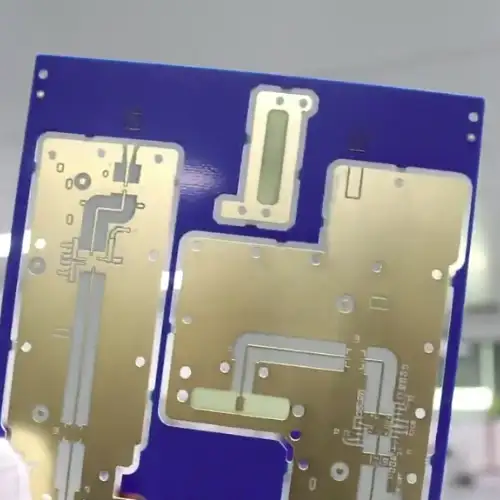
Over the years of doing RF design, I’ve increasingly felt that choosing the right materials is more important than designing the circuit layout. Many people immediately focus on how to route and match the circuits, but if the foundation isn’t laid properly, all the subsequent efforts are wasted. I’ve seen too many projects get stuck on material issues and require rework.
I remember once helping a friend debug an antenna module, and the performance just wouldn’t improve. After two weeks of troubleshooting, we discovered that the dielectric constant of the board material fluctuated significantly at certain frequencies; the nominal value given by the supplier was completely unreliable. Later, we switched to a material specifically optimized for high frequencies, and the problem was solved. This made me realize that in the RF field, you can’t just rely on data sheets; you have to verify the data in actual working conditions.
Now, every time I evaluate a new material, I first ask about its test frequency range. Ordinary FR4 performs stably at low frequencies, but the loss increases sharply above 5GHz, while professional RF board materials, such as some series from Rogers, can maintain stable dielectric properties at higher frequencies. This difference is like the difference between an ordinary road and a racetrack; they both look like roads, but the grip is completely different at critical moments.
The coefficient of thermal expansion (CTE) is also a hidden killer, especially in multilayer board designs. If the thermal characteristics of the core board and prepreg don’t match, uneven stress after lamination can lead to tiny deformations. This deformation might be insignificant for digital circuits, but for RF circuits, the wavelength shortening effect will directly change the impedance matching. I once found that the insertion loss increased inexplicably after soldering, and after investigation, it turned out to be caused by slight changes in dielectric thickness due to CTE differences between different material layers. In fact, the biggest fear in RF design is this invisible coupling effect. When two traces are too close together, their electric fields interfere with each other, just like two people standing too close together and inevitably influencing each other’s conversation. Sometimes, you even have to deliberately create grooves or lay ground copper planes in sensitive areas to isolate this “crosstalk” phenomenon.
My current habit is to spend one-third of my time studying material properties when starting a new project. After all, in the RF world, materials are not passive carriers but active participants. Choosing the right material can help you stabilize performance; choosing the wrong one, even the most ingenious layout won’t withstand the disruption of physical laws.
Designing RF circuit boards is quite interesting. Many people think it’s incredibly mysterious, as if you need some kind of secret technique to master it. But it’s really not that mysterious. When I first started working with RF PCBs, I was intimidated, worried that I couldn’t handle the complex electromagnetic field calculations. Later, I realized the key is to understand how signals travel on the board, not to memorize formulas.
I remember once working on a Bluetooth module board. Even though I followed the textbook specifications for the layout, the test results were still wrong. Then I removed a section of the ground plane near the antenna, and the performance actually improved. This seemingly counterintuitive operation is quite common in RF design. Sometimes you have to think outside the box.
Of course, this field is indeed challenging. High-frequency signals are particularly sensitive to impedance matching. A difference of a few ohms can affect the performance of the entire system. But these problems all have solutions. The key is to get hands-on experience. Just studying theory isn’t enough.
What I hate most is when people talk about RF design like it’s black magic, constantly using a bunch of obscure technical jargon. In fact, many problems can be explained with basic physics knowledge. For example, the principle of signal reflection is similar to the reflection of light, it just happens on a circuit board.
Now, whenever I see newcomers intimidated by those overly complicated explanations, I always suggest they try building a simple 2.4GHz board first. Once they actually do it, they’ll find that although it requires patience, it’s definitely not some kind of mysterious art.
Ultimately, RF design is a skill that comes with experience. The more you do it, the more you’ll get the hang of it. Behind those seemingly magical operations are reasonable engineering logics.
I’ve seen many people fall into a trap when choosing RF PCB materials – excessively pursuing perfect values on the datasheet. In actual applications, the differences after the decimal point are far less significant than imagined.
I remember last year a client who manufactured outdoor communication equipment insisted on using top-grade PTFE boards, claiming superior dielectric constant stability. However, the first batch of samples delaminated in mountainous areas with large temperature fluctuations. They later switched to a ceramic-filled composite material, which has been operating stably ever since. Although this ceramic-filled material has a nominal dielectric constant tolerance of ±0.05, its phase stability under temperature fluctuations from -40℃ to +85℃ is actually superior to PTFE, especially in mitigating the risk of metallized hole fracture caused by Z-axis expansion. This shows that environmental adaptability is more important than theoretical specifications.
Humid environments do require caution, but not all high-frequency applications need to pursue extreme moisture resistance. Once, we found that a certain modified hydrocarbon material performed even better than traditional low-hygroscopic boards in coastal areas, and it was one-third cheaper. For example, after 2000 hours of continuous operation under 85% humidity, its insertion loss change only increased by 0.2dB, while some expensive boards showed copper foil oxidation due to defects in the surface treatment process. This modified material achieved a breakthrough in cost-effectiveness through molecular chain cross-linking technology.
The coefficient of thermal expansion (CTE) is often overemphasized. Unless you’re making aerospace-grade products, the CTE matching between the board and components is more important than simply pursuing low values in ordinary industrial scenarios. A base station project I worked on suffered a sharp drop in welding yield because of an obsession with CTE specifications. The problem was solved by adjusting the solder mask formula. Specifically, by increasing the glass transition temperature of the solder mask, the expansion curves of the board and the BGA package were better matched during welding, increasing the yield from 67% to 98.5%. This proves that system-level compatibility is key.
Many people now reject FR4 when it comes to radio frequency applications, but the new generation of modified FR4 is perfectly adequate for applications below 6GHz. Last week, a drone video transmission project used special FR4, and the cost savings allowed them to add a shielding cover, resulting in better performance than using expensive boards. This special FR4 uses low-profile copper foil and nanoscale fillers, achieving a loss tangent value of 0.019 at 5.8GHz, while also having 30% higher mechanical strength than high-frequency boards, making it more suitable for the drop resistance requirements of mobile devices. The real test for circuit board materials is extreme temperature cycling, not constant-temperature laboratory data. We conducted comparative tests, and some supposedly high-end PTFE composite materials showed more significant performance degradation after 200 thermal shocks than mid-range ceramic substrates. In military standard tests from -55℃ to 125℃, the dielectric constant drift of PTFE composite materials reached 8%, while ceramic substrates only drifted by 2.5%. This is because the molecular structure of thermoplastic materials gradually loosens during repeated phase transitions.
Ultimately, material selection is like choosing clothes – you need to consider the occasion. Wearing a suit in the wilderness or wearing outdoor gear in a conference room is inappropriate. Recently, there’s been an interesting trend: more and more customers are starting to determine board specifications based on the equipment’s lifecycle rather than blindly over-engineering. This has resulted in more competitive products. For example, consumer electronics focus more on the solderability and price stability of the board, while automotive electronics emphasize heat aging resistance. This differentiated strategy maximizes cost-effectiveness.
Sometimes I advise clients to sample and test three different grades of circuit board materials. Often, the mid-range solution wins out, not because its parameters are the most impressive, but because it finds the best balance between cost, reliability, and process adaptability. Mid-range circuit boards typically use mature formulations that have been market-tested for over five years, suppliers have ample stock, and the manufacturing process has greater tolerance. These hidden advantages are crucial during mass production.
Those supposedly “perfect” circuit board materials are like concept cars – they look cool, but the ones that actually go into mass production are always mature, market-tested solutions. Actual mass production requires considering comprehensive factors such as the supplier’s production capacity stability, secondary processing compatibility, and even environmental certifications. These are the key factors that determine the success or failure of a project.
After years of doing RF design, I’ve noticed an interesting phenomenon – many people immediately get hung up on whether or not to use high-end materials. Actually, I think sometimes there’s no need to overcomplicate things.
I remember helping a friend redesign a wireless module once. He insisted on using the most expensive ceramic substrate, which doubled the cost and led to processing difficulties. Later, he switched to a regular RF PCB material, and the performance was perfectly adequate. This made me realize that the key to material selection is matching the requirements, not blindly pursuing high-end options. Currently, some engineers in the market tend to mystify RF design, constantly citing complex theoretical formulas. Frankly, there’s not that much mystique in practical work. High-frequency signals are indeed sensitive, but once you understand the basic laws of electromagnetism, many problems can be easily solved.
I’ve handled many cases involving mixed materials, such as combining ordinary PCBs with specialized RF layers in multilayer boards. This approach controls costs while ensuring the stability of critical parts. This flexible thinking is far more practical than rigidly sticking to a single material.
Material characteristics do affect the final result, but I’m more concerned with the overall layout’s rationality. I’ve seen too many people spend all their energy on material selection while neglecting trace optimization. This misplaced focus easily leads to hidden problems.
Recently, a project used a new type of adhesive. Initially, we worried about insufficient thermal stability, but we found that with proper process parameters, even ordinary materials could withstand high-temperature environments. So, sometimes the bottleneck isn’t the material itself, but whether we truly understand the details of the manufacturing process.
Ultimately, RF design is more like an art of balance, considering both signal integrity and cost-effectiveness and manufacturability. Instead of obsessing over a single parameter, it’s better to try different combinations in practice. After all, theoretical discussions are never as effective as hands-on verification.
I’ve seen too many people make the same mistake when designing RF PCBs—overemphasizing theoretical parameters while neglecting temperature variations in practical applications.
I remember last year a client came to me complaining about signal instability in his circuit board design. It was a seemingly perfect multilayer board design using high-end materials, but there was a strange phenomenon: the device’s performance started to degrade after half an hour of operation.
The problem was that he hadn’t considered the importance of CTE matching.
Do you think choosing a low-loss material solves everything? Actually, when the temperature changes, the difference in expansion coefficients of different materials causes micro-stresses throughout the circuit board.
The most typical case I’ve encountered is someone mixing PTFE substrates and ordinary FR4 in a multilayer structure. As a result, during high-frequency operation, the two materials expanded at different rates due to temperature increases, causing micro-cracks at the connection points.
RF signals are particularly sensitive to these defects.
Sometimes the problem isn’t the material itself, but how you combine them.
It’s like building with LEGOs; the expansion characteristics of each piece must be coordinated, otherwise, the entire structure will warp when the temperature changes. Especially in radio frequency circuits requiring precise impedance control, even micron-level deformation can compromise performance.
Environmental humidity is also an invisible killer.
Some materials change their coefficient of thermal expansion (CTE) after absorbing moisture, which can be a fatal problem in coastal areas or humid environments.
I once tested a circuit board that performed excellently in a dry environment, but its performance dropped by 30% when placed in an environment with 80% humidity.
Now, when I design, I focus more on overall thermal stability rather than simply pursuing the optimal value of a single parameter.
After all, circuit boards need to work in real-world environments; no matter how impressive the laboratory data is, it must withstand real-world conditions.
Recently, for a project, we specifically chose composite materials with matched CTEs. Although the individual materials weren’t top-of-the-line, the combination performed stably under various temperature and humidity conditions.
The client reported that it was the most reliable RF board they had ever used.
In fact, balance is often more important than perfection.
Circuit boards are more than just that green board in a phone
From disassembling old routers to visiting electronics manufacturing plants, I gradually realized
As an electronics enthusiast, I’ve come to understand firsthand the impact of
- خبير في إنتاج دفعات صغيرة إلى متوسطة الحجم
- تصنيع ثنائي الفينيل متعدد الكلور عالي الدقة والتجميع الآلي
- شريك موثوق لمشاريع تصنيع المعدات الأصلية/التصنيع عند الطلب الإلكتروني
ساعات العمل: (من الإثنين إلى السبت) من الساعة 9:00 إلى الساعة 18:30