

What Documents Are Required for PCB Production: A Field Guide From Real Industrial Weighing Controller PCB Projects
Many engineers focus too much on technical parameters early on and overlook
When manufacturing mixed-laminate multilayer PCBs, I pay particular attention to the issue of material compatibility. The differences in characteristics between dissimilar materials are often far more significant than one might imagine. For instance, on one occasion, we attempted to laminate two types of high-performance board materials together, only to encounter problems during the drilling stage. The heat generated as the drill bit passed through the different materials destabilized the resin, directly compromising the quality of the hole walls. Specifically, when the drill bit transitioned from a high-Tg material into standard FR-4 material, the disparity in thermal conductivity caused the local temperature to spike instantly—exceeding 180°C. This surge triggered a glass transition within the resin, which not only resulted in increased roughness of the hole walls but also led to the formation of micro-cracks following the copper plating process. Using thermal imaging, we observed temperature fluctuations exceeding 40°C at the interfaces between the dissimilar materials; the impact of this thermal shock on hole wall quality is far more complex than that encountered when drilling through a single, homogeneous material.
In fact, many people tend to overlook a critical detail: the compatibility of the board materials’ Glass Transition Temperature (Tg) values. On one occasion, I specifically compared various material combinations with differing Tg values and discovered that when subjected to significant temperature fluctuations, the layers were prone to subtle separation. This issue does not manifest immediately but evolves into a latent risk over the long term. This aspect of material compatibility becomes particularly critical for devices and systems that are required to withstand rigorous thermal cycling. For instance, in automotive electronics applications, we once tested a material combination where the glass transition temperatures (Tg) differed by 15°C. After undergoing 1,000 thermal cycles ranging from -40°C to 125°C, scanning electron microscopy (SEM) revealed interlayer gaps measuring 3 to 5 microns. Although short-term electrical testing yielded normal results, in a humid and hot environment, these microscopic gaps acted as pathways for moisture ingress, thereby accelerating the formation of Conductive Anodic Filament (CAF).
I recall a specific batch of boards where, during the testing phase, we discovered that signal integrity was suboptimal. Subsequent troubleshooting revealed that the dielectric properties of a specific layer within the hybrid-lamination stackup were incompatible with those of the surrounding layers. Although the parameters for each individual material met the required specifications when viewed in isolation, the overall performance was compromised once they were bonded together. This experience underscored the necessity of not merely evaluating individual material specifications, but also considering the complex interactions that occur when these materials are combined. This is particularly critical when low-loss materials—such as Megtron 6, often utilized for high-speed signal layers—are bonded with standard core materials; the disparity between the dielectric constant (Dk) of the low-loss material (typically 3.2) and that of standard FR-4 (typically 4.5) can lead to significant deviations in impedance continuity. Measurements taken using a Time Domain Reflectometer (TDR) revealed impedance discontinuities reaching as high as 8Ω—a deviation substantial enough to induce pronounced Inter-Symbol Interference (ISI) during signal transmission speeds exceeding 10 Gbps.
The drilling process presents a particularly technical challenge in the fabrication of hybrid-laminated PCBs. Discrepancies in the hardness of the various constituent materials result in uneven wear on the drill bits; on occasion, even when utilizing a brand-new drill bit, the resulting hole quality and consistency prove inferior to those achieved with a slightly worn, older bit. We eventually identified the optimal balance by fine-tuning the interplay between the feed rate and the rotational speed. Practical testing demonstrated that when processing hybrid boards containing ROGERS 4350B material, the adoption of a progressive parameter adjustment strategy is paramount: initially, we applied drilling parameters of 18,000 rpm and 2.4 m/min within the regions containing the harder, ceramic-filled materials; subsequently, upon transitioning to the standard material regions, we immediately adjusted the parameters to 16,000 rpm and 3.0 m/min. This dynamic adjustment methodology extended the service life of the drill bits threefold while maintaining hole-positioning accuracy within a tolerance of ±0.05 mm.
Moisture control constitutes another critical aspect of the process that is frequently underestimated. On one occasion, a batch of boards exhibited slight delamination during the reflow soldering stage; a subsequent investigation traced the root cause back to a specific layer of prepreg material that had absorbed excessive moisture prior to the lamination process. We now exercise much stricter control over environmental humidity; even for short-term storage, meticulous sealing and moisture protection are essential. Our internal data indicates that when the moisture content of prepreg exceeds 0.35%, it generates a vapor pressure exceeding 2 MPa at a reflow soldering peak temperature of 260°C—a pressure sufficient to compromise interlayer bond strength. Consequently, all materials must now be laminated within eight hours of unsealing. Furthermore, humidity in our intermediate storage areas is strictly maintained below 30% RH, and sensitive materials are stored in nitrogen-purged cabinets.
These experiences have led me to view the manufacturing of hybrid-lamination multilayer PCBs as akin to conducting a chemical experiment—one that requires constant formula adjustments. Every minute detail can influence the final outcome; often, issues do not stem from obvious sources, but rather from seemingly insignificant steps in the process. For instance, a mere 0.5°C/min deviation in the heating ramp rate during lamination, or a 5% fluctuation in vacuum levels—such minute parameter variations—can result in a ±3% deviation in dielectric thickness uniformity. We even discovered that variations in prepreg flow characteristics across different production batches directly impact the dielectric layer’s filling efficacy, prompting us to implement a more granular system for tracking incoming material batches.
Whenever I encounter those flashy, intricate designs for multilayer PCBs, I feel compelled to offer a word of caution: do not focus solely on routing; if the materials are chosen incorrectly, the entire project will be riddled with pitfalls down the line. This is particularly true for hybrid-lamination structures; while they may sound sophisticated and cutting-edge, executing them in practice feels much like walking a tightrope.
I have witnessed numerous engineers—in an effort to cut costs or accelerate schedules—indiscriminately stack and laminate a hodgepodge of different board materials. On one occasion, a client insisted on forcibly laminating standard FR4 alongside high-frequency materials; the result was a board that immediately blistered and delaminated upon passing through the reflow oven. Upon dissection, the culprit became obvious: the coefficients of thermal expansion for the two materials differed so drastically that, under high heat, they effectively “went their separate ways,” refusing to yield to one another. This type of fundamental flaw is simply beyond the scope of any subsequent process steps to remedy.
The lamination process is, in essence, an exercise in harmonizing the distinct “temperaments” of various materials. Some board materials soften rapidly when heated, while others stubbornly resist deformation. If the heating profile is not calculated precisely, the moment the press closes, one can immediately discern the faint sound of internal tearing. The most insidious aspect of this “internal injury” is that it remains invisible to the naked eye; the problem—manifesting as intermittent circuit connectivity—is often not discovered until the final testing phase.
Many people assume that material selection is merely a matter of consulting a datasheet; in reality, it is a process far more complex and nuanced than that. Take the glass transition temperature (Tg) as an example: while it appears to be a fixed numerical value, testing conditions can vary significantly between manufacturers—sometimes differing by as much as ten or fifteen degrees. I once compared materials of the same specified Tg rating from three different suppliers, only to find that their actual thermal deformation temperatures spanned an entire temperature range. If one were to set the lamination temperature based solely on theoretical values, the underlying layers might end up carbonized before the surface layers even reach their optimal bonding state.
Nowadays, some manufacturers like to boast about the sophistication of their hybrid lamination processes; however, the truly critical factor remains the compatibility of the underlying base materials. Rather than chasing after flashy stacking schemes, it is far more prudent to simply ensure that the coefficients of thermal expansion (CTE) for each individual layer are properly aligned. After all, these boards are designed to function under electrical load, not to sit in a display cabinet as mere works of art.
I recently encountered a particularly interesting case where an engineer inserted a transitional layer between standard FR4 material and a high-frequency substrate. Although this buffer layer increased the overall board thickness, it effectively mitigated interfacial stress. It seems that, at times, taking a step back can actually lead to a more stable and secure outcome.
I have always found circuit boards that incorporate a mix of different substrate materials to be quite intriguing. Just think about it: forcibly bonding high-frequency materials and standard FR substrates together using a multi-layer process to create a single board is, in itself, a rather risky undertaking. I have seen numerous engineers dive headfirst into this trap—often in an attempt to save money or to chase after specific performance metrics.
The most vexing issue is the discrepancy in the coefficients of thermal expansion (CTE) among these disparate materials. As temperatures fluctuate, these materials expand and contract to varying degrees, generating internal stress. Over time, this stress can easily lead to delamination or structural cracking. I recall one specific project where an entire batch of products failed during thermal cycling tests for precisely this reason—resulting in substantial financial losses.
Furthermore, the manufacturing processes required for these materials often differ significantly; some demand specialized drilling parameters, while others impose strict requirements on surface finishes. Attempting to process all of these materials simultaneously within a single production flow inevitably increases manufacturing complexity—and, consequently, negatively impacts the yield rate.
In my view, people often become overly fixated on achieving a so-called “perfect” solution, thereby overlooking the fact that a simple, reliable design is ultimately what matters most. Of course, there are specific application scenarios where such hybrid designs are indeed necessary; however, one must always conduct a thorough risk assessment rather than blindly following the latest trends.
I have witnessed designs where a much simpler solution would have sufficed, yet the engineers insisted on implementing a complex hybrid structure. The result? Not only did they fail to reduce costs, but they also introduced a host of reliability issues. One has to ask: is it really worth it? Sometimes, engineers need to step back from technical minutiae and view problems from a broader perspective, rather than blindly chasing technical breakthroughs; after all, product stability and reliability are paramount.
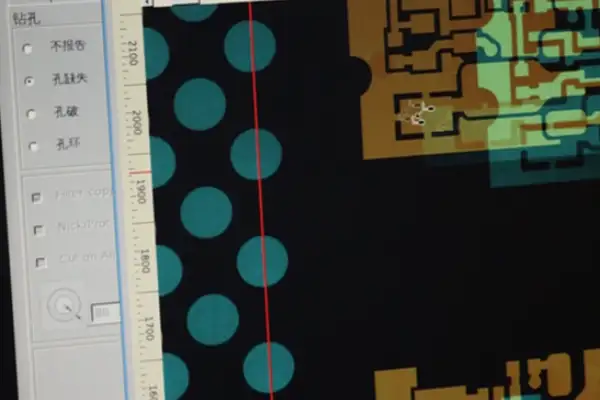
I’ve noticed that many people tend to make the manufacturing of hybrid-stackup multilayer PCBs sound incredibly mysterious. In reality, it isn’t that complicated. I’ve worked on quite a few such boards myself. The key lies in understanding the compatibility between the characteristics of the various materials used. Discrepancies in the coefficients of thermal expansion between different materials can cause trouble during high-temperature processing stages. For instance, we once paired a polyimide substrate with FR-4 material; the result was delamination during the reflow soldering phase. Such issues often go undetected until the final testing stage, leading to the scrapping of the entire production batch.
What truly gives one a headache is stress control during the lamination process. With every additional dielectric layer, the risk factor rises. Sometimes you might think you’ve calculated all the parameters perfectly, but during actual production, even minor fluctuations in ambient temperature and humidity can cause the entire design scheme to fail. I’ve seen far too many engineers rely excessively on theoretical calculations while overlooking the practical realities of the production floor.
There is a common misconception in the industry right now: the belief that the more layers a PCB has, the more sophisticated it must be. In reality, hybrid-stackup structures exceeding eight layers require extremely cautious evaluation. Signal integrity is just one aspect of the challenge; an even trickier issue is thermal management. When high-frequency materials are mixed with standard materials, the heat dissipation pathways can become highly irregular.
The safest approach is to start with a small-batch trial run—don’t rush straight into full-scale mass production. First, observe the aging performance of three to five production batches under various environmental conditions, paying particular attention to changes in copper foil adhesion at the material interfaces. Data gathered from such real-world observations is far more reliable than any simulation results.
Some manufacturers, in an effort to cut costs, will reduce the number of lamination cycles. This is an absolutely dangerous choice. Hybrid-stackup PCBs require sufficient lamination time to ensure that the different materials bond and fuse together completely. The inevitable consequence of such corner-cutting is the appearance of internal cracks in the product after just six months of use.
Ultimately, manufacturing this type of PCB is a test of patience and experience. There are no shortcuts. Every stage of the process requires ample room for adjustment; blindly chasing parameter optimization can actually end up sowing the seeds of future problems.
I strongly recommend prioritizing “manufacturability” right from the design phase, rather than simply dumping all the problems onto the production department. A competent engineer should clearly understand the specific manufacturing challenges that each of their design decisions will entail.
It truly pains me every time I see a batch of circuit boards scrapped due to warping issues. A recent order our factory received for a mixed-material board serves as a textbook example: the client insisted on using both standard FR material and specialized high-frequency material on the very same board. The result? After the lamination process was complete and the board was demolded, it was warped—curled up like a potato chip.
In reality, the greatest fear in multilayer PCB manufacturing is a mismatch in the coefficients of thermal expansion (CTE) between different materials. Just imagine: when two materials are heated, they expand to different degrees; when they cool, they contract at different rates. This disparity creates internal stresses that twist and distort the board. I once saw a board so severely warped that you could slide three business cards underneath it when it was laid flat on a surface—how on earth could that ever be processed on a surface-mount assembly line?
Many people assume that simply ensuring a symmetrical distribution of copper foil layers is sufficient, but that is far from the truth. On one occasion, we deliberately implemented a symmetrical design, yet the two types of FR base materials we used differed in thickness by just a few microns. The result was still visible warping—distortion that could be clearly seen with the naked eye. We later discovered the cause: one of the materials had a relatively low glass transition temperature (Tg), causing it to soften prematurely during the lamination process.
Nowadays, whenever we receive orders involving mixed-material stackups, we require our suppliers to provide complete CTE curve data. During one round of testing, we discovered that a specific material—which was marketed as being “compatible”—exhibited a sudden, abrupt jump in its expansion rate within the 80°C to 120°C temperature range. This kind of critical detail is simply impossible to detect by merely glancing at a standard datasheet.
Recently, we have been experimenting with the addition of “balancing layers” within asymmetrical board structures, and the results have been quite promising. For instance, we might pre-lay a sheet of prepreg (partially cured resin) on the thicker side of the board stackup. While this does increase production costs, it is certainly preferable to scrapping an entire batch of boards. However, this method is extremely sensitive to lamination parameters; a deviation of just two degrees per minute in the heating ramp rate can be enough to completely negate all our efforts.
Ultimately, mixed-material lamination is akin to performing a “graft” on a circuit board; no matter how sophisticated the technology becomes, it cannot fundamentally alter the inherent nature of the different materials involved. Sometimes, in their pursuit of peak performance, clients inadvertently overlook the most fundamental aspects of manufacturing feasibility—and that, perhaps, is the most realistic paradox encountered in the practice of engineering.
After years of manufacturing boards with mixed materials, I have come to a profound realization: sometimes, the most troublesome issues are not the ones that are immediately visible. For instance, when you first receive the raw board materials, they may appear perfectly flat on the surface, and all their technical parameters may seem to be within specifications; however, it is only when you actually begin the manufacturing process that you truly discover just how vastly different the “personalities”—the behavioral characteristics—of those various materials really are.
I recall one specific project involving a batch of core boards for telecommunications equipment, where we were tasked with laminating high-frequency materials together with standard FR-4 material. During the initial testing phase, the dielectric constants of the two materials appeared to match quite well; however, it was only after lamination that we discovered the actual issue lay with their coefficients of thermal expansion. During high-temperature pressing, the two materials expanded to different degrees. Consequently, after cooling, internal stresses persisted—stresses that simply could not be eliminated—causing the edges of the boards to curl slightly. Although the boards weren’t damaged to the point of being scrapped, this issue created significant difficulties for subsequent assembly. Such subtle discrepancies are completely invisible on engineering drawings and only become apparent during actual production.
In reality, the reliability of multilayer PCBs depends largely on the quality and precision of the lamination process. The resin systems of different materials require specific curing temperatures and durations, necessitating repeated fine-tuning. Sometimes, in order to accommodate the unique characteristics of two different materials simultaneously, we have to adjust the pressure parameters multiple times. Furthermore, every time we switch material suppliers—or even just change production batches—we often have to re-validate the entire process window. On one occasion, the supplier for our high-frequency material changed their curing agent formula; as a result, localized delamination occurred after lamination. This defect was completely invisible to the naked eye and went undetected until we performed impedance testing.
Nowadays, whenever I encounter a project involving a hybrid material structure, I prefer to dedicate an extra two weeks specifically to process validation. From material compatibility testing to pilot production runs, every single step requires a meticulous, iterative approach to identify the optimal parameters. After all, these types of boards are expensive; if a problem arises during mass production, the resulting financial losses far outweigh the initial investment in validation. For a recent automotive radar project, for instance, we deliberately extended the lamination cycle by 20%. Although this resulted in slightly lower production efficiency, it yielded a much more stable and consistent production yield.
Ultimately, the manufacturing of hybrid-material PCBs is best described as a process of constant compromise—one that requires balancing cost control with performance requirements while simultaneously adapting to the practical realities of the manufacturing environment. There are no “standard answers”; every new combination of materials requires a fresh search for that delicate equilibrium.
I have seen far too many engineers get overly fixated on specific technical parameters when designing hybrid-stackup multilayer PCBs. While the symmetry requirements outlined in technical datasheets are certainly important—particularly regarding material compatibility—in actual practice, I place far greater emphasis on how to maintain structural stability throughout the entire manufacturing workflow.
I recall a project last year where, in a rush to meet a tight deadline, we skipped the pre-baking stage. Consequently, during the subsequent reflow soldering process, the entire batch of boards developed micro-cracks. We later discovered that this issue was caused by differential shrinkage rates between the resin systems of the different materials at high temperatures. Such latent defects often do not manifest immediately; however, if they surface only after the product has been in use for some time, the resulting losses can be catastrophic.
Nowadays, whenever I review a design, I pay particular attention to whether the combination of core boards and prepregs is appropriate. Sometimes, in the pursuit of absolute symmetry, other performance metrics—such as thermal dissipation or signal integrity—are inadvertently compromised. In reality, as long as the stress distribution in critical regions remains balanced, making slight adjustments to the thickness of certain non-critical layers can actually enhance overall reliability.
Recently, we experimented with introducing a buffer layer into an asymmetrical structure, and the results were unexpectedly positive. Although this theoretically violates traditional principles of symmetry, practical testing demonstrated that mechanical strength actually improved by approximately 15%. This experience made me realize that standard textbook solutions must be adapted to the specific application scenarios at hand.
Ultimately, the greatest pitfall in laminating mixed materials is the rigid, uncritical application of theoretical data. Every manufacturer’s equipment possesses unique characteristics, and workshop temperature and humidity levels vary; all these factors influence the final curing outcome. Rather than blindly adhering to symmetrical formulas, it is far more practical to conduct multiple rounds of process validation.
On one occasion, we even discovered that the flow properties of the exact same roll of prepreg material would undergo subtle changes depending on the season in which it was opened. Such details are often overlooked by standardized procedures, yet they have a tangible impact on the long-term stability of multilayer PCBs. Our team has now adopted a routine: whenever we switch to a new batch of materials, we conduct a fresh compatibility test. While this increases our workload, it has proven highly effective in mitigating numerous potential risks.
I believe that in this line of work, the most important asset is not the ability to memorize countless regulatory clauses, but rather the cultivation of a keen sensitivity to material characteristics. Once you have physically handled boards at various stages of curing—and observed the distribution of fibers under a microscope—you will come to understand that the essence of “symmetry” lies in achieving a dynamic equilibrium, not merely in mechanical replication.
After working in this field for a while, you realize that the most vexing challenges in multilayer PCB manufacturing are not the technical processes themselves, but rather those seemingly insignificant details. I recall an instance last year when our factory accepted an order for a mixed-material laminate; the client requested the use of a specialized resin, but following the lamination process, we observed significant resin bleed along the edges of the boards. We expended considerable effort cleaning up the excess resin—a task that nearly caused us to miss our delivery deadline.
In reality, the manufacturing risks associated with mixed-material multilayer PCBs often lie hidden within the inherent characteristics of the materials themselves. Different types of resins exhibit vastly different flow properties: some are as viscous as honey, while others are as fluid as water and prone to flowing uncontrollably. The worst-case scenario I have witnessed involves uneven resin flow during lamination, resulting in the formation of localized voids; these microscopic gaps subsequently become critical failure points during thermal stress testing. Sometimes, what appears to be a mere cosmetic flaw may, in fact, compromise the reliability of the entire batch of boards.
The key to controlling resin bleed lies in a deep understanding of material characteristics. For instance, certain high-temperature resins require sustained pressure within a specific temperature range to ensure they have sufficient time to fill the gaps between circuit traces—without being allowed to flow unchecked. We subsequently refined our process; prior to lamination, we now preprocess the prepregs to fine-tune their dimensions and arrangement. While this does increase the upfront workload, it has undeniably led to a significant improvement in yield rates.
Void issues often stem from a neglect of detail. On one occasion, we discovered irregular internal voids in a specific batch of boards; upon investigation, we traced the root cause back to fluctuations in the workshop’s temperature and humidity. When resin absorbs even trace amounts of moisture, it generates bubbles under high heat; if these bubbles become trapped between layers, they manifest as voids. Consequently, we now strictly control the material storage environment—going so far as to incorporate a vacuum drying step prior to lamination.
As for misalignment issues, I view these more as a challenge in engineering management. During hybrid lamination—where sub-boards of different materials are stacked together—varying coefficients of thermal expansion can easily lead to interlayer shifting if the lamination parameters are not configured correctly. Through optimizing our registration hole designs and adjusting the temperature ramp profiles, we gradually identified the optimal balance point. However, every time we switch to a new material, we must approach the testing phase with the same meticulous caution as if it were our first time, as the specific characteristics of each material batch can vary ever so slightly.
These experiences have taught me that multilayer PCB manufacturing is less of a science governed by rigid formulas and more of an art form requiring constant fine-tuning. Sometimes, the most effective improvements stem from rethinking a seemingly minor step—such as altering the stacking sequence of the prepregs or adjusting the precise timing of pressure application. What truly matters is maintaining a keen sensitivity to every minute detail, for most problems leave subtle traces long before they escalate into major crises.
I have encountered far too many people who oversimplify the complexities of multilayer PCB manufacturing. They operate under the assumption that merely adhering to standard procedures guarantees a flawless outcome. In reality, the moment you open the laminator after a cycle feels much like opening a “mystery box”—you never quite know what you’re going to get—especially when dealing with hybrid material stacks.
Those supposedly “perfect” process parameters often overlook the most critical variable: the inherent temperament of the materials themselves. You can never fully predict how different types of prepregs will interact and exert opposing forces on one another under high-temperature conditions. On one occasion, while manufacturing a six-layer board, we utilized high-frequency materials for the outer layers and standard FR-4 for the inner layers. Upon inspection, we discovered fine, silvery hairline cracks appearing in the corners—resembling the fissures in a dried-up riverbed. This was a textbook case of “resin starvation.”
Many people mistakenly attribute delamination issues to insufficient pressure. In truth, however, the root cause more often lies in fundamental incompatibilities inherent to the specific combination of materials chosen. For instance, high-frequency laminates are inherently more “finicky” than standard FR-4; they impose an entirely different set of requirements regarding resin flow characteristics. When you force them together, it is akin to asking someone accustomed to Western cuisine and someone accustomed to Chinese cuisine to share the exact same set of cutlery.
The most vexing aspect of this flaw is its insidious nature. It doesn’t immediately render your circuit board useless; instead, it lurks like a chronic disease. It might be three months after the customer has installed the board before performance fluctuations finally begin to manifest.
I have now developed a habit: before every lamination cycle, I use a flashlight to shine a glancing light across the edges of the prepreg sheets, observing the state of the resin impregnation. This low-tech, makeshift method often proves more effective at predicting potential risks than many sophisticated precision instruments.
The true test of technical expertise lies in the ability to anticipate how different materials will interact under high pressure. Sometimes, it is necessary to deliberately leave “breathing gaps” within the lamination stack-up to create buffer space for the resin to flow.
I recall an instance where a client insisted on incorporating three different materials—each with a distinct dielectric constant—into a single board. We tried to dissuade them, but ultimately had no choice but to comply. The result? When we peeled back the release film after lamination, the entire board rippled and undulated like ocean waves.
We later discovered that the root cause of the problem lay not in the pressure or temperature settings, but rather in the fact that the resin absorption characteristics of a specific material had been underestimated. Nowadays, whenever I receive an order for a mixed-material stack-up, I begin by drafting a material compatibility matrix. Ultimately, this industry demands a deeper understanding of the inherent “temperaments” of the materials we employ.
Standard Operating Procedures (SOPs) can only guarantee a baseline level of quality; what truly determines success or failure is often the depth of your understanding regarding the specific characteristics of each individual batch of material.
I have witnessed far too many teams stumble and fall on projects involving mixed-material multilayer boards. They often operate under the misguided assumption that simply stacking materials with disparate performance characteristics will magically resolve their issues—a strategy that, more often than not, backfires spectacularly. On one occasion, in pursuit of superior high-frequency performance, our team inserted a low-loss laminate sheet into the core layers; the result was that the board warped into the shape of a banana before it had even left the workshop floor. That disastrous outcome drove home a crucial lesson: the coefficients of thermal expansion for different materials do not simply add up in a linear fashion. During the lamination process, these materials tug and pull against one another—much like a group of total strangers being forcibly crammed into a crowded elevator.
In truth, many people underestimate the critical importance of material compatibility. Do you really believe that you can simply select a random assortment of high-performance materials, stack them together, and expect a miracle? The reality is that even the slightest discrepancy in the resin systems of those materials can trigger unexpected chemical reactions during the lamination process. The most absurd situation I’ve ever encountered involved two different board materials actually repelling each other under high temperatures, causing the internal circuitry to become intermittent and barely visible. Problems like this often don’t surface until the final product testing phase—by then, it’s too late to attempt any rework.
Process control is where the real challenge lies. The exact same parameter settings might work flawlessly on a pure FR4 board, but they become completely ineffective when applied to a hybrid structure. Take the temperature ramp rate during lamination, for instance: it has vastly different effects on the resin flow rates of different materials. Heating up too quickly can lead to insufficient filling in certain layers, while doing so too slowly might result in over-curing. Striking this delicate balance requires extensive experimental data; it certainly cannot be resolved through theoretical calculations alone.
Drilling is another stage that proves to be a real headache. When you have to process multiple dielectric materials on a single board, the wear patterns on the drill bits become incredibly difficult to predict. A material structure featuring alternating hard and soft layers induces micro-vibrations in the drill bit; although these vibrations are invisible to the naked eye, their impact on the quality of the hole walls can be catastrophic. We once had to scrap an entire batch of boards because of this issue, only to discover later that the drilling speed parameters needed to be dynamically adjusted based on the specific combination of materials being used.
Nowadays, whenever I review a new project, I pay particular attention to the proposed solutions for managing material interfaces. Some designers like to insert a transitional dielectric layer between adjacent layers; while this does help alleviate stress concentration issues, it simultaneously introduces new risks associated with those additional interfaces. Ultimately, hybrid lamination is akin to preparing a complex culinary dish that requires balancing multiple ingredients—even a slight misjudgment of the “heat” can ruin the entire meal. Rather than chasing after extreme performance metrics, it is far wiser to first ensure that the fundamental material compatibility is properly established.
Recently, we’ve been experimenting with simulation software to predict how different material combinations will behave during the hot-press lamination process. While this cannot yet fully replace actual trial production runs, it at least helps us steer clear of some of the more obvious pitfalls. After all, in the realm of high-end applications, the cost of a single failure can easily exceed the entire research and development budget.
While managing the production of hybrid-laminated multilayer PCBs, I’ve observed an interesting phenomenon: many people tend to focus their attention almost exclusively on technical parameters. In reality, however, what truly determines success or failure are often those seemingly basic details that are easily overlooked. That specific issue I mentioned earlier—the “” problem—is a particularly classic example. Sometimes, even when the design schematics clearly and precisely specify the production requirements, inexplicable deviations still manage to creep in during the actual manufacturing process. I recall a specific incident that serves as a particularly illustrative example. A certain batch of boards performed flawlessly during laboratory testing—meeting every metric perfectly—yet once they entered the mass production phase, they began to exhibit frequent interlayer misalignment errors. We later discovered that the root cause lay in inadequate temperature and humidity control within the production workshop, which induced minute shifts in the materials’ coefficients of thermal expansion. These subtle tolerance deviations accumulated to a degree sufficient to render the entire production batch unsalvageable.
Consequently, I now place a premium on whether a supplier’s quality management system is truly—and effectively—implemented on the ground. Some manufacturers may proudly display an array of certification certificates, yet the actual operational practices within their workshops adhere to an entirely different set of standards. A truly reliable supplier will proactively provide real-time data logs of the production process and may even grant clients access to surveillance footage of critical manufacturing stages at any time.
Regarding the handling of material transition zones, I actually believe it is unnecessary to obsess over achieving theoretically perfect gradients. Practical experience has shown that as long as the uniformity of the resin fill is ensured—even if some degree of stress concentration exists—it will not adversely affect the product’s operational lifespan. The key lies in establishing a robust process monitoring mechanism—for instance, conducting a micro-section analysis every four hours of production.
A new approach we have recently been piloting involves building in a margin for dynamic adjustment during the design phase itself. For example, instead of adhering to rigid, fixed tolerances for line widths, we have shifted to a model where tolerances are adjusted in real-time based on the actual results of the etching process; this method has proven far more effective than blindly adhering to static standard values. After all, the actual conditions encountered on the production line are invariably far more complex than what is depicted in the engineering schematics.
When selecting a manufacturing partner, I prioritize their capacity to effectively address unforeseen issues. On one occasion, when we encountered batch-to-batch variability in raw materials, our supplier immediately activated their contingency plan while simultaneously fine-tuning the lamination parameters. This kind of agile, adaptive responsiveness offers far greater peace of mind than any certification certificate ever could.
Ultimately, managing the manufacturing risks associated with hybrid-laminate multilayer PCBs is akin to an art of balance. It requires a steadfast adherence to established standards while simultaneously maintaining the flexibility to adapt—that, in essence, is the true hallmark of high-quality manufacturing.
I have witnessed far too many engineers stumble when attempting to manufacture hybrid-laminate multilayer PCBs. They tend to fixate—often for hours on end—on sophisticated, high-level technical parameters, while frequently overlooking the most fundamental issue: material compatibility. Take, for instance, a prototype board we fabricated just last week: despite utilizing top-tier high-frequency materials, the entire board ended up warping like a potato chip simply because the choice of the underlying FR-4 substrate was made too haphazardly.
In reality, this type of issue is remarkably common. Many people mistakenly assume that simply stacking materials with disparate performance characteristics together will automatically yield optimal results—yet, more often than not, the outcome proves to be precisely the opposite of what was intended. Different materials inherently possess distinct coefficients of thermal expansion; when subjected to heating and cooling cycles, they exert opposing forces on one another—and that is precisely how warping occurs. I prefer to do my homework thoroughly during the early design phase, taking the time to fully understand the unique characteristics and “temperaments” of every material involved.
I recall an instance where we took on an urgent project; the client insisted on seeing samples within just one week. At the time, some team members suggested we simply make do with readily available standard materials. However, I insisted that we re-verify their coefficients of thermal expansion. And guess what? Those extra two days spent on testing proved invaluable; they revealed that a seemingly ordinary FR-4 material was actually a better fit for the overall structural integrity than the expensive, high-frequency substrate we had initially considered.
Managing risks during the manufacturing process demands a wealth of accumulated experience. On one occasion, we noticed that the edges of our circuit boards consistently exhibited subtle signs of delamination. After spending half a day troubleshooting, we discovered the culprit: the temperature profile set for the lamination press was simply too aggressive. We subsequently adjusted the heating ramp rate, allowing sufficient time for the various materials to adapt to the rising heat, and the problem resolved itself immediately. You won’t find details like this in any textbook; these are insights gained the hard way—by stumbling into pitfalls and learning from our mistakes.
I’ve now developed a habit: before every trial production run, I simulate every conceivable deformation scenario on the computer. While this adds a bit of extra time to the process, it is infinitely preferable to staring in frustration at a pile of scrapped boards later on. After all, even the most sophisticated instruments cannot detect every potential issue; sometimes, you still have to rely on the intuition and seasoned judgment of a veteran craftsman.
Lately, I’ve been experimenting with a novel lamination strategy that turns conventional thinking on its head. Instead of trying to force disparate materials to merely coexist, we are actively leveraging their inherent differences to achieve unique functional effects. While this approach may sound counterintuitive, the preliminary results have been surprisingly impressive. Perhaps, when it comes to manufacturing hybrid circuit boards, it really is time for us to start looking at the problem from a fresh perspective.
While working with hybrid multilayer boards, I’ve observed an interesting phenomenon: many people focus so heavily on surface finishes and processes that they overlook the critical issue of material compatibility itself. Beneath those seemingly flawless plated through-holes, a host of potential hidden defects may be lurking.
I recall a specific instance where we tested a batch of boards featuring a hybrid structural design. The outer layers utilized high-frequency materials, while the inner layers consisted of standard FR-4. The result? During thermal shock testing, microscopic cracks appeared within the walls of the plated through-holes. This type of defect is rarely seen in boards constructed from a single uniform material, yet it is a common pitfall when working with hybrid structural designs. Disparities in the coefficients of thermal expansion (CTE) of different materials can lead to stress concentration during temperature fluctuations; the walls of drilled holes, in particular, are highly susceptible to becoming critical weak points.
The lamination process is, in reality, far more complex than one might imagine. It involves much more than simply stacking various materials together and applying heat and pressure. On one occasion, we attempted to laminate PTFE material with standard epoxy resin. Although the process parameters appeared to meet all specifications, subsequent cross-sectional analysis revealed minute voids at the interfaces between the layers. Such defects can trigger delamination issues during subsequent assembly stages.
When it comes to drilling, the challenges posed by mixed-material stacks become even more pronounced. The junctions between materials of differing hardness are prone to burring. During a back-drilling operation, we once observed that the drill bit deflected slightly as it transitioned across the interface between a soft material and a hard one. Although the deviation amounted to only a few tens of microns, that is more than enough to compromise the integrity of high-speed signal transmission.
I now tend to prioritize material compatibility considerations right from the design phase. This might involve selecting different types of laminates with closely matched CTEs, or incorporating buffer structures within the mixed-material zones. Sometimes, I would rather sacrifice a marginal amount of performance to ensure absolute reliability. After all, circuit boards are engineered for practical application in the real world—not merely as museum pieces for a laboratory display.
We have recently been experimenting with a novel plasma treatment process. While traditional chemical treatments yield limited results with mixed-material stacks, this physical-based method proves far more effective at conditioning the interfaces between disparate materials. Although the associated costs are somewhat higher, the resulting improvement in manufacturing yield has been substantial—particularly for boards containing specialized fillers, where we have observed a marked enhancement in the adhesion of the metallization to the hole walls.
In practice, the more projects you undertake, the more you realize that each one constitutes a unique case study. There are no “standard answers”—only solutions that require continuous refinement and adaptation. The key lies in maintaining a keen eye for detail, identifying potential issues promptly, and responding to them with agility.
I have recently been giving a great deal of thought to the manufacturing of mixed-stack multilayer PCBs, and I feel that many people tend to oversimplify the inherent complexities. It is true that the disparities in thermal expansion coefficients between different materials pose a significant challenge, but that is merely the tip of the iceberg. What truly gives me a headache are those elusive, invisible internal stresses lurking within the board structure.
I recall a project we handled last year that utilized a mixed-stack architecture. Initially, we felt confident in our material selection—assuming that pairing high-frequency laminates with standard FR4 substrates would present no issues. However, disaster struck during the reflow soldering stage, when fine hairline cracks began to appear on the surface of the boards. Subsequent teardown analysis revealed that the failure was caused by the sudden, concentrated release of internal stresses—a direct consequence of the mismatched shrinkage rates between the various constituent materials.
Fundamentally, the inherent characteristics of these materials make it difficult for them to coexist harmoniously. Some materials possess high rigidity, while others exhibit excellent elasticity; consequently, when temperatures fluctuate, they behave like dance partners forcibly bound together—each moving to its own rhythm, completely out of sync. This intrinsic discord cannot be resolved merely by simple calculations of CTE values.
My focus now lies more on stress management throughout the entire manufacturing process. For instance, the temperature ramp rate during lamination must not be overly aggressive; it is essential to allow different materials sufficient buffer time to adapt to one another. On one occasion, we deliberately slowed down the heating rate, and the yield rate of the finished products improved significantly. Although this extended the production cycle, it was far preferable to scrapping entire batches.
Another subtle detail that is often overlooked is the issue of Z-axis expansion in multilayer boards. Sometimes, the surface may appear as smooth as a mirror, yet hidden complexities lurk within. This is particularly true for boards subjected to repeated high-temperature exposure; after undergoing several thermal cycles, even the plated through-holes can develop micro-cracks.
When selecting materials now, I place greater emphasis on their toughness rather than solely on their thermal performance metrics. Some materials, despite having a less-than-perfect CTE match, possess excellent flexibility that helps mitigate stress concentration. It is akin to dancing with an elastic partner: even if your steps are out of sync, you are less likely to step on each other’s toes.
Ultimately, manufacturing multilayer boards with mixed laminates is like preparing a delicate dish: it cannot be too salty, nor can it be too bland; the key lies in finding the perfect balance. Sometimes, by foregoing the pursuit of extreme performance parameters, one can actually achieve more stable product quality. Perhaps that is the true philosophy of manufacturing.
I have always felt that the most vexing aspect of multilayer board design lies in the minute details. This is especially true when working with mixed materials, where the disparity in expansion coefficients between different substrates acts like a buried time bomb. I recall an instance where we fabricated a board combining high-frequency material with standard FR-4. Although all parameters met specifications during lamination, a mishap occurred during the final surface finishing stage. At the time, in an effort to save costs, we opted for the Hot Air Solder Leveling (HASL) process; little did we know that the high temperatures involved would induce microscopic cracks at the interface between the two materials. We subsequently switched to Electroless Nickel Immersion Gold (ENIG) surface finishing, which yielded much better results; while slightly more expensive, it undeniably enhanced the overall stability. This experience taught me that in the manufacturing of mixed-laminate multilayer boards, the greatest risks often lurk in stages that appear, on the surface, to be merely secondary. For instance, high-frequency materials typically feature low dielectric constants and low loss factors, whereas FR-4 prioritizes mechanical strength and cost-effectiveness; under thermal stress, these inherent performance disparities become significantly amplified. The hot air solder leveling (HASL) process involves exposure to severe thermal shock at temperatures ranging from 240°C to 260°C. During this phase, the two materials involved expand and contract at different rates, generating shear stress at their interface. In contrast, electroless immersion gold (ENIG) plating forms a uniform coating through a gentle chemical deposition process, thereby avoiding the risks associated with thermal shock.
When it comes to micro-via design, I place particular emphasis on the selection of via-filling materials. I once had a client who, in pursuit of lower costs, insisted on using resin to plug the vias; consequently, the boards developed connectivity issues within six months of operation in an environment subject to significant temperature fluctuations. Subsequently, we insisted on utilizing electroplated copper filling. Although the process is more complex, it has demonstrably extended the product’s service life. Indeed, different via-filling processes yield vastly different levels of reliability. Resin-based materials are prone to aging and becoming brittle during thermal cycling; specifically, when temperature variations exceed 100°C, the mismatch between the resin’s coefficient of thermal expansion and that of the copper plating can lead to interfacial delamination. Conversely, electroplated filling creates a dense copper pillar within the via through an electrochemical process; its thermomechanical properties align closely with those of the base copper foil, enabling it to effectively withstand thermal fatigue. Experimental data indicates that over a test cycle of 1,000 repetitions ranging from -55°C to 125°C, the rate of change in via resistance for electroplated fills was three orders of magnitude lower than that for resin-plugged vias.
The number of lamination cycles is another critical factor that demands careful consideration. I have encountered far too many engineers who, in a blind pursuit of higher density, indiscriminately increase the number of lamination cycles—only to find that the cumulative misalignment of stacked vias becomes utterly uncorrectable by the final stages of production. My current rule of thumb is that if a design requires more than three lamination cycles, the entire structural layout must be re-evaluated; I would rather fabricate and interconnect multiple smaller, single-lamination boards than take the risk associated with excessive lamination. Each lamination cycle inevitably introduces new alignment errors, which have a cumulative effect. When a design involves four lamination cycles, the total positional deviation can exceed 2.5 times that of a single-cycle process, making it extremely difficult for the laser drilling system to accurately target the underlying pads. While adopting a modular design approach increases the number of interconnection interfaces, it allows the lamination cycles for each individual module to be limited to two or fewer, thereby significantly boosting the overall yield rate. We once implemented a split-lamination strategy for a 20-layer PCB, pressing it in three separate stages; the resulting alignment precision was ultimately 40% higher than that achieved using the traditional single-stage lamination method.
I am currently working on a project where we have encountered a classic example of precisely this type of issue. A client required a single board capable of simultaneously handling high-speed signal transmission and high-power supply, necessitating the use of a mix of specialized materials. During the trial production phase, we discovered that minute delamination consistently occurred at the material interfaces at the bottom of the micro-vias; it took several adjustments to our lamination parameters before we finally identified the optimal temperature profile. This case serves as yet another reminder that, when manufacturing boards with mixed materials, every single step of the process must be treated as a critical control point. Specifically, we implemented a stepped heating strategy: we raised the temperature slowly within the 80–120°C range to ensure adequate resin flow; extended the dwell time at 180°C to 90 minutes to guarantee proper interface fusion; and finally, applied a gradient pressure control during the 215°C curing phase. Scanning Electron Microscope (SEM) analysis revealed that this optimized process successfully reduced the void ratio at the material interfaces from an initial 5.3% down to 0.7%.
In my experience—the longer I work in this industry—I’ve come to realize that mastering fundamental manufacturing processes is far more important than simply chasing after the latest, flashiest technologies. After all, even the most advanced designs must ultimately be realized through concrete manufacturing steps, and the root causes of many problems often lie hidden within seemingly mundane operational details. Take, for instance, maintaining the parallelism deviation of the press platens within 0.05 mm, or ensuring the vacuum bag’s seal integrity meets a leakage standard of no more than 5 Pa over 10 minutes; while these basic metrics may appear simple, they directly determine the bonding quality of the inner layers in a multilayer board. The critical process parameter monitoring checklist we have established encompasses over 200 such fundamental control points—each representing a lesson learned through hard-won experience and costly mistakes.
I’ve always felt that one of the most vexing challenges in multilayer board manufacturing involves situations where disparate materials are mixed together. While combining laminates of different compositions might theoretically seem like a way to leverage the strengths of each—compensating for one material’s weaknesses with another’s strengths—the actual processing often gives rise to unexpected complications. This is particularly true when clients, in an effort to cut costs, insist on laminating standard FR-4 material together with high-frequency materials; attempting to guide the entire production workflow through such a scenario feels akin to walking a tightrope.
Just last month, our workshop encountered precisely such a case. The client insisted on incorporating two specialized dielectric layers into an eight-layer board design, claiming it was essential for signal integrity. However, during the hot-lamination phase, the significant disparity in the coefficients of thermal expansion between the different laminates resulted in the formation of micro-cracks within the inner-layer copper foil. When we subsequently performed cross-section analysis, we could clearly see those hairline-thin cracks situated precisely at the junctions between the different materials. Such latent defects are notoriously difficult to detect during standard testing; they often remain hidden until the assembly stage, or even until the final product is put into actual use.
In reality, many people underestimate the importance of fundamental inspections. We have now implemented a pre-heating protocol for every batch of laminates prior to the lamination process. We stack sample coupons of various materials together to simulate the actual thermal profile, observing whether any delamination or deformation occurs. Although this step adds two days to the lead time, it effectively mitigates the risk of having to scrap an entire batch later down the line.
On one occasion, I noticed slight warping along the edges of a batch of mixed-material laminates supplied by a vendor; I immediately requested that they re-bake the boards. Sure enough, infrared scanning revealed localized areas of uneven curing. Had we proceeded directly into production, the subsequent reflow soldering process would inevitably have resulted in board blistering.
Regarding surface finishes, I increasingly favor low-temperature processes—specifically, Electroless Nickel Immersion Gold (ENIG). We once worked on a defense-sector project where the use of a Hot Air Solder Leveling (HASL) finish led to pad lifting during environmental testing at -40°C. We subsequently switched to an Immersion Silver finish; although it increased costs by 15%, the boards successfully passed the extreme-temperature cycling tests.
I have now established a standard practice: for the first pilot-production batch of any mixed-material board, we conduct three additional sets of thermal cycling tests. We subject the samples to 500 cycles of temperature fluctuation, ranging from -55°C to +125°C. While this consumes a significant portion of our testing budget, the cost pales in comparison to the financial and reputational losses incurred from customer returns.
I recently discovered a simple diagnostic technique: after completing electrical testing, use a handheld microscope to closely examine the interface between the plated through-hole walls and the laminate material. If you observe any whitening or fine hairline cracks, it is a strong indication of insufficient adhesion. Although this method is rudimentary, it has genuinely helped us intercept several potential quality failures before they escalated into major incidents.
Ultimately, manufacturing multi-layer boards using mixed materials is akin to compounding chemical reagents: even a minor oversight can trigger a catastrophic chain reaction. Rather than attempting damage control after the fact, it is far more prudent to install “safety valves” at every stage of the process—after all, reliability is designed in, not inspected in.
Many engineers focus too much on technical parameters early on and overlook
As someone who has worked in PCB outsourcing for years, I’ve found
Cramming a camera, amplifier, dual-mic array, and Wi-Fi radio into a palm-sized
- خبير في إنتاج دفعات صغيرة إلى متوسطة الحجم
- تصنيع ثنائي الفينيل متعدد الكلور عالي الدقة والتجميع الآلي
- شريك موثوق لمشاريع تصنيع المعدات الأصلية/التصنيع عند الطلب الإلكتروني
ساعات العمل: (من الإثنين إلى السبت) من الساعة 9:00 إلى الساعة 18:30
Get quote, solution or any question, Andre always here to help