

What Documents Are Required for PCB Production: A Field Guide From Real Industrial Weighing Controller PCB Projects
Many engineers focus too much on technical parameters early on and overlook
I’ve seen too many companies stumble when choosing a flexible circuit board supplier. They always focus on comparing prices per square meter, ignoring the most fundamental issue—you’re not buying a piece of plastic, but a guarantee of reliability throughout the entire product lifecycle.
Last year, I remember a client who made medical monitoring patches. Their first supplier offered a very attractive quote. The samples looked good too—thin, flexible polyimide substrate that could withstand dozens of bends. However, when mass production started, the equipment began experiencing signal interruptions after three months. Upon disassembly, microcracks were found in the wiring at the bends. The problem lay with the substrate—the supplier, in an effort to control costs, chose a secondary material. Short-term tests showed no difference, but it couldn’t withstand long-term dynamic bending. This secondary material is prone to molecular chain breakage under long-term stress, leading to decreased adhesion between the conductive layer and the substrate, especially accelerating failure under high-frequency vibration.
This reminds me of the marketing methods used by many B2B flexible PCB manufacturing services. They like to show off how their products can be twisted like a pretzel, but rarely honestly explain the cost of this bending performance. Real professional manufacturers will discuss the impact of material thickness on the bending radius and explain why the same flexible board has completely different lifespan requirements when used in a smartphone folded daily versus in the joints of an industrial robot. For example, the wiring at a robot’s joints needs to withstand dozens of reciprocating movements per minute, while a foldable phone only folds a few dozen times a day. The former requires special rolled copper foil instead of ordinary electrolytic copper foil to cope with fatigue stress.
Once, I visited a truly experienced factory, and their engineers showed me a row of testing equipment. What impressed me most was the continuously operating robotic arm, holding flexible plates of various shapes that had been repeatedly bent millions of times. The manager said they even customize testing standards based on the customer’s product usage scenario—for example, the bending of a smart bracelet strap and the bending of wiring harnesses inside a car seat, although both are called bending, have completely different material requirements. Automotive wiring harnesses need to withstand temperature shocks from -40℃ to 125℃, while smart bracelets mainly consider corrosion from human sweat, which dictates that different grades of chemical-resistant materials must be used for the cover film.
Now, when customers inquire about prices, I actually ask about their product’s application scenario first. Is it occasional bending or daily dynamic folding? Does it require high-temperature resistance or corrosion resistance? These questions directly impact material selection—for example, some special applications may require thicker polyimide substrates, increasing costs but preventing greater losses later. In the aerospace field, even fluorinated polymers are used; although their unit price is five times that of ordinary materials, they ensure operation for over ten years in extreme environments.
Ultimately, a good manufacturer should be your R&D partner, not just a simple processing plant. They need to be able to tell you why a reinforcing plate is needed in a certain corner, or why a circuit should be curved instead of a right angle. This attention to detail is often far more important than the numbers on the quote. For example, right-angled traces cause reflection loss in high-frequency signal transmission, while a gradually curved design maintains impedance continuity, which is especially important for antenna circuits in 5G equipment.
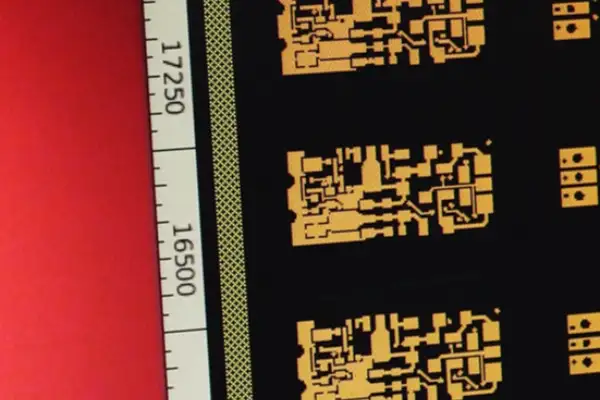
A recent interesting case: a team developing flexible sensors initially only wanted to make single-layer boards, but after the manufacturer’s suggestion, they changed to a double-layer design. Although the cost increased by 15%, the yield rate improved by 40%, and the process of adding a protective layer later was eliminated. This kind of value can never be reflected by simply comparing prices. The double-layer structure achieves electromagnetic shielding through cross-plating copper, while separating signal and power lines to reduce crosstalk.
Therefore, when evaluating suppliers next time, consider whether their lab has wear testing equipment and ask their engineers about their understanding of material properties. These details often speak louder than the scale of their production line—after all, there’s a world of difference between being able to produce and being able to do it well! A professional lab should be equipped with thermal cycling test chambers, salt spray corrosion testers, and other equipment, and should provide fatigue curve data tables for different materials at specific bending radii.
I’ve always felt that many people have a misunderstanding of flexible circuit boards. People see a bendable PCB and think the technology is simple, but there’s a lot more to it than that. Last year, when our company was developing a smart bracelet, we experienced this firsthand.
We found a supplier with a particularly low price, and the samples seemed okay. However, all the problems surfaced during mass production: frequent circuit breakages and connector malfunctions. The rework costs far exceeded the money saved initially. Later, after switching to a manufacturer specializing in B2B flexible PCB manufacturing services, we discovered the problem lay in material selection and process control.
The challenge of flexible boards lies in maintaining stable performance under bending conditions. Our current partners conduct detailed stress analyses before production and adjust material formulations based on actual application scenarios. For example, the durability requirements for boards used in wearable devices and industrial robot joints are completely different.
I particularly value the supplier’s testing process. Reliable manufacturers simulate real-world usage environments for bending tests, rather than simply making a sample. They even have a complete data traceability system, allowing us to track specific production process parameters for each batch of products.
When choosing long-term partners, I found that price alone is not enough. Some manufacturers offer low prices because they omit necessary quality control steps. Truly professional B2B flexible PCB manufacturing services proactively communicate with us about design details and offer improvement suggestions. This technical exchange often avoids many potential problems.
The industry is highly competitive now, but there are not many manufacturers that can truly produce high-quality flexible boards. We prefer suppliers that focus on specific areas; their experience accumulated in relevant application scenarios is invaluable. For example, the requirements for flexible PCBs used in medical devices differ significantly from those in consumer electronics.
I believe that when choosing a flexible PCB supplier, companies should focus on technical strength and quality control. While the cost may be higher in the short term, consistent quality performance is the true value throughout the product lifecycle.
I’ve always felt that many people’s understanding of circuit boards is still stuck in the image of rigid, green boards. In reality, many electronic products now use flexible materials. I remember disassembling a smartwatch charging dock and discovering that the thin circuitry inside could be twisted freely.
When designing products, choosing B2B flexible PCB manufacturing services involves much more than just whether it can be bent. Once, our team tested three different flexible solutions for a medical device project and found that materials of the same thickness performed drastically differently after hundreds of bends. Some developed tiny cracks on the surface, while others didn’t even change color. This made me realize that flexibility is actually a very complex indicator.
The combination of rigidity and flexibility is what’s most interesting now. For example, the main control board of a drone uses rigid materials for parts that need to maintain their shape, while the parts connecting to the camera use flexible circuitry. This ensures stability while allowing room for moving parts to operate. However, this combination of rigid and flexible design is extremely demanding in terms of manufacturing quality; even slight mishandling at the seams can easily lead to problems during vibration.
The most ingenious application I’ve seen is in automotive sensors, where the circuitry is designed as a spring-like spiral structure. This saves space and can withstand the high temperatures and vibrations of the engine compartment. This design approach completely breaks away from the traditional circuit board framework.
Actually, a very intuitive way to judge a supplier’s skill level is to see how they handle the bending transition area. Good solutions will use gradual changes in thickness and material, rather than simply gluing two materials together. After all, circuit boards need to withstand long-term fatigue wear, not just bendable.
I’ve been in this industry for over a decade and have seen many stories about flexible circuit board manufacturing. Many people think that as long as you buy the right materials and have the right equipment, you can make a good product, but that’s not the case at all. Especially in applications requiring frequent bending, poor attention to detail is often fatal. I’ve seen a smartwatch company whose first batch of products experienced wire breakage issues in less than six months of use.
The root of problems often lies in those seemingly insignificant junctions. Some suppliers, in order to rush production or save costs, simplify processes, resulting in a significant decrease in product reliability. The most demanding aspect of flexible circuit board manufacturing services lies precisely in handling these seemingly trivial details.
I remember once visiting a factory’s production line where they specifically showcased their design solutions for dynamic bending areas. They implemented special reinforcement designs in areas prone to stress concentration, rather than simply following standard procedures. This deep understanding of the process is what truly justifies paying for it.
Many B2B flexible PCB manufacturing service providers in the market now emphasize the sophistication of their equipment, but I value their understanding of material properties and the stability of their process control even more. For example, using the same polyimide substrate, some factories can adjust lamination parameters according to different application scenarios, while others simply copy standard operating procedures.
I particularly admire suppliers who are willing to spend time on process verification in the early stages. They provide detailed test data, including metallographic cross-section analysis, during the sample stage, rather than waiting until mass production problems arise to try and remedy the situation. This commitment to quality is the most valuable quality in manufacturing.
I’ve always felt that the hype surrounding flexible PCBs is somewhat unrealistic. Last year, while helping a medical device company with PCB selection, I found many suppliers touting the advanced nature of their polyimide substrates but failing to explain why their PCBs delaminated after repeated bending. The real problem in this industry isn’t the material itself, but rather the meticulous control of manufacturing details.
I remember a client who made industrial sensors complaining to me that their samples broke after only 2,000 bends, even though the supplier had promised a 5,000-bend lifespan. Upon disassembly, we discovered the problem lay in the bonding process between the cover film and the copper foil; those micro-bubbles, invisible to the naked eye, were the fatal flaw. Many B2B flexible PCB manufacturing services now focus on promoting new models while neglecting the stability of fundamental processes.
Designers of flexible electronics often focus on circuit performance parameters but easily overlook the fact that even the best polyimide material cannot withstand rough processing. The most extreme example I’ve seen is a flexible PCB used in a wearable device whose high-temperature resistant layer was damaged during assembly by a worker using a regular soldering iron. This disconnect between upstream and downstream processes is more troublesome than technological bottlenecks.
I recently met several manufacturers who are focused on practical work. They don’t emphasize so-called disruptive innovation but instead meticulously refine fundamental processes like etching precision and cover film lamination. One engineer showed me their improved lamination process, which increases the interlayer bonding strength of multilayer flexible boards by 30%, a far more practical approach than chasing flashy new materials.
Ultimately, the reliability of flexible circuit boards doesn’t depend on a single technological breakthrough but on the cumulative effect of hundreds of details in the manufacturing process. Suppliers who can calmly perfect each step are more worthy of long-term cooperation than those who constantly hype concepts. After all, when your product needs to operate continuously in harsh environments for five years, so-called industry trends are far less convincing than actual test data.
Every time I see the brochures of suppliers claiming to specialize in B2B flexible PCB manufacturing services, I can’t help but laugh. They take photos of their labs with equipment arrays that look like something out of a science fiction movie, but rarely mention the wrinkled substrates on the actual production line. Last year, we had a medical project ruined by a so-called high-end supplier. Their boastful reliability test reports were all template data; in actual mass production, they couldn’t even meet the most basic bending resistance standards.
You might think choosing a supplier is all about price and certifications, but the most magical thing about flexible circuit boards is that the same material can become completely different things in different factories. I once observed an interesting phenomenon during a factory inspection: two factories, both IATF certified, had vastly different results. Factory A treated its testing equipment as mere decoration, while Factory B had operators who could easily draw key impedance control parameter curves. These details truly determine product reliability.
Many buyers are easily misled by flashy certifications, but the stability of flexible circuit boards tests the supplier’s depth of understanding of material properties. For example, regarding the deformation compensation of polyimide substrates under high temperatures, excellent manufacturers will adjust the adhesive layer thickness according to the customer’s application scenario. Ordinary suppliers, however, simply mechanically copy standard processes, which is why some boards test perfect in the lab but frequently cause problems in actual use.
I especially want to remind my colleagues to pay attention to dynamic fatigue testing of flexible circuits. Many manufacturers like to use generic data to deceive people, but the truly professional approach is to simulate the actual bending scenarios of the end product. For example, the stress distribution in the hinge area of wearable devices is completely different from that in the wiring of industrial sensors. Reliable suppliers will require customers to provide motion trajectory parameters for targeted optimization.
A Shenzhen company I recently worked with surprised me. Their flexible power supply modules for drone manufacturers can withstand hundreds of high-intensity bends per day. Later, when I visited their workshop, I discovered that their engineers had created accelerated aging test models using flight vibration data from customer products. This practical approach to reliability is far more genuine than suppliers who constantly flaunt their certifications.
Ultimately, choosing a flexible circuit board supplier is like choosing a marriage partner—you can’t judge a book by its cover; you only know if it’s a good fit after living together. Some manufacturers, though offering higher prices, can help you mitigate risks from the design stage, while others, seemingly cheap, have bottomless pits for subsequent modifications. The worst are those who treat industry standards as the ceiling while claiming expertise; they have no understanding of the technological iterations flexible electronics is undergoing.
I’ve always found finding flexible PCB suppliers quite interesting. Many people treat procurement as a one-off transaction—whoever offers the lowest price this time, that’s it. But anyone who’s actually worked on projects for a few years knows this idea is too simplistic.
Take our previous wearable device project, for example. Initially, a new supplier offered an incredibly attractive price, but we later discovered that their substrate cracked after just a few bends. The time wasted on rework far outweighed the small savings. From then on, I placed great importance on whether a supplier could grow alongside us.
Good B2B flexible PCB manufacturing services should be like a seasoned teammate on a sports team—you only need a glance to know where to pass the ball. Once, when we wanted to try a new type of cover film material, our supplier of three years directly provided test data from their lab, showing us which combination was most resistant to bending, and even proactively adjusted the lamination parameters. This kind of tacit understanding can’t be achieved through price comparisons alone.
The charm of flexible boards lies in their malleability, and achieving this flexibility requires both parties to invest time and effort in refining the process. The most successful collaborations I’ve seen involve two companies holding two regular technical exchange meetings annually, even sending engineers to each other’s production lines. This deep integration brings optimization effects that one-way procurement can never achieve.
Now, whenever I evaluate a new project, I first check if the existing suppliers are capable of handling the order. Unless there are very specific process requirements, I won’t easily switch suppliers, as the cost of rebuilding rapport is too high. Sometimes, just getting a new supplier to understand our product’s usage scenarios can take half a year.
Ultimately, choosing a supplier is essentially choosing a pace for product development. Some pursue short-term cost-effectiveness, while others are willing to sacrifice long-term stability for quality. There’s no right or wrong; the key is what your product truly needs.
I’ve always felt that choosing a flexible circuit board manufacturer is a bit like finding a partner—you have to see if they can keep up with your pace of change. Last year, we had a medical device project that required frequent adjustments to the design layout, and our long-term supplier almost caused us to miss the delivery deadline due to the inflexibility of their production line.
The manufacturing process of flexible products truly tests a supplier’s adaptability. Once, during a factory visit, I discovered they offered over a dozen different thicknesses of substrate for various clients, and even the bonding method for reinforcing plates could be adjusted based on the application scenario. This flexibility isn’t achieved simply by expanding inventory; it requires establishing a modular production mindset from the engineering stage.
When auditing suppliers, I pay particular attention to their change response mechanisms. Good manufacturers participate in design discussions early on, such as reminding us that wiring in a bending area needs wider spacing, or suggesting using a thinner cover film to improve flexibility. One factory that makes smart wearable accessories for us even established a materials database, capable of recommending the most suitable flexible solutions based on the product’s usage environment.
I remember once a new product required electromagnetic shielding, and I was worried that the special process would affect delivery time. However, the supplier directly created an isolated work area on their existing production line, using segmented processing to handle both regular orders and special requirements simultaneously. This production model, which maintains standard processes while allowing for rapid adjustments, is truly the flexible manufacturing service suitable for B2B collaborations.
Now, my team and I place greater emphasis on suppliers’ collaborative design capabilities when selecting them. After all, good flexible circuit board manufacturing is not just about following blueprints; it requires understanding how to achieve the design intent while ensuring reliability. Sometimes, slightly changing the wiring or adjusting the material combination can increase the lifespan of the entire product by an order of magnitude.
Our recent industrial sensor project benefited from this kind of deep collaboration. The manufacturer adjusted the bonding process of the reinforcing plate based on the vibration environment and also limited the wiring layout according to the installation space. This approach of working backward from the application scenario to improve the manufacturing process is often more valuable than simply pursuing technical parameters.
I’ve always found that the most troublesome aspect of choosing B2B flexible circuit board manufacturing services is those unseen quality details.
I remember once our company purchased flexible circuit boards for wearable devices that broke after only two months of use. We later discovered that this was due to improper handling of the bending areas by the supplier.
In fact, the durability of flexible circuit boards largely depends on the manufacturer’s understanding of material properties.
Some manufacturers reduce the number of bonding steps to save costs, resulting in the cover film being prone to bubbling during use, especially at high temperatures.
The best practice I’ve seen is to consider the layout of reinforcement materials during the design phase, such as adding appropriate supports at connector locations. This doesn’t compromise flexibility while improving overall reliability.
Many manufacturers now claim to produce high-precision flexible boards, but in actual production, very few can achieve alignment accuracy of ±0.1mm.
One experience worth sharing is that we compared samples from different manufacturers and found that products performing well in bending tests often had unique bonding processes. They didn’t blindly pursue speed but focused on the stability of each step.
The choice of reinforcement materials is also crucial; thicker isn’t always better. It’s about finding a balance between rigidity and flexibility.
Sometimes customers focus excessively on price but overlook whether the manufacturer has comprehensive testing capabilities, such as whether they have automated optical inspection equipment to ensure bonding accuracy.
Truly reliable B2B flexible circuit board manufacturing service providers will thoroughly communicate with customers about the application scenarios before production, because different bending requirements greatly influence material selection and process routes.
After learning from our experience, we now require suppliers to provide detailed process control plans, especially regarding bending life. We can’t just rely on advertised data; we need to verify whether their testing methods meet actual usage conditions.
Manufacturers willing to invest time in optimizing designs are usually more worthy of long-term partnerships because they understand that the reliability of flexible PCBs is built up from every detail.
When choosing B2B flexible PCB manufacturing services, I’ve noticed a phenomenon—many people focus on equipment parameters but neglect the compatibility with actual application scenarios.
For example, the bending performance testing standards for flexible PCBs vary widely. Some use robotic arms to simulate tens of thousands of folds, while others manually repeatedly twist the same spot. The data obtained from these two methods correspond to completely different product lifecycles. Once, I took a third-party testing report to a factory for on-site inspection and found that their testing benches couldn’t simulate the curved bending angles of our product in actual use. We later adjusted the verification plan to avoid potential problems after mass production.
When I encounter new suppliers, I first ask them to demonstrate bending samples of different materials rather than rushing to ask about technical specifications. Feeling the resilience of the substrate and observing the wrinkles in the cover film is more intuitive than looking at numbers. One manufacturer’s engineer even tore open the edge of a sample on the spot to show me the copper foil texture. This kind of hands-on demonstration is more convincing than showing certification certificates.
A service provider I recently contacted was quite interesting. They proactively offered to conduct destructive testing using our scrapped old parts, bending the circuit board to the breaking point. This extreme verification method showed me their deep understanding of failure modes.
In fact, the reliability of flexible circuit boards is like a rubber band; if stretched in the same spot repeatedly, it will eventually fatigue. Good manufacturers should be able to clearly explain the material matching schemes corresponding to different bending radii, rather than simply throwing a standard parameter table at you. Last time, a project manager took our 3D model and directly pulled up stress cloud diagrams for similar cases. This kind of targeted analysis is what makes in-depth cooperation worthwhile.
I increasingly feel that choosing a supplier is like finding a fitness coach. The key is not how much equipment they have, but whether they can design a training program tailored to your needs. Manufacturers who boast about their equipment list but cannot explain the specific application scenarios often make later cooperation more difficult.
Many engineers focus too much on technical parameters early on and overlook
As someone who has worked in PCB outsourcing for years, I’ve found
Cramming a camera, amplifier, dual-mic array, and Wi-Fi radio into a palm-sized
- خبير في إنتاج دفعات صغيرة إلى متوسطة الحجم
- تصنيع ثنائي الفينيل متعدد الكلور عالي الدقة والتجميع الآلي
- شريك موثوق لمشاريع تصنيع المعدات الأصلية/التصنيع عند الطلب الإلكتروني
ساعات العمل: (من الإثنين إلى السبت) من الساعة 9:00 إلى الساعة 18:30
Get quote, solution or any question, Andre always here to help