

What Documents Are Required for PCB Production: A Field Guide From Real Industrial Weighing Controller PCB Projects
Many engineers focus too much on technical parameters early on and overlook
I’ve always found flexible circuit board design particularly interesting. Many people think that simply making the circuit lines thin allows for bending, but that’s not the case at all.
Last month, a client came to me with their design drawings, wanting to incorporate a 360-degree rotating module into a smartwatch. They initially chose ordinary electrolytic copper foil, but the sample cracked after only two hundred bends. Switching to rolled copper solved the problem.
There’s a common misconception here: that all flexible materials can be bent arbitrarily. In reality, different types of copper foil perform vastly differently. The grain arrangement of rolled copper allows it to withstand repeated deformation like a spring, while ordinary electrolytic copper is better suited for one-time bending. For example, in applications like car seat sensors where bending is only required once during installation, electrolytic copper actually has a cost advantage. This difference stems from the manufacturing process: rolled copper uses physical rolling to orient the metal grains, while the grain structure of electrolytic copper is formed by random deposition.
I remember once visiting the Flex PCB Fab production line and seeing workers handling substrates in a cleanroom. They told me that poor temperature and humidity control can cause changes in material shrinkage, even causing problems with laser cutting alignment. In particular, polyimide substrates are extremely sensitive to humidity; a change of 0.1% in moisture content can cause micron-level dimensional drift. This made me realize that environmental control not only affects yield but also directly relates to the stability of circuit precision.
The choice of cover film is also crucial. Some engineers, in an effort to save costs, use liquid solder resist instead of polyimide cover film, resulting in rapid delamination under dynamic bending conditions. A good cover film must not only have good insulation but also be able to deform synchronously with the copper foil. For example, in the hinge area of a folding phone, the cover film needs to have an elongation of less than 1% to match the deformation curve of the copper foil; otherwise, stress concentration points will be created.
The most extreme case I’ve seen is the circuit board in a medical endoscope, less than 2 millimeters in diameter, which has to withstand thousands of bends per day. Such applications must be planned from the material level; it’s too late to change it after the design is finalized. Designers need to establish a table in advance showing the correspondence between bending radius and material fatigue life. For example, when the bending radius is less than 3 millimeters, a composite structure of ultra-thin rolled copper combined with modified polyimide must be used.
Many consumer electronics products are now pursuing thinner and lighter designs, but thinner isn’t always better for flexible circuits. The key is to match the material’s fatigue resistance to the actual motion trajectory. For example, the circuitry in the wristband of a smart bracelet needs to focus on tensile deformation, while the hinge area of a foldable screen needs to address compressive stress.
Sometimes customers ask why flexible boards are so much more expensive than rigid boards. The reason is simple: rolled copper costs more than three times that of electrolytic copper, not to mention the specialized processing techniques. For instance, flexible boards require progressive stamping instead of traditional milling, and the precision of each die must be controlled within ±5 micrometers.
Recently, there’s been an interesting trend: more and more products are adopting a combination of rigid and flexible boards. For example, the circuitry in a drone gimbal needs to maintain stability in some areas while also allowing for high-frequency bending at joints. This design requires stress-buffering structures in the transition zone between the rigid and flexible areas, typically using trapezoidal gradient circuitry to distribute mechanical stress.
Ultimately, the most important aspect of flexible design is understanding the actual usage scenarios of the product. Is it meant to be bent a few times a day like a flip phone, or to move hundreds of times per minute like an industrial robot? Different movement frequencies dictate completely different material solutions. For example, high-frequency applications require consideration of the material’s heat dissipation characteristics to avoid heat accumulation due to repeated bending.
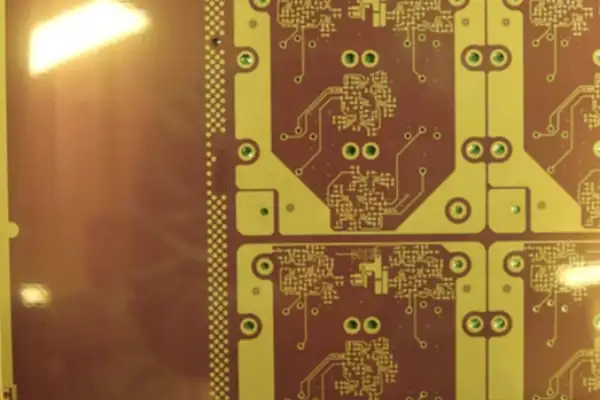
I’m always impressed by designs that use flexible circuits in the hinge of foldable screens. Ensuring tens of thousands of bends without problems within such a small space truly pushes the limits of material properties. These designs often employ multi-layered laminated structures, with the elastic modulus of each layer precisely matched, like dressing the circuit board in a custom-made “sports suit.”
The most fulfilling moment in this industry is seeing the circuit boards I helped design function stably in a product. After all, even the best theoretical analysis must ultimately be tested in real-world use. Once, after tracking a smart wearable device for two years, we disassembled and tested it, and found that the copper foil grain structure at the flexible interface remained intact. This verification is more exciting than any simulation data.
I recently chatted with a friend who works in smart wearables, and he mentioned that his team encountered many pitfalls in the Flex PCB Fab field. Many people think flexible circuits are simply about bending and twisting—that’s a simplistic view.
The real headaches lie in the unseen mechanical pitfalls. For example, in one project, sensors were attached to the elbows of athletic clothing. Testing revealed that micro-cracks appeared at fixed locations with each bend. Upon disassembly, it was discovered that while the bending area was marked, it was surrounded by a dense network of vias. This is like sewing a row of buttons along a folded seam; each bend subjectes the copper foil to unnecessary stress.
Another easily overlooked issue is the rough handling during assembly. During a factory tour, I saw workers folding flexible circuit boards like origami and stuffing them into casings—despite the designed curved bending paths. This assembly method directly caused delamination at the rigid-flex joint. They later added colored markings on the drawings to indicate the assembly angle.
The essence of flexible design lies in “going with the flow.” The most ingenious solution I’ve seen is using spiral wiring at the hinge of a smart bracelet, acting like a spring to provide buffer space for bending. This design doesn’t even require additional reinforcement materials. Many engineers today prefer high-layer counts and dense circuitry, but flexible circuits require simplification. One medical device team insisted on using an eight-layer board for their ear thermometer probe to reduce size until the samples continuously broke. Later, they switched to two thin copper layers with a hollow design, achieving better bending resistance.
What impressed me most was a team that, after improving their design, hung test samples on a robotic arm to simulate tens of thousands of bends per day. Three months later, upon inspection, the carefully designed gradient transition areas remained intact. This verification method is more convincing than any theory.
Flexible circuit design is more about finding a balance between rigidity and flexibility. Sometimes, increasing the cover film thickness by 0.1mm or changing the adhesive type can significantly alter a product’s lifespan. Experience in this field is often found in failed prototypes.
Flexible circuits are quite interesting. I’ve seen many failed smart bracelet designs—the problem often lies in the circuit board’s flexibility. Some manufacturers opt for ordinary materials to save costs, resulting in wristbands that feel uncomfortable and are prone to breakage during exercise. A truly good fitness tracker should fit the wrist like a second skin, thanks entirely to the design of its flexible circuitry.
I remember visiting the Flex PCB Fab once, where they showcased flexible circuit boards used in medical endoscopes. These boards could bend freely inside the body without affecting signal transmission. This level of precision made me realize that flexible circuitry is far more than just a “bendable circuit board.” It determines the overall user experience and reliability of the product.
Many products now claim to use flexible technology, but few truly do it well. Take a fitness tracker I recently tested, for example. It was advertised as using the latest flexible materials, but I always felt a foreign object sensation when wearing it. Upon closer inspection, I found the edges of the circuit board were very rough. This kind of attention to detail is precisely where a manufacturer’s skill is most tested.
Good flexible circuitry should be imperceptible, just like we don’t consciously feel a clothing tag. When the technology truly matures, it will blend into the background and become part of the product experience. This requires designers and manufacturers to have a deep understanding of material properties and manufacturing precision.
In fact, the applications of flexible circuits are more extensive than we imagine. Beyond common consumer electronics, their value is even more prominent in professional fields such as medical and industrial applications. For example, endoscopes requiring deep human examinations may break when bending if the circuit board is not flexible enough. In such scenarios, reliability is far more important than cost.
I think choosing a flexible circuit supplier is like finding a partner; you can’t just look at the price. Some small factories offer cheap prices, but their products cannot withstand real-world testing. It’s better to find a reliable partner from the start than to have to constantly return and repair products later, since product quality directly affects user experience and brand reputation.
I’ve seen too many designers stumble in the Flex PCB Fab stage. They always treat flexible circuit boards as variations of ordinary rigid boards—this idea is wrong from the beginning.
I remember a team making smartwatches who, in pursuit of thinness, directly attached the sensor chip to the edge of the bending area. As a result, the sample broke after less than two hundred bends. They ignored the fact that flexible boards are inherently dynamic, and every bending action tests the material’s resilience.
The key is to treat bending areas as living structures. For example, the transition zone between rigid and flexible components is often simply treated as a connection point. In reality, it requires buffer space, similar to designing expansion joints in bridges. I prefer to create component-free zones on both sides of the bend.
Material selection is also a science. Once, we tried using a new polyimide substrate instead of traditional materials, assuming the performance was equivalent, and simply replaced it. However, delamination occurred during low-temperature bending tests—the difference in thermal expansion coefficients between different materials creates unexpected stresses with temperature changes. Now, every time we change materials, we have to redo the entire bending test.
Regarding quality control, dynamic bending tests cannot simply apply standard parameters. We’ve encountered situations where the curvature of the testing equipment didn’t match the actual usage curvature—products that appeared to have passed lab tests.
The most easily overlooked aspect is contamination control. Once, an impedance anomaly was found during the final quality inspection of a medical device project.
Regarding traceability systems, I believe this is not only a regulatory requirement but also a technological guarantee.
Ultimately, flexible circuit design requires thinking outside the box. It’s more like textile engineering than electronic engineering—you have to consider the flexibility of materials, the durability of structures, and performance changes during dynamic use. (These experiences are lessons learned at great cost.)
I recently spoke with a team making smart bracelets about their Flex PCB Fab experience, which was quite interesting. They initially thought flexibility meant just bending it however you wanted, but the copper foil on their first batch of samples cracked like a spider web during bending tests. In reality, bending flexible boards isn’t as simple as you might think; you have to consider stress distribution.
For example, in the wristband part of the bracelet, they initially designed a structure with a sharp bend, but it broke after less than 5,000 folds in a 0.1mm thickness area. Later, after adjusting the bending radius from 3mm to 8mm, the lifespan quadrupled.
What many people easily overlook is that the dynamic and static applications of flexible boards are completely different. In devices like medical endoscopes that require high-frequency bending, even a local thickness increase of 0.02mm can lead to fatigue fracture. The most extreme case I’ve seen is the flexible board at the hinge of a foldable phone. Because the thermal expansion coefficients of the cover film and the substrate didn’t match, it delaminated when bent at low temperatures.
Thickness control is also a technical challenge. Once, during a factory visit, I saw them making ultra-thin single-layer boards. Even a 0.05mm thick substrate would slightly deform due to electrostatic adsorption on the conveyor belt. This subtle change would cause alignment deviations when the cover film was subsequently laminated.
In fact, flexible design is most challenging because it tests the understanding of material properties. Different manufacturers’ polyimide substrates vary greatly in flexibility; some are suitable for static bending, while others are better suited for dynamic, repeated bending. Choosing the wrong material will render even the best design useless.
Another common misconception is that thinner is always better. In reality, thickness and reliability must be balanced according to the application scenario. For example, appropriately thickening the copper foil in areas that need to support power components can actually improve durability.
Ultimately, good flexible board design is like practicing yoga—it needs sufficient flexibility while maintaining structural stability.
By the way, don’t underestimate the design of the wiring in bending areas. Lines parallel to the bending direction are generally more prone to cracking than those perpendicular to it.
I suggest clarifying a few key points before making flexible boards: How many times will this board need to be bent? What is the bending angle? What is the operating temperature range? Understanding these points will make communication with suitable Flex PCB fab manufacturers much smoother.
Some manufacturers offer bending simulation services, which are quite useful and can help identify design flaws early; it’s worth trying.
Regarding flexible circuits, I always feel that people are too obsessed with technical parameters. The laser drilling in Flex PCB fabs is indeed impressive—but I’ve seen too many projects get stuck on material selection.
Remember that medical device project last year? They insisted on using UV lasers to create micro-holes, thinking the finer the better. The result was that the substrate was too brittle and broke after only a few bends.
The essence of flexible design lies in balance, not in pursuing extreme parameters. Sometimes, mechanical drilling is more suitable for dynamic bending applications.
I especially want to remind you not to treat the cover film as a universal solution. Even the best windowing precision is useless if the bonding process is poorly controlled. I once saw an engineer using a cover film in a bending area, but the adhesive layer was too stiff, which actually accelerated fatigue fracture. Switching to a photosensitive adhesive of a specific thickness solved the problem.
In the circuit transfer stage, everyone’s talking about LDI (Liquid Disc Reflection), but traditional film, combined with proper tension control, can still produce excellent flexible circuits. The key is to understand your application scenario: is it static bending or dynamic, repeated bending? This directly affects your standards for judging precision.
What truly determines the lifespan of flexible circuits are often those seemingly insignificant details, such as the surface roughness after plasma treatment or the fluidity of the adhesive. These are the true litmus tests of a factory’s capabilities.
Ultimately, good flexible circuits should be like a dancer’s ligaments—both resilient and flexible—rather than blindly pursuing the limits of technical specifications. Sometimes, taking a step back can make the product more durable.
I recently chatted with an engineer who makes smart bracelets. He mentioned that his team encountered many difficulties when trying to make the motherboard thinner and lighter. This reminded me of my own experience when I first started working with flexible circuits. Back then, I always thought that as long as the material could be bent, it would be fine. Later, I realized that things weren’t that simple.
Once, a wearable device prototype we designed broke its circuitry after repeated bending during testing. That’s when we realized that flexibility is far more than just physical bending ability; it involves comprehensive considerations of material selection, structural design, and even the intended use case. For example, the requirements for bending resistance in circuits used in medical catheters are completely different from those in foldable phones.
Many people fall into a misconception when discussing Flex PCB Fabs: overemphasizing the flexibility of materials. What’s truly important is maintaining circuit stability in dynamic environments. I’ve seen teams choose overly flexible substrates in pursuit of extreme thinness, resulting in delamination issues during product assembly.
Another easily overlooked point is that the manufacturing process for flexible circuits needs to be treated differently from traditional rigid boards. For example, in the etching process, due to the inherent elasticity of the substrate, alignment accuracy requires a higher tolerance margin. I once visited a professional flexible board factory; their environmental control system was much stricter than that of ordinary PCB factories, controlling even temperature and humidity fluctuations within extremely small ranges.
I believe the key to the future development of flexible electronics may not lie in pursuing thinner or softer materials, but in ensuring that circuits maintain reliable operation in different configurations. Like the circuitry at the hinge of a foldable phone, it needs sufficient flexibility to adapt to opening and closing movements while maintaining absolute flatness in the unfolded state. This seemingly contradictory demand is precisely the most valuable direction for exploration in flexible technology.
Sometimes, looking at innovative cases in the industry is particularly interesting. For example, one company prints circuits directly onto textiles, eliminating the need for sewing rigid modules into smart clothing; another lab is researching stretchable conductive materials, allowing circuits to deform like skin. These attempts are expanding the boundaries of our imagination regarding the possibilities of PCB manufacturing.
However, no matter how technology develops, it ultimately comes down to the user’s actual experience. Good flexible design should be imperceptible, like how many smartwatches now hide circuitry in their straps, yet feel completely natural to the wearer. This concept of seamless integration is perhaps more meaningful than simply pursuing technical parameters.
I recently spent some time in the Flex PCB Fab and realized an interesting phenomenon—many people believe that choosing the right materials is enough to make a good product. In reality, what truly determines the quality of flexible circuit boards is often not the material itself, but the meticulous control of details during the manufacturing process.
Take polyimide, for example. While it does have excellent high-temperature resistance, the batch stability varies greatly between different manufacturers. We’ve encountered situations where the same batch of substrates exhibited drastically different performance in continuous bending tests. We later discovered that the humidity of the storage environment affected the material properties. These subtle variables are never mentioned in technical documents and can only be learned through practical production experience.
The lamination process is even more prone to pitfalls. Once, a customer requested ultra-thin double-sided boards, and we used a glue-free process for direct lamination, only to find micro-cracks in localized areas. During rework, we discovered a 0.5-degree fluctuation in the workshop’s temperature control equipment. While this is within the normal tolerance range, it’s fatal for flexible materials.
Now, we prefer a hybrid approach—using thin polyimide in areas requiring dynamic bending, and combining it with rigid reinforcement sheets for static areas. This approach transcends simply discussing materials and designs the circuit board as a system. For example, in a recent flexible circuit design for medical devices, we added localized reinforcement at the sensor location, ensuring reliability while avoiding the bulkiness caused by overall thickening.
In fact, the most easily overlooked factor is the impact of subsequent processes. Even if all previous stages are perfect, if the protective film used during final encapsulation has mismatched hardness, it can still halve the bending lifespan. These details often require cross-process collaboration to uncover, and problems simply cannot be solved by material data sheets alone.
I’ve seen too many teams spend all their energy on selection and comparison, while neglecting the manufacturing process. Anyone who has actually done mass production knows that there’s a vast difference between the parameters on the drawings and the stable results achieved in the workshop.
I’ve worked in the electronics industry for over a decade, and recently I’ve noticed a common misconception about Flex PCB Fabs: many people think flexible boards are superior to rigid boards. In reality, they are completely different.
When I first entered this field, I made the same mistake. Back then, I thought flexible circuit boards were incredibly cool and wanted to replace all my products with flexible ones. Later, after stumbling a few times in actual projects, I realized that the choice of board material depends entirely on the specific application scenario.
I remember once our team received an order for industrial control equipment. The client insisted on using flexible boards, saying it was to save space. However, the equipment developed signal interference problems after less than three months of operation. Upon disassembly, we discovered that frequent bending had caused circuit breakage. Ultimately, switching back to traditional rigid boards solved the problem. That project taught me a valuable lesson: newer material properties aren’t always better.
Now, I approach this issue much more rationally. For example, smartwatches, which need to fit snugly on the wrist, certainly require flexible circuitry; but for scenarios like server motherboards, where stability is paramount, sticking with rigid boards is more reliable.
The combination of rigid and flexible materials is indeed fascinating, but this process demands extremely high technical expertise. I’ve seen too many companies stumble in handling transition areas, resulting in either delamination and cracking or impedance abrupt changes. To achieve a successful rigid-flex combination, one must first thoroughly understand the differences in the properties of the two materials.
Ultimately, the biggest taboo in the Flex PCB Fab field is blindly following trends. I’ve seen too many engineers treat flexible boards as a panacea, often with the opposite effect. The truly important thing is to first understand the product requirements and then choose the most suitable solution.
Sometimes, the simplest solution is the most effective. Like the medical device project we did last year, the client initially insisted on using high-end flexible materials, but after repeated testing, we discovered that the improved rigid board actually better met the durability requirements of the medical device.
Now, whenever I see young engineers struggling to choose the right board material, I always suggest they first create a simple requirements matrix: What is the lifespan? What is the working environment? What is the cost budget? Once these fundamental questions are clear, the selection direction will naturally become clear.
Ultimately, both rigid and flexible boards are just tools; the key is how to use them effectively.
I’ve always felt that many people’s understanding of flexible circuit boards is somewhat off. Everyone focuses on the high-end technical parameters. What truly interests me are the seemingly ordinary yet fascinating details in the field of Flex PCB Fab.
I remember once visiting a factory and seeing workers handling rolls of flexible substrate. Under the light, the material shimmered with a special luster, like some kind of high-tech fabric. This visual impact made me suddenly realize that the charm of flexibility lies not in how many times it can be bent, but in the sense of liberation it brings to product design.
Many designers still habitually treat flexible circuits as a replacement for traditional rigid boards, which is quite a pity. The most ingenious application I’ve seen is in a medical device where the designer directly incorporated the circuitry into the device’s structural components. In this way, the circuit not only transmits signals but also provides some mechanical support. This approach breaks out of our usual understanding of circuit boards.
Manufacturing also involves many overlooked details, such as the stress changes in materials during processing. Experienced technicians can judge whether subsequent processes will encounter problems by observing the bending state of materials. This experiential knowledge is difficult to quantify with data, but it directly affects the quality of the finished product.
I think the future development direction of flexible circuits may not be to blindly pursue higher density, but rather to find more suitable application scenarios. Sometimes, excessively pursuing technical parameters can actually lose the greatest advantage of flexibility. Just like clothing, it’s not that the more high-tech the fabric, the more comfortable it is; the key is whether the occasion requires it.
Recently, I’ve noticed an interesting phenomenon: many innovations actually come from cross-industry applications, such as the combination of wearable devices and smart textiles. These fields often have a more open understanding of flexibility than the traditional electronics industry; they are less constrained by technical limitations.
Ultimately, the charm of flexible circuits lies in breaking our inherent perception of electronic products, allowing us to see that electronic products can also have a more organic and life-oriented form. This is perhaps its most promising aspect.
Many engineers focus too much on technical parameters early on and overlook
As someone who has worked in PCB outsourcing for years, I’ve found
Cramming a camera, amplifier, dual-mic array, and Wi-Fi radio into a palm-sized
- خبير في إنتاج دفعات صغيرة إلى متوسطة الحجم
- تصنيع ثنائي الفينيل متعدد الكلور عالي الدقة والتجميع الآلي
- شريك موثوق لمشاريع تصنيع المعدات الأصلية/التصنيع عند الطلب الإلكتروني
ساعات العمل: (من الإثنين إلى السبت) من الساعة 9:00 إلى الساعة 18:30
Get quote, solution or any question, Andre always here to help