

Distributed Antenna System PCB Design: PIM, Multiband Isolation and High-Frequency Laminate Selection for In-Building Coverage
Anyone in RF knows the Distributed Antenna System PCB in an in-building
I have seen far too many engineers treat Printed Circuit Board Laminates as if they were mere generic consumables. They pore over data sheets, comparing one set of parameters against another, yet they overlook the most fundamental question: In what specific environment will this board actually be operating? Parameters are static; the environment is dynamic.
Last month, a friend who works on outdoor surveillance systems reached out to vent his frustrations. The laminate he had chosen performed beautifully across every metric during laboratory testing. However, less than six months after being deployed in the field, the boards began to blister and delaminate. It turned out that the material’s moisture absorption rate had not been evaluated against the specific humidity levels of the local rainy season. Standard laboratory tests simply cannot replicate the relentless, sustained stresses of a real-world environment.
Selecting a laminate is somewhat akin to getting fitted for eyeglasses. Knowing your prescription strength isn’t enough; you must also consider how many hours a day you spend looking at a computer screen, whether you will be wearing them during physical activity, or even how the weight feels on the bridge of your nose. Some engineers obsess over achieving a high Tg (glass transition temperature) value, even when their product will never undergo manufacturing processes involving such extreme heat—a classic case of “parameter overkill.” Conversely, certain medical devices demand a level of long-term material stability far exceeding that required for communication base stations; the latter might be upgraded and replaced every three to five years, whereas the former may need to remain implanted within the human body for over a decade.
Nowadays, I place far greater emphasis on a supplier’s practical engineering capabilities than on the technical specifications listed on paper. A truly competent material supplier can tell you which specific etching solutions their laminates perform most stably in, recommend adjustments to copper foil roughness to meet specific impedance requirements, or even alert you if a particular batch of resin has a slightly different curing profile than usual, necessitating adjustments to your lamination parameters. It is this kind of expertise—hidden within the minute details—that constitutes true competitive advantage.
Recently, while assisting a new energy vehicle team with material selection, I stumbled upon a rather interesting phenomenon. Everyone seems to be rushing en masse to pursue high-frequency, high-speed materials. In reality, however, most automotive electronics simply do not require such high-end Dk/Df performance. Instead, the focus should be on a material’s dimensional stability under thermal cycling—after all, the drastic shift from sub-zero temperatures (down to -40°C) to the scorching heat of an engine bay is the norm in this field. In such scenarios, standard FR4—when subjected to specialized processing—may actually prove more reliable than expensive RF-grade laminates.
Truly excellent materials should be like air: so unobtrusive that you barely notice their existence. They neither fail you in extreme environments nor force you to pay a premium for performance capabilities you will never actually utilize. Every material selection is an exercise in the art of balance; one must not only understand the inherent limitations of the material but, more importantly, clearly define the actual requirements of one’s own product. This specific type of discerning judgment is, arguably, a hardware engineer’s most valuable asset.
I recently had a chat with several friends working in circuit design and noticed a rather interesting phenomenon: when selecting Printed Circuit Board (PCB) laminates, many engineers tend to fixate exclusively on the highest-end models available. In truth, however, the appropriate choice depends entirely on the specific application scenario.
I recall a project last year involving industrial control systems where the team insisted on using ultra-low-loss RF laminates. The result? The production cost skyrocketed to more than three times the original estimate. Later, they discovered that—given the significant temperature fluctuations in the equipment’s operating environment—the laminate’s Coefficient of Thermal Expansion (CTE) and mechanical strength actually became the project’s weakest links. Sometimes, it truly is not the case that the most expensive material is the most suitable one.
While high-frequency boards certainly demand strict Dk stability, there is simply no need for standard consumer electronics to obsess over this specific parameter. I once witnessed an engineer spend three months agonizing over how to fine-tune a Dk value to the second decimal place; ultimately, the product’s launch was delayed, allowing competitors to seize the market ahead of them.
Material selection is somewhat akin to getting fitted for prescription glasses: the key is finding the right prescription—the perfect fit. Medical devices, for instance, may require materials capable of maintaining dimensional stability under prolonged exposure to high temperatures, whereas smart home products should prioritize cost-effectiveness and manufacturability during mass production. I once disassembled a router from a well-known brand and discovered they were utilizing a modified version of standard FR4; even after undergoing continuous testing in an 85°C environment for three months, the impedance variation remained impressively within a 3% tolerance.
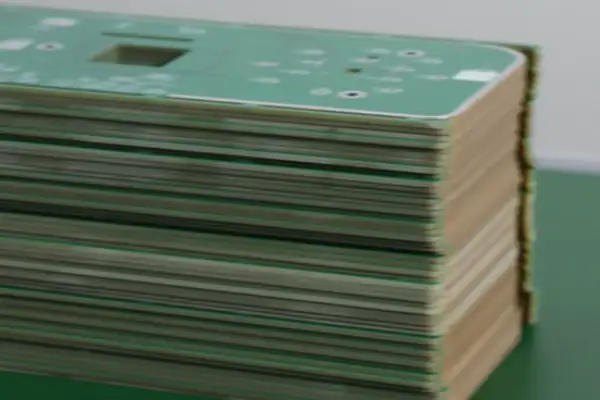
Nowadays, some engineers tend to get caught up in a “parameter arms race,” inadvertently overlooking the practical realities of the application environment. For example, while the automotive “pre-installation” (OEM) market indeed necessitates heat-resistant materials, “aftermarket” automotive accessories—such as in-car chargers—can often pass rigorous durability tests by utilizing standard TG130 laminates in conjunction with an optimized circuit design.
Ultimately, sound engineering decision-making boils down to finding the optimal balance between performance, cost, and reliability. It is much like cooking: simply piling together a collection of rare and expensive ingredients does not guarantee a delicious meal; the true secret lies in the skillful mastery of technique and the harmonious blending of flavors. While recently tidying up my studio, I stumbled upon a few old circuit boards. Gazing at their yellowed copper-clad areas, I was suddenly struck by a sense of nostalgia regarding the sheer variety of Printed Circuit Board Laminates I’ve encountered over the years. Many people might dismiss them as “just a board,” but there is actually a great deal of nuance and expertise involved.
I recall a time when I was helping a friend modify a piece of outdoor equipment. He insisted on using a standard fiberglass board; consequently, signal drift issues emerged before the rainy season had even concluded. We only resolved the problem after switching to a high-stability material—a critical detail that is often overlooked by newcomers to the field. In truth, selecting a circuit board material is much like choosing footwear: different occasions demand different characteristics. After all, you wouldn’t wear flip-flops while mountain climbing, would you?
For a time, I placed an almost blind faith in imported materials. However, I eventually discovered that the products offered by certain domestic manufacturers were actually better suited to local climatic conditions. The key lies in understanding the true significance behind UL certification; it is not merely a label, but a tangible manifestation of the standardization applied throughout the entire production process. I have encountered numerous small-scale workshops that flaunt the UL banner yet fail to even implement basic temperature control protocols effectively.
While IPC standards certainly establish essential ground rules for the industry, rigidly adhering to the rulebook can stifle innovation. It is akin to cooking: the recipe serves as the foundation, but a truly skilled chef knows how to adjust the heat and technique based on the specific ingredients at hand. On one occasion, we experimented with blending two materials possessing distinct characteristics—a bold move that ultimately enabled us to produce a circuit board far better optimized for high-frequency applications.
Nowadays, I find it somewhat regrettable to see young engineers who reflexively copy data sheets without deeper thought. Material performance is not a multiple-choice question; rather, it presents a complex problem requiring careful consideration in the context of specific applications. For instance, while both industrial equipment and small home appliances may demand high-temperature resistance, their respective thermal dissipation requirements differ vastly. Such practical insights and experiences often hold far greater value than mere standard parameters.
I have recently been experimenting with plant-based materials to fabricate prototype circuit boards. Although their performance has yet to reach commercial-grade standards, the very act of such exploration is inherently fascinating. The industry requires a mindset that simultaneously respects established norms and possesses the courage to think beyond conventional frameworks—for, ultimately, all standards serve merely as tools designed to facilitate the resolution of technical challenges.
While recently reviewing various resources on circuit board design, I noticed that many people tend to oversimplify the process of selecting a laminate material. In reality, every material possesses its own unique “temperament”—characteristics that cannot be fully discerned by merely glancing at a list of technical parameters. Take Printed Circuit Board Laminates, for example: many people immediately inquire about the material’s thermal conductivity while completely overlooking the critical issue of mechanical stress that arises during the actual assembly process. On one occasion, in an effort to accelerate our schedule, our team selected a high-thermal-conductivity laminate boasting impressive specifications. However, during the surface-mount assembly process, a mismatch in the coefficients of thermal expansion caused micro-cracks to appear across the entire batch of boards.
Nowadays, some manufacturers on the market tend to tout the extreme limits of their material parameters; yet, in practical applications, one must often account for a much broader range of factors. For instance, when mixing laminates made of different materials, impedance control can become a real headache. We once worked on a project where we used specialized materials for the RF section while sticking to standard FR-4 for the general signal layers. We subsequently discovered that the dielectric constants of the two materials exhibited completely different behaviors as a function of temperature, causing high-frequency signals to become unstable in environments with significant temperature fluctuations. This kind of issue is completely invisible in a datasheet; it is something you can only truly appreciate after getting your hands dirty and performing actual debugging.
Environmentally friendly materials are indeed a growing trend, but it is crucial to remember that “halogen-free” does not equate to a universal panacea. I have seen engineers—in an effort to satisfy environmental compliance checks—blindly switch to halogen-free laminates, only to overlook the fact that these new materials often possess exceptionally high moisture absorption rates. Consequently, when deployed in humid environments, the boards would suffer from degraded insulation within less than six months of operation. Therefore, material selection must always take the final operating environment into account—for example, will the device be housed in an air-conditioned room, or will it be exposed to the elements outdoors, enduring both rain and harsh sunlight?
Sometimes, the simplest materials prove to be the most reliable. Take standard FR-4 laminates, for instance: while their specifications may not be particularly flashy, they excel in terms of stability and the maturity of their manufacturing processes. Unless there is a specific, compelling requirement, blindly chasing after high-end, exotic materials can often prove counterproductive. I recall a client who insisted on using aerospace-grade polyimide laminates for a standard consumer electronics product; the result was a threefold increase in manufacturing costs, yet the actual performance improvement was negligible.
In truth, selecting materials is akin to formulating a traditional Chinese herbal remedy—it requires a careful balance and synergy among the various components, much like the “Monarch, Minister, Assistant, and Guide” principles of herbal medicine. Simply piling together the most expensive materials does not guarantee a successful design; the critical factor is whether those materials can work together harmoniously. Nowadays, some younger engineers rely too heavily on simulation software; however, in the real world of manufacturing, it is often the minute details—such as the specific parameters of the lamination process or the storage conditions of the raw materials—that ultimately determine the success or failure of a project.
I recently chatted with several friends who work in circuit design, and I noticed a common tendency among them: they often fall victim to “parameter anxiety” when selecting laminates. It is true that the dense arrays of numbers listed in a datasheet are important, but real-world applications are almost invariably far more complex than the idealized conditions found in a laboratory setting.
Take the issue of temperature, for instance. Many people assume that simply selecting a laminate with a high Glass Transition Temperature (Tg) is enough to ensure smooth sailing—but in reality, this is a common misconception. I’ve seen quite a few cases where even materials with a high glass transition temperature (Tg) of 180°C still encountered problems. This is because, in real-world applications, temperature distribution is rarely uniform. For instance, localized hotspots surrounding power components can often far exceed the average operating temperature.
I recall a project last year involving an industrial control system; the team specifically selected a high-performance laminate, yet it still suffered from delamination when subjected to environments with significant temperature differentials. It was later discovered that the issue stemmed from a mismatch in the materials’ coefficients of thermal expansion (CTE). This experience made me realize that simply chasing a high Tg value is less effective than focusing on a material’s stability across a range of temperatures.
I’m pleased to see that some manufacturers are now starting to provide actual data from thermal cycling tests—a practice I find highly practical. After all, when a printed circuit board is in operation, it experiences dynamic temperature fluctuations rather than existing in a static, constant-temperature environment.
There is another subtle detail that is often overlooked: even among high-Tg materials, laminates from different manufacturers can vary significantly in their performance during the actual soldering process. Some materials, despite having a high nominal temperature rating, begin to develop micro-cracks after undergoing multiple reflow soldering cycles.
Consequently, I now prefer to take the entire thermal profile into consideration. Factors such as whether the device will be subjected to thermal cycling, or the humidity levels of its operating environment, all play a role in determining a laminate’s actual performance. Sometimes, a material with a moderate Tg but superior overall stability proves to be more reliable than one chosen solely for its high numerical rating.
Ultimately, selecting a board material is much like coordinating an outfit: you shouldn’t judge it based on a single metric alone, but rather consider how all the elements harmonize together. After all, the ultimate goal is to ensure the circuit board operates stably in real-world conditions—not merely to make the specifications look impressive on a datasheet, right?
Whenever I look at complex circuit board schematics, one specific detail always comes to mind: the choice of board material often determines the ultimate success or failure of an entire project. I remember once helping a friend troubleshoot a drone flight controller board; it had been built using standard FR4 material, but during high-temperature testing, the board warped so severely that it arched like a bridge. The problem was only truly resolved after we switched to a high-Tg printed circuit board laminate.
Many people assume that a circuit board laminate is nothing more than a stack of insulating layers pressed together. In reality, the lamination process is far more complex than that. I’ve seen countless people stumble over the details—for instance, assuming that sufficient heat alone guarantees a strong bond, only to find the board beginning to delaminate after just six months of use. A truly reliable laminate requires careful consideration of the materials’ thermal expansion coefficients—much like building with LEGOs, where every piece must have a consistent shrinkage rate to fit together properly. During a series of tests on laminates with varying glass transition temperatures (Tg), I discovered that when the ambient temperature exceeded the material’s Tg point, the mechanical strength of low-Tg materials would plummet precipitously, whereas high-Tg laminates remained stable. This realization drove home the point that, in environments characterized by extreme temperature fluctuations—such as automotive electronics—material selection simply cannot be based on price alone.
Nowadays, some manufacturers like to boast that their laminates can withstand extreme temperatures. However, practical experience reveals that the critical factor isn’t the laminate’s thickness, but rather the control exercised over resin flow during the lamination process. Poor flow control leaves behind microscopic voids which, over time, evolve into critical failure points. Consequently, I tend to favor suppliers who offer full transparency regarding their lamination parameters—at the very least, this allows me to trace the curing profile of every specific batch of material.
I recently experimented with a new type of thermosetting material and found that its performance in high-frequency signal transmission is indeed superior to that of traditional FR-4. However, the cost is significantly higher. While such an investment may be unnecessary for consumer electronics, it is certainly justifiable—and indeed, essential—for military or medical equipment; after all, reliability is not something you can simply leave to chance.
Ultimately, selecting a PCB laminate is much like choosing a partner: focusing solely on surface-level specifications makes it easy to fall into pitfalls. Instead, one must evaluate the material within the context of its specific application environment. Sometimes, investing a little extra time in thermal stress testing upfront proves far more cost-effective than dealing with costly rework later on.
I made a rookie mistake when designing my very first high-frequency circuit: I assumed that any run-of-the-mill FR-4 laminate would suffice. When the prototypes returned for testing, however, the signal attenuation was so severe it felt as though the signal were trying to slog its way through a swamp. It was then that I realized the Printed Circuit Board Laminate is by no means a passive, supporting player; rather, it serves as the very “soil” of the electronic world—and just as different seeds require different nutrients to thrive, different electronic circuits require different foundational materials.
Selecting a laminate is, in essence, an exercise in balancing various conflicting requirements. Do you want your signals to travel at maximum speed? High-frequency laminates do indeed feature lower dielectric constants—but they may come with a price tag that is three times higher. Are you prioritizing superior thermal dissipation? Metal-core substrates can effectively function as a built-in heatsink—but you must then account for increased tool wear during the drilling and machining processes. I recall a specific instance where I was selecting materials for an industrial control board; the client required the board to undergo rigorous thermal cycling tests ranging from -40°C to +125°C. Standard epoxy-based laminates proved as brittle as crackers at sub-zero temperatures; ultimately, we switched to a polyimide-based material. Although the cost was painfully high, it ensured that the boards wouldn’t crack when deployed in the harsh winters of Northeast China.
The thickness of the copper foil is another factor that warrants careful consideration. I have seen instances where designers blindly specified 2-ounce copper foil in a quest to accommodate high current loads, only to overlook the fact that doing so inevitably compromises etching precision. For intricate circuitry, one really needs to revert to 1-ounce copper—or even thinner—much in the same way that you wouldn’t use coarse hemp rope for embroidery. I once designed a motor driver board where the power section utilized thick copper foil while the signal section used thin foil; this kind of localized, differentiated design left the engineers at the PCB fabrication plant feeling utterly despondent.
Nowadays, whenever I see novices excitedly placing orders in response to advertisements for free PCB prototypes, I always feel compelled to remind them to pay close attention to the board material specifications. Those laminates labeled merely as “general purpose” might not even be able to withstand the eddy current losses generated during wireless charging in a mobile phone. I recently helped a friend modify a drone’s video transmission module; simply by swapping out the standard FR-4 material for a medium-Tg laminate, we reduced video latency by 15 milliseconds—a tangible improvement far more effective than simply swapping in some high-end processing chip.
A truly excellent design should be akin to mixing a cocktail: you carefully blend the laminate’s glass transition temperature (Tg), dielectric loss, and coefficient of thermal expansion to suit the specific characteristics of the circuit. After all, no one would serve Maotai liquor in a wine glass; by the same token, can the material requirements for a smartwatch’s flexible PCB really be the same as those for a server motherboard?
While tidying up my studio recently, I stumbled upon several circuit boards from different eras, which I found particularly fascinating. The boards from the 1990s had edges that had begun to curl slightly—much like the pages of a book steeped in the passage of time—whereas the smart home controller I built just last year remained as flat and pristine as the day it was made. This stark contrast compelled me to rethink what exactly we are truly striving for when selecting PCB laminates.
Many people, the moment the subject of laminates arises, immediately zero in on parameters like dielectric constant. However, I believe the first priority should be to clearly define the specific environmental conditions your circuit board will have to endure throughout its operational life. I once worked on an outdoor weather station project where I initially opted for high-end, low-loss materials; ironically, the extreme temperature fluctuations of winter caused the laminate to delaminate. When I subsequently switched to a specific grade of standard FR material, the unit ran stably for three years. Sometimes, the most expensive option is not necessarily the most suitable one.
I remember when I first started working with high-frequency circuits, my mentor pointed to a specialized laminate inside a piece of microwave equipment and remarked that this material was like building a “superhighway” for electrons. However, standard home routers have absolutely no need for such specifications; blindly chasing high performance in that context would merely double the cost. Nowadays, when I see teams incorporating high-end RF materials into products as simple as smart plugs, I can’t help but feel that they might be overcomplicating a simple problem.
While once repairing an old radio, I noticed that—despite its substrate having yellowed with age—it remained remarkably sturdy. Such durability is truly a testament to quality that leaves one feeling nostalgic. In contrast, the laminates used in some modern, low-cost consumer electronics tend to develop copper corrosion at the slightest hint of moisture; yet, simply by selecting an appropriate FR-grade specification, these issues could easily be avoided. Durability should never be the first casualty in the pursuit of cost-cutting.
I have grown increasingly fond of examining the cross-sections of laminates produced by different manufacturers. High-quality materials exhibit a uniform distribution of glass fibers, resembling the intricate patterns of marble; inferior products, conversely, are often riddled with trapped air bubbles or impurities. These microscopic structural differences directly impact long-term stability—though, regrettably, many people fail to realize the critical importance of laminate selection until their products begin to fail en masse.
Recently, while helping a friend modify a drone flight controller board, I experimented with a hybrid approach: utilizing high-performance laminates for the core processing unit, while employing standard FR-grade materials for the peripheral interface circuitry. This strategy effectively balances cost control with the preservation of critical signal integrity—a far more pragmatic solution than simply adopting expensive materials across the entire board. A truly skilled engineer, much like a talented chef, understands the importance of selecting the right ingredients for each specific stage of the process.
The true test of a laminate’s mettle lies in its performance under extreme environmental conditions. I once handled a batch of automotive electronics deployed in Xinjiang; subjected to the region’s drastic diurnal temperature fluctuations, the standard materials used initially began to develop cracks within just six months. The issue was ultimately resolved only after we switched to FR-grade laminates with a high glass transition temperature (Tg). Such insights are rarely found in textbooks; only through hands-on, real-world experience does one truly come to appreciate just how critical a laminate’s thermal adaptability can be.
It always strikes me as a missed opportunity whenever I see novices selecting materials simply by blindly adhering to a manufacturer’s recommended list. Understanding the characteristics of different laminates is akin to understanding the properties of various fabrics: you choose wool for a tailored suit and polyester for athletic wear—and the same logic applies to circuit design. It is only when you truly grasp how electrical currents flow through substrates of varying compositions that your material choices become both precise and judicious.
I have encountered far too many engineers who become overly fixated on technical parameters when selecting materials. Those dense, data-filled spec sheets certainly offer a sense of security—listing dielectric constants precise to three decimal places, or specifying loss tangent values confined within a narrow tolerance range—yet, when you actually embark on a real-world project, you soon discover that these figures merely represent the baseline entry requirements.
Take, for instance, the smart wearable device our team developed just last month. The client initially insisted on using a specialized high-frequency laminate, given that the product incorporated Bluetooth transmission capabilities. However, I realized they had overlooked a far more critical issue: this device was designed to be bent and worn on a human wrist! Consequently, problems emerged during the testing phase: although signal transmission met the required standards, repeated bending caused cracks to appear in the copper foil near the connectors.
It is at moments like this that you truly appreciate that the elongation requirements for flexible materials specified in IPC standards are not merely arbitrary figures. We subsequently switched to polyimide-based flexible laminates; although this increased costs by 30%, it completely resolved the durability issues. Interestingly, actual testing revealed that standard FR4 material performed far better than expected at high frequencies—a success largely attributable, of course, to the PCB manufacturer’s precise control over impedance.
Nowadays, whenever I encounter a new project, I begin by asking three questions: Will this board be subjected to movement? What is its expected lifespan? And what are the consequences if it fails? For instance, a scenario involving an industrial control board housed in a climate-controlled enclosure for a decade—remaining completely stationary—is a world apart from a scenario involving a board situated under a car hood, where it must withstand extreme heat and vibration. The former can be adequately served by the most basic FR4 material, whereas the latter may require laminates featuring specialized resin systems to cope with thermal shock.
My recent experience helping a friend refurbish an old radio further validated this perspective. Upon disassembling the circuit boards—dating back to the 1970s and 80s—I discovered that while the laminate substrate had yellowed and become brittle with age, the copper traces etched onto it remained perfectly intact. While modern material science has undoubtedly advanced, have we perhaps become overly fixated on achieving theoretical performance metrics on paper? Sometimes, the simplest materials prove to be the ones that best stand the test of time.
What truly matters is understanding the fundamental requirements of the specific application scenario, rather than blindly chasing high-performance specifications. The next time you are selecting materials, consider taking a physical sample and subjecting it to some “extreme testing”: bend it, heat it up and freeze it, or even spill some coffee on it to observe the reaction. Such hands-on, rudimentary methods often provide far more intuitive insights than any technical datasheet ever could.
I have recently noticed that many people’s understanding of PCB laminates remains at a very superficial level—viewing them as nothing more than “just a board.” In reality, however, these materials are far more fascinating than you might imagine.
Take, for instance, the vintage radio I disassembled last week: although the circuit board inside had yellowed with age, its underlying laminate structure remained remarkably robust. This ability to maintain stability over the course of many years is precisely the result of the prepreg material undergoing a thorough and complete curing process during manufacturing. In the process of repairing that radio, I even took the opportunity to research the specific differences in laminate manufacturing processes across various historical eras. Nowadays, some manufacturers, in their pursuit of efficiency, tend to shorten the curing time. This is akin to turning off an oven prematurely while baking bread: the exterior may appear fully formed, but the interior remains nothing more than wet dough. I once encountered a workstation motherboard that had delaminated due to incomplete curing; applying a bit of heat with a hot-air gun would elicit a faint tearing sound—a latent defect that was utterly undetectable during the standard quality inspection phase.
A truly high-quality Printed Circuit Board (PCB) laminate should resemble a mille-feuille pastry, where every layer of material is perfectly fused together under pressure. I recall visiting a military-grade PCB manufacturing facility where quality control inspectors would randomly select finished boards to undergo thermal shock testing—subjecting them to rapid temperature cycling between -40°C and +125°C.
While researching PCB materials recently, I observed an interesting phenomenon: many people, the moment high-frequency applications are mentioned, immediately gravitate toward polyimide materials. In reality, this mindset can actually limit design possibilities. In a millimeter-wave radar project I worked on last year, the team initially insisted on using high-end polyimide substrates; however, during the testing phase, we discovered that their coefficient of thermal expansion (CTE) was poorly matched with the surrounding components, leading to the formation of micro-cracks in the solder joints. We subsequently experimented with modified epoxy resins combined with specialized fillers—a solution that not only resolved the thermal stress issues…
Certain ceramic-filled hydrocarbon materials currently available on the market are, in my opinion, significantly underrated. Their dielectric stability at high frequencies is far superior to what is commonly assumed; specifically, when operating frequencies exceed 10 GHz, the Dissipation Factor (Df) values of certain variants can remain remarkably stable at around 0.002. A common misconception is that these types of materials necessarily require specialized manufacturing processes.
Speaking of the FR-4 material series, I believe its range of applicable scenarios is much broader than traditionally perceived. Last month, a client specializing in automotive electronics—who originally intended to use metal-based substrates for a power module—took my advice to first try a high-thermal-conductivity variant of FR-4. As it turned out, prototype testing revealed that this modified FR laminate fully met their thermal dissipation requirements while costing 40% less than the metal-based alternative. Of course, achieving this requires precise calculations regarding the copper foil thickness and the thermal conductivity of the insulating layer.
Furthermore, flexible circuit designs do not necessarily have to rely exclusively on polyimide materials. I’ve observed that some engineers tend to view material selection for rigid and flexible zones in isolation; however, modern composite laminates are actually capable of achieving a seamless transition between these rigid and flexible regions. The key lies in selecting materials based on the actual bending radius and the required number of dynamic flex cycles, rather than blindly chasing high-end material specifications.
During a visit to a precision instrument manufacturing facility, I noticed that their high-frequency test fixtures were actually constructed using standard glass-fiber-reinforced epoxy laminates. The engineers there explained to me that, provided the trace impedance and dielectric thickness are properly controlled, such standard materials are entirely adequate.
These experiences have led me to realize that, when selecting PCB materials, the primary focus should be on the overall system compatibility. Sometimes, the most expensive material can actually become a bottleneck in the design process.
When it comes to selecting PCB materials, many people immediately dive into the technical data sheets; however, I believe the first question one should answer is: in what specific environment will this product actually be deployed? I’ve encountered numerous engineers working on standard consumer electronics who agonize over whether to use high-frequency materials—only to see their costs skyrocket with negligible improvement in performance.
I recall once helping a friend redesign the PCB for a small audio speaker. He insisted on using a high-performance FR-grade material, citing concerns about heat dissipation. In reality, the device’s power output was merely a few watts, making such a high-spec material completely unnecessary. We ultimately switched to a standard substrate, which nearly halved the production cost, and the device has operated flawlessly for two years without a single issue.
The selection of lamination processes is another fascinating aspect. A higher layer count does not automatically equate to a more sophisticated design; the choice must be driven by actual requirements. For simple double-sided boards, forcing a complex multilayer structure can actually introduce additional potential failure points. I personally prefer a design approach based on functional partitioning—segregating sensitive signal lines from power supply sections to handle them independently.
Nowadays, whenever high-frequency applications are mentioned, many manufacturers are quick to recommend specialized materials; yet, in many cases, simply optimizing the routing layout can resolve the majority of the issues. Unless you are specifically designing microwave equipment, there is no need to blindly pursue ultra-low-loss substrates.
Regarding thermal adaptability, I believe automotive electronics represent the ultimate test for PCB materials. They must not only withstand high temperatures but also endure rapid and extreme temperature fluctuations. Standard FR-grade materials are prone to delamination under such extreme thermal stress, making it necessary to consider specially treated laminates for these applications.
Medical equipment presents yet another distinct set of considerations. Beyond electrical performance, one must also carefully evaluate the material’s biocompatibility. I once came across a teardown of a cardiac pacemaker and noticed that the circuit board they used was completely different from the ones we typically encounter—even the soldering materials were meticulously selected.
Ultimately, choosing materials is much like picking out an outfit: it all depends on the occasion. If you were to insist on making your everyday clothes out of heavy-duty, industrial-grade fabrics—simply because they can withstand repeated washing—you would essentially just be making life unnecessarily difficult for yourself.
Anyone in RF knows the Distributed Antenna System PCB in an in-building
A trailer brake controller suddenly lurches, and after hours of checking the
A bidirectional OBC board led me into vehicle-grid interaction by accident. I
- خبير في إنتاج دفعات صغيرة إلى متوسطة الحجم
- تصنيع ثنائي الفينيل متعدد الكلور عالي الدقة والتجميع الآلي
- شريك موثوق لمشاريع تصنيع المعدات الأصلية/التصنيع عند الطلب الإلكتروني
ساعات العمل: (من الإثنين إلى السبت) من الساعة 9:00 إلى الساعة 18:30
Get quote, solution or any question, Andre always here to help