

PCB Manufacturing Standardization: Why the Best Server Cooling Controller PCB Designs Break the Rulebook on Purpose
PCB manufacturing standardization brings quality assurance and industry-wide coordination, but it also
I’ve always found the design of solar lights particularly interesting. Many people might think it’s just a simple matter of a board and some LEDs.
Last year, I saw many solar street lights malfunctioning in a coastal city. The lights looked fine during the day but wouldn’t light up at night. It turned out the problem was that the chips on the circuit board were damp. Moist air slowly seeped in, affecting the charging function and causing the entire system to fail.
The design of the circuit board is crucial for solar lights. I’ve seen some products use very basic chips to save costs, resulting in them not lasting more than six months in high-humidity environments.
While some manufacturers are now using better materials for their circuit boards, which does extend lifespan, I believe the real key is to consider the actual usage environment during the design phase, rather than just testing in a lab.
I remember a friend buying a set of solar garden lights. They worked well for a few months, but then the charging efficiency decreased significantly. Upon closer inspection, the chips inside were showing signs of corrosion.
This made me realize that the durability of solar products shouldn’t be judged solely on initial performance; it must be assessed in real-world conditions. Just like when we buy a phone, we don’t just look at the initial battery level, but rather how well it lasts after a year.
A good solar light should be able to adapt to various weather conditions, especially in rainy or coastal areas. Even the best chips are useless if the circuit board isn’t properly protected.
I admire brands that pay attention to product details; they apply special coatings to the circuit boards to ensure the chips function correctly even in humid environments.
Ultimately, solar lights aren’t disposable; their value lies in a long-term, stable user experience. When choosing solar energy products, you can’t just look at the price; you also need to consider their performance in real-world environments.
Every time I see advertisements for ultra-low-priced solar energy products, I can’t help but warn my friends to avoid being scammed. I learned this the hard way when choosing solar lights for my yard. One light, supposedly lasting five years, developed a circuit board problem after just one rainy season. Upon closer inspection, the workmanship of the Circuit Board for Solar Light was appalling; the solder joints looked like they were just hastily put on.
Many people think that solar energy devices just need to light up.
Recently, while researching solar lights, I discovered an interesting phenomenon—many people focus too much on fancy technical specifications. The core value of a good solar light circuit board lies in its ability to work stably in various harsh environments.
I remember helping a friend repair a garden light last year with a particularly typical problem. The light charged normally during the day but wouldn’t light up at night. After checking for a long time, I found that the reverse charging protection design was faulty, causing the battery to drain backwards at night. If this basic function isn’t done well, even the highest conversion efficiency is useless.
Outdoor electronic devices are most vulnerable to unexpected malfunctions. For example, during my testing, I discovered that some inexpensive Circuit Boards for Solar Light lacked even the most basic protection against surges caused by thunderstorms. A single small electrostatic discharge could paralyze the entire system, making me realize that the importance of protective design is no less than performance specifications.
I prefer product designs that prioritize safety. A good circuit should be able to handle various unexpected situations, such as accidental reverse wiring during installation. Reliable reverse connection protection can prevent the equipment from being rendered unusable on the spot. After all, solar lights are mostly installed outdoors, making maintenance particularly troublesome.
Now, when I look at products, I pay more attention to real-world usage scenarios. No matter how impressive the specifications of a circuit board are in the lab, if it can’t withstand real outdoor conditions, it’s all just theoretical. A truly good design should remain stable under various extreme conditions—this is the ultimate goal that solar lighting equipment should strive for.
I recently installed several solar lights in my yard and discovered something quite interesting—many people believe that as long as the solar panel is large enough, it guarantees lighting performance. In fact, the key to how long a light lasts lies in that small circuit board.
Last week, my neighbor’s solar light broke down right after the warranty expired. Upon inspection, the battery was bulging. He was using a brand-name solar panel, but the accompanying circuit board lacked any temperature compensation function. In the midday sun during summer, the charging voltage spiked too high, damaging the battery. This phenomenon is particularly common in systems lacking temperature management, because the chemical reaction in lithium-ion batteries accelerates at high temperatures, leading to increased internal pressure and expansion. High-quality circuit boards monitor the temperature in real time using thermistors. When the panel temperature exceeds 45°C, they automatically reduce the charging current, effectively preventing battery overheating.
Currently, solar light circuit boards on the market are incredibly varied, with some even cutting corners on basic protection functions. I prefer boards with intelligent adjustment that automatically adjust the charging voltage based on ambient temperature, ensuring a full charge in winter and preventing overcharging in summer. This design is particularly useful for extending battery life, especially in areas with frequent temperature fluctuations. For example, in high-altitude areas with large day-night temperature differences, intelligent circuit boards can use pulse charging at night (below freezing) to prevent battery crystallization, while switching to trickle charging mode during the hottest afternoon hours. Some high-end models also feature MPPT (Maximum Power Point Tracking) technology, which optimizes the energy harvesting efficiency of solar panels in real time, much like a sunflower tracking the sun, converting up to 15% more energy than ordinary circuit boards.
Speaking of battery types, I’ve noticed many people blindly pursue high capacity while neglecting matching issues. For example, while lithium iron phosphate batteries are safe, they require precise voltage control. If the voltage output from the circuit board is unstable, even the best battery won’t withstand the strain. Nickel-metal hydride batteries are resistant to overcharging but have a high self-discharge rate, requiring the circuit board to have a periodic wake-up charging function; while ternary lithium batteries have high energy density but are sensitive to overvoltage, requiring voltage cutoff protection accurate to 0.05V. I once tested a circuit board with eight selectable battery matching modes, allowing for compatibility with batteries of different chemical systems via jumper caps.
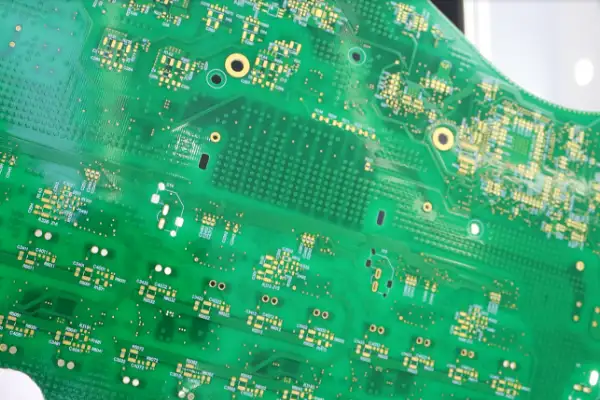
Another easily overlooked detail is the quality of the voltage regulator module on the circuit board. I disassembled two similarly priced solar lights; the more expensive one used an automotive-grade voltage regulator chip, resulting in very stable brightness at night, while the cheaper one dimmed significantly in the middle of the night due to excessive voltage fluctuations. These voltage regulator chips typically employ synchronous rectification technology, achieving a conversion efficiency of over 92%. Even when the battery voltage drops from 4.2V to 3.0V, the LED beads maintain constant current drive. Inferior voltage regulator modules, on the other hand, experience voltage drops at low voltage levels, causing visible flickering in the light.
Actually, there’s a very intuitive way to judge the quality of a circuit board: observe the light’s battery life during consecutive cloudy or rainy days. A high-quality circuit board will rationally allocate power, prioritizing basic lighting rather than wasting it on fancy features. For example, some smart models automatically turn off decorative RGB lighting, concentrating power on the main lighting unit; others use adaptive dimming algorithms to dynamically adjust brightness levels based on remaining battery power, achieving a consistent lighting effect.
I personally modified an old solar light by replacing the circuit board with one featuring balanced charging. This light has lasted for three years, and the battery is still in excellent condition with almost no reduction in its nighttime illumination time. This equalization charging technology is particularly suitable for multi-cell series connections. It eliminates the tiny 0.1V voltage difference between cells through bypass resistors, preventing the “weakest link” effect where one cell is overcharged while others are undercharged.
When purchasing solar panels, don’t just look at the specifications. Ask the seller about the circuit board details, such as overcharge protection and compatibility with different battery types. These are the real factors affecting lifespan. Request to see the circuit board’s IPC certification level. Class 2 and higher boards typically use double-sided fiberglass boards and their solder joints undergo three tests. Also, pay attention to the protection rating; an IP68-packaged circuit board won’t short-circuit even when washed with water.
Sometimes, a price difference of a few tens of dollars might be reflected in these unseen aspects, which often determine whether you’ll need repeated repairs and replacements over the next two to three years. For example, circuit boards using gold tantalum capacitors can withstand extreme temperatures from -40℃ to 125℃, while ordinary electrolytic capacitors will experience a capacity reduction of over 30% at low temperatures. These hidden differences in materials are like the turbocharger in a car engine—unseen but significantly impacting overall performance.
I recently installed a few solar lights in my yard and discovered they’re quite interesting. At first, I thought I could just buy any light, but I found there’s a lot more to it than meets the eye, especially that tiny circuit board which practically determines how long the light will last.
I remember my first light broke down in less than six months. When I took it apart, I found the problem was with the battery’s charging and discharging. Later, I talked to a knowledgeable friend and learned that the circuit board design of solar lights is crucial, especially the part that powers the LEDs. The circuit boards used in solar lights on the market are incredibly varied; some are as simple as a few components, while others are as complex as a computer motherboard.
I prefer circuit boards with multi-channel designs. They can control several LEDs simultaneously and provide very uniform brightness. I once bought a cheap light that flickered like a firefly at night, but after switching to one with a balancing circuit, it was much better. These boards also place high demands on the battery, as they need to ensure that each channel works stably and that a problem in one channel doesn’t crash the entire system.
Speaking of batteries, I think many people are too focused on capacity; battery compatibility is actually more important. Some manufacturers advertise extremely high capacities, but the circuit boards they provide often can’t handle the high charging and discharging pressures, resulting in faster battery failure. My current approach is to thoroughly understand the circuit board’s performance before choosing batteries—like choosing shoes based on your foot shape, otherwise even the most expensive shoes are useless.
Another point is heat dissipation. Don’t be fooled by the fact that solar lights only work at night; in the summer, they’re exposed to direct sunlight all day. If the circuit board for solar light doesn’t dissipate heat well, the components will age very quickly. Now, when choosing lights, I specifically check the circuit board material. Aluminum-based boards are significantly more durable than ordinary fiberglass boards, although they’re more expensive, but it saves me the trouble of future replacements and repairs.
In fact, after using them for a while, you’ll find that good solar lights don’t need too many fancy features; reliability is key. Instead of pursuing features like remote control via smartphone or automatic dimming, focus on a solid basic circuit that ensures the light can reliably and consistently illuminate throughout the winter—that’s the real requirement.
One last reminder: if you’re modifying solar lights yourself, never mix and match batteries and circuit boards from different brands. I learned this the hard way. Two components that tested fine individually caused all sorts of strange malfunctions when put together. I later discovered it was a voltage mismatch issue. For these kinds of things, sticking with the original manufacturer’s parts is the safest option.
While researching outdoor lighting recently, I discovered an interesting phenomenon: many people think choosing solar lights is all about appearance, brightness, and price. However, the most important thing to pay attention to is actually that seemingly insignificant circuit board. Last year, I installed several solar streetlights in my backyard. Initially, it was quite convenient, but problems arose after less than two months—some lights, despite being exposed to plenty of sunlight during the day, wouldn’t even stay on for half an hour at night. Upon inspection, I discovered the problem was with the circuit board’s charging management module. After replacing it with a reliable circuit board manufacturer and using batteries of the same capacity, it now lights stably all night. This made me realize that choosing the right solar streetlight board is more important than anything else.
The current market is truly chaotic. Some manufacturers, in order to lower prices, cut corners on circuit boards that lack even basic protection features, such as overcharge protection and short-circuit protection. These seemingly insignificant designs can prevent battery failure or even fires in critical situations. The most outrageous example I’ve seen is a cheap streetlight board that skipped the heat sink; the chip burned through in the summer heat. Therefore, when looking at products now, I always ask about the circuit board’s protection rating; it should at least have an IP67 waterproof and dustproof rating to withstand the changing outdoor environment. Actually, there’s a very intuitive way to judge the quality of a circuit board: observe its performance on cloudy or rainy days. A good design will intelligently adjust the brightness mode; for example, it will automatically switch to an energy-saving mode during consecutive cloudy days instead of foolishly maintaining full brightness until the battery runs out. I compared two garden lights with different circuit boards. After three days of cloudy or rainy weather, the one with the intelligent circuitry could still maintain basic lighting, while the other stopped working on the third day. This subtle difference precisely reflects the technical skill of the design team.
Speaking of supply chain issues, a friend of mine who works in engineering learned a hard lesson. Last year, they wholesaled 500 sets of solar streetlights, and 30% of them malfunctioned within three months of installation. The investigation revealed that a capacitor on the circuit board was substandard. Although saving a few cents on a single component only resulted in a significant increase in repair costs due to batch failures. Now, when purchasing, they require suppliers to provide traceability reports for key components, especially the brand information of control chips and power components.
Some might think that focusing solely on the circuit board is too meticulous, but in my experience, it’s actually the most worry-free approach. After all, isn’t the core of a solar light simply converting, storing, and releasing light energy? In this process, the circuit board acts like the brain, directing battery charging and discharging, LED dimming, and various protection mechanisms. Choosing the right board can ensure a lifespan of several years; choosing the wrong one, even with a beautiful casing, is pointless. Recently, when I helped my neighbor choose a balcony sensor light, I specifically selected a circuit board with microwave sensing functionality. It not only lights up automatically when someone approaches but also switches automatically based on ambient light, significantly reducing the false trigger rate compared to traditional infrared sensors. These tangible differences in experience have reinforced my belief that in the solar lighting field, you truly get what you pay for.
Every time I see a solar street light illuminated, I can’t help but think of that unassuming circuit board behind it. Many people think procurement is simply about comparing prices and placing orders, but those who have actually done it know that choosing the right Circuit Board for Solar Light supplier is laying the foundation for the entire project.
I’ve seen too many people spend all their energy haggling over prices, neglecting the compatibility of technical details. For example, some boards boast high efficiency, but in areas with frequent rainy weather, they simply won’t last through the winter. In this case, even the lowest unit price becomes a waste, because you’ll have to frequently replace and repair them. Good suppliers will proactively inquire about the climate characteristics of your installation environment, rather than simply pushing so-called best-selling models.
I remember once we were preparing to replace a batch of solar lights in an older community, and three suppliers were competing. Supplier A offered the lowest price, but their technical documentation was vague; Supplier B made grandiose claims but couldn’t provide any real-world examples. We ultimately chose Supplier C, even though they were a bit more expensive. Their engineers came to the site with samples for testing and even adjusted the charging management solution based on our installation angle. This kind of partner, willing to delve into the specifics of the situation, brings value far exceeding the price difference.
Many procurement decisions are now simplified to comparing numbers in tables, which is quite dangerous. The truly important things are often not on the quotation: for example, whether the supplier is willing to share component traceability information, whether the production line has aging testing capabilities, and whether the after-sales team can quickly respond to on-site issues. These soft skills are the key to determining whether a project can run smoothly for five years.
Sometimes I wonder what the essence of procurement really is. It’s probably not just about buying parts, but also about building trust through each choice. When you find a supplier who can solve technical problems with you, subsequent cooperation will snowball smoothly. After all, solar energy projects have long cycles and complex environments, requiring partners who can grow together, not one-off transactional partners.
Recently, the industry has started paying attention to carbon footprint labeling, which provides a new perspective for procurement. But I think it’s more practical than chasing labels to see if the supplier truly cares about product lifespan. A circuit board that lasts ten years is itself a major resource saving. This long-term thinking is the core of strategic procurement.
I recently noticed an interesting phenomenon while helping a friend choose a circuit board supplier for solar lights. Some manufacturers exaggerate their technical parameters, boasting about their minimum line width precision and the variety of surface treatment processes. But in reality, the cooperation is completely different.
I remember a supplier who claimed to be able to manufacture microvias smaller than 0.3mm. However, the first batch of samples ran into problems. The circuit board installed on the solar light developed charging and discharging abnormalities after only two weeks. Upon inspection, it was discovered that the solder pad design was flawed. This kind of issue should have been identified during the DFM audit stage.
Now, I value a supplier’s understanding of specific application scenarios more. For example, the circuit board for outdoor solar lights needs to withstand the thermal expansion and contraction caused by temperature differences between day and night. Simply meeting parameter standards is not enough. Once, I visited a small factory’s production line. Although the equipment wasn’t top-of-the-line, their engineers conducted aging tests on finished products in simulated environments. This pragmatic attitude is more reassuring than fancy certifications.
Customer complaint handling is also a revealing indicator. A manufacturer I cooperated with last month sent technicians to the site to analyze the issue within three days of receiving feedback and even brought back faulty samples for improvement. Conversely, some large manufacturers tend to shirk responsibility when problems arise, attributing the problem to improper installation or environmental factors.
Finding a supplier is like finding a partner. The key is whether they are willing to grow together with you. One manufacturer initially struggled even to produce high-quality metal substrates. However, they diligently improved their processes after each customer complaint. Now, their circuit boards perform exceptionally well in high-temperature and high-humidity environments.
The EU’s recent push for digital product passports made me realize that supply chain transparency will become increasingly important. Manufacturers who proactively provide material traceability records demonstrate confidence in their quality.
Ultimately, choosing a circuit board supplier shouldn’t be based solely on the numbers on the technical specifications. It’s crucial to consider their attitude towards problems and their problem-solving abilities. After all, even the most perfect specifications can’t compare to a partner who truly cares about your needs.
Sometimes, the simplest way to judge a supplier is to see if they dare to discuss their failures—be wary of manufacturers who constantly boast about their success stories.
Throughout my years working on solar lighting projects, I’ve learned one thing—choosing a circuit board supplier isn’t just about the numbers on the quote. I made a mistake early on, choosing a supplier with an extremely low price. As a result, nearly 5% of the first batch of products had problems within three months of being delivered to the customer. Do you know what that means? Fifty out of a thousand light fixtures needed to be replaced in the mountains. The travel expenses alone would have been enough to buy two more batches of supplies.
Later, I changed my approach. I started focusing on suppliers willing to share their testing data. The supplier I’m currently working with sends me aging test reports every time. Although their circuit boards are about 15% more expensive, their failure rate has remained below 0.3% over the past two years. This has saved me a lot in after-sales manpower costs.
Many hidden costs are actually in the details. For example, one supplier always used second-hand chips to lower prices. As a result, the charging efficiency of the entire batch of lights was halved on rainy days. I was overwhelmed with customer complaints. On the other hand, the supplier I’m using now, although their materials are more expensive, insists on using imported solder paste. This attention to detail has indeed extended the product’s lifespan considerably.
Recently, I’ve also been discussing the possibility of modular design with the supplier. After standardizing the solar panel and light head interfaces, future repairs will only require sending a new circuit board for the customer to replace themselves, saving even the cost of on-site service. The value generated by this long-term cooperation far exceeds the level of simply calculating a few cents in cost.
Sometimes, looking at the piles of faulty circuit boards in the warehouse, I think to myself, trying to save a little money back then has actually led to a bigger waste. Now I’d rather spend the budget on quality control upfront. After all, a good circuit board can keep solar lights burning stably in the field for years. That’s truly being responsible to the customer.
I always feel that the circuit boards for solar lights are designed too complexly. Last year, I installed a few lights in my yard, and they all broke down in less than six months. When I took them apart, the wiring inside was a dense spiderweb. Many of the functions were actually unnecessary and only increased the probability of failure.
Now, the market is full of so-called intelligent control systems, practically equipping every light with sensors and communication modules. I wonder if streetlights really need such high-end configurations? The solar lights in my neighborhood that can be networked and dimmed often malfunction due to signal problems, suddenly dimming or flickering at night, which actually affects the lighting effect.
What’s truly important is the protection function of the circuit board, especially the protection of the battery. I’ve seen too many solar lights fail prematurely due to overcharging or over-discharging. A good circuit board should act like a considerate butler, ensuring the battery functions optimally while promptly cutting off any potential hazards. I once tested a board with temperature protection; its automatic reduction of charging current in high-temperature environments was a very practical design.
Manufacturers often like to cram in features, turning simple lighting devices into smart terminals, but users are most concerned with durability and safety. I’d rather choose a simple, well-protected circuit board than those flashy but unreliable smart systems.
Some manufacturers use inferior components to cut costs, causing circuit boards to corrode quickly in humid environments. I once disassembled and repaired a light whose circuit board lacked even a basic waterproof coating; the solder joints were already green. This kind of cost-cutting is truly disappointing.
In fact, solar light technology is already quite mature. The key is to solidify the basic functions rather than blindly pursuing smart features. A reliable circuit board combined with a reasonable protection mechanism can ensure the light fixture works stably for many years—this is the true value users need.
I’ve noticed that many people are easily attracted by smart features when purchasing, but neglect the most crucial durability testing. Next time you buy solar lights, pay more attention to the circuit board’s protection rating and the quality of its components. This is far more important than those flashy but impractical internet connectivity features.
I’ve always felt that the most easily overlooked part of a solar light is that tiny circuit board. Many people only look at how bright the LEDs are and how large the battery capacity is when choosing lights, unaware that the real determinant of lighting quality is often that inconspicuous board behind it.
Last month, I helped my dad upgrade the solar lights in our yard. Originally, we installed a standard fixed-brightness model, but the neighbors always complained that it was too glaring at night. After switching to an adjustable model, the situation was completely different. The best thing about this type of board is that it can flexibly adjust the brightness according to actual needs. For example, you can use full brightness mode when it just gets dark, and automatically dim it when there are fewer people around late at night. It saves electricity and doesn’t disturb others’ rest, making it especially suitable for residential areas.
Speaking of LED selection is also quite interesting. Nowadays, solar lights on the market often use ultra-high-power LEDs in pursuit of brightness, which is completely unnecessary. I prefer lighting effects that are gentle and gradually change, as natural as moonlight. A good circuit board for solar light should be able to work with the characteristics of LEDs to provide even, non-glaring light.
I remember once visiting a friend’s guesthouse, and their yard had smart, adjustable solar lights. They automatically turned on a warm yellow light at dusk, and then reduced the brightness to 30% after 10 pm, maintaining basic lighting functionality without disturbing guests. This kind of meticulous design is key to truly enhancing the experience.
Actually, lighting is never about being as bright as possible. Especially in your own yard, what you need is just the right amount of ambient light. The biggest advantage of an adjustable circuit board is that it allows you to freely control the light according to different scenarios. You can brighten it for a small gathering one day and dim it for everyday use. This flexibility is something fixed-brightness lights can never provide.
Now, when I recommend solar lights to clients, the first question I ask is whether they need an adjustable function. After all, lighting is a very personal matter. Some people prefer bright and clear lighting, while others prefer a soft and warm glow. The ability to adjust freely is a truly thoughtful design.
Recently, while researching solar light circuit boards, I discovered an interesting phenomenon: many people are overly reliant on the magical effects of MPPT technology. In fact, for most household solar lights, a PWM controller is more practical.
I remember last year when I installed solar lights in my family’s yard, I specifically chose a product with an MPPT controller. However, I found that on cloudy or rainy days, its performance was worse than my neighbor’s cheaper PWM model. Later, after disassembling and investigating, I discovered that MPPT requires sufficient light intensity to be effective, but our area is often cloudy, and the photovoltaic panel voltage is already low, so the advantages of MPPT are not apparent.
There is a crucial detail when making solar light circuit boards—the matching degree of the charging circuit is more important than the type of controller. Some manufacturers cram in MPPT chips for marketing gimmicks, ignoring battery characteristics. For example, lead-acid batteries and lithium batteries have completely different charging curves; if not properly tuned, even the most advanced controller is useless.
I prefer a solution that uses a PWM controller paired with high-quality components. While this combination may not sound high-end, its stability is truly unparalleled. Especially when upgrading streetlights in residential areas, we tested two solutions, and the PWM version had a significantly lower failure rate. After all, the biggest problem with solar lights is frequent malfunctions.
Currently, solar light circuit boards on the market are too homogenized, with many touting MPPT technology. In many scenarios, PWM is sufficient; the key is the overall design’s rationality. Like cooking, it’s not about piling on expensive ingredients to create a delicious dish; proper combination is crucial.
Recently, when helping a friend upgrade their balcony solar lights, I specifically chose a PWM controller with temperature compensation. This design adjusts charging parameters according to ambient temperature, which is far more practical than those fancy features. Especially in the high temperatures of summer, it effectively prevents battery overcharging, extending the lifespan of the entire system.
Ultimately, choosing a solar light circuit board shouldn’t be based solely on technical jargon; it must be considered in the actual usage environment. Sometimes, the simplest solution is the most reliable—a principle that applies in many fields.
That day, while rummaging through a batch of scrapped solar garden light circuit boards in the warehouse, I suddenly realized something—most of the problems with these boards stemmed from seemingly insignificant solder joints. Especially for solar light circuit boards used in outdoor environments, they have to withstand the test of temperature fluctuations. During the day, they’re scorching hot from the sun, and at night they drop to dew point temperatures. This repeated thermal expansion and contraction causes micro-cracks, invisible to the naked eye, to slowly form at the solder joints.
I’ve seen too many products claiming IP67 certification fail within six months of use. Upon disassembly, the solder joints are covered in oxidation marks. A typical example is a lawn light I helped a friend repair last year. The circuit board itself had no design flaws, but the manufacturer, to save costs, used low-temperature solder. As a result, after continuous high temperatures in the summer, the pins of several components became loose.
Actually, there’s a very simple, rudimentary way to judge the reliability of solder joints—freeze the circuit board in a freezer at -20 degrees Celsius for two hours, then quickly bring it to room temperature. Repeating this several times simulates the effect of outdoor temperature shock. Many samples provided by suppliers perform perfectly in laboratory room temperature tests but cannot withstand this rapid temperature change test.
Now, when I discuss cooperation with suppliers, I always ask them to provide a microstructure analysis report of the solder joints. Truly experienced factories strictly control the reflow soldering temperature profile to avoid cold or poor solder joints, and they understand the importance of thorough cleaning after soldering to prevent flux residue from absorbing moisture and causing corrosion.
Sometimes I use a magnifying glass to carefully inspect every solder joint on the circuit board. Those with rough surfaces and uneven edges are often potential sources of future failures. Don’t underestimate these seemingly insignificant details; they are crucial in determining whether a solar light fixture can withstand three seasons.
Recently, I came across a Taiwanese circuit board manufacturer whose approach impressed me deeply—they randomly sample each batch of products for destructive testing, removing components from the board to observe the fracture surface of the solder joints. This meticulous approach truly ensures the product’s durability in harsh environments; after all, nobody wants a well-installed solar light to fail prematurely due to a loose solder joint.
Ultimately, when choosing a solar light circuit board, you can’t just look at the package level or price tag. The soldering quality hidden beneath the components is the key factor that truly determines the product’s lifespan.
PCB manufacturing standardization brings quality assurance and industry-wide coordination, but it also
When exploring how to evaluate PCB supplier capability for a Packaging Machine
Many people assume the key to circuit-board manufacturing is high-end equipment, but
- خبير في إنتاج دفعات صغيرة إلى متوسطة الحجم
- تصنيع ثنائي الفينيل متعدد الكلور عالي الدقة والتجميع الآلي
- شريك موثوق لمشاريع تصنيع المعدات الأصلية/التصنيع عند الطلب الإلكتروني
ساعات العمل: (من الإثنين إلى السبت) من الساعة 9:00 إلى الساعة 18:30
Get quote, solution or any question, Andre always here to help