

What Separates the Best Prototype Printed Circuit Board Manufacturers When You’re Building a Telecom Rectifier PCB
Many people assume the key to circuit-board manufacturing is high-end equipment, but
I recently discovered an interesting phenomenon—many people think that automotive electronics upgrades are simply about piling on more chips. In fact, what truly determines system stability is often the automotive PCB hidden deep within. I remember an engineer friend complaining that their team spent six months designing a domain controller, only to be stuck on a seemingly ordinary PCB. At the time, I found it unbelievable. It wasn’t until I saw firsthand the circuit boards undergoing high and low temperature cycles in the testing workshop that I understood why automotive PCB manufacturing is called the “marathon of electronic engineering.”
Modern smart cars are far removed from traditional wiring methods. Previously, each added function required a new electronic control unit, resulting in a tangled mess of wiring harnesses. Now, the domain controller approach integrates dozens of disparate functions onto a few core PCBs, presenting automotive PCB manufacturers with entirely new challenges. For example, the DC module responsible for vehicle control must handle instantaneous high currents while ensuring zero-error response. Once, during a lab visit, I saw engineers repeatedly testing a palm-sized PCB, which reportedly manages steering, braking, and power distribution simultaneously—a highly integrated design unimaginable five years ago.
Electric vehicles have even more unique PCB requirements. The battery management system’s circuit board needs to be as precise as a heart monitor, constantly monitoring the status of hundreds of cells. I’ve seen cases where a design flaw in a single via on the PCB caused the entire BMS to falsely report a fault. This precision requirement forces manufacturers to adopt special processes, such as embedding temperature-sensing circuits within the PCB layers or using ceramic substrates to withstand sudden high temperatures.
What impressed me most was the reliability testing process. Some manufacturers subject their finished PCBs to rapid switching between environments of -40°C and 125°C, simulating extreme climates from Mohe to Turpan. One sample board, after undergoing thousands of temperature cycles, developed minute delamination—this internal defect is undetectable by ordinary testing, but could cause the vehicle system to malfunction under certain conditions.
Ultimately, at this stage of automotive electronics evolution, it’s not about who has the higher computing power of their chips, but about whose PCB can operate stably for decades.
A good automotive PCB should be like an invisible guardian; you won’t feel its presence normally, but it constantly ensures the accurate transmission of every command.
This subtle, pervasive reliability is the most valuable quality of a smart car.
As autonomous driving levels increase, the complexity of future domain controllers will grow exponentially.
A single PCB might need to integrate optical communication modules, millimeter-wave radar interfaces, and AI accelerators—imagine these signals of different frequencies coexisting harmoniously within a tiny space; the layout and routing requirements would be like dancing on a pin.
However, it is precisely these seemingly tedious technical details that form the foundation of our daily safe travels.
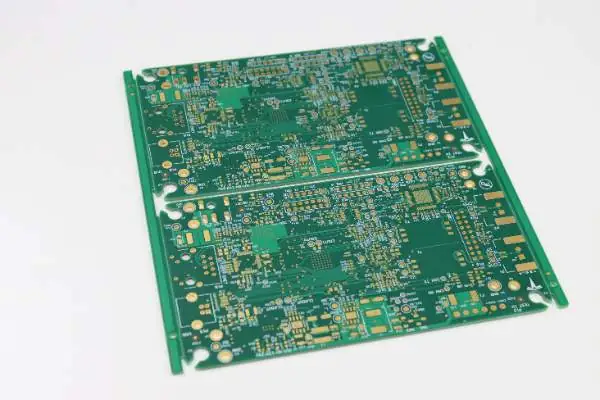
I recently chatted with a friend who works in automotive electronics and discovered that many people misunderstand automotive PCBs. People often think that automotive-grade components are simply enhanced versions of ordinary circuit boards, but in reality, the design concepts and manufacturing standards are completely different.
For example, many automotive PCB manufacturers are currently facing a common challenge: the selection of substrate materials. Traditional consumer electronics material FR-4 cannot withstand temperature differences of -40°C to 150°C, while automotive electronics may have to withstand the dual challenges of 80°C surface temperatures in Turpan during summer and -50°C in Mohe during winter. The most extreme case I’ve seen is the main control PCB of an electric vehicle. During temperature cycling testing, a mismatch in the substrate’s coefficient of thermal expansion caused the chip solder joints to crack—a problem that might not occur even once in ten years on a mobile phone motherboard.
Speaking of chip capacity is even more interesting. Modern smart cars often cram dozens of processor chips into a space smaller than a fingernail, yet the pin spacing is kept below 0.3 millimeters. The precision requirements for PCB circuitry are simply insane. One supplier complained to me that for a certain autonomous driving project, they made a 20-layer board where each layer’s dielectric thickness had to be controlled within a tolerance of 0.05 millimeters—an error range finer than a hair’s breadth. This isn’t just manufacturing circuit boards; it’s sculpting miniature works of art.
However, what surprised me most was the revolutionary change in thermal design. Previously, a single fan was enough to cool a computer CPU; now, a car PCB might simultaneously house five or six chips with power consumption exceeding 30 watts crammed into a palm-sized area. When I disassembled the electronic control unit of a hybrid vehicle recently, I discovered that they directly incorporated copper alloy inserts into specific areas of the PCB, allowing heat to flow directly through the substrate to the water-cooling system. This approach essentially treats the circuit board as an extension of the thermal management system.
In fact, observing the changes over the years reveals that automotive PCB manufacturing is diverging into two technological paths: one is towards ultra-high density, like autonomous driving domain controllers using mSAP technology to achieve near-semiconductor-level circuit precision on resin substrates; the other is towards power integration, such as motor drive boards directly using aluminum substrates, serving as both circuit carriers and heat dissipation components—a cross-disciplinary design unimaginable five years ago.
Sometimes I feel that the automotive industry’s stringent requirements for PCBs have actually driven the progress of the entire electronics manufacturing industry. Now even consumer electronics are starting to adopt automotive-grade reliability testing methods; this reverse technology spillover is quite interesting.
I recently chatted with a friend who works in automotive electronics and discovered an interesting phenomenon. Everyone is currently discussing how powerful domain controllers are, which is somewhat putting the cart before the horse. What truly determines the stable operation of these systems is the most fundamental component: the PCB. Think about it: behind those fancy intelligent driving functions are layers of circuit boards transmitting signals.
I’ve seen numerous cases where the software algorithms were beautifully written, but due to flaws in the automotive PCB manufacturing process, vehicles misjudged situations in extreme weather. A friend who does autonomous driving testing complained to me that their imported HDI boards experienced worse signal attenuation than domestically produced ones in -20°C conditions. This made me realize that not all high-end products are suitable for real-world road conditions.
The biggest challenge facing automotive PCB manufacturers now isn’t catching up in technology, but rather how to achieve fundamental reliability. Some manufacturers, in their rush to secure orders, relentlessly drive down prices, resulting in substrates with substandard thermal expansion coefficients. Hidden problems like micro-cracks appearing at solder joints after tens of thousands of kilometers are far harder to detect than software bugs.
In fact, the most crucial breakthrough now is in material compatibility. For example, the PCB for an electric vehicle motor controller must withstand high-frequency vibrations while rapidly dissipating heat from power devices. Simply stacking more layers isn’t enough; everything from copper foil roughness to dielectric layer thickness needs to be re-matched. I’ve seen manufacturers use ordinary FR4 material for 48V systems, and after three years, the insulation resistance dropped by 30%.
The concept of domain controllers has been hyped so much that it’s made people overlook the value of area control. Just like a building can’t rely solely on a main distribution box; each floor needs its own sub-control unit. Those local circuit boards distributed in the car doors and roof are the ones that truly withstand the test; they must accommodate various sensors and actuators within confined spaces.
Recently, I visited a company’s production line. They used a carrier-like PCB process for their six-layer boards for braking systems. Although the cost is higher, it ensures that the braking signal transmission delay is below microseconds—this precision is the safety baseline. In contrast, some projects that advertise ultra-high-layer boards stumbled on the reliability of basic through-holes.
I think what the industry lacks most right now is a scenario-based verification mindset. Impressive lab data is no match for actual 100,000 kilometers of driving. I’ve seen manufacturers directly install industrial-grade PCBs into cars, only to find blistering solder mask after a trip to Xinjiang. The biggest taboo in automotive electronics is applying consumer electronics thinking to cars.
Ultimately, a PCB is like the neural network of a car. A powerful central processing unit isn’t enough; every component must be robust. Next time you see a manufacturer advertising a 20-layer HDI board, ask if their test reports include vibration spectrum data from gravel roads and salt spray corrosion data.
I recently chatted with a friend who works in the automotive parts industry and discovered that many people’s understanding of automotive circuit boards is still limited to “just a green board.” In reality, the intricacies are far more complex than imagined. Automakers now have incredibly stringent requirements for circuit boards; after all, they’re crucial to vehicle safety, and no one dares to be careless.
I remember visiting a factory that supplies new energy vehicles last year. Their workshop had over twenty testing processes alone. An experienced worker pointed to the circuitry under a microscope and told me that the line width precision requirements for automotive PCBs are now even higher than for mobile phones. If the circuit board of the camera module gets damp and short-circuits while driving in the rain, the entire driver assistance system could be paralyzed. This kind of quality control hidden in the details is where the real difference lies.
Some emerging electric vehicle manufacturers, in an effort to accelerate production, are partnering with consumer electronics PCB manufacturers to switch to automotive orders. However, compatibility issues frequently arise during implementation. For example, the window control module of a popular electric vehicle had an exceptionally high return rate in the first three months, later discovered to be due to insufficient temperature resistance of the circuit board, making it prone to deformation after exposure to summer sun. Traditional automotive PCB manufacturers have an advantage in this area; they even design different board formulations for different installation locations.
I’ve noticed a particular phenomenon: leading domestic PCB companies have been transitioning to the automotive sector in the past two years, but their approaches are completely different. Some are acquiring specialized factories to quickly acquire technology, while others are choosing to co-build laboratories with automakers, getting involved from the design stage. The latter, although requiring a larger investment, results in significantly stronger partnerships. Last week, a German brand announced its 800V platform project, with the core circuit board supplier being the same company that began joint development three years ago.
However, what surprised me most is that even circuit boards are now affecting the pace of vehicle model updates. A new model originally planned for release this year by a certain domestic high-end brand was forced to be delayed due to low yield rates of HDI boards for the intelligent cockpit. This illustrates that the higher the level of automotive electronics, the more critical the technological barriers of basic components become. PCB manufacturers that can simultaneously achieve reliability, cost, and production efficiency will undoubtedly become highly sought-after by automakers in the next five years.
It’s quite interesting to think about. Before, when choosing a car, we looked at the engine and transmission; now we also care about who made the circuit boards. This industry is moving from behind the scenes to the forefront, and the players who truly survive will not only be able to make boards but also understand the soul of the car.
I’ve always felt that many people have a misconception about automotive circuit boards—that as long as they’re inserted into the car and work, it’s fine. Actually, it’s much more complex than that. Last year, I talked to a team that makes automotive radar about their PCB design process and discovered the difference—a problem with a regular consumer electronics board might just require a restart, but even a minor malfunction in a car can affect the safety system.
Those in the automotive PCB manufacturing industry should be aware of the unavoidable hurdle—the IATF certification system. This isn’t a simple process of filling out a form; it requires traceable records throughout the entire production chain, from raw material procurement to final testing. A factory I know upgraded its entire workshop flooring just to meet electrostatic discharge (ESD) protection standards—a standard that might not even be considered for ordinary electronic products.
Interestingly, many automotive PCB manufacturers are now treating AEC standards as a basic requirement rather than a bonus. For example, when selecting a capacitor, they not only consider its temperature range but also its performance curve under severe vibration. One supplier showed me their test report—components from the same batch showed performance differences of up to 30% under simulated bumpy conditions—something unheard of in consumer electronics.
A recent case impressed me even more: a new energy vehicle manufacturer required a copper block to be embedded inside the PCB beneath the main control chip to aid in heat dissipation. This design requires precise calculation of the coefficient of thermal expansion; otherwise, the solder joints might crack after hundreds of thermal cycles. Ordinary PCBs might last three to five years without problems, but automotive circuit boards must remain stable for ten years.
What strikes me most is the evolution of the industry’s definition of “collaboration.” In the past, PCB designers and structural engineers often worked in shifts; now, they need to collaborate on simulating actual operating conditions from the initial sketch stage. I once saw a team spend three months repeatedly adjusting the layout of a motor drive board just to ensure the heat dissipation path avoided the areas of the chassis most prone to water accumulation. This kind of meticulous attention to detail is the essence of automotive-grade manufacturing.
Ultimately, the rigor of the automotive industry is forcing the entire PCB supply chain to upgrade. When a circuit board needs to simultaneously meet the requirements of starting at -40 degrees Celsius and maintaining stability under high-temperature traffic jams, solutions once considered “over-designed” have become standard. This change isn’t just happening with large suppliers; even small and medium-sized PCB factories are proactively introducing vibration testing benches and aging test chambers—after all, no one wants to lose an order from a car manufacturer because of a problem with a single board.
I recently chatted with a friend who works in automotive electronics and discovered an interesting phenomenon. Many people now think of digital twin technology as too magical. In reality, it’s like giving each circuit board a virtual twin. I’ve seen them testing PCB boards for new car models in the workshop. Engineers don’t wait for physical production to test. They directly simulate various extreme road conditions on the computer: the stress distribution on components under bumpy roads, the expansion coefficient of copper foil under high temperatures. This data is fed back to the design team in real time.
One case left a deep impression on me. A manufacturer discovered during trial production that the pass rate for a certain solder joint was consistently low. After repeated simulations using digital models, they finally discovered the problem was with the pressure parameter settings of the placement machine. Previously, this kind of issue might have required scrapping hundreds of boards to find the cause.
I feel that modern cars are increasingly resembling intelligent terminals on wheels. This places entirely different demands on PCB manufacturers. Previously, the focus might have been on meeting electrical performance standards. Now, they must consider seemingly peripheral issues such as electromagnetic compatibility, heat dissipation efficiency, and even vibration durability.
The most extreme test I’ve seen involved placing a chassis with its circuit boards mounted on a hydraulic platform and continuously jolting it for 72 hours, simulating the aging process of a ten-year vehicle. This type of testing is extremely costly but absolutely necessary. After all, nobody wants their car’s autonomous driving system to suddenly malfunction due to a faulty circuit board.
Interestingly, this test data can, in turn, optimize manufacturing processes. For example, if it’s discovered that a certain type of capacitor is prone to cold solder joints at low temperatures, temperature monitoring points will be added to the hot air leveling process on the production line.
This closed-loop feedback reminds me of biological evolution. Digital twin technology is like equipping manufacturing with a gene sequencer.
I’ve seen many people emphasize extreme environment test data when discussing automotive circuit boards. What I find truly interesting is the industry’s delicate balance in material selection—ensuring performance without driving up costs too much.
I recall observing an interesting phenomenon during a visit to an automotive PCB manufacturing plant: the same design drawings produced by different manufacturers resulted in lifespans differing by more than three times.
A detail often overlooked is that while high Tg values do offer superior heat resistance, they can become a bottleneck in high-frequency signal transmission.
Last year, our team conducted a comparative experiment and found that some mid-range Tg materials performed better than their nominal specifications, especially when dealing with sudden temperature changes.
Many engineers are currently trapped in the misconception that simply piling on the highest-grade materials guarantees a good product. However, automotive PCB manufacturing is more about playing a balancing act.
For example, one manufacturer insisted on using top-grade ceramic substrates for its in-vehicle entertainment system, resulting in mass desoldering during winter startup due to a mismatch in thermal expansion coefficients.
I believe that excellent automotive PCB manufacturers should approach their work like traditional Chinese medicine practitioners, emphasizing individualized treatment and matching different material solutions to different parts of the circuit board.
A recent new energy vehicle project I’ve been working on is quite interesting. Their battery management system PCB is actually using modified polyimide, a material originally used in the aerospace industry.
However, what the industry lacks most right now is talent with cross-disciplinary thinking skills—engineers who understand both material properties and the operational conditions of a vehicle.
I once saw a new energy vehicle brand make its main control board excessively thin and light to reduce weight, resulting in chip solder joint defects on bumpy roads—a classic case of sacrificing one thing for another.
Actually, there’s a very intuitive way to judge PCB quality: observing the change in solder joint gloss after a thermal runaway test is more accurate than looking at a test report.
I know an experienced technician who can judge the lamination process level just by touching the edges of the board. Ultimately, this industry requires accumulated practical experience.
I’ve seen many people focus excessively on fancy technical parameters when discussing automotive PCBs. The key to whether a circuit board can last ten years in a car often lies not in those high-end features. The most troublesome aspects of the projects we’ve worked on are often the seemingly basic steps.
I remember once during testing, several boards suddenly failed. After investigation, we found that a tiny current fluctuation during the electroplating process caused uneven copper layering. This kind of problem might only affect the yield rate in ordinary consumer electronics, but in the bumpy, vibration-induced temperature changes of an automotive environment, it could trigger a major problem. This made me realize the importance of finding the right automotive PCB manufacturer; they need to truly understand the unique characteristics of vehicle usage scenarios.
Many people think that automotive PCB manufacturing is simply raising industrial standards a bit higher. In reality, everything from material selection to production processes needs to be rethought. For example, ordinary PCBs may allow for certain tolerances, but in automotive electronics, the reliability of each connection point is related to the safety of the entire system. We’ve compared samples from different manufacturers; some looked impressive in terms of parameters, but delamination occurred early in temperature cycling tests.
There’s a misconception in the industry now: blindly pursuing new processes. In fact, for most automotive applications, mature and stable solutions are often more practical than cutting-edge technologies. The key is whether the manufacturer can perfect every basic step. The stability of the electroplating process and the matching of the base material—these seemingly ordinary requirements are precisely where the true skill is tested.
I prefer automotive PCB manufacturers with deep experience in traditional processes. They might not tout any cutting-edge technology, but they guarantee consistent performance from every board under different conditions. After all, cars aren’t like smartphones; users won’t tolerate frequent repairs.
Ultimately, automotive electronics requires a down-to-earth, craftsman-like spirit. Making every solder joint solid and designing every circuit rationally is more meaningful than piling on high-end parameters. This is why our team highly values manufacturers’ attention to detail; even the most basic solder mask thickness is repeatedly verified.
I’ve been pondering an interesting phenomenon lately: modern cars are increasingly resembling smartphones on wheels, and behind the scenes, supporting all of this are those unseen circuit boards. You might not have noticed, but every time you start the engine or use the autopilot function, countless PCBs are silently working. These tiny boards are like the car’s neural network, connecting various electronic devices.
A friend of mine works at a company specializing in automotive PCB manufacturing, and he’s shared many industry secrets with me. He says the reliability requirements for these products are now extremely stringent. Think about it: ordinary electronic products might break down and need a restart; but what if a circuit board in a car malfunctions? That’s no small matter. For example, at high speeds, the control board responsible for the braking system must be error-free; even a minor malfunction can lead to serious consequences. Therefore, automotive-grade PCBs undergo rigorous environmental testing, including simulations of extreme conditions such as high temperature and humidity, vibration, and shock, to ensure stable operation throughout the vehicle’s entire lifespan.
I remember last year when I test-drove a new energy vehicle, the salesperson emphasized how advanced their intelligent system was. I was thinking then how many sophisticated PCBs were needed to support these fancy features. From controlling the battery management system to processing sensor data, a modern intelligent car can use hundreds of PCBs, distributed across various subsystems such as the powertrain, infotainment, and body control. These circuit boards require special materials such as high-frequency FR-4 or polyimide substrates to meet different signal transmission needs.
The automotive industry’s requirements for PCBs are indeed unique. They must not only withstand extreme temperature changes but also maintain stable operation on bumpy roads. This places higher standards on manufacturing processes. Several automotive PCB manufacturers I’ve spoken with have repeatedly emphasized that their top priority is not the speed of innovation, but product consistency. For example, in soldering processes, automotive PCBs require the use of high-reliability silver-containing solder and stricter testing standards, such as X-ray inspection of each solder joint.
The automotive industry is currently undergoing a profound transformation. Previously, when buying a car, we focused on engine performance; now, more people are concerned with intelligent features. This shift directly drives the demand for high-quality PCBs. After all, even the most advanced algorithms require reliable hardware to implement. Especially with the development of vehicle-to-everything (V2X) technology, the demand for high-frequency, high-speed PCBs has surged. These circuit boards must be able to handle gigabit-level data transmission while resisting electromagnetic interference.
One trend I’ve observed is that more and more traditional PCB manufacturers are beginning to transform into automotive-grade products. This field does have high barriers to entry, but once established, it creates a strong competitive advantage. For example, achieving IATF 16949 quality system certification in the automotive industry requires significant investment in upgrading production lines and testing equipment. However, this also means stronger product pricing power and profit margins that are more than 30% higher than those for consumer electronics PCBs.
Sometimes I find it fascinating how these circuit boards hidden in every corner of a car, though unseen and intangible, undeniably determine our driving experience. The next time you enjoy automatic parking or voice control, it’s actually multi-layered HDI boards working together, using microvia technology to achieve high-density wiring, enabling real-time communication between various sensors and control units.
This industry is still rapidly evolving. As autonomous driving technology matures, higher demands are placed on PCBs. For example, microwave RF boards used for LiDAR require finer line widths, some even requiring line widths and spacings below 20 micrometers—approaching the precision levels of semiconductor manufacturing.
Ultimately, good automotive PCBs are like unsung heroes. They not only ensure complete functionality but also consider lightweight design, such as using thinner substrates to reduce overall vehicle weight. Excellent automotive PCB designs even consider thermal management solutions, optimizing heat distribution through special copper foil thicknesses and heat dissipation hole designs.
I believe that in the next few years, whoever masters more advanced automotive PCB manufacturing technology will gain an advantage in the competition for smart cars. This is no longer just a manufacturing issue; it concerns a crucial aspect of the entire automotive industry’s upgrade. Especially with the widespread adoption of domain controller architectures, the demand for system-level PCBs will increase significantly. These highly integrated circuit boards need to replace the functions of multiple traditional ECUs, posing entirely new challenges to manufacturing processes and reliability.
I recently chatted with a friend who works in automotive electronics and realized something—many people think automotive-grade PCBs are just an enhanced version of industrial-grade PCBs. That’s not the case at all.
Think about it: if a regular electronic product breaks down, you can just restart it, but if a car’s electrical system malfunctions while driving at high speed, it’s no joke. So, if manufacturers claiming to make automotive PCBs don’t treat testing like a sacred duty, I suggest you look elsewhere.
I’ve seen some small factories increase the sampling rate on their production lines to save costs, thinking that as long as most of them pass, it’s fine. This mentality is playing with fire in the automotive industry—you never know if that untested board might end up in the brake control module.
Truly reliable automotive PCB manufacturers approach testing with an almost obsessive attitude. They even deliberately expose samples to extreme environments to observe failure points, such as repeatedly immersing entire boards in ice buckets and boiling water to see when the material delaminates.
Speaking of materials, the high-frequency circuits used in autonomous driving increasingly rely on PTFE substrates. While this material does reduce signal loss, it also significantly increases the difficulty of processing. During a factory visit, I witnessed experienced workers handling PTFE sheets with the utmost care, like handling tofu, because even slight improper force can affect dielectric properties.
Furthermore, I’ve noticed an interesting phenomenon: the more complex the automotive electronic system, the more it needs to address fundamental issues, such as power supply stability. One project team spent two weeks investigating an intermittent fault, only to discover that it was simply a micro-crack developed on the solder pad of a power filter capacitor due to temperature differences.
So, while everyone is discussing how cool autonomous driving is, it’s all supported by these seemingly tedious manufacturing details. Next time you hear a PCB supplier boasting about their advanced technology, ask them how they simulate vibration testing on a rural gravel road—the answer is often more convincing than the brochures.
Many people assume the key to circuit-board manufacturing is high-end equipment, but
Every time you open up an electronic device, that iconic green circuit
Chasing perfection at the Prototype PCB Production stage can actually plant hidden
- خبير في إنتاج دفعات صغيرة إلى متوسطة الحجم
- تصنيع ثنائي الفينيل متعدد الكلور عالي الدقة والتجميع الآلي
- شريك موثوق لمشاريع تصنيع المعدات الأصلية/التصنيع عند الطلب الإلكتروني
ساعات العمل: (من الإثنين إلى السبت) من الساعة 9:00 إلى الساعة 18:30
Get quote, solution or any question, Andre always here to help