

What Documents Are Required for PCB Production: A Field Guide From Real Industrial Weighing Controller PCB Projects
Many engineers focus too much on technical parameters early on and overlook
I’ve always found the electronics manufacturing industry to be quite fascinating. In the past, people tended to fragment the process into disjointed pieces: finish the schematics, then find a vendor to fabricate the PCBs; compile a parts list, then scour the globe to source the components; and finally, find a separate facility to solder everything together. It felt a lot like renovating your own home: you had to separately hire plumbers, masons, carpenters, and so on—worrying about coordination and quality control at every single step.
I’ve interacted with numerous startup teams and small business owners. What they complain about most often isn’t actually technical hurdles or financial pressures—issues they are typically well-prepared to handle—but rather those unexpected, trivial annoyances: a critical chip suddenly going out of stock; shipping schedules from different suppliers failing to align; or receiving a batch of boards only to discover that a component was soldered in the wrong orientation. These seemingly insignificant details can often drag an entire project out for weeks on end. For instance, a global shortage of a specific Bluetooth module might force engineers to work overnight redesigning the circuit to substitute it with a slightly lower-performance—yet available—alternative. This, in turn, necessitates adjustments to the software drivers, triggering a cascade of unplanned R&D expenditures.
The situation is different now. I’ve noticed that many teams are beginning to shift toward an “all-inclusive” Turnkey PCBA service model—a system where you simply submit your design files and wait to receive the finished product. This type of service typically consolidates the entire value chain: from PCB prototyping, component procurement, and inventory management, all the way through SMT assembly and soldering, functional testing, and even final enclosure assembly. Underlying this shift is a very simple principle: when your core objective is to create excellent products, the act of “manufacturing” itself should be a seamless process, not a hindrance. It ought to function much like cloud service infrastructure in modern software development—stable, reliable, and available on demand—freeing innovators from the need to build their own “factories” from scratch.
I have a friend who develops smart home products. When they developed their first product, they followed the traditional approach—and as a result, simply coordinating materials took them two months. Later, when working on their second-generation product, they switched to a comprehensive, all-inclusive service model; it took just three weeks from the completion of the design phase to receiving a testable prototype. Their engineers were even able to utilize the time saved to iterate on two additional hardware versions, thereby optimizing antenna performance.
What was saved was not merely time and cost. More importantly, this approach enabled the entire team to focus on what truly matters: product design and user experience optimization. You no longer need to fret over supply chain fluctuations, spend your days tracking a dozen different shipping manifests, or deal with suppliers playing the blame game whenever quality issues arise. Designers can experiment more freely with complex layouts, secure in the knowledge that the manufacturing partner employs professional process engineers to conduct Design for Manufacturability (DFM) analyses, thereby mitigating risks in advance.
Of course, some might worry about the cost—wondering if bundling every stage of the process with a single company might actually end up being more expensive.
My observations suggest the exact opposite. When you consolidate your purchasing volume, you can actually secure better pricing; when the entire production workflow is executed in a single location, yield rates tend to be higher; and when problems do arise, you only need to deal with a single point of contact. The reduction in these “hidden costs” is often far more valuable than any superficial difference in unit price. For instance, the extra shipping fees, capital tied up in inventory, and labor costs associated with incoming material inspection—all consequences of fragmented procurement—can be virtually eliminated through an integrated service model. Furthermore, the risk of a full-batch recall—triggered by defects in a single production run—is drastically reduced thanks to the enhanced controllability of the overall process.
Moreover, today’s all-inclusive manufacturing services have reached a high level of maturity. They possess their own sophisticated component inventory management systems, standardized quality control protocols, and can even provide manufacturability recommendations during the design phase to help you preempt potential issues down the line. Some leading service providers even offer online platforms that allow clients to monitor project progress, material inventory levels, and test reports in real time, ensuring a high degree of transparency.
I like to think of this as the “move-in ready” experience of the electronics manufacturing world—you no longer have to fret over the minute details of construction and renovation; instead, you can simply focus on making the space as comfortable and functional as possible. The developer has already completed the basic interior finishing and installed the major appliances; all you need to bring are your personalized furniture and decorative items—or, in this context, your core creative concepts and algorithms.
For most product development teams, this is actually a very sensible choice: delegate specialized tasks to specialists, allowing you to return to your core competencies and focus on creating value where you excel. This approach is particularly effective in fields characterized by rapid product iteration—such as the Internet of Things (IoT) and wearable technology—where it can significantly shorten the “concept-to-market” cycle, thereby becoming a critical component of a company’s competitive edge.
I have long felt that many people harbor a fundamental misconception regarding the process of PCBA (Printed Circuit Board Assembly). People often treat the “do-it-yourself” mantra as gospel—procuring materials themselves, sourcing factories for surface-mount assembly—under the assumption that this grants them absolute control over the entire process while simultaneously saving a significant amount of money.
However, reality rarely plays out that way. I, myself, have learned this lesson the hard way, having taken many detours along the path.
In the past, I insisted on handling everything myself because I felt it was the only way to have peace of mind. The result? Just to track down a single obscure chip, I would have to spend hours comparing prices and contacting various distributors—all while worrying about whether the components were counterfeit or refurbished stock. Once I finally managed to gather all the materials and ship them to the factory, I would inevitably discover that a specific resistor’s package type didn’t match the design files, or that a particular batch of components was defective; a single phone call from the factory would then force me to drop everything else to resolve the issue. The time and energy costs consumed during this process far exceeded anything I had ever imagined.
Eventually, I decided to try what is known as a “turnkey” service—specifically, the turnkey PCBA model. At first, I was somewhat resistant to the idea; I felt uneasy about relinquishing control over the procurement of materials.
However, after experiencing it firsthand, I realized that the critical factor isn’t actually “control,” but rather the “attribution of responsibility.” When you unbundle every task and outsource each step to a different party, it becomes incredibly easy for finger-pointing to ensue whenever a problem arises: the factory blames the materials, the supplier blames the design, and you are left stuck in the middle—like a harried mediator—trying to sort out the mess.
The logic behind a “one-stop-shop” solution is far simpler: I deal with a single point of contact, and that entity assumes full responsibility for the final outcome.
Does that sound like it lacks technical sophistication? Quite the opposite.
In my view, the core value of this model lies not merely in “buying things on your behalf,” but in its ability to internally absorb and neutralize the uncertainties and friction costs that exist throughout the entire supply chain. Take the procurement stage, for instance. Because they handle a consistently high volume of orders over the long term, competent service providers can secure more stable—and sometimes even lower—pricing than we could through sporadic, piecemeal purchases. This isn’t merely a matter of cost; more importantly, they have access to upstream manufacturers or Tier-1 distributors. This ensures a much higher degree of assurance regarding both material quality and supply stability. I’ve personally experienced a situation where a shortage of a single, low-volume specialty chip caused an entire project to be delayed by two months—the sense of helplessness was overwhelming.
Or consider logistics. You might assume it’s just a simple matter of moving goods from Point A to Point B—nothing particularly technical or complex.
However, when you have to coordinate materials arriving from five or six different global suppliers—each with its own unique customs declaration and clearance timeline—you quickly realize just how complicated things can get. A “one-stop-shop” approach consolidates all those disparate shipments into a single, unified delivery of finished products. They handle all the intermediate steps—warehousing, sorting, and kit-completeness checks—leaving you free to simply receive a complete batch of fully tested circuit boards at the agreed-upon time. For hardware projects that require rapid iteration, this kind of seamless, friction-free experience is immensely valuable.
Consequently, my perspective on this issue has shifted completely.
I no longer obsess over questions like, “Did I manage to find the absolute cheapest price for this specific capacitor?” Instead, I ask: “Can this partner deliver a high-quality, reliable circuit board exactly when I need it, while taking full responsibility for any issues that may arise throughout the entire process?”
Ultimately, what is being put to the test here is the supplier’s capacity for deep integration across the entire manufacturing chain, as well as the robustness of their quality control systems. What they deliver is not merely manual labor, but rather a sense of certainty and reliability. For hardware entrepreneurs or small teams, “peace of mind” is never an excuse for laziness; rather, it is a means of channeling your most precious resources—time and attention—squarely into product definition and innovation itself, rather than letting them be drained away by an endless stream of supply chain minutiae.
This, in essence, is the most profound realization I’ve gained during my transition from a “do-it-yourself-at-all-costs” mindset to one of “finding reliable experts to handle specialized tasks.”
I recently chatted with a few friends working in the hardware space, only to discover that they are still struggling to manage their own material procurement—leaving them completely overwhelmed and frazzled. To be honest, I was quite surprised. In today’s business landscape, spending your time and mental energy on sourcing materials, chasing down shipments, and reconciling inventory strikes me as a rather inefficient use of resources—a case of the costs outweighing the benefits.
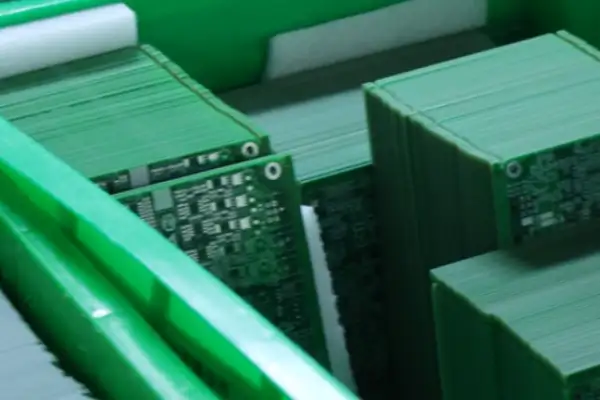
My own experiences in this regard may well diverge from the prevailing conventional wisdom. Many people view outsourcing the procurement process merely as a way to save time and effort. However, I believe its deeper value lies in the fact that it fundamentally transforms your workflow rhythm and risk structure. In the past, whenever a project kicked off, I would have to spend a week or two—sometimes even longer—scouring the market to source components and compare prices. Locating obscure chips or passive components with specific specifications often felt like searching for a needle in a haystack; even if I did manage to find a supplier, I still had to worry about the reliability of their supply channels and whether they would actually meet their delivery deadlines. The mental toll exacted by this constant uncertainty was immense.
Later, I decided to try working with “one-stop” service providers—what is commonly referred to as the “turnkey PCBA” model. My impression is that this isn’t just about offloading procurement tasks; it’s more akin to bringing in a professional partner to share the risks. Instead of having to deal with dozens of disparate suppliers, you now only need to communicate with a single point of contact. All those headaches—such as ensuring component quality consistency and supply stability—are now fully covered and guaranteed by them. This has allowed me to truly focus my mind on the circuit design itself—thinking about how to optimize performance or reduce costs—rather than spending my entire day chasing after answers to questions like, “Have the materials arrived yet?”
Speaking of cost advantages, many people assume that only large corporations can afford the luxury of a full-service solution. This couldn’t be further from the truth! For small-to-medium-sized teams or startups, your procurement volume is simply too low to secure competitive pricing on your own; if you attempt to negotiate directly, you risk getting hit with markups at every single stage of the process. Professional service providers, however, can leverage their massive, long-term purchasing volumes and integrated supply chain relationships to drive down the unit cost of components significantly. In many cases, the all-inclusive quote they provide ends up being lower than the total cost you would incur by piecing together and purchasing all the materials yourself! And that’s not even factoring in the hidden costs—such as the human resources, time, and warehouse management overhead—that you would otherwise have to invest.
Therefore, my stance is this: stop clinging to the illusion of “control.” The core value of a “one-stop” solution isn’t merely about “doing the work for you,” but rather about “professional integration.” It liberates you from non-core, high-risk, and tedious administrative tasks, allowing you to channel your limited energy into genuine innovation and product refinement. This is especially critical in today’s fast-paced environment, where product iteration cycles are incredibly rapid; launching a product just a few weeks late could easily mean missing out on a crucial market opportunity.
This model is particularly well-suited for projects characterized by high product complexity and a diverse range of required components. Attempting to manage the material kitting and completeness for hundreds of different components on your own is nothing short of a nightmare. Entrusting this task to professionals—who possess systematic processes to ensure material availability—allows for much smoother production scheduling. You will find that both the predictability and the pace of the entire project’s advancement are elevated to a whole new level.
I have always found the electronics manufacturing industry to be quite fascinating. When discussing how to collaborate most efficiently, many people tend to get bogged down in debates over which operational model is superior—as if one absolutely must identify a single “best” solution. However, having personally worked on numerous projects, I have come to realize that the reality is far less absolute; more often than not, the optimal approach depends entirely on the specific circumstances at hand.
Take the “Turnkey PCBA” model, for instance. Many people cite its greatest advantage as being the peace of mind and reduced effort it offers. This is certainly true: the factory handles the entire scope of work—from material sourcing to actual production—leaving you to simply provide your requirements. However, I have discovered a deeper benefit that is often overlooked: this model actually helps you mitigate risks stemming from your own “blind spots” in knowledge. As R&D specialists, we may be experts in circuit design, but we are not necessarily experts in the intricacies of the supply chain—such as the nuances of specific components, the subtle variations between different material batches, or even the exacting requirements for proper warehousing environments. By entrusting these responsibilities to a professional factory, you leverage the wealth of experience they have accumulated over years of operation to shield yourself from a multitude of unexpected pitfalls. For example, you might assume the market supply for a particular chip is stable, yet the factory—thanks to their industry insight—may have sensed the looming signs of a shortage months in advance.
Conversely, what happens if you choose to supply the materials yourself? Many people believe this approach offers greater cost transparency and stronger control. While it is true that, in theory, you maintain oversight of the source and price of every single component, the practical execution is an entirely different story. You would need to assemble dedicated procurement and logistics teams, negotiate with countless distributors, and grapple with a host of tedious—yet potentially critical—issues such as customs clearance, warehousing losses, and electrostatic discharge (ESD) protection. This consumes not only financial resources but, more significantly, vast amounts of time and internal management energy. I have witnessed far too many teams squander their core engineers’ valuable time chasing down materials and coordinating logistics—which, in reality, constitutes the greatest hidden cost of all.
Consequently, I now approach these matters with a much more pragmatic perspective. The “one-stop-shop” service offers far more than just a mere concatenation of a few sequential steps on the production line. It acts more like an experienced partner, utilizing a mature operational framework to liberate you from the areas where you lack expertise. You might worry that this entails losing control over your materials; however, the traceability systems provided by modern manufacturing facilities are actually far more transparent than you might imagine.
Of course, this does not mean that a “turnkey” service is the right fit for every situation. If your product volumes are massive, your material requirements are highly specialized, or your team possesses exceptional supply chain negotiation capabilities, then the calculus changes. But for most small and medium-sized enterprises—particularly those engaged in innovative projects that demand rapid iteration—the certainty and speed afforded by a “one-stop-shop” approach may well be worth far more than the marginal cost difference reflected on the balance sheet. It transforms complex supply chain challenges into a relatively straightforward delivery problem for you to manage.
Ultimately, choosing a collaboration model isn’t a black-and-white decision; rather, it is an exercise in resource allocation, tailored to your team’s specific capabilities and project objectives. Ask yourself: what is your most critical shortage? Is it time? Specialized expertise? Or is it the need for absolute cost control? Once you have a clear answer to that question, the path forward becomes much clearer.
Many people feel uneasy about outsourcing material procurement, harboring the belief that sourcing components themselves will save money or provide better quality control. However, based on my observations over the years, I’ve found that the reality is often quite the opposite.
I once encountered a startup team that decided to procure a batch of chips on their own. Unfortunately, due to inadequate storage conditions, they discovered during assembly that the pins on half of the chips had oxidized. When they approached their PCBA assembly partner with the issue, they were met with a swift and unequivocal response: “This is a defect in the materials you provided; our manufacturing process is flawless.” In the end, the startup had no choice but to accept the loss; not only did they have to purchase an entirely new batch of materials, but the entire project timeline was also delayed by a full month.
Such disputes and finger-pointing are rarely encountered when utilizing a turnkey service.
This is because, from the perspective of a turnkey PCBA provider, the entire process—from procurement to assembly—is handled end-to-end under a single umbrella. If a problem arises, they assume full responsibility, leaving absolutely no room for evasion or shifting blame.
I’d like to specifically address a point that is often overlooked: time cost. You might assume that supplying your own materials simply entails spending money to purchase components; in reality, however, it involves far more than that. You must invest time in vetting suppliers, tracking the production and logistics status of every single component, coordinating delivery schedules, and handling various unforeseen contingencies.
For instance, if a specific capacitor suddenly faces a global shortage, your procurement team has to scour the world for a suitable substitute—which then requires a complete re-validation process.
During this entire period, your engineers might be left sitting idle, waiting. In contrast, a one-stop service provider typically possesses more stable supply channels and ready-made backup plans; since this is their daily bread and butter, they can resolve such issues far more rapidly.
By entrusting the specialized work of component sourcing to them, you free up your own hands to focus on the areas that truly create value—namely, product design and marketing.
Then there is the issue of capital tie-up. Sourcing components yourself means converting your cash into a stockpile of electronic parts—which might not even be utilized for months—sitting idle in a warehouse.
Had that same capital been invested in R&D or marketing initiatives instead, the potential returns could have been vastly different. This is especially true given the rapid pace of technological iteration today; the chips you stockpile today might be superseded by newer models next year, causing your existing inventory to depreciate instantly.
Packaging these risks and headaches and handing them over to professionals to manage is, in reality, a far more intelligent approach.
Of course, I am not suggesting that this model is suitable for every single scenario. However, for the majority of companies aiming to concentrate their energy on their core competencies, the value derived from this peace of mind and labor-saving efficiency far outweighs any perceived “cost savings” they might have imagined.
I have seen far too many people oversimplify the PCBA process. They operate under the assumption that they can simply toss their schematics at a factory and—presto—everything will fall into place. In reality, nothing could be further from the truth.
Many people make the mistake of focusing solely on price right from the start—picking whichever vendor offers the lowest quote. This is, quite literally, the first step toward digging your own grave.
A friend of mine once undertook a small-batch smart hardware project and, in an attempt to save money, outsourced the PCBA work to a small-scale workshop. The result? When the boards arrived, they were riddled with cold solder joints; they couldn’t even pass basic power-on tests, let alone function as intended. The vendor then tried to dodge responsibility by claiming the design itself was flawed. After two months of back-and-forth wrangling, my friend had no choice but to scrap the entire batch and start over. Both time and money went completely down the drain. Whatever perceived “cost advantage” that initial low quote offered paled into utter insignificance when weighed against the endless stream of headaches that followed.
That is why I now place such a high premium on a partner’s integration capabilities—what is commonly referred to as the “turnkey” model. However, this entails far more than just bundling together component procurement, PCB fabrication, and assembly services for you. The true value lies in their ability to help you filter out risks right from the very outset.
For instance, is your PCB layout truly sound? Did you take into account the precision limitations and process constraints of surface-mount machines during actual production? Are the components you selected models that are nearing end-of-life in the market, or do they have unreasonably long lead times? While these details might seem trivial during the design phase, they can become formidable roadblocks once you reach the production stage.
A good partner should be able to get involved while you are still drafting your schematics—leveraging their experience to advise you on areas for optimization and identify components that may pose risks. This approach is infinitely superior to waiting until your boards have already been manufactured, only to be informed that a specific chip is currently facing a global shortage.
My current practice is to prioritize spending extra time on upfront communication to ensure all these potential issues are laid out on the table and thoroughly clarified. For example, I require my partners to provide a Design for Manufacturability (DFM) analysis report. This report systematically pinpoints potential process bottlenecks and assembly failure points within the design—even covering factors such as the potential warping coefficients of different PCB materials during high-temperature reflow soldering. This type of early intervention—grounded in both data and experience—effectively prevents costly engineering changes further down the line.
Speaking of surface-mount processes, many factories today boast about possessing fully automated production lines, which certainly sounds impressive. However, the true determinants of final product quality are factors such as the age and condition of the equipment, the proficiency of the operators, and the environmental controls within the workshop.
I have toured several factories, and the differences are stark. In some workshops, dust control is impeccable, temperature and humidity levels remain stable, and employee operations are highly standardized. In others, while the machines may be physically present, maintenance is clearly inadequate, and process parameters are configured haphazardly.
You can sense the difference immediately—you can tell at a glance which facility treats this work as their core livelihood and which merely treats it as a side business. For instance, professional factories perform regular calibrations on their surface-mount machines and use standard test boards to verify precision. Furthermore, they fine-tune their reflow temperature profiles based on the component density and solder paste type of each specific board, rather than simply applying a single, generic set of parameters across the board.
Ultimately, PCBA is not an isolated production step; its success is inextricably linked to the overall success of your product. If you choose the wrong partner, you could face consequences ranging from product recalls and damage to your brand reputation to even legal liabilities—costs that far outweigh the meager savings you might have realized on processing fees.
My advice, based on my own experience, is this: don’t just listen to what they say—pay close attention to what they actually do. Go visit their production lines, chat with their engineers about technical details, and ask them about the tricky cases they’ve handled in the past—and how they resolved them.
These genuine interactions speak volumes more than any glossy brochure ever could. You can deliberately pose questions regarding specific scenarios—for instance: “If my board features a mix of ultra-compact 01005-package components and large connectors, how does your process ensure a high soldering yield?” or “For BGA chips, what inspection methods do you employ to guarantee solder joint quality—do you perform X-ray spot checks or full inspections?” The depth and confidence evident in their responses will allow you to accurately gauge their level of professional expertise.
Finding a reliable turnkey PCBA supplier is akin to finding a true technical partner. They possess a deep understanding of both production and process engineering, enabling them to safely transform your most imaginative concepts into tangible, reliable products. This process requires trust and a period of mutual adjustment; however, once that collaborative relationship is firmly established, the road ahead becomes infinitely smoother.
When I first started getting involved in turnkey PCBA projects, I naively assumed that finding a supplier was simply a matter of price comparison—you just pick whoever offers the lowest quote. It wasn’t until I stumbled into several pitfalls myself that I fully realized just how incredibly naive that mindset was.
The biggest headache for me wasn’t the price itself, but rather the various “shenanigans” hidden within the quotation sheets. Some suppliers will present you with an incredibly low unit price for assembly—a figure that looks incredibly enticing. Yet, once you’ve signed the contract and production is underway, they’ll slowly start to drop the bombshells: “Oh, by the way, the stencil comes with a separate fee,” or “We haven’t factored in the machine setup costs yet,” or “You’ll need to commission separate testing fixtures.” When you tally up all these miscellaneous charges, the final cost ends up being significantly higher than the initial quoted total.
At that point, you’ve typically already invested a massive amount of time and energy—and your product launch timeline is likely hanging in the balance—leaving you with absolutely no room to back out.
That is why the very first thing I look for in a potential supplier now is a crystal-clear breakdown of their quotation. I want to know the cost per PCB board; the service fees (or markup margins) applied to component procurement; the pricing structure for each SMT solder joint; the labor rates for any through-hole (DIP) components; and the details of their testing strategy—specifically, whether or not it requires the creation of additional fixtures. Only after laying all these details out in the open can you truly understand the actual composition of that so-called “total price.”
I place particular value on whether or not a supplier proactively brings up the subject of DFM (Design for Manufacturability) analysis. A good supplier should be able to offer you production-related advice immediately after you submit your design files. For instance, they might point out if a specific component package is difficult to solder, suggest layout optimizations to improve manufacturing yield, or verify whether sufficient test points have been included.
If they merely provide a mechanical quote based solely on your BOM and Gerber files—and then simply pressure you to place an order—you should proceed with caution. This typically implies that their only concern is physically manufacturing the product; whether it is produced well or efficiently may not be their top priority.
Regarding the sourcing of materials, my perspective may differ slightly from the norm. Many people place a heavy emphasis on requiring official certificates of authenticity or proof of agency from the original component manufacturers.
While such documentation is undoubtedly important, I have found that truly reliable partners take the initiative to engage in thorough discussions with you regarding component selection during the early stages of the project. The market is rife with certain chips that are frequently counterfeited or suffer from highly unstable supply chains; similarly, some components may possess identical performance specifications but feature different packaging—making them suitable for manual soldering but potentially problematic for automated surface-mount assembly.
A responsible supplier will proactively identify these potential risks and discuss alternative solutions with you, rather than waiting until issues arise during the actual procurement phase to come seeking your input.
Ultimately, when selecting a turnkey PCBA supplier, you should not focus solely on the final price tag. Instead, you must evaluate their professionalism and rigor—and determine whether they are truly considering the project from your perspective—by observing their approach throughout the entire communication and quotation process. Suppliers who are willing to invest the time to clearly explain technical details to you—and even proactively suggest potential areas for optimization—are generally the ones most worthy of your trust.
After all, what we truly need is not merely a simple manufacturing plant, but a collaborative partner dedicated to helping us bring a high-quality product to fruition.
The tactic of luring clients in with rock-bottom prices only to impose various surcharges later is, at its core, an exploitation of information asymmetry. Companies with genuine capabilities demonstrate their value through their technical expertise and efficient execution, rather than through such deceptive gimmicks.
I have long felt that many people tend to overcomplicate the process of electronics manufacturing. I often find myself getting a headache whenever I encounter those lengthy evaluation checklists—listing everything from certifications and procedural protocols to traceability systems. Of course, there is no denying that these elements are indeed important.
However, my perspective differs somewhat. I believe that when searching for a reliable turnkey PCBA supplier today, the most critical factors to look for are not necessarily the certificates hanging on their walls or their impressive-sounding list of high-tech equipment.
I have, unfortunately, endured several rather frustrating collaborative experiences in the past. On one occasion, we had a particularly urgent project requiring rapid prototyping to validate a concept; yet, the vendor insisted on running it through their entire internal approval gauntlet—a process involving paperwork alone that dragged on for a whole week.
On another occasion—during the mass production phase, no less—we discovered that the supply of a critical component was extremely unstable. The vendor had previously given us their solemn assurance that there would be no issues, only to be left scrambling at the last minute to source substitutes, nearly derailing the entire project timeline.
Consequently, whenever I evaluate potential suppliers now, I start by asking a few very practical questions. For instance: “How do you typically manage your material inventory?” “Have you ever encountered sudden stock-outs?” “And how do you generally handle such situations?”
Or: “If there is a potentially flawed aspect in my design, will you strictly adhere to my schematics, or will you bring it to my attention for discussion?” The answers to these questions are often far more valuable than simply seeing how many SMT machines they own. After all, true collaboration lies in solving problems together, rather than merely executing orders mechanically.
Speaking of AI, many suppliers nowadays tout their use of “intelligent inspection” or “automation.”
However, I’ve found that very few actually utilize the technology effectively; in many cases, it’s little more than a marketing gimmick. For instance, some factories simply slap an “AI-Powered” label onto their standard Automated Optical Inspection (AOI) equipment. Yet, their algorithms haven’t been sufficiently trained on our specific board layouts and components, resulting in an astronomically high false-positive rate—which, ironically, ends up increasing the labor costs associated with manual re-inspection. True intelligence should manifest in a deep understanding of the manufacturing process and in its predictive optimization.
The most pragmatic vendor I’ve encountered used algorithms to analyze historical production data. They proactively alerted us that the soldering yield for a specific component might be lower than expected, suggesting we switch to a different package type or tweak the pad design.
This is precisely what AI should be doing—not replacing human workers, but empowering them to identify potential issues ahead of time. They even established a shared database to categorize and tag process-related risks encountered in various client designs; this way, whenever we utilize similar layouts or components from the same suppliers, we receive an early warning, allowing us to mitigate risks right at the source.
As for the overall procurement and production workflow, while transparency is undoubtedly important, I believe the smoothness of communication between both parties is even more critical.
Some suppliers boast beautifully designed systems that allow clients to monitor every single step of the production line in real-time; yet, when you actually encounter a problem that requires discussion, you can’t seem to find a single person capable of providing a prompt response.
What is the point of such transparency? It functions more as a one-way information display than as a genuine two-way collaborative interface. Ideal transparency should be accompanied by actionable touchpoints—for instance, when a workstation within the system triggers an alarm, one should be able to notify the corresponding process engineer with a single click, while simultaneously viewing their estimated resolution time and proposed solution.
I would much rather have a partner whose system isn’t necessarily cutting-edge, but who is always available to take a call and can quickly coordinate resources to resolve actual problems. For example, there was one instance where our production line suddenly ground to a halt in the middle of the night; the supplier’s project manager I contacted convened an ad-hoc meeting involving equipment, materials, and process engineers within twenty minutes. While conducting a video inspection of the site, they directed the troubleshooting efforts, and production was fully restored within two hours. In moments like these, response speed is far more critical than a flashy real-time dashboard.
Ultimately, manufacturing remains a collaborative endeavor between people; technology is merely a tool.
The suppliers most needed in today’s era are those capable of effectively leveraging these tools while simultaneously maintaining flexibility and a human touch. They understand how to carve out “green channels” for a client’s urgent needs, even if those needs fall outside standard protocols; they also know how to use their experience to fill the blind spots in data, making sound judgments in complex scenarios that algorithms simply cannot cover.
After all, the market changes so rapidly that no one can predict what new challenges might arise next month; having a partner willing to brainstorm solutions alongside you is invaluable—worth more than anything else. This kind of partnership is forged through the collaborative resolution of countless minor issues on a daily basis, ultimately cultivating a level of trust and tacit understanding that is difficult to simply replicate. This bond is far more resilient against uncertainty than any written contract or rigid system could ever be.
I have long felt that many people’s understanding of “one-stop” PCBA services is somewhat misguided. People often like to portray it as a perfect “turnkey” solution—as if you can simply hand over your design schematics and sit back waiting to receive the finished product. In reality, however, that is not the case at all. It is, in fact, a process of deep collaboration rather than a simple transfer of responsibility.
I have encountered numerous teams who assumed that by finding a so-called “turnkey PCBA” supplier, they could rest easy—only to find themselves completely stalled during product iterations due to supply issues with a critical component chip. The core value of a one-stop service provider lies in far more than just bundling together procurement, SMT assembly, and other steps for your viewing pleasure. Their true test lies in the depth of their understanding of the supply chain and their ability to effectively manage and control it. A good partner is someone who can explain why the lead time for a specific capacitor model has recently stretched to eight weeks, while a domestic alternative actually offers more stable performance; they are someone who can begin securing inventory for long-lead-time components even before your design has been fully finalized. This isn’t mere execution; it is active engagement—informed by foresight and professional expertise.
Nowadays, many startups like to emphasize low barriers to entry—”minimum order quantities starting from just a single unit” sounds very appealing, doesn’t it? Yet, lurking behind this promise is a trap: when you focus solely on the convenience of initiating production, it is all too easy to overlook the critical issue of resilience within your entire supply network. A smooth run during small-batch pilot production does not guarantee that the process will remain just as seamless when you scale up to manufacturing a thousand or ten thousand units.
The suppliers who are truly capable of solving your problems are, more often than not, themselves embedded within highly complex supply networks. They understand how to manage multi-tiered upstream distributors and original component manufacturers, and how to balance the capacity demands of various clients to effectively navigate unforeseen contingencies. This capability is not built overnight; rather, it is forged through years of navigating and battling within complex market environments.
Therefore, I believe that when selecting a one-stop service provider, the most critical factor is not the promises they make, but rather the unforeseen crises they have successfully resolved in the past. Is their supply chain sufficiently diversified and resilient? Do they have contingency plans in place should a factory in a specific region be forced to halt production due to regulatory changes or natural disasters? These are the factors that ultimately determine whether your project can be successfully delivered.
Ultimately, the term “one-stop service” should not be interpreted merely as a way to save yourself some hassle; rather, it signifies that the risks and challenges you and your partner must jointly confront have become more concentrated and specialized. You need to find a partner who can help you see the true essence of a problem—not merely an executor who simply nods and says, “Understood; will do.”
It is somewhat akin to finding a technical co-founder to build a startup together. Your objectives must be in perfect alignment: to build an exceptional product and successfully bring it to market.
This entire process is fraught with uncertainty—such as sudden surges in component prices or updates to environmental regulations. A truly professional partner will work alongside you to analyze changes in compliance requirements—such as RoHS standards—and proactively plan your material selection, rather than waiting until your products get held up at customs to finally notify you.
I have always believed that effective collaboration is a process of mutual empowerment. You provide innovative product definitions and market insights; in return, an exceptional one-stop supplier leverages their robust engineering capabilities and extensive supply network resources to bring your vision to life.
Within this relationship, the concept of “outsourcing” simply does not exist; there is only a division of labor.
When you cease to view your partner merely as a factory executing orders—and instead regard them as an indispensable intellectual partner in the realization of your product—many processes suddenly begin to flow much more smoothly. Ultimately, what you acquire is not merely a batch of circuit boards, but a comprehensive, validated, and trustworthy system capable of supporting your product’s growth over time. This is where the fundamental value of this endeavor truly lies.
Many engineers focus too much on technical parameters early on and overlook
As someone who has worked in PCB outsourcing for years, I’ve found
Cramming a camera, amplifier, dual-mic array, and Wi-Fi radio into a palm-sized
• Expert in Small-to-Medium Batch Production
• High-Precision PCB Fabrication & Automated Assembly
• Reliable Partner for OEM/ODM Electronic Projects
Business Hours: (Mon-Sat) From 9:00 To 18:30
Get quote, solution or any question, Andre always here to help