

What Documents Are Required for PCB Production: A Field Guide From Real Industrial Weighing Controller PCB Projects
Many engineers focus too much on technical parameters early on and overlook
I have encountered quite a few engineers who are just starting out in the field and harbor misconceptions regarding the double-sided PCB manufacturing process. They often assume that the true secrets to success lie hidden within the most complex and intricate procedures. In reality, however, many problems stem from issues within the most fundamental stages of the process.
Take, for instance, the seemingly simple process of electroplating. Some assume that all it requires is immersing the board in the chemical solution and applying an electric current. In practice, however, the most easily overlooked aspect of this entire process is the meticulous handling of minute details. For example, many fail to realize just how significant an impact the flow dynamics of the chemical solution have on the final outcome. This issue becomes particularly pronounced when dealing with high-density boards featuring small-diameter vias.
I recall a particularly tricky situation we once faced: during testing, a board kept exhibiting inexplicable open circuits. We eventually discovered that a minute deviation in the chemical concentration at a specific stage had caused uneven deposition on the via walls. Such issues are notoriously difficult to detect during routine inspections and often remain hidden until the final testing phase.
I have come to realize that the most critical factor in the double-sided PCB manufacturing process is maintaining stability at every single step. Sometimes, in an effort to meet tight deadlines, teams will skip certain seemingly unnecessary inspection steps—only to end up spending even more time on rework later on. This is especially true when dealing with multi-layer structures, where even a minor oversight in an earlier stage can trigger a cascading chain reaction that negatively impacts all subsequent operations.
Now, whenever I see novices getting bogged down in the complexities of various technical parameters, I always advise them to focus on building a solid foundation first. After all, even the most advanced production processes are inseparable from the precise control of every fundamental step.
Over my years of working with circuit boards, I’ve come to realize something: the manufacturing process for double-sided boards is a true test of a factory’s ability to strike a balance. One must simultaneously ensure stable electrical connectivity between both sides while keeping costs from becoming excessive; mastering this delicate equilibrium requires genuine expertise.
I recall visiting a long-established PCB factory once and watching their master technicians fine-tuning the concentration of the plating-through-hole solution; their level of focus left a deep impression on me. They explained that while the double-sided PCB manufacturing processes used today have been significantly simplified compared to a decade ago, the reliability of the core hole conductivity has actually increased. This made me realize that technological progress does not always equate to increased complexity; sometimes, it means refining key steps to achieve greater precision.
I have encountered quite a few engineers whose understanding of double-sided boards remains stuck in the era when electroless copper deposition (chemical plating) was considered the only viable method. In reality, certain specialized applications now utilize alternative methods for interlayer connections—such as riveting or silver paste filling—though these are typically better suited for small-batch prototyping. For mass production, the classic “pattern plating” route remains the most reliable choice, having been validated over decades of practice.
A common misconception is that the larger the vias (plated-through holes) on a double-sided board, the better and more reliable the conductivity will be. In practice, however, an improper ratio between hole diameter and board thickness can actually lead to voids forming during the copper plating process. We learned this the hard way; once we adjusted the hole diameter to approximately 0.8 times the board thickness, the results improved dramatically. Such details are rarely mentioned in standard technical documentation; they are lessons learned the hard way—by stumbling through the actual pitfalls of the manufacturing process.
Recently, while helping a friend debug a motor driver board, I observed an intriguing phenomenon: using the exact same circuit layout on double-sided PCBs produced by different manufacturers resulted in noise levels that differed by a factor of three or more once the boards were powered up. Upon closer inspection, we discovered the root cause lay in the solder mask process—the board exhibiting poor performance suffered from an uneven solder mask layer, which led to localized concentrations of the electric field. This goes to show that the solder mask—often viewed merely as a protective coating—can have a far greater impact on high-frequency circuits than one might initially imagine.
Looking back now, the manufacturing of double-sided PCBs appears less as a series of isolated steps and more as a comprehensive systems engineering challenge, where every single stage influences every other. For instance, the quality of the drilling determines the smoothness of the hole walls, which in turn affects the adhesion of the electroless copper plating; the effectiveness of that plating, in turn, dictates the final circuit’s current-carrying capacity. Sometimes, when a client complains about impedance instability, the issue can be traced all the way back to a specific drill bit model that was switched out six months prior. Such intricate interdependencies are difficult to truly grasp unless one has personally experienced the entire manufacturing workflow from start to finish. I believe the future direction for double-sided PCBs will likely place a greater emphasis on balancing environmental sustainability with efficiency. During a visit to a factory in southern China last year, I observed that they had already begun replacing DC plating with pulse plating. Although the equipment itself was somewhat more expensive, the cost of wastewater treatment dropped by 40%—a move that, in the long run, proves to be quite cost-effective for production. While this type of improvement may not immediately translate into a lower unit price, it is crucial for the sustainable development of the entire industry.
Ultimately, the business of manufacturing circuit boards comes down not to whose equipment is the most advanced, but rather to the depth of one’s understanding of the underlying processes. I once watched a veteran technician assess the quality of a chemical copper plating simply by shining a flashlight on it—a judgment made even faster than an automated instrument could manage. It is the value of such accumulated experience that constitutes true competitive advantage.
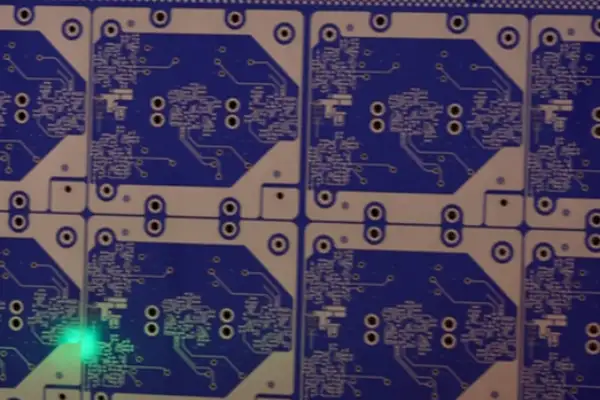
Whenever I gaze upon the intricate, densely packed circuitry of a PCB, I am reminded of the bewilderment I felt when I first encountered the process of manufacturing double-sided boards. Back then, I naively assumed that the job was done simply by routing traces on both sides; only later did I discover just how many nuances and intricacies were involved.
The manufacturing process for double-sided PCBs is actually quite fascinating—particularly the surface finishing stage. I have seen countless people agonize over which specific finishing process to choose. Some clients immediately insist on gold plating, under the impression that it signifies high-end quality; in reality, however, it is often entirely unnecessary. Even older, more traditional techniques—such as Hot Air Solder Leveling (HASL)—remain highly practical and effective today.
I recall an instance where I helped a friend design a simple controller; he adamantly insisted on using immersion gold plating, which nearly doubled the production cost. Later, I demonstrated the results achievable with HASL, showing him that the resulting solder joints were just as robust and reliable.
Speaking of OSP (Organic Solderability Preservative) finishes, I believe they are particularly well-suited for cost-sensitive projects. Although this organic protective film may sound deceptively simple…
Sometimes I find myself wondering: why do so many people today still harbor such a blind faith in expensive surface finishing techniques? It is likely a phenomenon rooted in certain ingrained preconceptions prevalent within the industry.
In truth, the aspect of double-sided PCB manufacturing that is most frequently overlooked is the initial design phase. Many people tend to focus the bulk of their energy and attention on the subsequent manufacturing processes.
I recently worked on a project that offered a perfect illustration of this point: the client initially insisted on utilizing the most expensive surface finishing method available. However, after conducting a comparative test, we discovered that a standard HASL finish was actually better suited to the specific characteristics of his product—a realization that ultimately saved him a significant portion of his budget.
Ultimately, the choice of manufacturing process for a double-sided PCB must be dictated by specific requirements. “More expensive” does not necessarily mean “better,” nor does “newer” automatically equate to “superior”; the true key lies in identifying the solution that is best aligned with the unique needs of your product.
I have long felt that many people harbor a misconception regarding the production of double-sided circuit boards—specifically, the belief that a more complex manufacturing process inherently signifies higher quality. In reality, the exact opposite is sometimes true. I recall visiting a factory once and observing their process for manufacturing double-sided PCBs; it was particularly fascinating. After completing the basic circuit fabrication, the workers proceeded directly to the surface finishing stage—rather than engaging in the repetitive electroplating typical of traditional methods. Counterintuitively, this approach actually resulted in a more stable and consistent finished product.
Speaking of surface finishing, many manufacturers today utilize the SMOBC method to treat the surfaces of solder pads, yielding excellent results. However, I’ve noticed significant variations in the specific details of this process across different manufacturers; some rely too heavily on chemical agents, which can inadvertently compromise the board’s long-term durability.
The most sound and practical approach I’ve encountered involves applying the solder mask after completing the fundamental steps of double-sided PCB fabrication, but before performing the final surface finishing. Although this requires a bit more preparation time upfront, it virtually eliminates issues with solder pad oxidation down the line—making it an ideal method for devices intended for long-term, continuous use.
A client once approached me with a circuit board in hand, puzzled as to why—despite sharing an identical design—some boards would fail after just a year of use, while others would last three to five years. Upon closer inspection, we discovered that the difference lay entirely in that seemingly simple surface finishing stage; the boards that had been processed with meticulous care featured solder pads with perfectly smooth and even edges.
Nowadays, many manufacturers cut corners by simplifying certain steps in an effort to save time or effort. However, investing a little extra effort in critical anti-oxidation treatments can actually lead to significant reductions in future repair and maintenance costs—a principle that holds true throughout the entire PCB manufacturing process.
I’ve encountered many people who hold an overly simplistic view of circuit board manufacturing. They assume that once the circuit layout is designed correctly, the rest will take care of itself. In reality, the true test of craftsmanship lies in those seemingly inconspicuous stages of the production process.
Take the manufacturing workflow for double-sided PCBs, for instance. I once witnessed firsthand a situation where an entire batch of products had to be scrapped because the solder mask application was executed improperly. This occurred at a small-scale facility where, in a rush to meet a tight deadline, the workers skipped essential quality inspection steps. Consequently, microscopic residues remained trapped between the circuit traces—acting like ticking time bombs waiting to cause a failure.
The printing stage is another area particularly prone to errors. I recall a specific supplier who constantly boasted about the advanced technology of their equipment; yet, during an on-site inspection, I discovered that their ink mixing process relied entirely on the “instinct” and tactile judgment of a veteran technician. While this might appear to be a charmingly traditional practice, it actually creates numerous hidden vulnerabilities within the manufacturing process.
Many people assume that the circuit pattern formation marks the end of the manufacturing journey. In reality, it is the subsequent processing stages that truly determine the ultimate lifespan and reliability of the circuit board. I have witnessed far too many instances where the pursuit of speed and rapid turnaround times led to a critical neglect of quality control details.
The experience that left the most lasting impression on me was a particular factory visit I undertook some time ago. They spent a fortune acquiring automated inspection equipment, yet it sits gathering dust in a corner; the workers remain accustomed to inspecting for micron-level defects with the naked eye. It goes without saying just how high the rate of missed defects must be.
In reality, the most critical factor in this industry is not the sophistication of the technology, but rather the attitude applied to every single step—even the most basic cleaning procedures deserve to be treated with the utmost seriousness.
Sometimes I wonder why finished products produced by different manufacturers—working from the exact same design schematics—can vary so drastically. I eventually realized that the difference lies in those seemingly mundane daily operations; for instance, something as simple as temperature control or the duration of a mixing cycle can significantly impact the final outcome.
Having worked in this field for so many years, I have come to increasingly appreciate that every choice made during the manufacturing process quietly shapes a product’s destiny. From material ratios to operational techniques, no single stage can be treated with carelessness.
I have always found the manufacturing process for double-sided circuit boards particularly fascinating. I remember when I first started working with circuit boards, I was constantly curious about how those intricate traces managed to appear with such precision in their exact designated locations. It was only later that I discovered the key lies in the electroplating stage—a process that effectively coats the circuit traces in a layer of sturdy protective armor.
Many people assume that manufacturing a circuit board simply involves etching away the unwanted copper. In reality, it is not quite that simple. The true challenge lies in ensuring that the specific traces intended for retention remain unscathed during the etching process. I have seen the work of many novice designers whose finished products were rendered utterly unusable simply because they overlooked this critical detail.
On one factory visit, I observed workers processing a semi-finished double-sided circuit board. They began by applying a special metallic coating over the traces that required protection; this protective layer would then hold its ground during the subsequent etching stage, ensuring that the underlying copper foil remained completely intact.
What impressed me most was the sheer precision of the entire manufacturing process. Every single step—including timing, temperature, and even the concentration of chemical solutions—requires rigorous control; the slightest deviation can compromise the final result. This is particularly true for the “vias”—the conductive through-holes connecting the two sides of the board—which must simultaneously ensure electrical conductivity and mechanical structural integrity; it is, indeed, a highly technical undertaking.
Nowadays, many manufacturers are actively optimizing traditional production methods in an effort to strike a balance between efficiency and quality. However, I believe that rather than chasing after speed, it is far more prudent to ensure that every individual stage is executed with absolute solidity—after all, the reliability of the circuit board directly determines the overall lifespan of the entire electronic device.
Watching a gleaming, pristine substrate slowly transform into a double-sided circuit board intricate with precise circuitry is, truly, a wondrous experience. Although automation is becoming increasingly prevalent today, behind those seemingly simple manufacturing steps lie numerous intricacies that are well worth careful study and contemplation.
I have observed that when discussing double-sided PCB manufacturing, many people tend to focus almost exclusively on drilling parameters. While adjustments to factors like spindle speed and feed rate are indeed important, the true determinants of success or failure are often the overlooked chemical processes. I recall visiting a factory once, where a technician pointed to a hole wall under a microscope and remarked, “Look at this electroless copper layer; it’s just like applying primer to a wall. If the primer isn’t applied evenly, no matter how thick a layer of copper you plate on top later, it will all be for nothing.”
The process of electroless copper deposition is quite fascinating. Unlike electroplating, which is driven by electric current, this method relies on chemical reactions within a solution to gradually build up a layer of copper inside the holes. During one experiment where we tested various activator formulations, we discovered that the distribution pattern of the catalytic particles directly determined the continuity of the copper layer within the holes. These micron-scale chemical reactions may appear simple on the surface, but in reality, they demand far more accumulated experience to master than merely operating a drilling machine.
Speaking of hole quality, many people get hung up on the choice of drill bit models. However, based on my observations, rather than constantly swapping out drilling tools, it is far more effective to focus one’s attention on the pre-treatment stage. The impact of board cleanliness on subsequent chemical processing is often underestimated—particularly in double-sided PCB manufacturing, where contaminants present on the board material can directly compromise the activity of the electroless copper plating solution.
A common misconception is that the smoother the hole wall, the better. In reality, a moderate degree of roughness actually enhances the adhesion of the copper layer; the key lies in utilizing chemical methods to create a uniform, micro-rough surface structure. It is much like ivy climbing a wall: if the wall surface is too smooth, the plant’s tendrils simply won’t be able to get a secure grip.
Recently, we experimented with incorporating a plasma treatment step into our standard workflow and found that it significantly improved the quality of the electroless copper deposition within the holes. However, such process adjustments necessitate a comprehensive re-validation of the entire chemical system; after all, ensuring seamless compatibility between consecutive process steps is ultimately more critical than merely optimizing a single isolated stage.
The true test of one’s process engineering expertise lies in the fabrication of blind vias. The high aspect ratios (depth-to-diameter ratios) inherent in these structures present significant challenges regarding the exchange and circulation of chemical solutions, necessitating specialized designs for oscillation frequencies and solution flow patterns. In some instances, simply extending the electroless copper deposition time can actually backfire, leading to excessive copper buildup at the hole entrance—a phenomenon known as “neck-down”—which effectively clogs the hole throat.
Ultimately, PCB manufacturing is much like cooking: simply following a recipe isn’t enough; you must truly understand the underlying chemical reactions taking place between each of the ingredients. The figures listed in technical data sheets serve merely as a reference; what truly matters is cultivating an intuitive grasp of material characteristics.
I’ve long felt that many people harbor a misconception regarding the fabrication of double-sided PCBs—specifically, the notion that the job is complete simply by routing traces on both sides. In reality, the aspects of this process that give me the biggest headaches are precisely those invisible details and nuances.
I recall an instance where I was designing a simple controller board. In an attempt to save money, I tried to route the traces as compactly as possible—a decision that inadvertently resulted in an overly complex array of drill hole types. The time the workers spent swapping drill bits ended up exceeding the actual drilling time; when the final costs were tallied, we hadn’t saved much money at all—and worse, the frequent tool changes compromised the overall manufacturing precision. I learned my lesson that day; now, whenever possible, I prioritize standardizing hole diameters rather than creating unnecessary variations.
Material selection is another fascinating aspect of the trade. Some designers immediately gravitate toward high-end materials, yet many everyday electronic products simply do not require such high-performance specifications. Having worked on numerous projects, I’ve found that standard FR-4 material is often perfectly adequate; the key lies in striking the right balance between copper thickness and board thickness. If the board is too thin, it becomes prone to warping; if it is too thick, it adds unnecessary weight and cost.
Recently, I helped a friend revise a smart home circuit board design. His original layout featured over twenty test points. When I asked him which ones were truly essential, he paused for a long moment before admitting that only five or six key points actually required verification, while the rest were included merely “just in case.” This is a classic example of “over-engineering.” We subsequently streamlined the design down to eight test points—a move that not only ensured quality but also reduced the overall testing time by one-third.
Speaking of the double-sided PCB fabrication workflow, I believe the most easily overlooked aspect is the coordination between the various processing stages. For instance, if the plating stage is not properly synchronized with the preceding processes, it can easily result in uneven plating coverage. Unlike cooking—where you can simply taste the dish to check its flavor—problems with circuit boards often remain undetected until the final testing phase; by that point, the cost of rework can be prohibitively high.
I’ve developed a habit of printing out design files before every production run and using colored pens to mark areas where potential issues might arise. This method may seem rather primitive, but it has genuinely helped me avoid numerous errors; sometimes, the simplest solutions prove to be the most effective.
In truth, the longer one works in this field, the more one realizes that so-called “technical difficulties” are less about complex theory and more about one’s ability to master the details. Hidden within the seemingly ordinary fabrication process for double-sided PCBs are countless little tricks and nuances that require accumulated experience—knowledge that simply cannot be acquired by merely reading a few technical manuals.
Having worked with double-sided PCBs for many years, I’ve observed that many people tend to overcomplicate the manufacturing process in their minds. The key, in reality, lies in understanding the interplay between each stage of the process, rather than simply rote-memorizing technical parameters. Take trace width, for instance: while established standards certainly serve a purpose, what truly determines the quality of the final product is the harmonious coordination of the entire manufacturing workflow.
I’ve encountered numerous engineers who, in their pursuit of absolute precision—down to the last 0.1mm—inadvertently cause their production yield rates to plummet. Sometimes, slightly relaxing a requirement can actually result in a much smoother and more efficient production flow. This is particularly true when a board requires specialized processing—such as the use of certain high-frequency substrate materials—where rigidly adhering to standard specifications can often prove counterproductive.
The placement of test points serves as an excellent example of this principle. Many people assume that “the more, the merrier,” but the critical factor is actually placing them in the right locations. I recall a client who insisted on arranging test points strictly according to textbook-prescribed spacing guidelines; the result was that subsequent troubleshooting and repair work became incredibly cumbersome. We later revised the layout, and although the total number of test points was reduced, the actual efficiency of the testing process improved significantly.
What strikes me most is the extent to which many young engineers today rely on design solutions automatically generated by software. I once reviewed a design where the parameters generated by the software appeared flawless on paper, yet completely failed to account for the impact of temperature fluctuations on the substrate materials during actual production. We subsequently adjusted the distribution of copper thickness in several critical areas, and the problem was resolved with ease.
Ultimately, after working in this field for a sufficient length of time, one comes to realize that a truly excellent design is not achieved by merely stacking up technical parameters, but rather by possessing a genuine, deep-seated understanding of the entire manufacturing workflow. Sometimes, a seemingly minor adjustment—such as shifting the position of a single via—can elevate the overall performance of the entire circuit board to a whole new level. This kind of experiential wisdom is something that truly must be cultivated gradually through hands-on work on actual projects.
To be more specific, the coordination of the manufacturing workflow manifests across multiple dimensions. For instance, during the etching stage, the tolerance control applied to trace widths must be carefully matched to—and compatible with—the inherent stability characteristics of the substrate material being used. When utilizing standard FR-4 materials, an excessive pursuit of extremely narrow line widths may result in uneven etching due to the limited adhesion strength of the copper foil on this substrate. Conversely, if a high-frequency-specific PTFE substrate is employed—whose stable dielectric constant permits finer circuitry—the concentration and temperature of the etching solution must be adjusted in tandem; otherwise, high-frequency signal transmission will be compromised by surface roughness. Another frequently overlooked detail is the lamination process. If the lamination pressure and duration for a double-sided board are not harmonized with the line width design, board deformation may occur, thereby compromising impedance control. For instance, I once handled a case where an engineer specified a line width of 0.1mm to enhance signal integrity; however, standard parameters were applied during lamination. Consequently, micro-cracks appeared in the board during high-temperature testing. The issue was ultimately resolved by reducing the lamination pressure by 15% and extending the curing time. This requirement for coordination dictates that designers must possess not only circuit design expertise but also an understanding of materials science and mechanical stress distribution.
Regarding specialized processing, the application of high-frequency materials further underscores the importance of flexibility. For example, high-frequency laminates such as Rogers 4350B exhibit a coefficient of thermal expansion that differs significantly from conventional FR-4; a rigid, mechanical application of standard processing parameters in such cases can lead to brittle solder joints during assembly. In practice, we often recommend incorporating buffer designs—such as tapered line widths or localized increases in copper thickness—within the board’s transition zones to help dissipate stress. Another illustrative example involves impedance-controlled boards: while software simulations may yield an theoretically ideal line-width-to-spacing ratio, actual etching deviations during production can lead to cumulative errors. In one particular project, the software-generated design theoretically achieved perfect impedance matching; however, during mass production, fluctuations in etching rates resulted in impedance deviations exceeding 10%. We subsequently resolved this issue by implementing dynamic compensation—specifically, by reserving a 0.02mm adjustment margin in critical areas—thereby boosting the yield rate from 70% to 95%. This demonstrates that standard processing parameters must be fine-tuned in conjunction with the actual capabilities and constraints of the production line.
The optimization of test points involves not merely their quantity but, more importantly, their strategic placement. An excessive number of test points increases parasitic capacitance, thereby compromising high-frequency performance—particularly when the spacing between points falls below one-tenth of the signal wavelength, a condition that can trigger signal crosstalk. I once participated in a telecommunications equipment project where the initial design placed five test points per square centimeter. Consequently, testing in the GHz frequency band revealed significant noise issues. By reducing the density to just two points—and strategically positioning them at nodes within the signal path rather than in the middle of signal traces—we not only simplified the flying-probe test paths but also cut the testing time by 20%. Furthermore, the placement of test points should take repair accessibility into account. For instance, positioning points near the board edges or within the gaps between components—thereby avoiding obstruction by large components—can significantly reduce future rework costs. A common error is to densely cluster test points beneath BGA packages; although software validation may pass, the practical difficulty of maneuvering a hot-air gun during actual repairs increases the risk of accidental damage.
The root cause of software dependency issues lies in the fact that algorithms often lack training based on actual production data. Most design software relies on idealized models that fail to account for environmental variables. Consider, for example, the impact of temperature fluctuations on copper thickness distribution: while software might model a uniform copper layer, actual production conditions—where board corners dissipate heat faster than the center—result in varying copper deposition rates and, consequently, uneven thickness. In one specific case, thermal simulations revealed that a power supply board experienced an 8% reduction in copper thickness at the corners when subjected to low-temperature environments, creating a current bottleneck. To address this, we increased the copper area in the edge regions by an additional 5%, thereby effectively balancing the thermal gradient effects. Another dimension of this issue is the software’s tendency to underestimate process margins. Take via design, for instance: algorithms often recommend the minimum permissible hole diameter without accounting for the wear-and-tear cycles of drilling tools. In practice, we typically increase the via diameter by 0.05 mm in high-density areas to accommodate tool tolerances, thereby preventing board scrap caused by broken drill bits. This type of optimization—rooted in historical production line data—is something that pure software solutions simply cannot replicate.
The core of accumulating expertise lies in cultivating cross-disciplinary insight. Consider, for example, the fine-tuning of via placement: shifting a via from directly beneath a signal trace to an adjacent lateral position—though it increases the routing length by a mere 0.1 mm—effectively reduces electromagnetic interference by preventing vertical coupling. This specific adjustment stems from repeated observations made during electromagnetic compatibility (EMC) testing. Similarly, in the ground plane design for double-sided PCBs, experience teaches us that arranging ground vias in an array pattern is more effective than distributing them uniformly, as it creates a superior shielding cavity. Such intricate details cannot be fully captured through parametric modeling, yet they directly impact the ultimate reliability of the finished product. The failures and successes encountered in every project—much like pieces of a jigsaw puzzle—gradually build a comprehensive, three-dimensional understanding of the manufacturing process.
I have always found the production process for double-sided circuit boards particularly fascinating. I remember the first time I saw those intricate traces; I couldn’t help but wonder: How on earth are these actually made? It was only after gaining more exposure to the field that I realized the most critical stage is, in fact, the one that transforms the copper foil into those precise patterns.
Many people may not realize just how many coordinated steps lie behind the seemingly simple lines found on a double-sided board. This is especially true when trace density is high; even a slight deviation can render the entire board useless.
During a factory visit once, I observed how meticulously they handled the etching stage. The operator explained to me that if the concentration and temperature of the chemical solution aren’t precisely controlled, it can result in burrs forming along the edges of the traces. They had a seasoned veteran on the team who could determine whether adjustments were needed simply by observing the color of the solution. This kind of accumulated experience is far more effective than any instruction manual.
In reality, the production of double-sided circuit boards is ultimately a test of how seamlessly the various stages are integrated. For instance, if the initial pattern transfer isn’t executed correctly, no amount of perfection in the subsequent etching stage can salvage the board. I’ve seen manufacturers cut corners on chemical usage to save costs, only to produce boards that fail to meet the required design specifications.
Currently, some manufacturers are experimenting with new chemical formulations said to offer better control over the issue of “lateral etching” (undercutting). However, I believe that even the finest formulation requires skilled operators to execute it effectively. After all, machines are rigid tools, whereas humans are adaptable; often, flexible adjustments must be made based on the specific conditions at hand.
I’ve long felt that many people’s understanding of double-sided boards is too limited—as if they were merely simple, transitional products. In truth, the manufacturing processes behind double-sided boards reveal some of the most fundamental—yet most easily overlooked—details within the entire electronics industry. I’ve encountered many novice engineers who immediately aim for high-density designs, only to struggle with even the most basic parameters, such as trace width.
I recall helping a friend revise a simple controller board design once; his original layout featured an excessive number of holes with extremely small diameters. Consequently, during the double-sided board production process, issues arose regarding uneven copper plating within the hole walls. Such defects might not be apparent during the prototyping phase, but they inevitably surface once mass production begins. PCB manufacturing is not magic; it is a craft built step-by-step upon accumulated process experience.
The workflow for double-sided boards appears deceptively simple: material cutting, drilling, electroless copper plating, pattern transfer, electroplating, etching… yet every single stage demands meticulous attention to detail. Take, for instance, the control of current density during pattern plating; it directly impacts the uniformity of the circuit traces. Many people dismiss this as too elementary to warrant their attention.
I, however, hold the opposite view: the individuals who truly understand the craft are those capable of executing a double-sided board flawlessly. Many of the so-called six-layer or eight-layer boards currently on the market are, in reality, merely attempts to compensate for deficiencies in fundamental manufacturing processes. Once you have truly grasped the essence of every stage involved in producing a double-sided board, you will find yourself navigating the complexities of multi-layer boards with ease and confidence.
A fascinating trend has emerged recently: driven by advancements in flexible electronics, double-sided boards have experienced a renaissance in certain specialized fields. For instance, wearable devices frequently require double-sided boards constructed upon thin substrates.
Ultimately, in PCB manufacturing, complexity for its own sake is not the goal. Sometimes, the seemingly simplest double-sided board processes serve as the most rigorous test of an engineer’s true competence. Those who constantly seek to bypass the fundamentals in favor of tackling high-end challenges often end up stumbling over the most basic issues.
I believe this industry is in need of more individuals who are grounded and pragmatic.
I have encountered many people who harbor an overly simplistic view of circuit board manufacturing. They operate under the assumption that merely submitting a design file is sufficient to receive a flawless finished product. In reality, the production process for double-sided circuit boards is rife with subtle nuances and technical intricacies.
Take the gold plating stage, for example. Many assume its sole purpose is to lend the board a more premium aesthetic. In truth, the decision of whether to perform gold plating before or after etching during the double-sided board manufacturing process has a direct and significant impact on the final outcome. I once handled a project where an entire batch of boards had to be scrapped simply because the sequence of these steps was reversed.
On that occasion, we were manufacturing an interface board featuring “gold fingers” (edge connectors). Following conventional wisdom, the engineers scheduled the gold plating after the etching process; consequently, they discovered that the metal contact points began to peel away after just a few insertion-and-removal cycles. It was only later that we realized this specific design necessitated a specialized manufacturing workflow for double-sided boards—one that required shifting the gold plating step to occur before the etching process.
Nor is the etching process merely a simple matter of chemically dissolving away excess copper foil. It demands precise control over both the chemical concentration and the timing; a deviation of even a few minutes can result in traces that are either too thin or marred by residual copper debris.
I recall visiting a factory on one occasion and observing an operator processing a high-precision double-sided board. The operator sat intently monitoring the parameter curves displayed on a screen, constantly making minute adjustments to the etching speed—demonstrating a level of focus and precision that rivaled that of a surgeon performing an operation. Nowadays, whenever I encounter circuit boards requiring specialized handling, I pay particular attention to the sequencing and coordination of the entire production workflow. Sometimes, simply adjusting the order of a specific stage proves far more effective than merely attempting to boost the precision of a single, isolated process.
Recently, a client insisted on utilizing a gold-plating process for a standard consumer electronics product. Despite my lengthy attempts to dissuade them, my efforts were in vain; consequently, production costs soared by 30%, yet the market showed absolutely no interest in the final product.
In reality, what is suitable is ultimately what is best; there is no need to blindly chase after so-called “high-end” manufacturing processes. The key lies in understanding the underlying logical relationships between each step—only then can one devise a solution that is both reliable and cost-effective.
Many engineers focus too much on technical parameters early on and overlook
As someone who has worked in PCB outsourcing for years, I’ve found
Cramming a camera, amplifier, dual-mic array, and Wi-Fi radio into a palm-sized
• Expert in Small-to-Medium Batch Production
• High-Precision PCB Fabrication & Automated Assembly
• Reliable Partner for OEM/ODM Electronic Projects
Business Hours: (Mon-Sat) From 9:00 To 18:30
Get quote, solution or any question, Andre always here to help