

The Success Illusion of Prototype PCB Production: Why a Bidirectional DC-DC Converter PCB Works as a Sample but Fails at Volume
Chasing perfection at the Prototype PCB Production stage can actually plant hidden
I recently discovered an interesting phenomenon while chatting with a friend who works in communication equipment. To save on budget, their team replaced ISOLA materials with ordinary FR-4 on high-speed signal boards, resulting in signal errors appearing in the entire batch of equipment after three months of operation in tropical regions. This reminded me of the common misconception that PCB materials only need to be conductive. Those who have truly worked on high-frequency projects know that the almost obsessive material stability of ISOLA circuit boards is their hidden competitive advantage.
Last year, I tested the humidity and heat resistance of an ISOLA PCB—I placed the board in an environment of 85℃/85% humidity for 500 consecutive hours. When it was removed, the connectors were rusted, but the dielectric constant of the board barely shifted. Behind this stability lies a design logic at the molecular level: it’s like putting a protective jacket on the circuit, making it difficult for external moisture and chemicals to penetrate and interfere with signal transmission.
Interestingly, many engineers now focus too much on the Dk/Df values in the parameter list when selecting materials, neglecting the material’s strain capability in real-world scenarios. For example, I once saw a manufacturer’s millimeter-wave antenna board suffer from microcracks at the antenna feed point due to a mismatch in the Z-axis expansion coefficient. ISOLA materials, with their matching thermal expansion coefficients, can avoid this problem at its source.
Actually, there’s a simple but effective way to judge the quality of a board: tap a blank board from different brands with your finger and listen to the sound. ISOLA boards will produce a more muffled and solid sound; this intuitive physical characteristic often indicates a denser internal structure. Of course, this can’t replace professional testing, but it at least allows you to perceive the difference in material density.
The most extreme case I’ve seen is an ISOLA printed circuit board in a submarine fiber optic cable repeater that served for twelve years in a high-voltage, high-humidity environment. When it was replaced, the loss measurement still met the initial standards. This long-term reliability is difficult to explain with a single parameter; it’s more like the result of a collaborative system of material formulation, cross-linking process, and surface treatment.
Sometimes choosing a board material feels like choosing hiking boots—you don’t see the difference after a few steps on flat ground, but when the environment becomes extreme, those hidden material properties truly reveal their value.
I recently chatted with some friends who work on high-speed circuits and discovered an interesting phenomenon: when choosing ISOLA PCBs, everyone tends to obsess over the numbers in the parameter list. In reality, those nominal Dk values and loss values are more like ideal conditions in a laboratory—the real test begins after you put the board in the chassis and power it on.
I remember once our team used ordinary FR material for the 25G optical module baseboard to save on budget, and it backfired spectacularly. The impedance diagram was barely acceptable at room temperature, but after two days of continuous operation, the signal quality completely collapsed. Only after switching to ISOLA circuit boards did we realize the problem was the thermal stability of the material. With ordinary boards, dielectric losses skyrocketed at high temperatures.
Now, what’s most reassuring about ISOLA printed circuit boards is their understated stability. For example, their FR series substrates exhibit an impedance curve that’s almost a straight line under high temperature and humidity conditions. This is crucial for equipment intended for global deployment; the data tested in Southeast Asian factories remains consistent with the performance in customer data centers in Northern Europe.
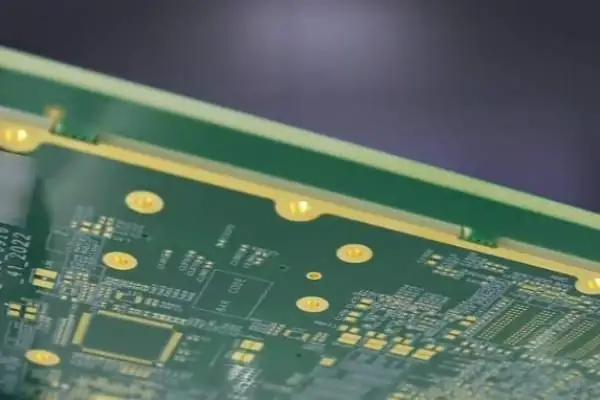
Once, while disassembling a flagship switch from a major manufacturer, I noticed a detail: they even specifically marked the ISOLA logo on the contact surface between the heatsink and the PCB. This is more convincing than the specifications—when the material itself becomes a selling point, you know that this stuff truly solves a real problem.
However, don’t overhype specialty materials. I’ve seen people force high-end ISOLA boards into consumer-grade products—it’s like using a sledgehammer to crack a nut. The real concern about material waste often arises in scenarios with signal rates exceeding 56G or cabling lengths exceeding 20 inches. In these situations, every extra penny spent will be reflected in a lower bit error rate.
Ultimately, choosing a board material is like getting eyeglasses; you can’t just look at the prescription, you have to wear them comfortably and not get dizzy while walking.
Choosing the right board material is quite interesting—sometimes you spend a lot of money on top-tier materials but still fail, blaming the board itself when the problem might actually lie in the design phase. Take, for example, a millimeter-wave radar project I worked on last year. We were debating whether to use ISOLA’s high-frequency board material. Some in the team thought ordinary FR4 would suffice, as it could reduce costs by 30%. However, during simulations, we found that the Dk value of ordinary materials fluctuated too much, causing microstrip line phase deviation and directly distorting the antenna pattern. Later, we switched to ISOLA’s RF series and discovered that their Dk stability is truly strong, and even the board thickness tolerance is controlled more strictly than other companies.
Many people easily fall into the misconception that high-speed, high-frequency design is simply about choosing the material with the lowest loss and the most attractive parameters. The real headache is actually in the manufacturing process. I remember the first time I used a certain PTFE vinyl material, the experienced PCB manufacturer shook his head, saying that this material was prone to delamination during lamination, and impedance control was entirely a matter of luck. Later, we switched to ISOLA. While the I-Speed series may not have the highest Df parameters, its strength lies in its processability. Existing production lines can stably manufacture it, resulting in high yields and ultimately lower overall costs. Sometimes, differences to three decimal places on the parameter list are less important in actual engineering than process compatibility.
Recently, while helping a friend with a 5G small cell project, I noticed many young engineers were overly reliant on ideal models in simulation software. However, the actual performance of ISOLA PCBs is directly related to the accuracy of the Dk model provided by the supplier. Once, we used outdated Dk data for simulation, and the resulting S-parameters were completely inconsistent. We had to obtain the latest batch’s frequency response curves from ISOLA and readjust the microstrip line length to resolve the issue. This made me realize that in high-frequency design, material data and processing capabilities are actually intertwined. Even different batches of ISOLA circuit boards from the same series may require design adjustments due to differences in resin content.
In fact, whether or not to use high-end materials depends on whether the system can fully utilize their performance. I once saw someone force a high-speed board onto a low-speed industrial controller, resulting in nothing more than increased costs—like driving an SUV on a city highway, which is wasteful. Now, before selecting a material, I always calculate the signal rise time and transmission distance. If the wavelength is much greater than the error caused by board inhomogeneity, there’s really no need to pursue the flagship series. After all, ISOLA’s material tiers are very detailed, with corresponding options ranging from consumer electronics to military grade.
The worst situation is when a customer wants millimeter-wave performance but is constrained by a consumer-grade budget. In this case, you have to make trade-offs between materials and the number of layers. Last time, we changed a 6-layer board to a 4-layer board, using ISOLA’s low-loss materials and optimized stack-up, and we actually made up for the loss through structural design. This shows that materials are just one piece of the puzzle; sometimes a different approach is more effective than simply stacking parameters.
I’ve seen too many engineers treat PCB material parameters like exam questions, especially those new to high-frequency design. They immediately focus on the Dk value, as if choosing the lowest value will solve all problems.
Actually, anyone who has actually used ISOLA circuit boards knows that material stability is far more important than the number itself. Once, we were working on an automotive radar project. The client insisted on an extremely low Dk value. As a result, the entire impedance curve fluctuated during high-temperature testing.
Later, switching to another ISOLA material with a medium Dk value proved much more stable. Their resin formulation is truly unique, especially in terms of temperature adaptability.
Many people overlook a fundamental fact—circuit boards are meant to operate in real-world environments. No matter how impressive the parameters in the lab are, they can’t withstand the test of actual operating conditions.
I particularly appreciate the performance of ISOLA printed circuit boards in handling thermal stress. Their resin system maintains stable mechanical properties. This is especially evident in multilayer board lamination processes.
I remember once disassembling a five-year-old base station device. The ISOLA PCB board inside showed almost no signs of delamination.
Now, when I look at material parameters, I pay more attention to the range of variation rather than a specific value.
After all, temperatures and frequencies in the real world fluctuate.
Sometimes choosing a slightly higher Dk value can actually yield better overall performance.
It’s like choosing tires—you don’t just look at the top speed. You also need to consider rain performance and durability.
We recently experienced this firsthand while working on a millimeter-wave project.
Although lower-loss materials are available on the market, we chose ISOLA products considering both processability and reliability.
Their materials have a significantly higher yield rate during lamination in the factory, which is crucial for mass production projects.
Ultimately, parameters are just tools; the real art lies in balancing various indicators.
Each project has different priorities; some require extreme performance, while others prioritize stability and reliability.
A good material supplier should offer multiple options rather than blindly pursuing the ultimate in a single parameter.
This is why I prefer to view ISOLA’s different models as a toolbox, using them in combination according to specific needs.
I always laugh when I see people who oversimplify circuit board design. Do they think they can handle high-speed signals by simply choosing any material? I’ve seen too many projects fail because of this.
Take ISOLA PCBs, for example. Many people think that as long as they use high-end materials, everything will be fine, but that’s not the case at all. Once, our team took on a project where the client insisted on using a certain ISOLA printed circuit board, claiming it was for low loss; the resulting board had completely mismatched impedances. It turned out they hadn’t considered the copper foil matching at all, making decisions based solely on a few numbers in the material specification sheet.
The truly important thing is how you integrate material properties into the entire design process. For example, impedance control isn’t simply a matter of calculating a formula; you have to consider thickness fluctuations during actual processing and the impact of copper foil surface treatment on the signal. Sometimes simulation models are too idealistic and completely different from what’s actually produced in the factory.
I particularly remember a millimeter-wave project team that completely ignored the impact of copper foil roughness during simulation. By the time actual testing revealed excessive losses, it was too late to revise the design. In such high-frequency scenarios, the microstructure of the copper foil directly determines signal quality, and it’s not something that can be solved simply by switching to a higher-end material.
Many designers now tend to fall into two extremes: either over-relying on simulation software or relying entirely on experience. To unleash the potential of materials like ISOLA, a balance must be found between design and manufacturing. Factory lamination parameters, drilling processes, and even the choice of chemicals all affect the final performance; these details are often more worthwhile to consider than the material itself.
I’ve recently experienced this firsthand with an AI accelerator card project. We adjusted the dielectric layer thickness three times to control the impedance tolerance within 5%. However, during this process, we discovered that ISOLA material is particularly sensitive to lamination temperature; even a slight deviation from the standard curve causes the dielectric constant to drift. Therefore, we now have to create a process verification board before each production run.
Ultimately, the key to using high-performance materials effectively lies in acknowledging the imperfections of the real world. Simulation is merely a reference; true confidence comes from understanding and controlling the manufacturing process. This shift in understanding is more important than pursuing the latest material models.
I’ve been thinking a lot about circuit boards lately. You might find it strange, but once you’ve actually worked with various ISOLA circuit boards, you’ll find them quite interesting. Every time I disassemble an electronic product and see those densely packed circuits, I wonder how much intricacies are hidden behind these seemingly ordinary green boards.
I remember last year when I helped a friend repair his drone, I discovered that its flight control board used an ISOLA printed circuit board. I was particularly surprised that such a thin board could withstand such large current fluctuations and had such excellent heat dissipation. Later, I learned that this is inseparable from the material’s properties.
Many electronic products are now striving for lighter and thinner designs, which places higher demands on circuit board packaging technology. I’ve seen ISOLA PCBs used in some high-end graphics cards; the craftsmanship is breathtaking, with each layer of material meticulously designed.
Speaking of which, I recall an engineer at an electronics exhibition I visited telling me that many manufacturers are now focusing on material sustainability. This makes me think that ISOLA must also have considerable innovation in this area, given that environmental protection is a major trend.
However, to be honest, what I find most fascinating is the diversity of circuit board materials. Different applications require completely different properties; some need high-temperature resistance, some need interference resistance, and some also need flexibility. It’s like cooking—choosing different ingredients based on different tastes.
A friend of mine who works in smart home technology recently struggled with choosing circuit boards when developing a new product. They ultimately chose ISOLA material because of its outstanding stability in high-frequency signal transmission.
Sometimes, looking at my phone, I think it probably uses more than one type of ISOLA circuit board material, each playing its specific role yet working perfectly together to allow this small device to function properly.
Ultimately, the development of circuit board materials reflects the overall direction of progress in the electronics industry. From simple connectivity to the current demands for signal integrity, thermal management, and even environmental compliance, these changes are driving continuous innovation in companies like ISOLA.
Have you noticed how increasingly sophisticated the circuit boards in even household appliances are? This indicates a rising demand for higher quality internal components in electronic products. This is a good thing, as good materials are essential for product lifespan and performance.
Every time I see a new electronic product launch, I pay special attention to the circuit board materials used, as this often reflects the manufacturer’s commitment to product quality. I think this is why specialized material suppliers like ISOLA are gaining increasing recognition.
Whenever I see those glamorous electronic product launches, I think about how people rarely notice the underlying materials that truly support the entire system. Just like building a house, no one stares at the cement grade all day, but without it, the whole building could collapse at any moment. Basic materials like ISOLA PCBs play this same role; they may not be eye-catching, but they determine how fast, how long, and how much pressure the equipment can withstand.
I’ve seen too many engineers spend all their energy on chip selection or software optimization in the early stages of a project, only to turn their attention to the substrate issue when the board overheats severely and signal attenuation exceeds limits. By then, it’s often too late, the design cycle is lengthened, and costs skyrocket. In fact, the characteristics of the substrate should be considered from the very first line drawn. High-frequency circuits require low-loss materials, and high-power applications need to pay attention to thermal conductivity—these are not issues that can be solved by patching later.
Last year, a project team working on a communication module initially chose standard FR4 PCB material to save money, but during testing, they found that the signal integrity didn’t meet the requirements. They then switched to ISOLA’s specialized high-frequency material, which cost 20% more per unit, but this saved them the cost of two rounds of redesigns, resulting in an overall cost reduction of 15%. This type of case is very common in the industry; seemingly spending more on materials actually avoids greater hidden losses.
Many IoT devices are currently exposed to environments with large temperature fluctuations and high humidity year-round. Ordinary circuit boards may delaminate and deform after only two years. Our lab has conducted comparative tests using ISOLA printed circuit boards with a specific resin system. Under a double 85% test (85 degrees Celsius, 85% humidity), they can operate stably for tens of thousands of hours. This durability is the real key to determining a product’s lifespan.
Some people think material innovation is simply changing the dielectric constant or glass transition temperature, but it’s far more than that. For example, recently some ISOLA materials have begun to incorporate thermal management particles, improving heat dissipation efficiency without increasing thickness. Such microscopic improvements often lead to system-level breakthroughs. As chip power consumption increases, these seemingly small advancements become the bottlenecks for technological iteration.
Truly skilled designers treat materials as part of the design tool, just as a painter knows the final effect when choosing paint. Before each new project, I spend time studying the characteristic curves of different ISOLA circuit boards. Sometimes, a flatter dielectric constant temperature curve for a particular material can ensure the stability of RF circuits in extreme environments. The advantages brought by such details cannot be compensated for by later debugging.
The term “unsung heroes” is frequently used in the industry these days, and I think it’s quite apt.
Recently, while tidying up my studio, I came across some old circuit boards. Looking at the yellowed substrate, I suddenly felt a pang of nostalgia. Over the years, I’ve used many brands of PCB materials, and some have truly left a lasting impression. I remember when I first started working with high-frequency circuits, I thought I could just use any board material, but my first RF project was a disaster.
Back then, I was working on a 2.4GHz wireless module. Using a standard FR-4 board for prototyping, the signal attenuation was severe. Later, a senior engineer reminded me to check the dielectric constant stability, and I realized that the basic materials have a much greater impact on high-frequency circuits than I had imagined. Especially with temperature changes, the parameter drift of ordinary materials can cause the matching characteristics of the entire circuit to deviate.
One interesting comparative experiment remains vivid in my memory. The same antenna design was fabricated using boards from different manufacturers. The sample using ISOLA material maintained the best performance under high temperature and high humidity conditions. This difference might not be noticeable in conventional digital circuits, but for RF circuits, it’s a world of difference. Later, I developed a habit of paying special attention to parameters like the dielectric loss tangent of the PCB board when doing high-frequency designs.
What many people easily overlook is that the choice of PCB materials directly affects the long-term reliability of a product. Last year, I helped a friend repair a five-year-old medical device and discovered that the failure was caused by choosing a cheap PCB board to save money, which led to a decrease in the insulation resistance of the power layer. These hidden problems often only surface after mass production, and by then, the cost of rectification is much higher.
It’s quite gratifying to see specialized material manufacturers like ISOLA constantly launching new products. For example, some of their recent models have particularly excellent thermal expansion coefficients, which is good news for automotive electronics that need to withstand temperature cycling. However, ultimately, material selection should be based on the specific application scenario; there’s no need to blindly pursue high-end materials. Once, a client insisted on using high-end materials for a simple control board, resulting in double the cost without any performance improvement.
I think choosing a PCB board is like choosing ingredients; the key is to find the right fit. In my recent IoT terminal project, I chose ISOLA’s mid-range materials, ensuring both RF performance and cost control. Sometimes, looking at the densely packed transmission lines and simulation curves in design documents makes me realize that good base materials can truly save engineers a lot of trouble. After all, even the most ingenious circuit design ultimately needs to be implemented on a physical circuit board to function.
Recently, while researching high-frequency circuit design, I discovered an interesting phenomenon: many people overemphasize component parameters while neglecting the importance of the substrate. Take our team’s automotive radar project last month, for example—after testing three different ISOLA PCB substrate materials, we discovered that the differences in signal integrity were greater than expected.
A common misconception is that using brand-name materials guarantees performance. In reality, the dielectric loss characteristics of ISOLA printed circuit boards fluctuate subtly with changes in wiring density. I remember once, when debugging a 79GHz radar module, even though a material with a nominally low loss was used, signal attenuation still occurred. It was later discovered that the lamination process caused uneven distribution of the dielectric constant.
Many engineers now habitually apply standard parameter tables provided by material suppliers, but this is far from sufficient for high-frequency applications. Especially in millimeter-wave radar applications, microstrip line edge effects can make actual losses significantly higher than theoretical values. We later solved the problem of unstable detection range by switching to ISOLA’s series specifically optimized for automotive radar.
Material selection is more like a balancing act. Pursuing excessively low loss can lead to insufficient mechanical strength, while increasing rigidity can affect high-frequency characteristics. I once saw a team make their boards extremely thin to reduce loss by 0.1dB, only to have all the pads crack during vibration testing.
I think the real key is establishing a complete verification process. For example, when designing antenna arrays, we first use ISOLA prototypes to perform temperature drift testing to confirm phase stability before proceeding to the formal design, rather than simply making judgments based on the datasheet.
A recent project has further highlighted the importance of material compatibility. A satellite communication device was originally planned to use conventional ISOLA boards, but unexpected dielectric relaxation was discovered in a vacuum environment. Fortunately, the material formulation was adjusted in time.
Ultimately, a good circuit board should act as an invisible guardian, neither hindering performance nor requiring excessive design. Especially for timing-sensitive applications like radar, sometimes changing the grounding layer treatment is more effective than changing the substrate brand, although this requires substantial experimental data.
Chasing perfection at the Prototype PCB Production stage can actually plant hidden
In circuit board design, prototyping is often the most creative and most
A tire pressure sensor that lost signal after six months, taken apart,
• Expert in Small-to-Medium Batch Production
• High-Precision PCB Fabrication & Automated Assembly
• Reliable Partner for OEM/ODM Electronic Projects
Business Hours: (Mon-Sat) From 9:00 To 18:30
Get quote, solution or any question, Andre always here to help